Lovis Corinth More Art

German, 1858-1925

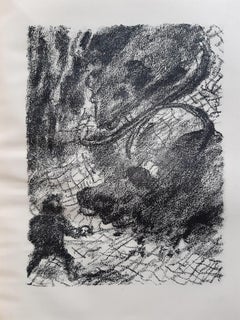
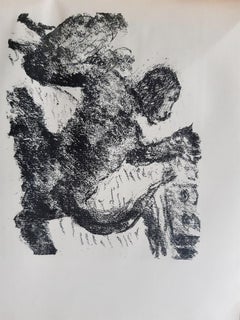
Lovis Corinth was a German artist and writer whose mature work as a painter and printmaker realized a synthesis of impressionism and expressionism, known for his dramatic figurative and landscape paintings also for his landscapes of the Walchensee area of Bavaria and his portraits, Corinth also painted religious scenes, often violent . He also made etchings and lithographs in which he revealed his capacity for Expressionist power.

to
1
Overall Width
to
Overall Height
to
1
1
1
1
1
16
312
226
122
117
1
Artist: Lovis Corinth
Related Items
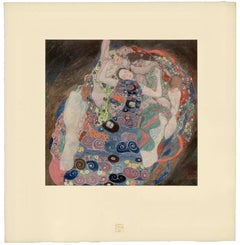
H.O. Miethke Das Werk folio "The Virgins" collotype print

H.O. Miethke Das Werk folio "The Virgins" collotype print

By Gustav Klimt & K.K. Hof-und Staatsdruckerei

Located in Palm Beach, FL

The Virgins, no. 2 from the fifth installment of Das Werk Gustav Klimts The Virgins speaks to a new chapter of Klimt’s artistic development. That it was sel...

Category

Early 1900s Vienna Secession Lovis Corinth More Art

Materials

Paper

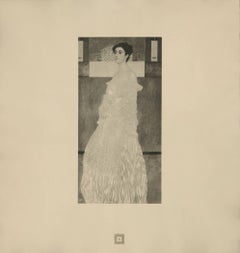
Max Eisler Eine Nachlese folio "Portrait of Baroness Wittgenstein" collotype

Max Eisler Eine Nachlese folio "Portrait of Baroness Wittgenstein" collotype

By (after) Gustav Klimt

Located in Palm Beach, FL

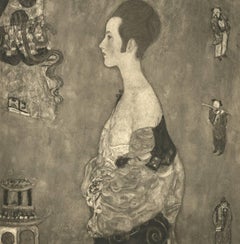
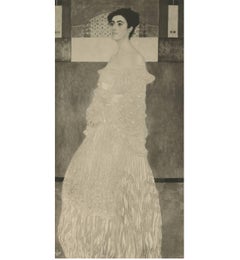
After Gustav Klimt, Max Eisler Plate #4, Bildnis Baronin Wittgenstein; dark grey monochrome collotype after the 1905 painting in oil on canvas. GUSTAV KLIMT EINE NACHLESE (GUSTAV KLIMT AN AFTERMATH), a portfolio of 30 collotypes prints, 15 are multi-color and 15 are monochrome, on chine colle paper laid down on heavy cream-wove paper with deckled edges; Max Eisler, Editor-Publisher; Osterreichischer Staatsdruckerei (Austrian State Printing Office), Printer; in a limited edition of 500 numbered examples of which: 200 were printed in German, 150 were printed in French and 150 were printed in English; Vienna, 1931. 2018 marks the 100th anniversary of Gustav Klimt’s death. It is a fitting time to reflect upon the enduring legacy and deep impact of his art. Recognizing this need for posterity with uncanny foresight, the publication of Gustav Klimt: An Aftermath (Eine Nachlese) provides a rare collection of work after Klimt which has proven to be an indispensable tool for Klimt scholarship as well as a source for pure visual delight. Approximately 25 percent of the original works featured in the Aftermath portfolio have since been lost. Of those 30, six were destroyed by fire on 8 May 1945. On that fateful final day of WWII, the retreating Feldherrnhalle, a tank division of the German Army, set fire to the Schloss Immendorf which was a 16th century castle in Lower Austria used between 1942-1945 to store objects of art. All three of Klimt’s Faculty Paintings: Philosophy, Medicine and Jurisprudence (1900-1907), originally created for the University of Vienna, were on premises at that time. Also among the inventory of Klimt paintings in storage there was art which had been confiscated by the Nazis. One of the most significant confiscated collections was the Lederer collection which featured many works by Gustav Klimt such as Girlfriends II and Garden Path with Chickens...

Category

1930s Vienna Secession Lovis Corinth More Art

Materials

Paper

Max Eisler Eine Nachlese folio "Wally" (Girl in Profile) collotype

Max Eisler Eine Nachlese folio "Wally" (Girl in Profile) collotype

By (after) Gustav Klimt

Located in Palm Beach, FL

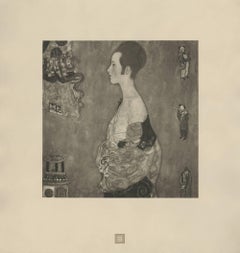
After Gustav Klimt, Max Eisler Plate #27, Madchen im Profile; grey-toned monochrome collotype after the 1916 painting in oil on canvas. Original destroyed by fire May 1945. GUSTAV K...

Category

1930s Vienna Secession Lovis Corinth More Art

Materials

Paper

Adoration of the Magi / - The Rider of the Sun -

Adoration of the Magi / - The Rider of the Sun -

Located in Berlin, DE

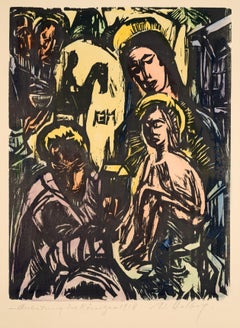
Walter Helbig (1878 Falkenstein - 1968 Ascona), Adoration of the Magi, 1918. Hand-colored linocut, 30 cm x 22.5 cm (depiction), 50 cm x 35 cm (sheet size), signed “W.[alter] Helbig” in pencil lower right, inscribed “Adoration of the Magi” lower left and dated “1918”. Below this a handwritten dedication “with heartfelt Christmas greetings”. - Paper somewhat darkened and with slight creases, thumbtack holes in the corners - The Rider of the Sun - The 'apocalypse' of World War I brought about a return to sacred art. Walter Helbig belonged to the circle of the 'Brücke' and the 'Blauer Reiter'. With his reinterpretation of religious themes in an expressionist formal language, Helbig shaped an avant-garde neo-sacred art. This is symbolically expressed in the silhouette of the rider against the sun-like yellow background. It refers to the awakening initiated by the Blue Riding, which is now linked back to the sacred. The rider and horse "look" at Mary and the Christ Child, who occupy the entire field. Opposite them are the three kings, the eldest of whom kneels before Christ and offers him a gold-filled casket. The expressionist lines give rise to a tower that rises into the "sun", so that the gift has become a Gothic church, expressing the hope that the fallen world will be resurrected in the name of Christ. This dimension of meaning is emphasized by the magical effect of the color scheme. About the artist In 1895, Walter Helbig began studying at the Dresden Academy of Art, where he became friends with the future Brücke artist Otto Müller, with whom he lived in Dresden from 1903 to 1905. While studying in Italy from 1897 to 1899, he met Arnold Böcklin and Adolf von Hildebrand. After completing his studies, he first worked for Otto Gussmann, painting churches. From 1905 to 1909 he worked as a freelance painter in Hamburg. In 1909, through the mediation of Otto Müller, Helbig made the acquaintance of artists from the 'Brücke'. In 1910 he exhibited at the founding exhibition of the Berlin 'Neue Sezession'. In the same year, he moved to Switzerland, where, together with Hans Arp and Oscar Lüthy, he founded the 'Moderne Bund' in Weggis, to which Cuno Amiet and Giovanni Giacometti also belonged. At the second exhibition of the 'Moderne Bund' in Zurich in 1911, Henri Matisse and Robert Delaunay were represented alongside artists from the 'Blauer Reiter'. In 1913, Helbig traveled to Paris with Arp and Lüthy. After the dissolution of the 'Moderne Bund', Helbig was represented at the first Dada exhibition in Zurich in 1914. In 1919, he joined the Berlin 'Novembergruppe'. After the devastation of World War I, Helbig turned increasingly to religious themes in his work. In 1924, like many other artists of his time, he moved to Ascona for financial reasons, where he became a naturalized citizen in 1938. There he founded the artists' association "The Great Bear", to which Marianne von Werefkin...

Category

1910s Expressionist Lovis Corinth More Art
Materials

Paper

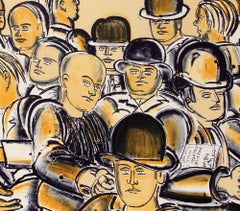
Tip of Broadway II
Tip of Broadway II

Tip of Broadway II

By Lester Johnson

Located in Buffalo, NY

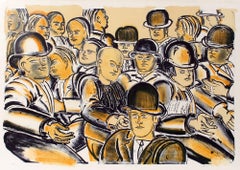
An original lithograph created by Lester F. Johnson. This work was donated to Hallwalls Contemporary Art Center by the David K. Anderson Charitable Trust. All proceeds from the sal...

Category

1970s Expressionist Lovis Corinth More Art
Materials

Paper, Lithograph

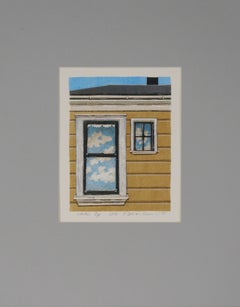
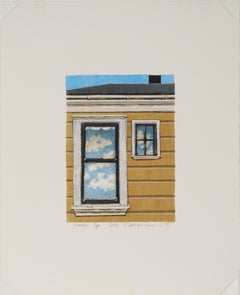
"Weather Eye" - 1989 Lithograph on Paper

Deborah Rumer"Weather Eye" - 1989 Lithograph on Paper, 1989

$440Sale Price|20% Off

H 16 in W 12 in D 0.5 in

"Weather Eye" - 1989 Lithograph on Paper

By Deborah Rumer

Located in Soquel, CA

"Weather Eye" - 1989 Lithograph on Paper 1989 Lithograph on paper titled "Weather Eye" by Deborah Rumer (American, 20th Century). A windowsill is the focal point, as the viewer look...

Category

1980s Expressionist Lovis Corinth More Art
Materials

Paper, Ink, Lithograph

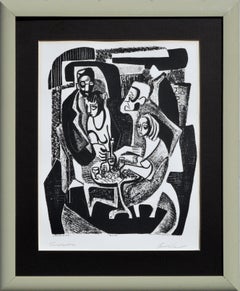
Nick's Coffee House in the Village - Rare Edition 1970s Modern Figurative Print

Nick's Coffee House in the Village - Rare Edition 1970s Modern Figurative Print

By Lenore SImon

Located in Soquel, CA

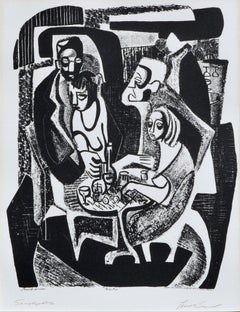
This bold screen print depicts a scene from the 1950s, set in a jazz coffee house in Greenwich Village called Nick's, which Simon patronized while in high school. The original stone ...

Category

Late 20th Century Expressionist Lovis Corinth More Art
Materials

Archival Paper, Screen

Polish French Figurative Abstract Art Brut Expressionist Lithograph Maryan

Polish French Figurative Abstract Art Brut Expressionist Lithograph Maryan

By Pinchas Maryan

Located in Surfside, FL

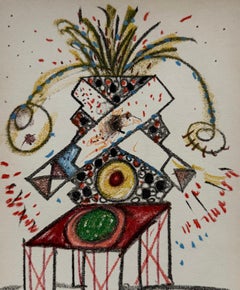
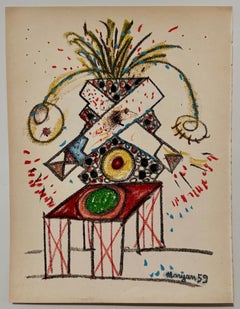
Pinchas Burstein, known as Maryan Lithograph (after the drawing). 1960 Dimensions: 12 3/8 x 9 3/8 inches (315 x 240mm). There is printed text on the back, as issued. Signed in the...

Category

1960s Expressionist Lovis Corinth More Art
Materials

Paper, Lithograph

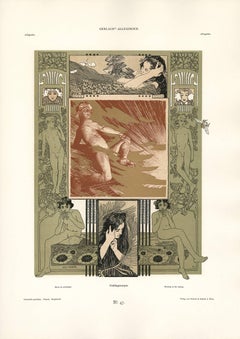
Gerlach's Allegorien Plate #47: "Morning in the Spring" Lithograph

Gerlach's Allegorien Plate #47: "Morning in the Spring" Lithograph

By Koloman Moser

Located in Palm Beach, FL

Koloman Moser (1868 –1918), AUSTRIAN Instead of applying his flair and art education solely to painting, Koloman Moser embodied the idea of Gesamt Kunstwerk (all-embracing art work) by designing architecture, furniture, jewelry, graphics, and tapestries meant to coordinate every detail of an environment. His work transcended the imitative decorative arts of earlier eras and helped to define Modernism for generations to come. Moser achieved a remarkable balance between intellectual structure (often geometric) and hedonistic luxury. Collaborating with Gustav Klimt and Josef Hoffmann, the artist was an editor and active contributor to Ver Sacrum, (Sacred Spring), the journal of the Viennese Secession that was so prized for its aesthetics and high quality production that it was considered a work of art. The magazine featured drawings and designs in the Jugendstil style (Youth) along with literary contributions from distinguished writers from across Europe. It quickly disseminated both the spirit and the style of the Secession. In 1903 Moser and Hoffmann founded and led the Wiener Werkstatte (Viennese Workshop) a collective of artisans that produced elegant decorative arts items, not as industrial prototypes but for the purpose of sale to the public. The plan, as idealistic then as now, was to elevate the lives of consumers by means of beautiful and useful interior surroundings. Moser’s influence has endured throughout the century. His design sensibility is evident from the mid-century modern furniture of the 1950s and ‘60s to the psychedelic rock posters...

Category

1890s Vienna Secession Lovis Corinth More Art

Materials

Paper

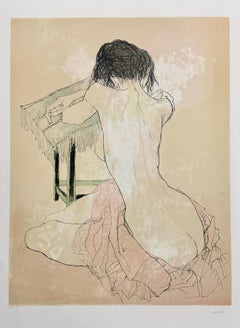
Nu de Dos au Tabouret, 1993 Lithograph on Paper, Expressionist, Signed

Nu de Dos au Tabouret, 1993 Lithograph on Paper, Expressionist, Signed

By Jean Jansem

Located in Les Acacias GE, GE

Jean Jansem (1920-2013) Nu de dos au tabouret, 1993 Lithographie sur papier Arches, Justifiée Signée en bas à droite 76 x 56 cm CR Jansem, 1993, n°88 "Dans mes dernières litho...

Category

Late 20th Century Expressionist Lovis Corinth More Art
Materials

Lithograph, Paper

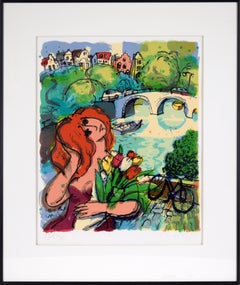
"By the Canal" Limited Edition Lithograph on Archival Paper

"By the Canal" Limited Edition Lithograph on Archival Paper

Located in Soquel, CA

"By the Canal" Limited Edition Lithograph on Archival Paper Vibrant lithograph of a red-headed woman near a canal by Michael Leu (Taiwanese, b. 1950). The woman is holding a bouquet of tulips. Nearby, a bicycle is parked alongside the canal. There is a bridge over the canal, connecting to a small town in the distance. This piece is whimsical, bold, and expressive. Numbered "31/198" in the lower left corner. Signed and dated "Michal Leu 95" in the lower right corner. Presented in a black aluminum frame with a white mat. Frame size: 32.75"H x 27.25"W Image size: 24"H x 19"W Born in Taipei, Taiwan, Michael Leu (b. 1950) studied fine art and design in his home town in the late 1960s and learned printmaking techniques at Otis Parsons...

Category

1990s Expressionist Lovis Corinth More Art
Materials

Ink, Archival Paper, Lithograph

R. Layni, Zeichnungen folio, "Male Nude in Red Loincloth" Collotype plate II

R. Layni, Zeichnungen folio, "Male Nude in Red Loincloth" Collotype plate II

Located in Palm Beach, FL

After Egon Schiele (1890 – 1918), AUSTRIA “ART CANNOT BE MODERN, ART IS PRIMORDIALLY ETERNAL.” -SCHIELE Defiantly iconoclastic in life and art, Egon Schiele is esteemed for his mas...

Category

1910s Vienna Secession Lovis Corinth More Art
Materials

Paper

Lovis Corinth more art for sale on 1stDibs.

Find a wide variety of authentic Lovis Corinth more art available for sale on 1stDibs. You can also browse by medium to find art by Lovis Corinth in paper, lithograph and more. Much of the original work by this artist or collective was created during the 20th century and is mostly associated with the Expressionist style. Not every interior allows for large Lovis Corinth more art, so small editions measuring 9 inches across are available. Customers who are interested in this artist might also find the work of George Grosz, Robert Hofherr, and Anita Roy Chowdhury. Lovis Corinth more art prices can differ depending upon medium, time period and other attributes. On 1stDibs, the price for these items starts at $869 and tops out at $2,129, while the average work can sell for $1,499.