By Maurice Élie Sarthou
Located in New York, NY
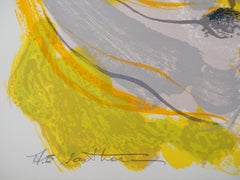
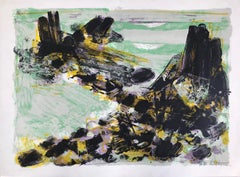
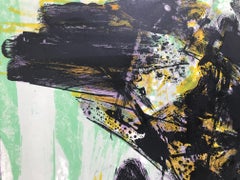
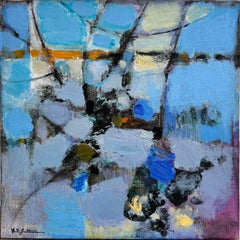
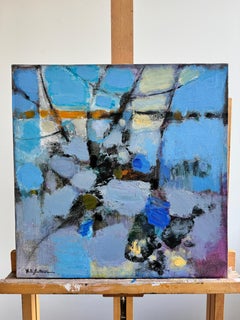
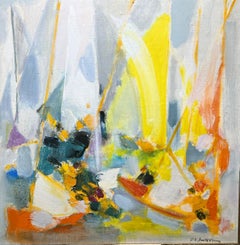
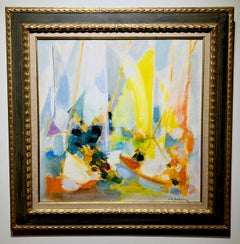
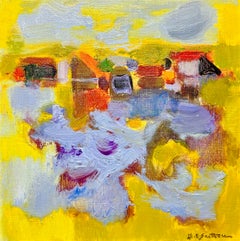
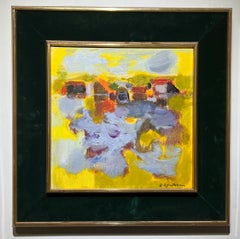
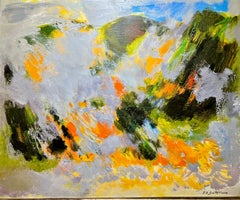
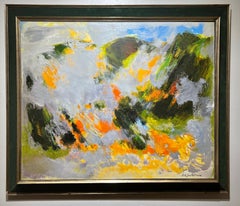
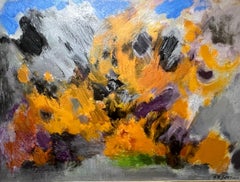
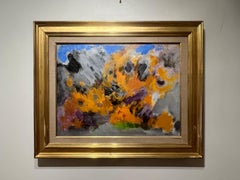
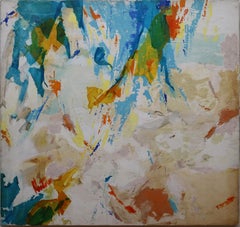
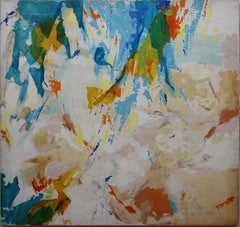
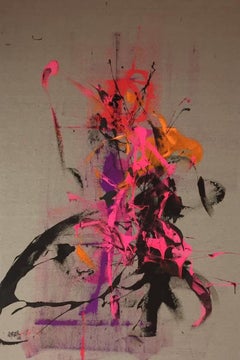
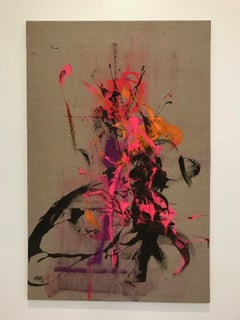
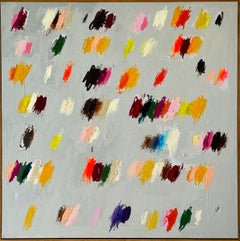
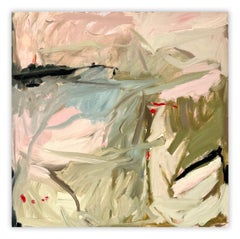
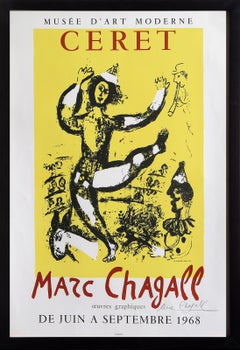
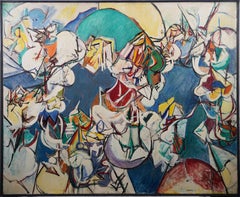
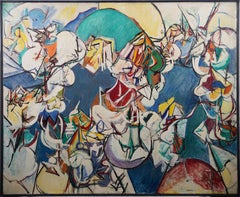
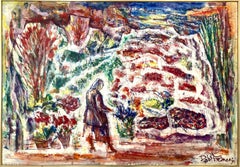
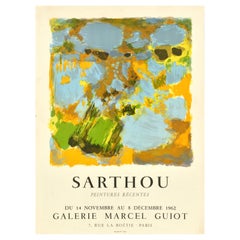
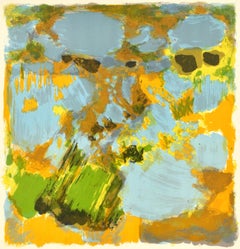
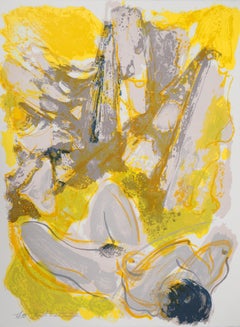
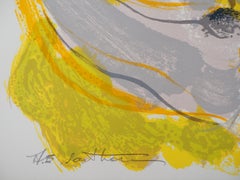
Maurice Élie Sarthou (French, 1911-1999) "Composition" Edition 209/220, Abstract Lithograph signed and numbered in Pencil, 18.50 x 24.63, Late 20th Century, ca. 1960s
Colors: Green, Black, Yellow, Purple, Orange
Sarthou was born in Bayonne on January 15, 1911; an orphan following the death of his father during the First World War, he was raised by his mother and grandfather in Montpellier. After high school, in 1927, he obtained the authorization to enter the Beaux-Arts of the city provided he prepared architecture. After a year, he persuades his family to let him study at the painting studio. He first attended a training at the School of Fine Arts in Montpellier; Then in 1930, a fellow of the city of Montpellier as the ward of the nation, he entered the Beaux-Arts in Paris.
In 1934, birth of Francine, his daughter. To make a living, he introduces himself to the drawing faculty. He was appointed to Bastia, then in 1937 to Bordeaux.
In 1939, 1940 and 1941, he made war in the transmissions.
In 1943, he became a member of the Société des Artistes Indépendants Bordelais, which regularly organizes exhibitions of Parisian artists (Bissière, Lhote, Walch, etc.); this has a positive influence on him; Artistic emulation allows him to assert his style even more intensely.
In 1948 he met the writer Raymond Guérin who introduced him to Maurice Toesca, Marcel Arland and, later, Jean Paulhan. In 1950, he illustrated Raymond Guérin's book "Testamentary fragment".
In 1949 he was chosen by Jacques Lassaigne, who came to Bordeaux to preside over the regional selection of the Prix de la Jeune Peinture. He won the price Drouant, the first mention of the price (fourth prize on more than 90 competitors, including Lagrange, Lapoujade, Rebeyrolle, also mentioned). In the jury, Gaston Diehl noticed him and invited him to the Salon de Mai of which he is the founder. It is the first manifestation of Sarthou with the Parisian public with two paintings: "Still life" and "Open window". He will participate in this show until 1963.
He moved to Paris in 1950, where he was appointed professor of drawing at Lycée Henri IV, which allowed him to exhibit in the salons of the capital and to be more recognized.
From 1950, around Jean Paulhan, meet at the arena of Lutetia, on Sunday morning, to play bowls: Maurice Toesca, Jerome Lindon, Yves Berger...
Category
1960s Abstract Maurice Élie Sarthou Art