By Benjamin Duke
Located in Chicago, IL
[From Ben Duke] The following is from Wikipedia, but I learned of this spot after getting into August Strindberg novels.
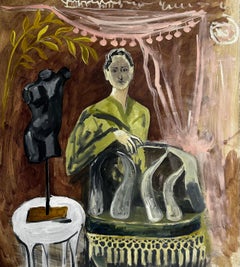
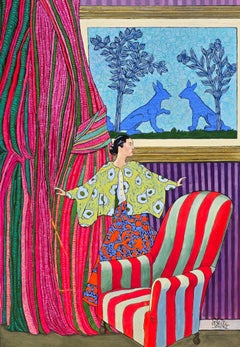
"Zum Schwarzen Ferkel," translated as "The Black Piglet," was a historic tavern located at the corner of Unter den Linden and Neue Wilhelmstraße in Berlin. Notable for its cultural and historical significance, the tavern was a central meeting point for Nordic writers and artists in the 1890s. It was frequented by figures such as August Strindberg, Edvard Munch, and the Polish writer Stanisław Przybyszewski, among others.
The tavern's original name was Gustav Türkes Weinhandlung und Probierstube, owned by Gustav Türke, and it was also known as "The Cloister." The name "Zum Schwarzen Ferkel" was coined by Strindberg, who thought an Armenian wine-sack hanging over the entrance resembled a black piglet. This quirky name was enthusiastically accepted by both the owner and the patrons.
August Strindberg, a Swedish playwright and novelist, played a significant role in the tavern's history. After moving to Berlin in 1892, he became a regular at the tavern and a leading figure among the Nordic and German artistic community that gathered there. The tavern was not only a place for socializing but also a hub of intellectual and artistic exchange, with members engaging in vibrant discussions and forming significant relationships, both personal and professional.
Edvard Munch, the Norwegian painter, also became a regular after his arrival in Berlin in 1892. The tavern saw its share of drama, including romantic entanglements and artistic disputes. One notable figure was Dagny Juel, a Norwegian music student who became involved with several members of the circle and was later tragically murdered in Tbilisi in 1901.
The tavern's influence extended into the literary and artistic works of its patrons. For example, Adolf Paul wrote about his experiences and the people he met at the Ferkel in his book "Strindberg-Erinnerungen und -Briefe," published in 1914. Strindberg's novel "Klostret" ("The Cloister"), published posthumously in 1966, also drew from his experiences at the tavern.
Unfortunately, the original building that housed Zum Schwarzen Ferkel was destroyed during the Second World War. Today, its legacy lives on through the stories and works of the artists and writers who once gathered there. Wikkipedia.
Ben Duke
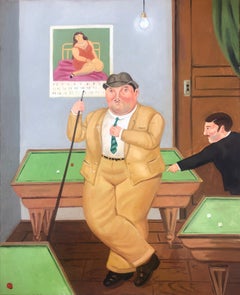
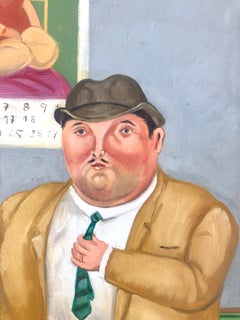
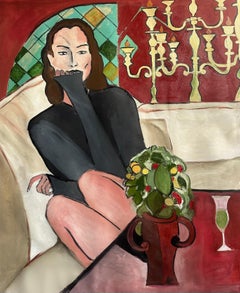
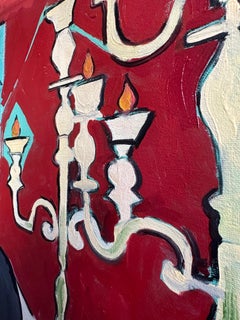
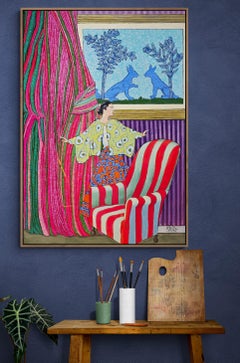
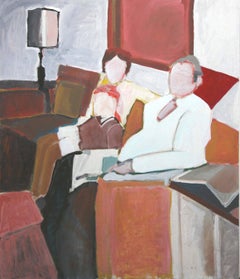
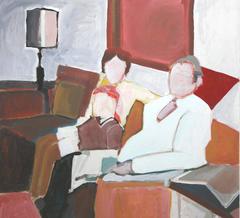
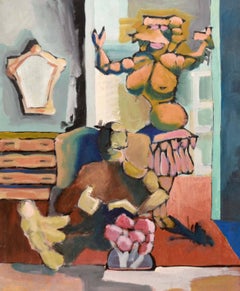
Zum Schwarzen Ferkel
oil on canvas
36h x 36w in
91.44h x 91.44w cm
BSD039
Ben Duke
b. 1977 Louisville, KY
Education
2006 M.F.A., Maryland Institute College of Art, Baltimore, MD
2002 B.F.A., University of Utah, Salt Lake City...
Category
21st Century and Contemporary Contemporary Michael Eggleston Interior Paintings