By Michael Kabotie (Lomawywesa)
Located in Santa Fe, NM
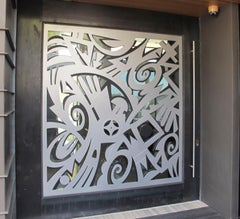
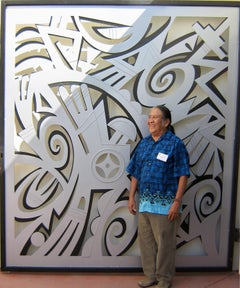
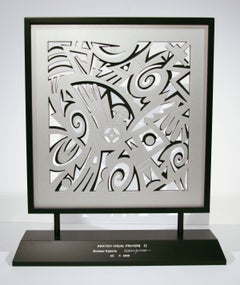
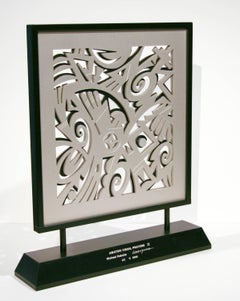
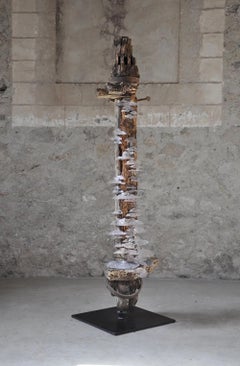
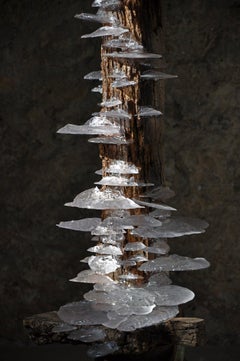
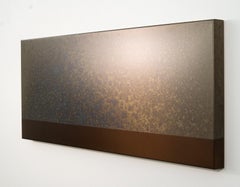
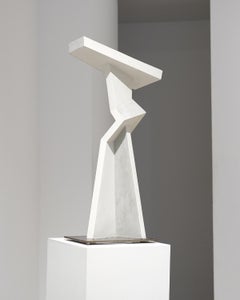
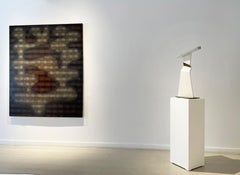
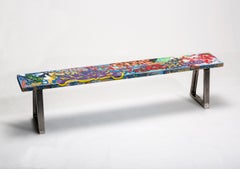
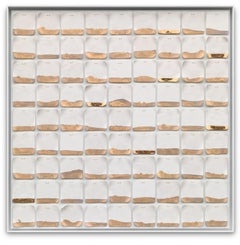
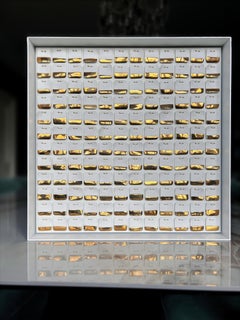
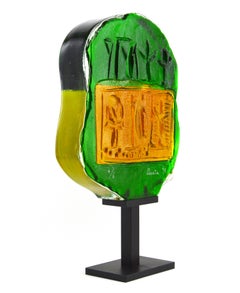
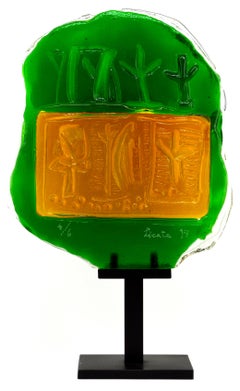
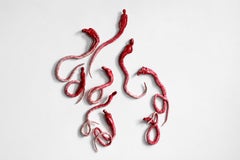
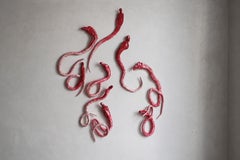
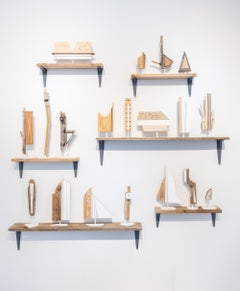
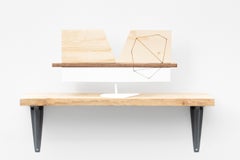
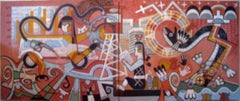
Awatovi Visual Prayers, II, Hopi overlay, silver, black, contemporary, Kabotie
limited edition of 40
The Heard Museum in Phoenix, Arizona commissioned Michael Kabotie to do a large sculpture/gate for them in 2006. It is done in his signature Hopi overlay style. Kabotie calls it “Visual Prayers” and he describes it as being loosely related to the ancient kiva murals at the Hopi village of Awatovi. His version shows the woven forms of smoke and feathers that the Hopi use to convey prayers that are for the health, long life and blessings for all people.
Michael Kabotie was born on September 3, 1942 on the Hopi Indian Reservation in northeastern Arizona. He grew up in the village of Shungopavi and attended school on the reservation until the Hopi high school was closed. He graduated from Haskell Indian School in Lawrence, Kansas in 1961. While in his junior year there he was invited to spend the summer at the Southwest Indian Art Project at the University of Arizona. Participants included Fritz Scholder, Helen Hardin, Charles Loloma and Joe Hererra (who became a lifelong friend and his primary artist mentor).
After high school, Michael attended the University of Arizona, studying engineering. After dropping out of college he held a one-man show at the Heard Museum and his work was on the cover of Arizona Highways magazine.
In 1967 Michael underwent his Hopi manhood initiation into the Wuwutsim Society and was given his Hopi name, Lomawywesa (Walking in Harmony).
Both Michael and his father, Fred Kabotie, have been innovators in the Native American Fine Arts Movement, creating paintings that reflect traditional Hopi life in contemporary media. Fred Kabotie was one of the Hopi art...
Category
Early 2000s Contemporary Michael Kabotie (Lomawywesa) Art