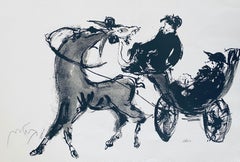
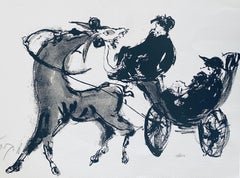
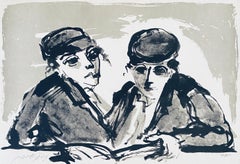
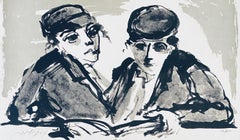
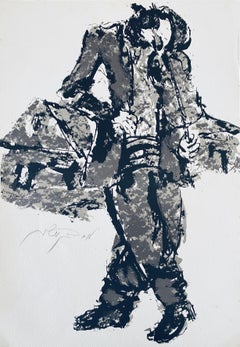
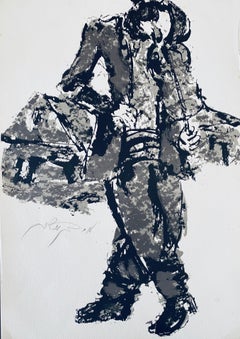
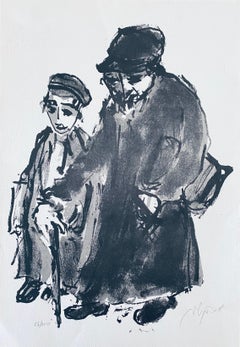
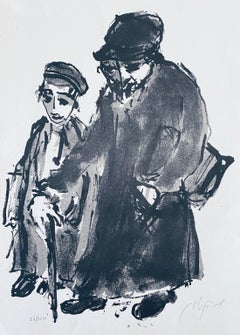
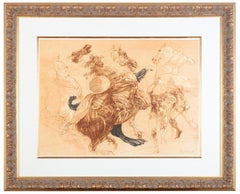
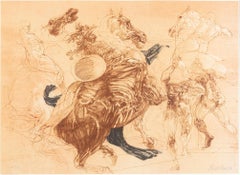
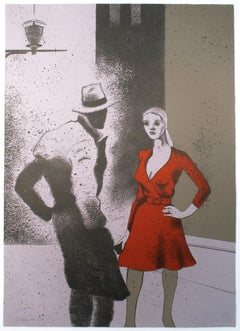
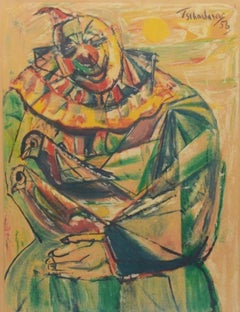
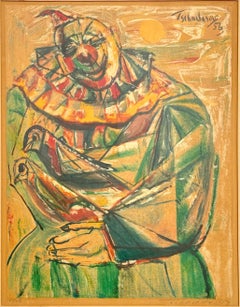
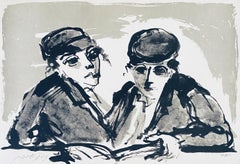
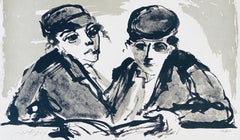
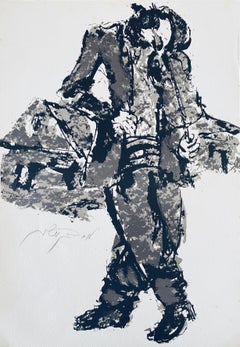
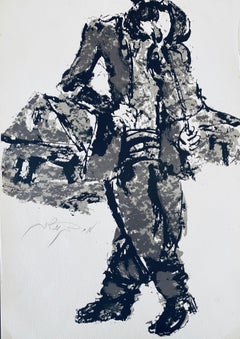
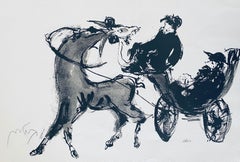
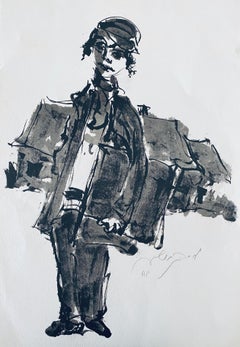
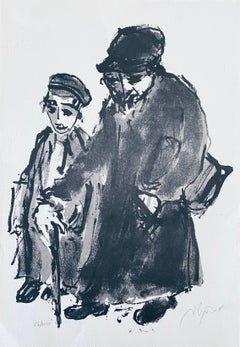
By Moshe Bernstein
Located in Surfside, FL
Born in Poland in 1920, Bernstein completed his art studies in the Academy of Vilna in 1939. His family was wiped out in the Holocaust, but he survived the war and lived in Russia until 1947, when he immigrated to Palestine as part of the "illegal immigration" (aliyah bet). He was caught and spent time in a detention camp in Cyprus.
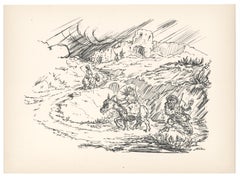
Bernstein's artistic path in Israel recalls that of other painters who reflected their memories of small Jewish Diaspora towns, or shtetls. At a certain stage, these artists were rejected by the local art scene. In the 1950s, '60s and '70s, the subject aroused public interest and recognition. In 1948, Bernstein participated in a group exhibit in the Tel Aviv Museum of Art, and in 1949 in a group exhibit at Artists' House (then known as the Artists' Pavilion). In 1954, he participated in another exhibition - of young artists - in the Tel Aviv Museum. In 1962, he had a solo exhibition at the Tel Aviv Museum, another in 1967 at the Haifa Museum, and a retrospective in 1973 in the Ein Harod Museum of Art. Interspersed among these events were shows at the Katz and Chemerinsky Galleries in Tel Aviv.
A Bernstein exhibit, which included paintings of the shtetl, was shown in 1998 at the international theater festival in Parma, Italy. In 1999, he was awarded a prize by the Massuah Institute for the Study of the Holocaust, for his "documentation of the world that vanished at the beginning of his career."
His paintings appeared on the walls of the defunct Kassit cafe in Tel Aviv, and in the Kiton restaurant - "places in which he ate...
Category
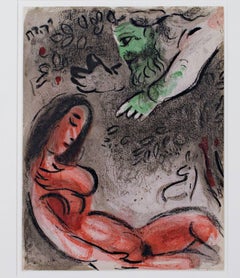
Mid-20th Century Expressionist Moshe Bernstein Art