Nelson De La Nuez More Art

Cuban, American, b. 1959

Nelson De La Nuez is one of the most sought-after contemporary Pop artists practicing today. His striking, vivid mixed media artwork borrows motifs and messages from the language of wealth, power, fame, excess, taste, and access to cast a narrative about modern society.

Known to many as The King of Pop Art, De La Nuez is an innate iconoclast, elevating themes from commerce, pop culture, advertising, and branding to provide commentary on our culture – showing us that the entire world is for sale –in a manner that is both ironic and aspirational. Included in the Who’s Who List of the Most Collected Artists of Our Time, De La Nuez was born in Cuba and moved as a child to California, where he was initially introduced to many of the iconic images that he uses in his art to this day. His ability to experience these important cultural touchpoints at such a young age with a purely fresh perspective allows him a distinctive point of view – one that is both critical and embracing, sardonic and sentimental – that lends his work an air of accessibility and curiosity and has led to his significant popularity.

Demonstrating that art can be both humorous and intellectual, he first gained recognition in the 1980s for his unique Pop art style, using familiar imagery from popular board games, as well as newspaper articles, vintage advertisements, and other visual references that spoke about upward mobility to an emerging luxury audience.

Find original Nelson De La Nuez paintings, mixed media work, prints and other art on 1stDibs.

2
Overall Width
to
Overall Height
to
2
2
2
2
2
2
47
318
227
122
117
2
Artist: Nelson De La Nuez
Zero Fcks - SOLD - commission available
By Nelson De La Nuez
Located in New York, NY
Mixed Media. Pop Art. Humorous. On canvas. Featuring Homer Simpson. Collage background along sides of canvas as well. About the Artist: NELSON DE LA NUEZ is one of the m...
Category

2010s Pop Art Nelson De La Nuez More Art

Materials

Canvas, Mixed Media
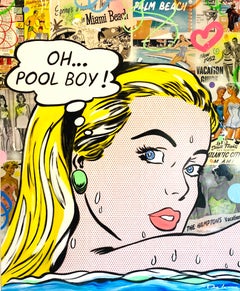
High Maintenance
By Nelson De La Nuez
Located in New York, NY
Mixed Media. Pop Art. Humorous. On canvas. About the Artist: NELSON DE LA NUEZ is one of the most sought-after contemporary Pop artists practicing today. His striking, vivi...
Category

2010s Pop Art Nelson De La Nuez More Art

Materials

Canvas, Mixed Media
Related Items
17th C, Baroque, Flemish School, Saint Francis in Ecstasy.Oil on oak panel.
Located in brussel, BE
During the Counter-Reformation, the traditional cult of saints was encouraged, and spiritual exercises were recommended to come closer to God. In the pai...
Category

17th Century Baroque Nelson De La Nuez More Art

Materials

Oil

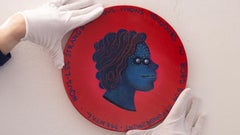
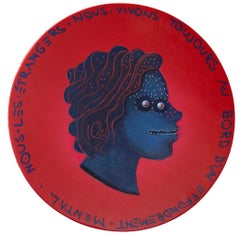
"Currency #201" Blue Portrait Artwork with French Text on Red Background
By Natasha Lelenco
Located in FISTERRA, ES
“Currency #201” is a circular mixed media portrait on wood featuring a surreal blue figure against a vibrant red background. Around the head, the French inscription reads: “Nous, les...
Category

2010s Pop Art Nelson De La Nuez More Art

Materials

Wood, Spray Paint, Acrylic

Dutch Old Master Portrait of Maurits, Prince of Orange-Nassau, Oil on Panel
Located in London, GB
In 1607, the Delft city council decided to commission a portrait of Stadholder Maurits of Nassau for the town hall, with Michiel van Mierevelt as the chosen artist due to the passing...
Category

17th Century Old Masters Nelson De La Nuez More Art

Materials

Oil, Wood Panel

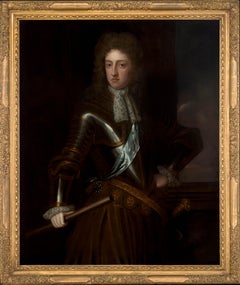
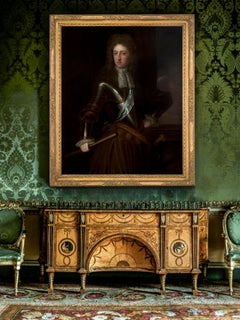
Portrait of a Gentleman, David Erskine, 13th Laird of Dun, Wearing Armour c.1700
Located in London, GB
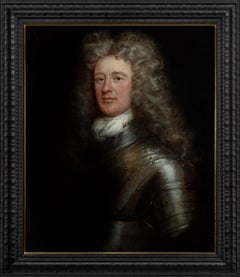
The gentleman in this exquisite oil on canvas portrait, presented by Titan Fine Art, is shown with the grandiloquence characteristic of the English School of painting. He is portray...
Category

17th Century Old Masters Nelson De La Nuez More Art

Materials

Oil, Canvas

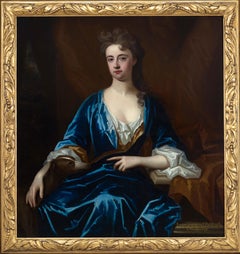
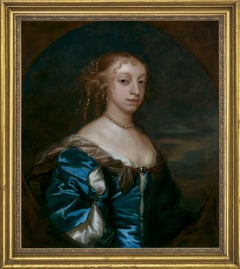
Portrait of Mary Hooper née Davie, Blue Dress, Seated in a Parkland, Provenance
By Jonathan Richardson the Elder
Located in London, GB
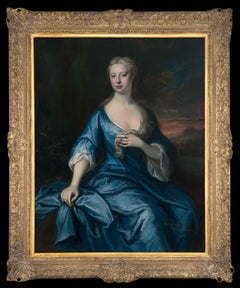
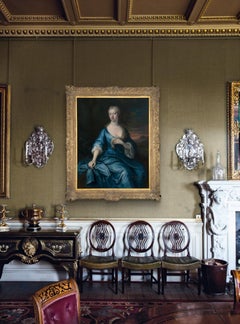
Portrait of Mary Hooper (née Davie) in a Blue Dress & Seated in a Parkland c. 1715–1725 Jonathan Richardson the Elder (1667–1745) This portrait, presented by Titan Fine Art, is of p...
Category

18th Century Old Masters Nelson De La Nuez More Art

Materials

Canvas, Oil

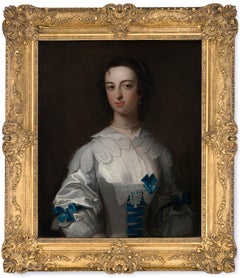
Portrait of a Young Lady in White Dress, probably British c. 1730–1740, painting
Located in London, GB
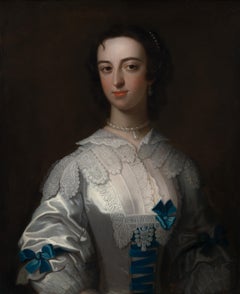
Portrait of a Young Lady, probably British c.1730–1740 Attributed to Jeremiah Davison (c. 1695–1745) What makes this portrait immediately compelling is its directness: the sitter’s ...
Category

18th Century Old Masters Nelson De La Nuez More Art

Materials

Oil, Canvas

Portrait of Lady, Barbara Herbert, Countess of Pembroke c.1708, Large Painting
Located in London, GB
Portrait of Barbara Herbert, Countess of Pembroke c.1708 Charles d’Agar (1669-1723) This magnificent large-scale portrait, presented by Titan Fine Art, depicts the British court of...
Category

17th Century Old Masters Nelson De La Nuez More Art

Materials

Cotton Canvas, Oil

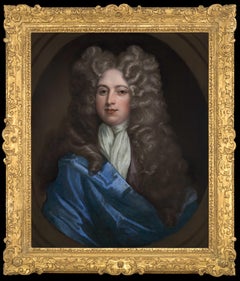
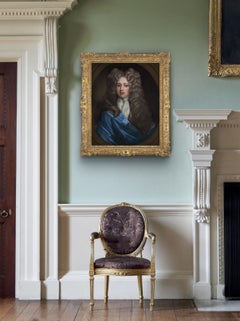
c.1700 Gentleman Portrait with Wig and Blue Cloak, Thomas Murray Oil Painting
Located in London, GB
Portrait of a Gentleman with Periwig and Blue Cloak c.1695-1710 Attributed to Thomas Murray (1663–1734) This accomplished oil-on-canvas portrait, presented by Titan Fine Art, was al...
Category

17th Century Old Masters Nelson De La Nuez More Art

Materials

Canvas, Oil

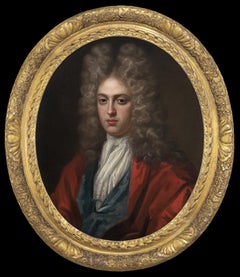
Portrait of a Gentleman in a Red Coat and Periwig, c.1715-1725; Godfrey Kneller
By Sir Godfrey Kneller
Located in London, GB
Portrait of a Gentleman in a Red Coat and Periwig, c.1715-1725 Studio of Sir Godfrey Kneller (1646–1723) This portrait of a gentleman, presented by Titan Fine Art, is a fine and wel...
Category

18th Century Old Masters Nelson De La Nuez More Art

Materials

Canvas, Oil

Portrait of lady, Mary Hammond in Rich Attire, Jewels, Lace c.1618-22 Historical
By Cornelius Johnson
Located in London, GB
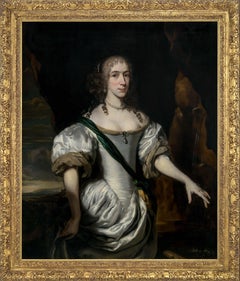
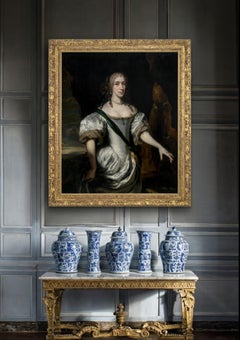
Portrait of Mary Hammond in Sumptuous Attire, Jewels and Lace c.1618-22 Circle of Cornelius Johnson (1593-1661) This portrait of a lady, presented by Titan Fine Art, is an exquisite example of early seventeenth-century portraiture, remarkable both for the lavishness of its subject’s attire and for the distinguished provenance that has accompanied it across four centuries that adds a rich layer of historical significance. It was once part of the notable collection of Sir William Temple, 1st Baronet (1628–1699) at Moor Park, a stately mansion in Hertfordshire. Temple was a diplomat, essayist, philosopher, and the patron of Jonathan Swift. He was a key participate at an important period in English history, helping not only to negotiate the Triple Alliance, but also the marriage between William of Orange and Princess Mary. His collection at Moor Park was well known in its day, reflecting both his cultivated taste in art and literature and his international connections. Its fabulous attire, rendered with almost microscopic attention, is not merely decorative but emblematic of a world in which visual display was a language of power. Its provenance, stretching from the English country house and Enlightenment scholarship to modernist circles, forms a microcosm of cultural exchange across four centuries. Thus, the portrait of Mary Hammond stands as both a masterpiece of early seventeenth-century craftsmanship and a witness to the grand narrative of collecting and connoisseurship—a testament to the enduring fascination of beauty, status, and history intertwined. By tradition the portrait depicts Mary Hammond (born c.1602), who was Sir William Temple’s mother, and the daughter of the royal physician who served James I, Dr John Hammond (c.1555–1617) and whose family owned Chertsey Abbey in Surrey. The woman appears between 18 and 25 years old, and Mary would be about 18–20 when the portrait was painted circa 1620, therefore this matches the apparent age of the sitter and the fashion perfectly. Mary stood at the intersection of learned/courtly and gentry worlds. On 22 June 1627 she married her first cousin (a common practice for consolidating family wealth and influence during that era.) Sir John Temple (1600-1677) at St Michael, Cornhill in the City of London. The couple resided nearby, at Blackfriars. Her marriage to Sir Temple placed her at the heart of the social and political circles that shaped British history. The couple had at least five children, and they became highly significant historical figures: The eldest son, Sir William Temple, 1st Baronet, became a distinguished diplomat, statesman, and essayist, famous for his role in the Triple Alliance and as a patron and mentor to the writer Jonathan Swift – our portrait was in his collection. Their daughter, Martha Temple, later Lady Giffard, was a notable figure in her own right. She became her brother William's first biographer and a respected letter-writer, providing a rare female perspective on the events and high society of the time. Another son, also named Sir John Temple, became Attorney General for Ireland and was involved in the turbulent politics surrounding the English Civil War and the Act of Settlement in Ireland. Mary died in November 1638 after giving birth to twins and was buried at Penshurst, Kent. The family's connection to Penshurst Place is a major point of interest as this historic manor was the seat of the Sidney family, a major aristocratic and literary dynasty. The portrait was in the collection of the Mary’s son, Sir William Temple. From there it descended to his daughter, and then to her nephew, the Reverend Nicholas Bacon of Spixworth Park, Norfolk (his mother was Dorothy Temple who died in 1758). Indeed, by this time, many Temple relics were in the collection at Spixworth including the engagement ring of the illustrious Dorothy Osborne, Lady Temple, wife of Sir William Temple. The portrait thus linked two prominent English families—the Temples and the Bacons—for generations. It is listed in a Spixworth Park inventory of 27 October 1910 by the local collector and art historian, Prince Duleep Singh. He described it with characteristic precision as: “No. 69. Lady Half Length, body and face turned towards the sinister, hazel eyes upwards to the dexter, red hair dressed low and over the ears, a jewelled coronet behind, pearl ear-rings tied with black strings. Dress: black, bodice cut low and square, with lace all round the opening and over shoulders, sleeves with double slashes showing red lining and lace under, falling thin pleated lace collar, black strings tied behind it, a jewel suspended on a black string round the neck, and a double row of agate and silver beads all round to the shoulders. M. In brown veined stone frame. Age 30. Date c.1620. It is called ‘Dutch portrait from Moor Park, mentioned by Nicholas Bacon of Coddenham and Shrubland as a very valuable painting.’ A few years later, when Robert Bacon Longe’s executors sold the contents of Spixworth Park (19–22 May 1912), the portrait appeared as lot 262, described as: “A very valuable half-length portrait on panel, ‘Dutch Lady, with deep lace collar and pearl and amethyst necklace, pendant, and ear-rings, and auburn hair, with coronet’ Early Dutch School 1620.” Following this sale the painting entered the collection of David and Constance Garnett, prominent literary figures of the early twentieth century, before being gifted to Andre Vladimervitch Tchernavin by 1949, and subsequently passed by him to the present owners in 1994. The two great houses associated with the painting, Moor Park and Spixworth Park, further underscore its pedigree. Moor Park, in Hertfordshire, was among the grandest country estates of seventeenth-century England—its gardens famously redesigned by Sir William Temple himself and later influencing landscape design across Europe. Sir William's Temple's secretary was Jonathan Swift, who lived at Moor Park between 1689 and 1699. Swift began to write "A Tale of the Tub" and "The Battle of the Books" at Moor Park. Spixworth Park, near Norwich, was an Elizabethan country house in Spixworth, Norfolk, located just north of the city of Norwich. It was home to successive generations of the Bacon family, one of Norfolk’s most distinguished dynasties (later, the Bacon Longe family), who were considerable land owners (owning Reymerston Hall, Norfolk, Hingham Hall, Norfolk, Dunston Hall, Norfolk, Abbot's Hall, Stowmarket, and Yelverton Hall, Norfolk). Spixworth Hall and the surrounding parkland remained in the Longe family for 257 years until 1952, when it was demolished. Rendered with meticulous precision and sumptuous detail, the painting depicts an elegantly dressed woman—her poise, costume, and jewels all communicating a message of wealth, refinement, and social rank. Every brushstroke conveys an artist deeply attuned to the textures of luxury and the nuances of feminine dignity. The sitter’s attire is nothing short of magnificent. Her bodice and sleeves are fashioned from the finest black silk or satin, the fabric absorbing and reflecting light in equal measure, suggesting both depth and lustre. Around her shoulders lies an opulent lace ruff—a deep, radiating lace collar worked in such intricate detail that it testifies to both the artist’s technical skill and the sitter’s extravagant taste. Lace of this quality, especially Venetian or Flemish bobbin lace, was one of the costliest materials available in early seventeenth-century Europe, its weight worth more than gold, and was a marker of prestige that rivalled jewels in value. The painter has taken great care to delineate every loop and scallop of the lace, achieving an almost tactile realism. Pale skin was also a desired beauty standard, sometimes accentuated with contrasting black ribbons or strings. Her jewels amplify this display of affluence. Matching earrings and a delicate coronet or jewelled hair ornament with a feather adorn her hair, which is styled in the modest yet fashionable manner of the time. These details are far from decorative excess—they serve as visual emblems of social standing, refinement, and lineage. Portraits of this kind were statements of both identity and aspiration, intended to project a family’s prosperity and moral virtue to posterity. The portrait was most likely painted in London around 1618-1622. The low-cut, décolletage-revealing neckline was fashionable in the courts of England and France during the late Elizabethan and Jacobean eras (c. 1590s-1610s), this style did not prevail in the public fashion of the Low Countries at this time. This style of lace ruff — delicate needle lace with geometric openwork — was fashionable from c.1615 to 1622, and the jewelled caul (hair net) and lace edging over a stiffened coif are consistent with high-status English women’s portraiture between 1610–1620. The puffed sleeve slash and the use of pink satin beneath black velvet belong squarely to the late Jacobean...
Category

17th Century Old Masters Nelson De La Nuez More Art

Materials

Oil, Panel

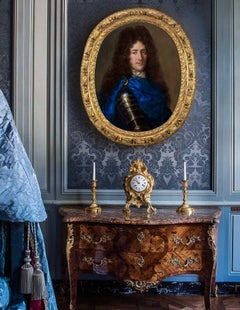
Portrait Gentleman Armour, Blue Cloak, Diamond Brooch c.1700 French Carved Frame
By Joseph Vivien
Located in London, GB
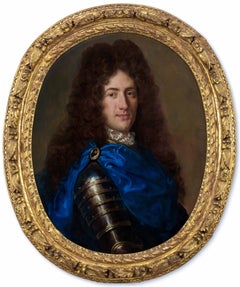
Portrait of a Gentleman in Armour and Azure Cloak with Diamond Brooch c.1700 Attributed to Joseph Vivienne (1657-1735) The sitter in this superb portrait, offered by Titan Fine Art...
Category

17th Century Old Masters Nelson De La Nuez More Art

Materials

Oil, Cotton Canvas

"James BOB" Pop Art James Dean Painting 66 x 52 inch by John Paul Fauves
By John Paul Fauves
Located in Culver City, CA
"James BOB" Pop Art James Dean Painting 66 x 52 inch by John Paul Fauves From "Alts iz farloyrn" ("All is lost") series 2019 Mixed media, acrylic and oil on canvas 66" × 52" inch "Alts iz farloyrn" ("All is lost") "Alts iz Farloyrn” – the latest series by John Paul Fauves featuring large-scale mixed media paintings, sculptures, and his famous art masks. Inspired by American idols James Dean and Steve McQueen, "Alts iz Farloyrn,” which translates to "All is Lost," was Steve McQueen’s first ever line on stage and represents Fauves own struggle with losing it all yet discovering his true self. “Alts iz Farloyrn” dives deep into the darkness that surrounded James Dean and Steve McQueen and explores their need to live fast. Through this new series, viewers are reminded that although both men overcame challenges to become the Hollywood elite, they struggled to mentally escape their troubled childhood and demons. Recognized internationally for his Neo-Pop Expressionism, Fauves paintings deal with identity through art, mainstream culture and social media. About this series, Fauves says “I have personally lost it all and what I’ve learned is when you lose it all you can win it all again and create a new beginning!” ABOUT John Paul FAUVES: John Paul Fauves (born in 1980) is a contemporary Artist from Costa Rica . His artistic journey started at a very young age after he became a student of Joaquin Rodriguez del Paso , one of the most important Costa Rican modern art tutors. John Paul spent 15 years studying and mastering his technique, and only a few years ago he finally started showcasing his work. In his paintings he engages questions of identity as they relate to art history as well as our everyday interactions with mainstream culture and social media. Greatly inspired by modernist masters as wellas pop-artists, Fauves mixes fragments of different iconic images in vivid and colourful compositions. Of his experimental and high eclectic style, he says, “art is an expression from the soul, and the soul is somethinglimitless. This is why I am always searching for different elements to bring into the work.” 2019: ​ Alts Iz farloyrn, Los Angeles, CA Portraits of Someone, London ​ ​ 2018: ​ [ Mi / Me ] solo exhibition at DOPENESS ART LAB, Taipei, Taiwan Arte de La Peer Papi Chulo group exhibition, Krause gallery, NYC Down the Rabbit Hole group exhibition, Imitate London, London, UK ARCO Madrid Art Palm Beach, Miami ​ 2017: ​ Art Basel Miami PIXELS Pre-Basel group exhibition by JM Art Management at Laurent & Martin gallery LA Style Fashion week FACES, group exhibition by JM Art Management at HOMME gallery A Loss of Innocence, solo exhibition Guy Hepner...
Category

21st Century and Contemporary Pop Art Nelson De La Nuez More Art

Materials

Canvas, Mixed Media, Oil, Acrylic

Nelson De La Nuez more art for sale on 1stDibs.

Find a wide variety of authentic Nelson De La Nuez more art available for sale on 1stDibs. You can also browse by medium to find art by Nelson De La Nuez in canvas, fabric, mixed media and more. Much of the original work by this artist or collective was created during the 21st century and contemporary and is mostly associated with the Pop Art style. Not every interior allows for large Nelson De La Nuez more art, so small editions measuring 47 inches across are available. Customers who are interested in this artist might also find the work of Erró, Laurence de Valmy , and Karen Barton.