Title: 18th Century Ethnological Engravings of Peruvians and Ecuadorians
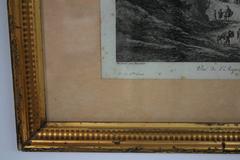
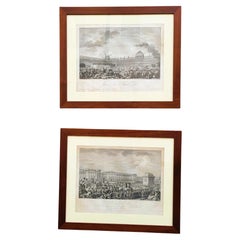
Description: These two 18th-century engravings, printed in 1756, are detailed depictions of the social and cultural life in Peru and Ecuador during the colonial era. Created by Quentin-Pierre Chedel (1705–1762), they are part of Histoire générale des voyages by Antoine François Prévost, a monumental collection that documented the world's exploration and cultural encounters.
First Engraving (Residents of Peru):
This print illustrates the residents of Lima, Peru, highlighting the various social classes and ethnic groups present in the region during the colonial period. The detailed engraving captures:
A. Femme de Lima en Habit de Ville – A woman from Lima in formal city dress, representing the elite of society.
B. Femme en Habit de Ménage – A woman in household dress, typical of a middle or upper-class domestic attire.
C. Espagnol vêtu comme on l’est au Pérou – A Spanish man dressed as one would in Peru, showing the influence of Spanish colonial fashion on local attire.
D. Mulatresse – A woman of mixed African and European descent, reflecting the diverse ethnic makeup of colonial Peru.
E. Nègre Domestique – A domestic servant of African descent, showcasing the role of enslaved individuals in colonial households.
The scene is set in a lush, natural landscape, with attention to the differences in social standing and attire.
Second Engraving (Residents of Quito, Ecuador):
The second engraving, although similar in style, depicts residents of Quito, Ecuador, and provides an ethnological view of the city’s diverse inhabitants. The composition shows:
1. Espagnole de Quito – A Spanish woman of high status, dressed elegantly, representing the colonial upper class in Quito.
2. Indienne de Distinction – An Indigenous woman of notable status, likely representing the local nobility or important community figures.
3. Barbier Indien – An Indigenous barber, reflecting the occupational diversity and social roles of the Indigenous population in colonial society.
4. Métive de Quito – A Métis woman from Quito, showing the mixed-race population that emerged during the colonial era.
5. Paysan Indien – An Indigenous farmer, indicating the essential role of agriculture and rural labor in the economy of colonial Ecuador.
6. Indienne du Commun – A common Indigenous woman, dressed in traditional attire, representing the majority of the Indigenous population.
Like the first engraving, this print captures the varied ethnic and social dynamics in a colonial society, with figures placed in a landscape setting, emphasizing the connection between people and their environment.
These engravings are not only artistic representations but also important historical records of colonial Latin America...
Category
Mid-18th Century French Antique Furniture