By Niklaus Stoecklin
Located in Zurich, CH
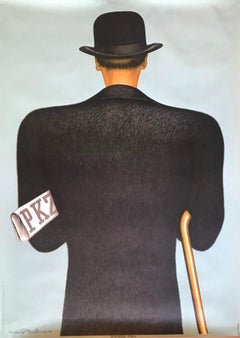
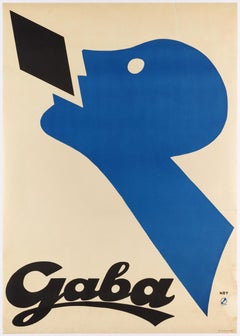
The story of this iconic poster by Niklaus Stoecklin (linocut, printed 1927 by Benno Schwabe in Basel) dates back to 1638 when the Goldene Apotheke (Golden Pharmacy) was founded in Basel (that's why GABA). The pharmacy is still active, and its spin-off today produces – for example – the Elmex toothpaste (every Swiss knows Elmex).
But back to the topic: 1846, on a study trip to America, Basel physician Dr. Emanuel Wybert observes how Indians cure their colds by chewing licorice roots. He then develops small diamond-shaped pastilles based on licorice and passes the recipe on to the Goldene Apotheke, which sells the first "Wybertli" in 1846. In 1910, they were renamed "Gaba tablets", industrially produced and advertised as a brand – using soon Stoecklin's radical and timeless poster design created 1927 as the trademark. It just fit perfectly with the incipient establishment of branded goods demanding images without any unmistakable characteristics of an artist's hand and inscribing the products in the collective memory.
Stoecklin (1896 - 1982) was trained amongst others by Burkhard Mangold, one of the three or four most important artists who cleared out the Swiss poster and brought it into the modern age. However, Gaba's scarcity isn't typical for Stoecklin's poster work, even when it is one of his catchiest designs. Today he is most known for being a highly influential representative of the New Objectivity and the hyperrealism style as well as the father of the Basel school which laid the foundation for the Swiss version of the "Sachplakat" (well, Otto Baumberger from Zurich had his merits too) which elevated everyday objects to icons developing a mysterious life of their own through sophisticated compositions and a very detailed rendering (that required excellent printers, by the way). Some notable Swiss poster designers such as Peter Birkhäuser...
Category
1920s Modern Niklaus Stoecklin Art