Ohara Koson Paintings

Japanese, 1877-1945

Ohara Koson was a prolific printmaker of the 20th century widely known for his kacho-ga, bird and flower prints. During his study with Kason, he took his artist name Koson, a partial adaptation of his teacher's name. Early in his career, many of Koson’s prints were muted in color and captured a sense of calmness and elegance. Koson’s depiction of birds are very realistic, the details of body and feathers in particular were always depicted with meticulous care.

to
1
1
Overall Width
to
Overall Height
to
1
1
1
1
1
1
1
1
1
1
1
1
1
1
8
757
752
733
671
1
Artist: Ohara Koson
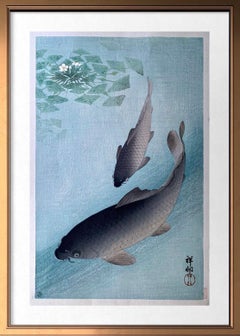
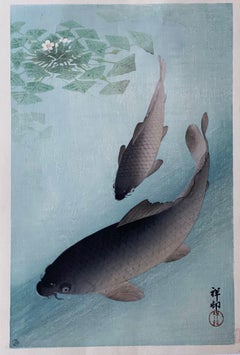
Authentic Life Time Edition Woodblock Print-Two Carps and Water Chestnut-Mint

Authentic Life Time Edition Woodblock Print-Two Carps and Water Chestnut-Mint

By Ohara Koson

Located in London, GB

This is an authentic Japanese woodblock print by Ohara Koson (Shoson), titled Two (koi) Carp or Carp and Water Chestnut; originally created in the early 20th century, depicts two car...

Category

1940s Edo Ohara Koson Paintings

Materials

Ink, Washi Paper, Woodcut

Related Items
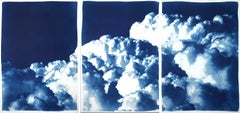
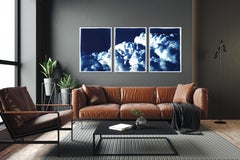
Blue Tones Triptych, Serene Gorgeous Clouds, Handmade Cyanotype Watercolor Paper

Blue Tones Triptych, Serene Gorgeous Clouds, Handmade Cyanotype Watercolor Paper

By Kind of Cyan

Located in Barcelona, ES

This series of cyanotype triptychs showcases the beauty of nature scenes, including stunning beaches and oceans, as well as the intricate textures of w...

Category

2010s American Realist Ohara Koson Paintings

Materials

Emulsion, Lithograph, Monotype, Handmade Paper

Two Actors - Japanese Woodblock by Chikanobu Yoshu

Two Actors - Japanese Woodblock by Chikanobu Yoshu

By Toyohara Chikanobu

Located in Soquel, CA

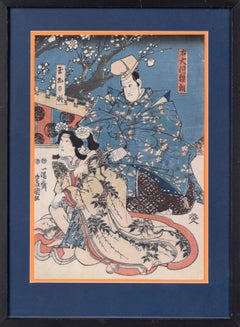
Two Actors - Japanese Woodblock by Toyohara Chikanobu (豊原周延, 1838–1912), better known to his contemporaries as Yōshū Chikanobu (楊洲周延). Colorful and expressive court scene. Two actors...

Category

1890s Edo Ohara Koson Paintings

Materials

Ink, Rice Paper, Woodcut
3 Panel Hand Colored Japanese Woodcut Print Lithograph

Keisai Eisen3 Panel Hand Colored Japanese Woodcut Print Lithograph

$920Sale Price|20% Off

H 12 in W 23 in D 0.5 in

3 Panel Hand Colored Japanese Woodcut Print Lithograph

By Keisai Eisen

Located in Soquel, CA

3 Panel Hand Colored Japanese Woodcut Print Lithograph Three panel hand colored woodcut lithograph from Nanso Satomi hakkenden, Tale of the Eight Dogs...

Category

Early 19th Century Edo Ohara Koson Paintings

Materials

Paper, Ink, Woodcut

Page from "Spring View in Takanawa" Mid 18th Century Ukiyo-e Print

Page from "Spring View in Takanawa" Mid 18th Century Ukiyo-e Print

By Utagawa Kunisada (Toyokuni III)

Located in Soquel, CA

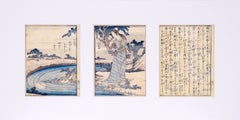
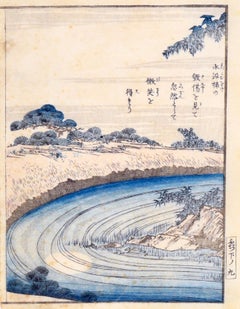
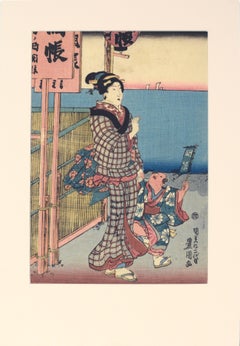
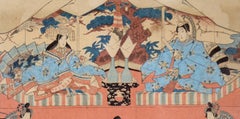
Page from "Spring View in Takanawa" Mid 18th Century Ukiyo-e Print Left page from the triptych print "Spring View in Takanawa" by Utagawa Kunisada (Toyokuni III) (Japanese b. 1786 d...

Category

1840s Edo Ohara Koson Paintings

Materials

Printer's Ink, Mulberry Paper, Woodcut

Kiyomizu Temple, Scenes of Famous Places along Tôkaidô Road - Woodblock on Paper

Kiyomizu Temple, Scenes of Famous Places along Tôkaidô Road - Woodblock on Paper

By Utagawa Hiroshige II

Located in Soquel, CA

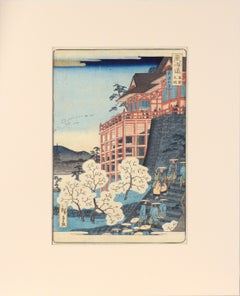
Kiyomizu Temple, Scenes of Famous Places along Tôkaidô Road - Woodblock on Paper Full Title: Kyoto: Kiyomizu Temple (Kyô Kiyomizudera), from the series Scenes of Famous Places along...

Category

1860s Edo Ohara Koson Paintings

Materials

Ink, Rice Paper, Woodcut
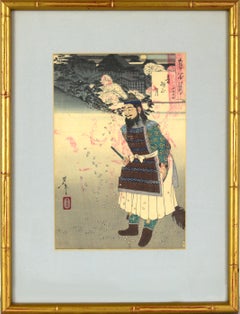
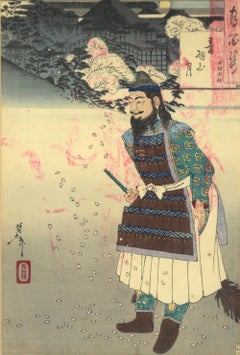
One Hundred Aspects of the Moon, Mt Otawa Moon - Bright God Tamura

One Hundred Aspects of the Moon, Mt Otawa Moon - Bright God Tamura

By Tsukioka Yoshitoshi

Located in Soquel, CA

"Mount Otawa Moon: Bright God Tamura" - Woodblock on Paper by Tsukioka Yoshitoshi From the series "One Hundred Aspects of the Moon" This piece depicts the general Sakanoe no Tamura...

Category

1880s Edo Ohara Koson Paintings

Materials

Paper, Ink, Woodcut

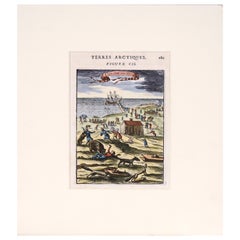
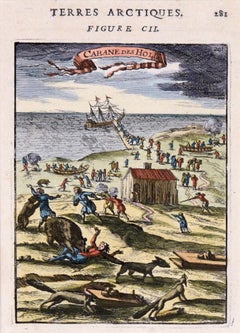
Rare Hand Colored "Cabane Des Hold" - 1st Ed "Description de l’Univers" C. 1683

Rare Hand Colored "Cabane Des Hold" - 1st Ed "Description de l’Univers" C. 1683

By Alain Manesson Mallet

Located in Soquel, CA

Rare Engraving "Cabane Des Hold, Terres Artiques, Fig CII," 1st edition "Description de l’Univers, page 281 This rare image depicts the Willem Barentsz expedition of 1597 to Novaya Zemlya, Russia. The engraving, with later hand-coloring, shows the cabin and ship of the Dutch arctic expedition of Barentsz on Novaya Zemlya (Nova Zembla), with the party being attacked (and in some cases apparently eaten) by bears and wolves. Dutch explorer, Willem Barentsz, reached the west coast of Novaya Zemlya in 1594, and in a subsequent expedition of 1596 rounded the northern point and wintered on the northeast coast. Barentsz died during the expedition, and may have been buried on the northern island. This artwork is a page from a book by 17th century cartographer and engineer, Allain Manesson Mallet (French, 1630-1706), "Description de L'Univers, contenant les differents systêmes du monde, les cartes générals et particulières de la géographie ancienne et modern." Paris: Denys Thierry, 1683. Presented in an cream colored mat. Text on verso shown in images. Mat Size: 11.5"H x 9.07"W Paper Size: 8.25"H x 5.44"W Image Size: 5.63"H x 3.75"W Alain Manesson Mallet (French, 1630-1706) was a 17th century cartographer and military engineer. He started his career as a musketeer in the army of Louis XIV, became a Sergeant-Major in the artillery and an Inspector of Fortifications. He later served under Alfonso VI, King of Portugal...

Category

1680s Realist Ohara Koson Paintings

Materials

Paper, Ink, Gouache

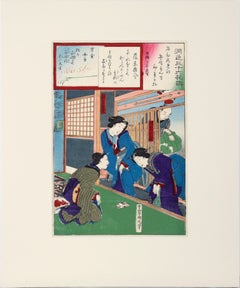
"Enshoku Sanju-roku Kasen" (Thirty-six Enchanting Flowers) Woodblock on paper

"Enshoku Sanju-roku Kasen" (Thirty-six Enchanting Flowers) Woodblock on paper

By Toyohara Kunichika

Located in Soquel, CA

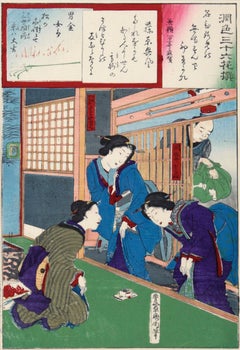
"Enshoku Sanju-roku Kasen" (Thirty-six Enchanting Flowers) Woodblock on paper Elegant woodblock print by Toyohara Kunuchika (Japanese, 1835-1900). Three women are in talking with each other inside, while a man waits outside holding a bag of some kind. The colors in this piece are rich and saturated, primarily blues, greens, and purple. Mat size: 16"H x 20"W Paper size: 14.75"H x 9.88"W Born in 1835, Toyohara Kunichika grew up in the Kyobashi district of Edo in the midst of merchants and artisans. In 1848, at age 13, he was accepted as an apprentice into the studio of Utagawa Kunisada I...

Category

1880s Edo Ohara Koson Paintings

Materials

Ink, Rice Paper, Woodcut
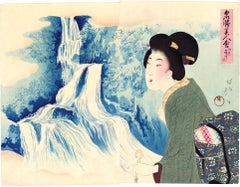
Japanese Beauty Admiring Kirifuri Waterfall

Yoshu ChikanobuJapanese Beauty Admiring Kirifuri Waterfall, 1898

$940Sale Price|20% Off

H 14.02 in W 18.67 in

Japanese Beauty Admiring Kirifuri Waterfall

By Yoshu Chikanobu

Located in Burbank, CA

A beauty turns to admire the Kirifuri Waterfall in Nikko Province. She holds the handle of an umbrella and wears fashionable clothing that is beautifully printed. This series pairs f...

Category

1890s Edo Ohara Koson Paintings

Materials

Handmade Paper, Mulberry Paper, Woodcut

Mu-Tamagawa
Mu-Tamagawa

Mu-Tamagawa

Located in Middletown, NY

Woodcut in ink with embossing and hand-coloring in watercolor on laid Japon paper, 16 x 10 inches (406 x 253 mm), ōban tate-e, full margins. Scattered handling wear and toning, other...

Category

Late 19th Century Edo Ohara Koson Paintings

Materials

Watercolor, Handmade Paper, Woodcut

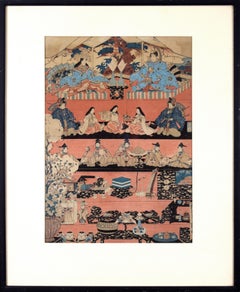
"Various Himochi" Wagashi Festival Japanese Woodblock Print by Utagawa Toyokuni

"Various Himochi" Wagashi Festival Japanese Woodblock Print by Utagawa Toyokuni

By Utagawa Toyokuni

Located in Soquel, CA

"Various Himochi" Wagashi Festival Japanese Woodblock Print by Utagawa Toyokuni Rare oversized early 19th century 5-tiered woodblock by Utagawa Ichiyosai Toyokuni, (Japan, 1769-1825), a Japanese lord and wife oversee a sekku festival of food, music, and dolls or toys. '"oshi" is the first day of “Mi (Snake)” in the third month of the lunar calendar. This day, known in modern Japan as the Girls' Festival, originated in China as a form of purification ceremony in which water and drinking peach blossom wine were used to drive away evil. Many kinds of hishi-mochi appear in this picture of hina ningyo (dolls associated with Hinamatsuri, or the Girl’s Day) from Omochae. The custom of eating special dishes at events throughout the year and at milestones in people's lives has existed since ancient times. This paragraph specifically focuses on the annual event called sekku, and life events that involve eating sweets. Joshi is the first day of “Mi (Snake)” in the third month of the lunar calendar. This day, known in modern Japan as the Girls' Festival, originated in China as a form of purification ceremony in which water and drinking peach blossom wine were used to drive away evil. According to the Keiso saijiki, in ancient China, on the third day of the third lunar month, people ate “ryuzetsuhan,” which is the juice of gogyo (Jersey cudweed) mixed with rice flour and nectar. In Japan, there is a record in the Heian period history book Nihon Montoku tenno jitsuroku [839-5] that it was an annual event to make kusamochi using gogyo on the third day of the third month of the lunar calendar, which may have been influenced by Chinese customs. The tradition of eating kusamochi on the third day of the third month of the lunar calendar continued after that. By the Edo period, however, hishimochi had come to be used as a sweet to serve on the third day of the third month. A picture of a hishimochi is included in the Morisada manko , which we mentioned in Part 1. According to it, hishimochi in the Edo period were often three layers of green-white-green instead of the now common red-white-green. However, it is possible to see from our collection that not all hishimochi were made in this way. Omochae published in 1857, is a good example. Omochae is a type of ukiyoe print...

Category

1820s Edo Ohara Koson Paintings

Materials

Ink, Rice Paper, Woodcut
Ohara Koson paintings for sale on 1stDibs.

Find a wide variety of authentic Ohara Koson paintings available for sale on 1stDibs.