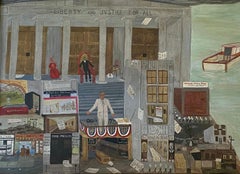
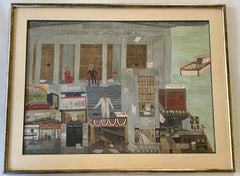
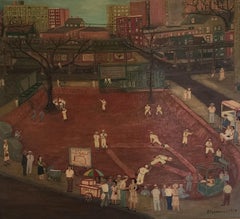
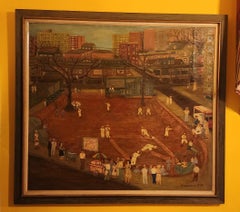
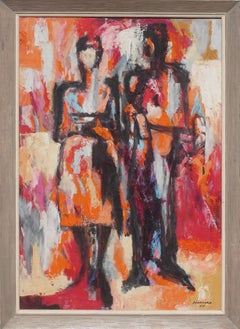
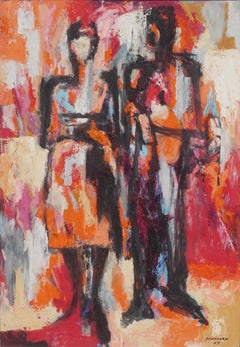
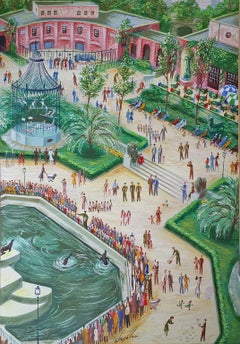
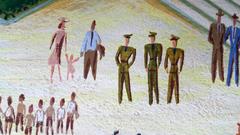
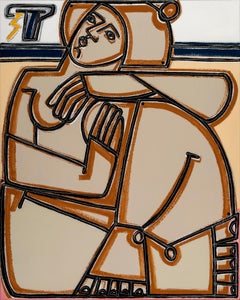
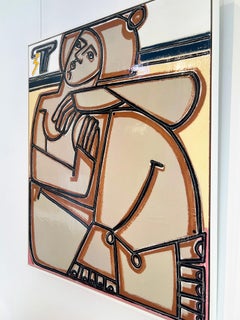
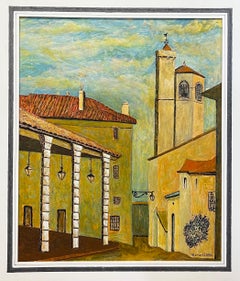
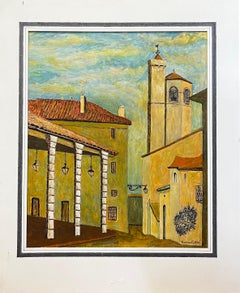
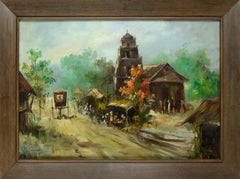
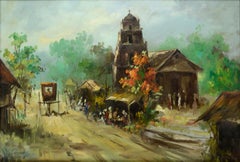
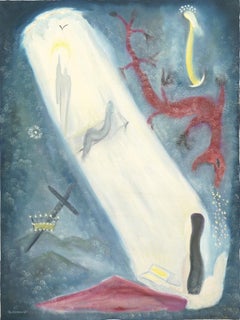
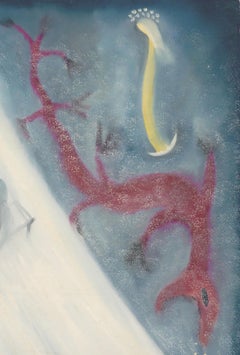
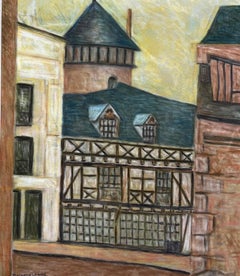
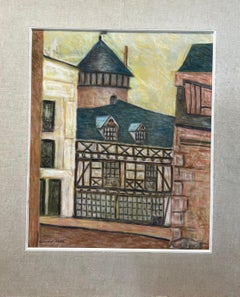
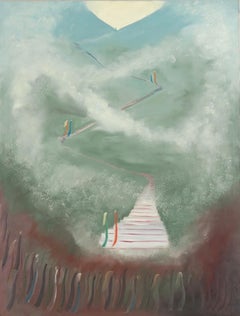
By Ralph Fasanella
Located in Saratoga Springs, NY
Signed lower right and dated 1954.
Bio:
FASANELLA, RALPH (1914-97) was a self-taught painter who created large, colorful and intricate paintings of working-class culture and American politics from 1945 until his death in 1997.
Fasanella had an artistic vision born of a working life. A child of Italian immigrants, he spent his youth delivering ice with his father and enduring the harsh regimen of a Catholic reform school. During the Great Depression, Fasanella worked in garment factories and as a truck driver.
From his mother—a literate, sensitive, and progressive woman, Fasanella acquired a social conscience. Through her influence he became active in antifascist and trade union causes. Fasanella's political beliefs were radicalized by the Depression. His antifascist zeal led him to volunteer for duty in the International Brigades fighting fascism in Spain, where he served in 1937-1938.
Upon his return to New York City Fasanella became an organizer for various unions, particularly the United Electrical, Radio, and Machine Workers of America, with whom he achieved some major organizing successes.
In 1945, disillusioned by the labor movement and plagued by a painful sensation in his fingers, Fasanella started to draw. He left organizing and began to paint full time. He painted obsessively, capturing the vibrant moods of the city and the tumult of American politics. For a brief time he received some critical notice for his work, and had shows of his work in galleries as well as union halls. Fasanella included in his paintings a profusion of brightly colored details, showed interiors and exteriors simultaneously, and combined past and future. He populated his paintings with likenesses of family and friends.
In 1950 Fasanella married Eva Lazorek, a schoolteacher who supported the couple through over two decades of artistic obscurity and blacklisting by the FBI. In the 1950s Fasanella retreated from political content in his works out of fear of reprisals. With the emergence of the New Left in the 1960s, however, his works became large, sharply focused political essays using images from the popular media. In 1972 Fasanella was featured in "New York" magazine and in an illustrated coffee-table book, "Fasanella's City". His large-scale, intricate paintings of urban life and American politics were then introduced to art critics and the public.
In the late 1970s Fasanella spent two years in Lawrence, researching the 1912 Bread and...
Category
1950s Other Art Style Ralph Fasanella Paintings