Located in Lymington, Hampshire
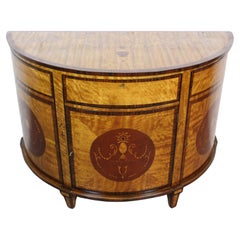
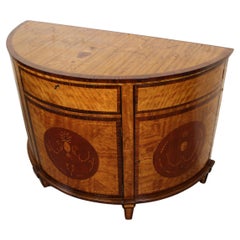
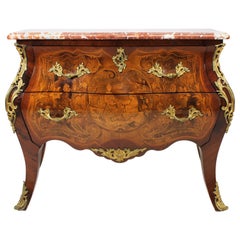
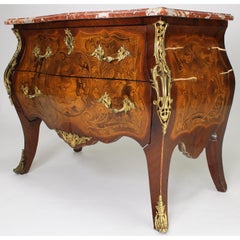
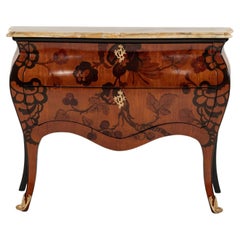
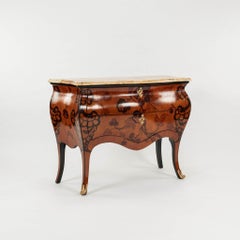
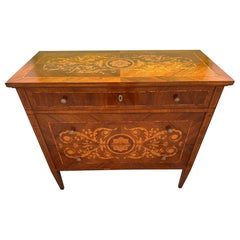
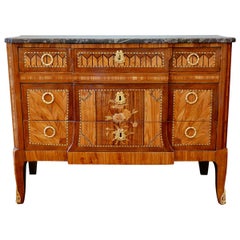
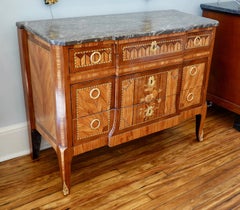
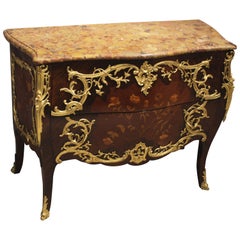
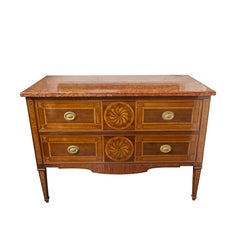
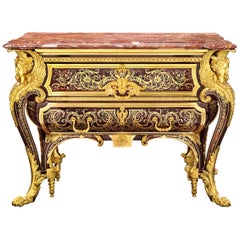
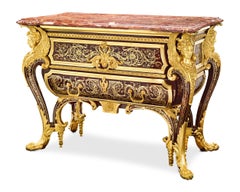
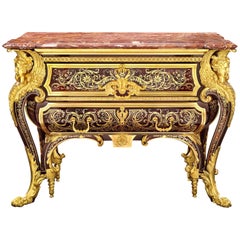
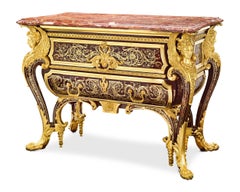
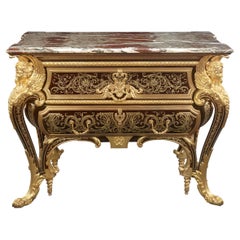
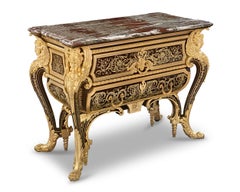
An Exceptional Edwardian Satinwood Commode, Reproducing Thomas Chippendale’s Piece-Known as the Diana and Minerva Commode-Supplied to the Lascelles Family at Harewood House
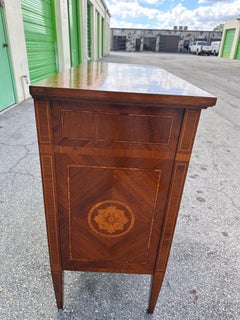
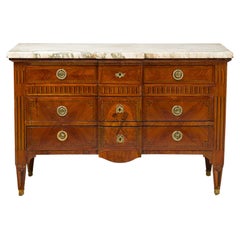
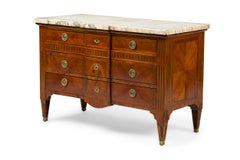
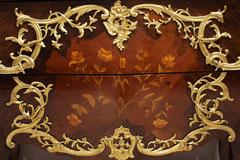
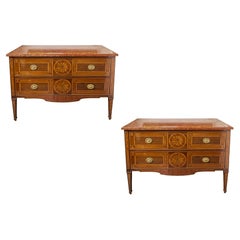
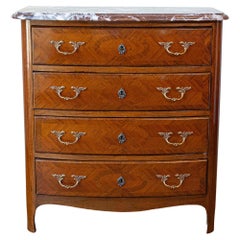
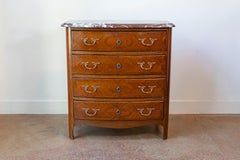
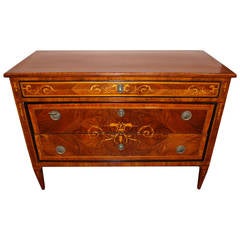
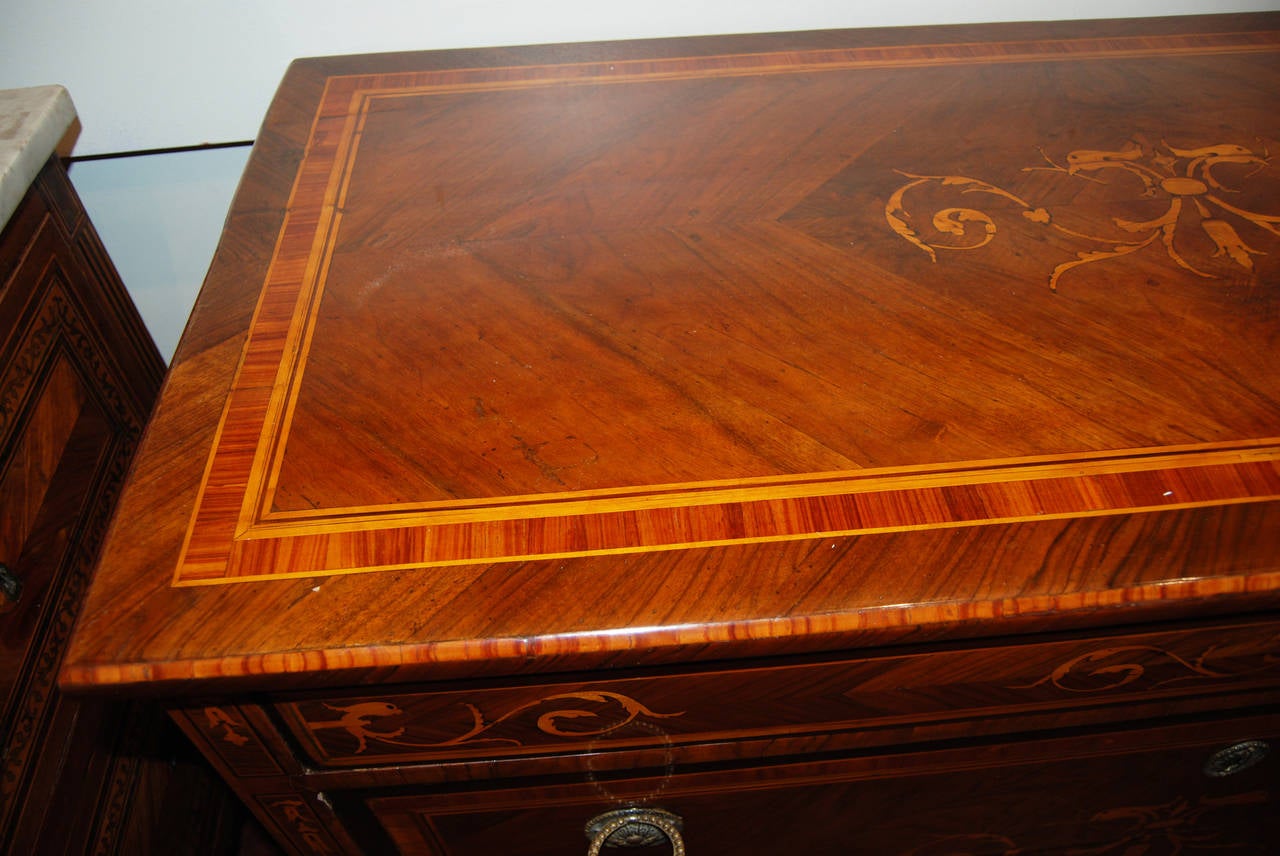
A satinwood Sheraton Revival breakfront marquetry commode, the shaped marble top above one long drawer flanked by two concave drawers decorated with inlaid festoons, all above a recessed, arched central drawer and concave side-cupboard doors, decorated in fruitwood and hardwood marquetry with crossbanding, bellflower garlands and classical motifs centred on roundels depicting Diane and Minerva with mother-pearl and bone detailing, applied with ormolu mounts and raised on six carved square-section legs, the locks on one drawer marked ‘Hobbs & Co’. English, circa 1900.
Ivory reference number: A89CGW1D
Published: Christopher Payne, ‘British Furniture 1820-1920: The Luxury Market.’ Woodbridge, 2023, p. 436, pl. 8.89.
Acknowledged as one of Chippendale’s finest documented pieces, the Diana and Minerva commode was supplied for the State Bedroom at Harewood House in 1773.
Our example faithfully reproduces the spirit and decorative impact of Chippendale’s original-including the wonderful inlaid ivory panels-whilst adding a very practical marble top.
For a very similar commode see the 1900 painting ‘Sir George Sitwell, Lady Ida Sitwell and Family’ by John Singer Sargent. The locksmiths’ company of Hobbs & Co of London was actually founded by an American salesman and inventor for Jones & Newell of New York. Boston born Alfred Charles Hobbs (1812-1891) created quite a stir at the Great Exhibition of 1851 when he picked the ‘impregnable’ locks of both Bramah and Chubb! Making the most of his fame, he registered his own company, Hobbs and Co...
Category
Early 1900s English Sheraton Antique Robert Blake Furniture