By Robert Ingersoll Aitken
Located in Shippensburg, PA
ROBERT INGERSOLL AITKEN
United States, 1878-1949
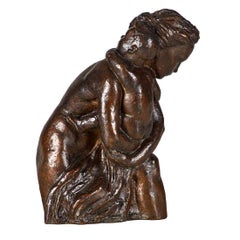
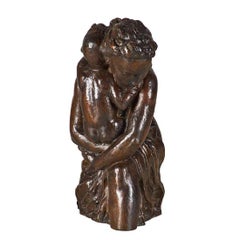
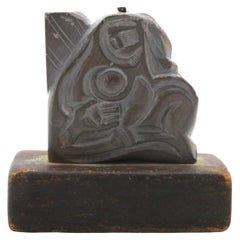
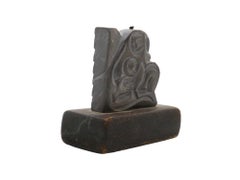
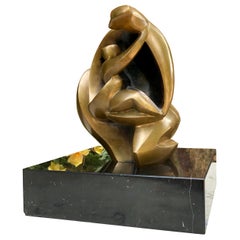
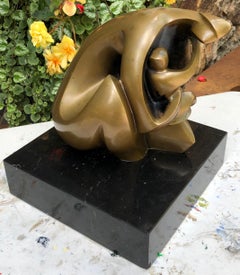
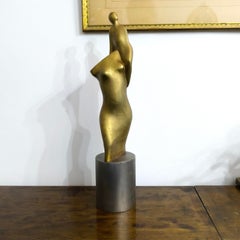
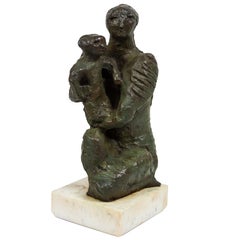
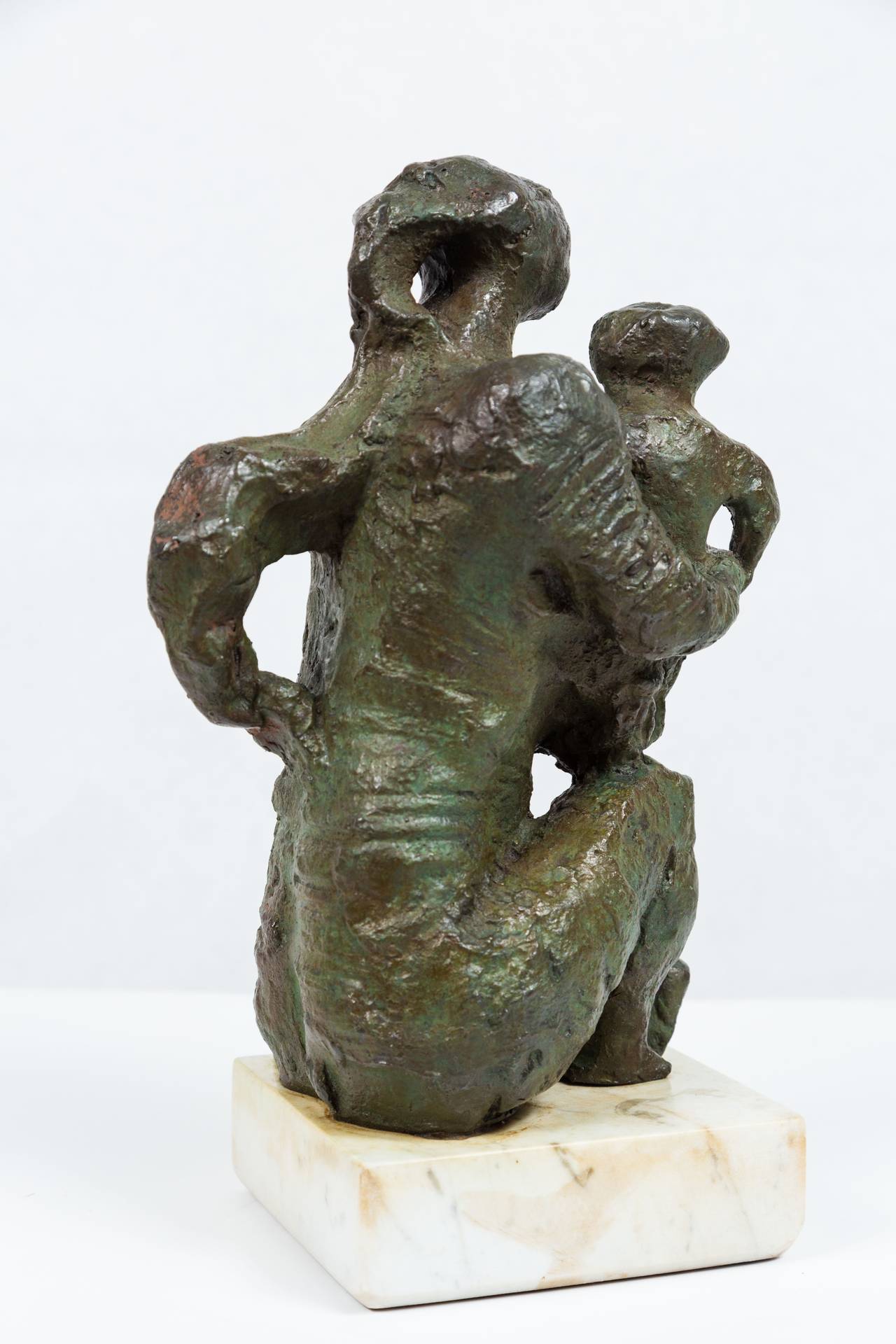
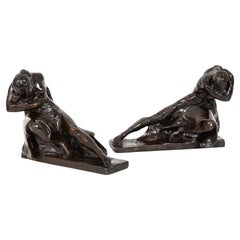
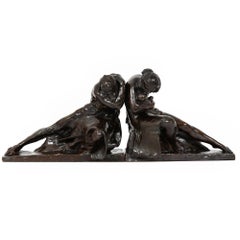
"Humanity: Man and Woman"
Lost-wax cast and patinated bronze with foundry mark for Roman Bronze Works N.Y., signed AITKEN on each, with cast "V" mark to base edge
Item # 407LXP09A
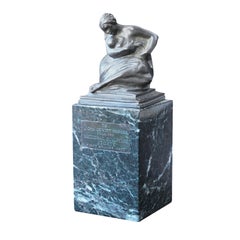
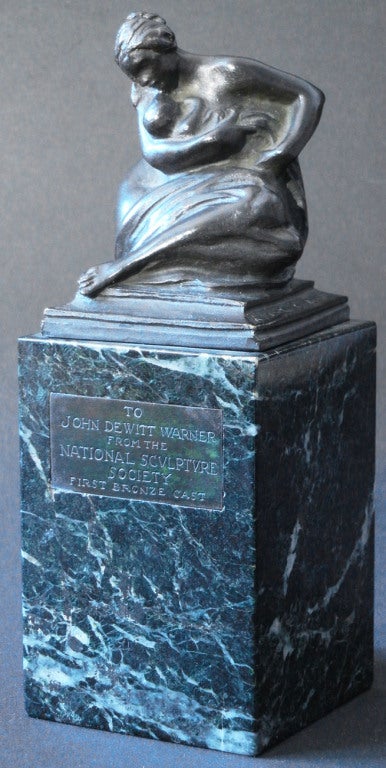
A rare and fine pair of bookends by the famous luminary of American sculpture, Robert Ingersoll Aitken. The model is entitled "Humanity" in the first it captures the infinite love of woman, the tenderness of her embracing the babe clutched in the crook of her arm, the protective nature as she shields the child with her entire body, her leg outstretched to balance herself as she bends in to kiss the child on the forehead. The man has his leg outstretched in defense, a war-like posture with his arm brought fiercely in to protect his face from an attack as intensity rules his brow.
The models are a picture of opposites, a juxtaposition of archetypes: war and peace, love and rage, tension and serenity.
Designed as bookends to rightly oppose one another, a casting of the same pair is held in the permanent collection of the National Gallery of Art. The present pair are finished in a wonderful chaotic surface patina that is overall dark brown and black with hints of oranges and reds, stretches of vibrant greens and a full spectrum of hues in between.
ROBERT INGERSOLL AITKEN
Born on May 8th of 1878, Robert Ingersoll Aitken studied at the Mark Hopkins Institute of Sculpture in San Francisco. He took a job teaching at the institute, replacing Douglas Tilden, the teacher of sporting sculpture at the institute. He started exhibiting his own work in 1896 and just after the turn of the century he spent three years in Paris studying sculpture. He subsequently returned to the United States where he settled in New York City and became an instructor at the National Academy of Design in New York and at the Art Students League. He was a representational sculptor who spoke boldly through his work about the moment he was a part of, incorporating the newest technologies and ideas into his work, coming to age in the midst of the revolution in sculpture towards Modernism. Always on the cusp of the newest thought and invention, in 1915 he made a stir in his Fountain of the Earth, which incorporated lights and jets of steam to create drama and awe. His modernist busts...
Category
Early 20th Century American Robert Ingersoll Aitken