Ryosuke Harashima Cabinets

to
Height
to
Width
to
Depth
to
1
1
1
1
1
1
1
1
1
1
20
80
80
72
67
Creator: Ryosuke Harashima
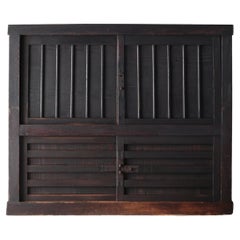
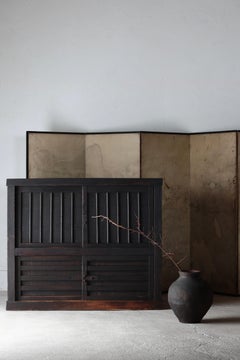
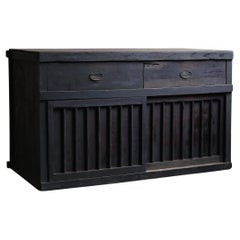
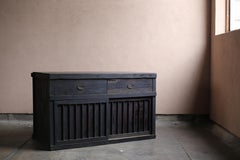
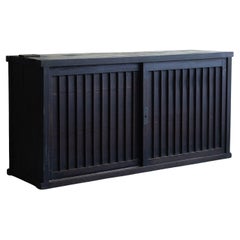
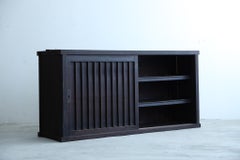
Cabinet Ryosuke Harashima Contemporary Zen Japanese Craft Mingei

Cabinet Ryosuke Harashima Contemporary Zen Japanese Craft Mingei

By Ryosuke Harashima

Located in Shibuya-ku, Tokyo

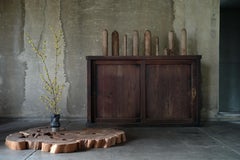
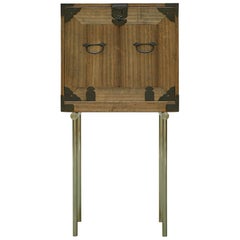
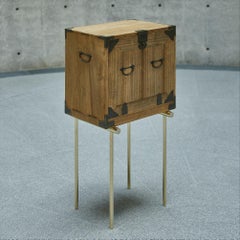
Cabinet by Ryosuke Harashima. Name: Casa Do Walk Collection: STILLIFE A chest for ship with a key door. With four legs that imitate a stilt building structure, it looks like a house that going to walk. STILLIFE STILLIFE is not to redesign old Japanese folk tools but also to have a dialogue with the tools. Morphing "old folk tools" into a "more attractive still life" by giving it a modern interpretation. "Tsukumo God" which we Japanese...

Category

2010s Japanese Edo Ryosuke Harashima Cabinets

Materials

Brass

Related Items
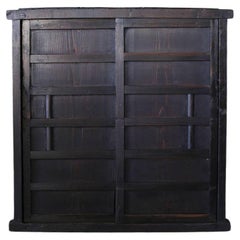
Japanese Antique Simple Large BK Tansu 1860s-1900s / Cabinet Sideboard

Japanese Antique Simple Large BK Tansu 1860s-1900s / Cabinet Sideboard

Located in Sammu-shi, Chiba

This is an antique Japanese chest of drawers. It features a simple design with only carved handles. It is a very old chest of drawers, and while it remains largely in its original c...

Category

Mid-19th Century Japanese Edo Antique Ryosuke Harashima Cabinets

Materials

Cedar

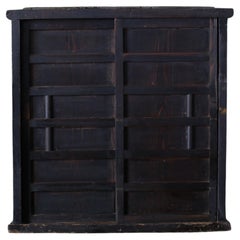
Japanese Antique BK Tansu 1860s-1900s ③ / Cabinet Sideboard Wabi Sabi

Japanese Antique BK Tansu 1860s-1900s ③ / Cabinet Sideboard Wabi Sabi

Located in Sammu-shi, Chiba

This chest of drawers is one of a set of three that were used in the same old Japanese house. Judging by its current condition, it appears to be quite old. While preserving its origi...

Category

Early 20th Century Japanese Edo Ryosuke Harashima Cabinets

Materials

Cedar

Japanese Cabinet, 1930s

Japanese Cabinet, 1930s

$1,434

H 31.5 in W 25.6 in D 14.18 in

Japanese Cabinet, 1930s

Located in Amsterdam, Noord Holland

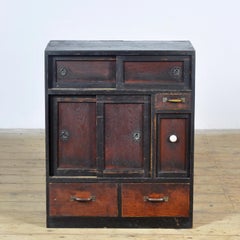
This Japanese cabinet with drawers and sliding doors is an attractive eye-catcher for any interior. Crafted from solid wood, it boasts a beautiful, we...

Category

1930s Japanese Japonisme Vintage Ryosuke Harashima Cabinets

Materials

Elm

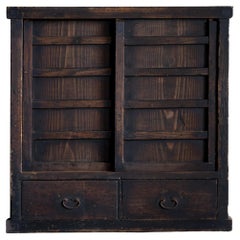
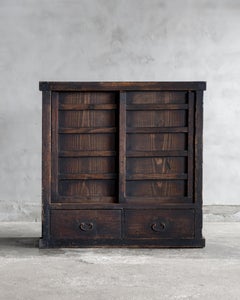
Japanese Antique Large Black Tansu / Cabinet Sideboard / 1800-1868s / Wabi-Sabi

Japanese Antique Large Black Tansu / Cabinet Sideboard / 1800-1868s / Wabi-Sabi

Located in Iwate-gun Shizukuishi-cho, Iwate Prefecture

This is an old Japanese cabinet called a tansu. It is made of cedar and is thought to date from the Edo or Meiji period. The doors have a simple, unified design, with vertical bars ...

Category

Mid-19th Century Japanese Edo Antique Ryosuke Harashima Cabinets

Materials

Iron

Japanese Antique Large BK Tansu 1860s-1900s / Cabinet Sideboard Wabi Sabi

Japanese Antique Large BK Tansu 1860s-1900s / Cabinet Sideboard Wabi Sabi

Located in Sammu-shi, Chiba

This is an antique Japanese Tansu. Judging by the condition of the metal parts, it appears to be quite old, likely dating to the Edo period. It has been carefully maintained to pres...

Category

Mid-19th Century Japanese Edo Antique Ryosuke Harashima Cabinets

Materials

Cedar

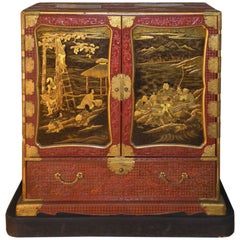
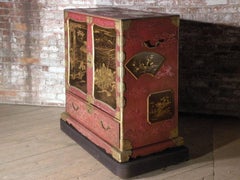
Japanese Lacquer and Cinnabar "Samurai" Cabinet, Inaba Family, Edo Period

Japanese Lacquer and Cinnabar "Samurai" Cabinet, Inaba Family, Edo Period

Located in Troy, NY

Exceptionally large and rare lacquer cabinet. According to the heraldry, visible on the headgear in one of the panels, it was made for the Inaba family, a high ranking Daimyo family,...

Category

Late 19th Century Japanese Edo Antique Ryosuke Harashima Cabinets

Materials

Bronze

Japanese Antique Mizuya Cabinet, Bunsei Era 1818–1830, Edo Period, Wabi-Sabi

Japanese Antique Mizuya Cabinet, Bunsei Era 1818–1830, Edo Period, Wabi-Sabi

Located in Hitachiomiya-shi, 08

This Japanese antique mizuya cabinet was crafted during the early years of the Bunsei era (1818–1830) in the late Edo period, making it approximately 200 years old. Measuring 33.9” W...

Category

1820s Japanese Edo Antique Ryosuke Harashima Cabinets

Materials

Iron

Japanese Antique Cabinets, Wabi Sabi, Japandi

Japanese Antique Cabinets, Wabi Sabi, Japandi

$5,000

H 34.65 in W 70.08 in D 20.48 in

Japanese Antique Cabinets, Wabi Sabi, Japandi

Located in Katori-Shi, 12

This is an antique Japanese-style cabinet made in the Meiji period. The texture of the black lacquer, smoked with soot from the hearth, has a unique depth and charm that is unlike a...

Category

Early 20th Century Japanese Meiji Ryosuke Harashima Cabinets

Materials

Wood

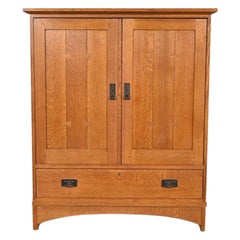
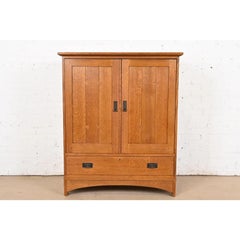
Stickley Mission Oak Arts & Crafts Media Cabinet

Stickley Mission Oak Arts & Crafts Media Cabinet

$2,795

H 51.5 in W 42.88 in D 23 in

Stickley Mission Oak Arts & Crafts Media Cabinet

By L. & J.G. Stickley Inc.

Located in South Bend, IN

A beautiful Mission or Arts & Crafts media cabinet or armoire By L. & J.G. Stickley USA, Late 20th Century Solid quarter sawn oak, with original hammered copper hardware. Measure...

Category

Late 20th Century American Arts and Crafts Ryosuke Harashima Cabinets

Materials

Copper

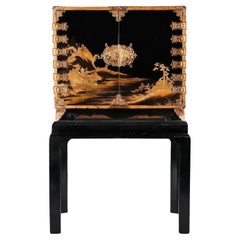
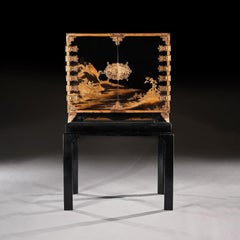
An Important Late 17th Century Japanese Lacquered Cabinet Edo Period on Stand

An Important Late 17th Century Japanese Lacquered Cabinet Edo Period on Stand

Located in Benington, Herts

An extremely fine, elegant and rare late 17th Century Japanese lacquer cabinet, from the Eco period, on later lacquered black stand. Japanese circa 1690 Provenance A private Scottish collection This outstanding cabinet is a fascinating fusion of east and west. The cabinet itself would have been made in Japan, c.1690, and is decorated to the outside with hiramaki-e lacquer. This technique involves the use of sprinkled gold powder which adheres to the lacquer surface. On the best pieces, as with this example, many layers are added in order to create areas of high relief and give depth to the surface decoration. The taste of the Japanese workshops in this period was often for quite restrained pieces with plenty of the black background visible, unlike some of the busier Chinese lacquer or European japanned examples produced around the same time. The Japanese makers seemed content to rely on the outstanding quality of the lacquer itself, regarded by most experts as the finest lacquer ever produced, and did not see the need to cover every surface believing that less was more in this respect. The lacquer here is used to produce a mountainous scene with buildings on the bank of a river, the other side of the river with more buildings and a contrasting flatter and forested landscape. The fine perspective achieved is the result of the clever use of raised and flatter areas in the lacquer itself in combination with the drawing of the design itself. Another remarkable aspect of this piece is the fine metalware throughout, but particularly the lockplate / hasp, hinges and foot mounts to the front. This is all beautifully cast and engraved contrasting against the black background. Interestingly another cabinet on stand with near identical metalwork was advertised in the Burlington Magazine, November 1913, with the dealer W. Williamson and Sons of Guildford. The lacquer on that piece is similarly refined and it seems likely that both pieces came from the same workshop. The European influence in our piece can be seen in both the later ebonised stand and in the japanned decoration which has been applied to the inside of the doors and is also very fine indeed. This consists of two panels with birds of prey perched on branches in colours set against a golden background. The cabinet has a recent Scottish provenance and so it is likely that the ebonised stand was made in Britain though such pieces were made throughout Europe as a way of quite literally elevating these imported pieces of eastern lacquer as in Japan these would have been used on the floor. Inside the cabinet there is a combination of more Japanese lacquer and lock plates and European drawer handles. Most of the lacquer drawer fronts incorporate mountainous scenes and birds in combination, with a few purely one or the other of the two subjects. Again the lacquer is in excellent condition and is of exceptional quality with multiple layers of relief used in one single scene in many cases. As mentioned above, Japanese lacquer is the most technically brilliant of the eastern lacquers and, as such, was highly prized by collectors and connoisseurs throughout Europe when this piece was made. The acquisition of such pieces would only have been possible for a small group of incredibly wealthy individuals, largely royal or high ranking courtiers or merchants connected with the East India trade...

Category

1690s Japanese Edo Antique Ryosuke Harashima Cabinets
Materials

Lacquer

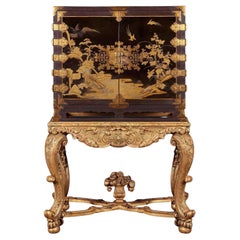
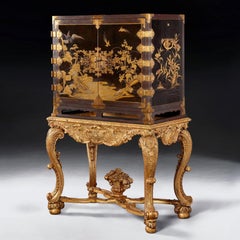
17th Century Japanese Lacquer Cabinet On French Giltwood Regence Stand

17th Century Japanese Lacquer Cabinet On French Giltwood Regence Stand

Located in Benington, Herts

An Extremely Fine and Very Important 17th Century Japanese Lacquer Cabinet on French Giltwood Stand of Regence Period circa 1680-1690 Provenance Likely acquired by Herman Willem ...

Category

17th Century Japanese Edo Antique Ryosuke Harashima Cabinets
Materials

Giltwood, Lacquer

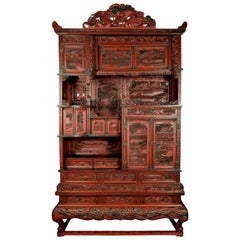
19th Century Japanese Cinnabar / Lacquer Cabinet

19th Century Japanese Cinnabar / Lacquer Cabinet

$21,500Sale Price|49% Off

H 88 in W 50.5 in D 19.5 in

19th Century Japanese Cinnabar / Lacquer Cabinet

Located in Fulton, CA

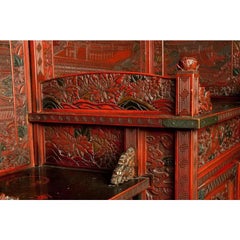
Incredible example of Asian lacquer carving. Standing over seven feet tall, this monumental display shelf was produced in Japan at the end of the Ed...

Category

Late 19th Century Japanese Edo Antique Ryosuke Harashima Cabinets
Materials

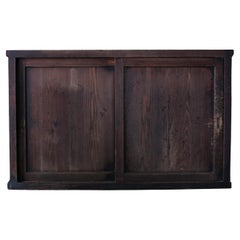
Wood, Lacquer

Ryosuke Harashima cabinets for sale on 1stDibs.

Ryosuke Harashima cabinets are available for sale on 1stDibs. These distinctive items are frequently made of metal and are designed with extraordinary care. There are many options to choose from in our collection of Ryosuke Harashima cabinets, although brown editions of this piece are particularly popular. Prices for Ryosuke Harashima cabinets can differ depending upon size, time period and other attributes — on 1stDibs, these items begin at $4,500 and can go as high as $4,500, while a piece like these, on average, fetch $4,500.