Victor Delfin Art

to
1
1
6
3
Overall Width
to
Overall Height
to
11
6
4
3
5
3
4
2
2
2
2
2
2
2
1
1
1
1
1
1
1
5
3
2
2
2
11
10,138
2,779
1,375
1,369
1
6
11
Artist: Victor Delfin
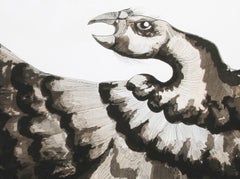
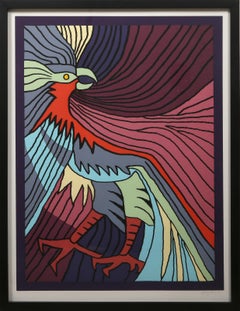
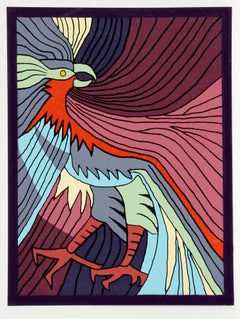
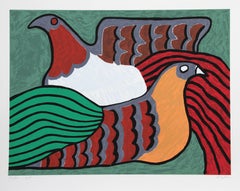
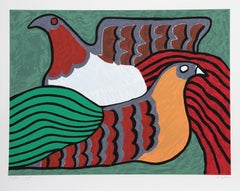
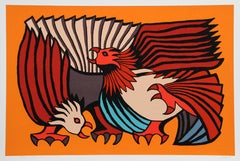
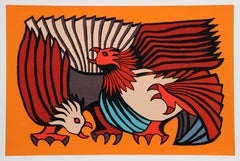
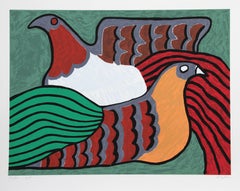
Baby Condor, Folk Art Screenprint by Victor Delfin
By Victor Delfin
Located in Long Island City, NY
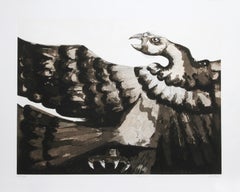
Victor Delfin, Peruvian (1927 - ) - Baby Condor, Year: 1979, Medium: Screenprint, signed and numbered in pencil, Edition: 200, AP 30, Image Size: 31.5 x 24 inches, Size: 35 in. ...
Category

1970s Folk Art Victor Delfin Art

Materials

Screen

Hens, Folk Art Screenprint by Victor Delfin 1980
By Victor Delfin
Located in Long Island City, NY
This print was created by Peruvian artist Victor Delfin. Delfin found the source of his inspiration in the ancient Paracan culture of Peru, part of the broader Incan civilization. De...
Category

1980s Folk Art Victor Delfin Art

Materials

Screen
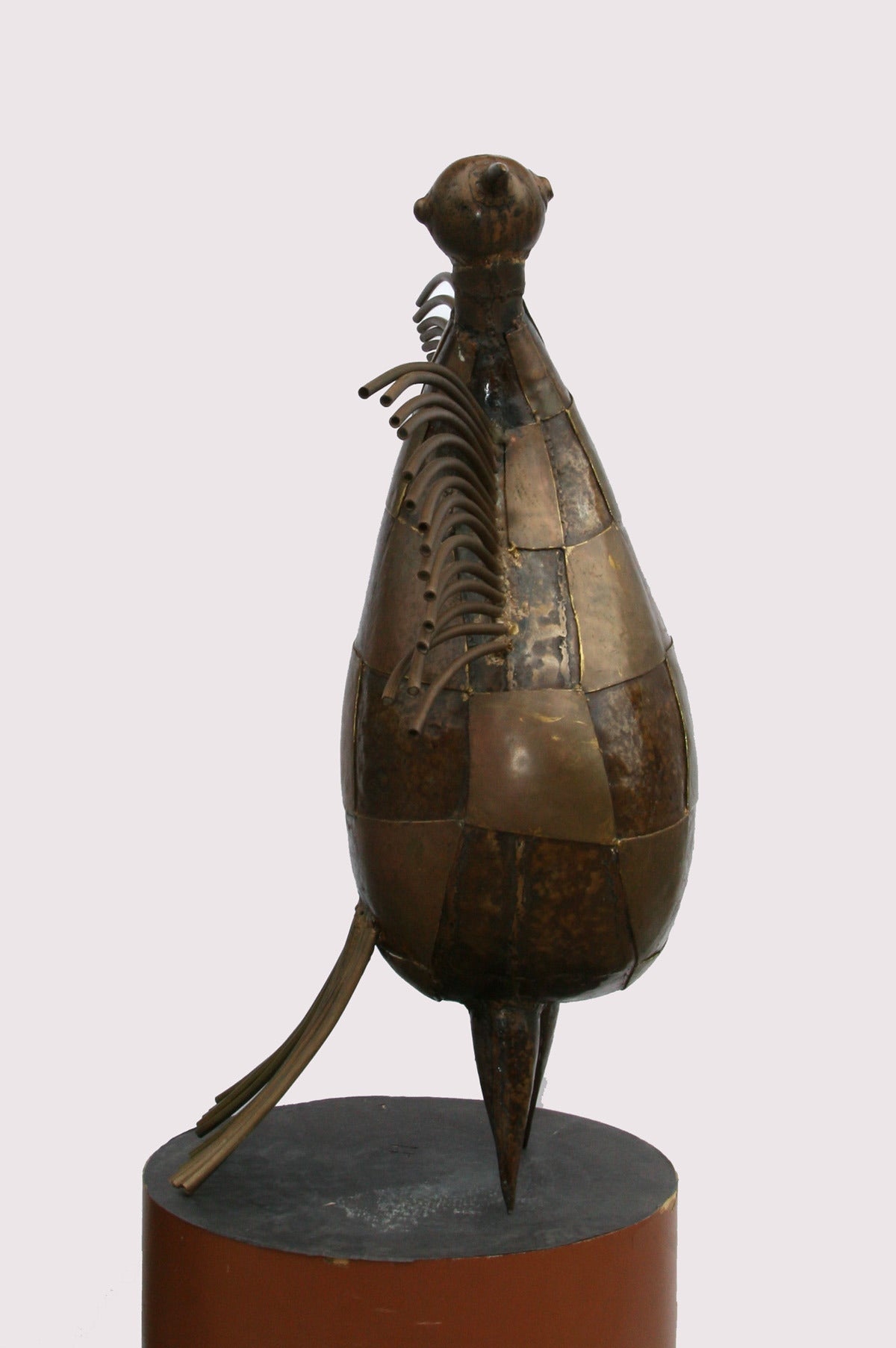
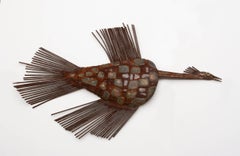
#1 Bird, Hand-Welded Bronze, Copper and Iron Sculpture by Delfin
By Victor Delfin
Located in Long Island City, NY
Artist: Victor Delfin, Peruvian (1927 - ) Title: #1 Bird Year: 1978 Medium: Hand-Welded Bronze, Copper and Iron Sculpture Size: 45 in. x 71 in. (114.3 cm x 180.34 cm)
Category

1970s Modern Victor Delfin Art

Materials

Bronze, Copper, Iron

Baby Condor, Peruvian Art by Victor Delfin 1979
By Victor Delfin
Located in Long Island City, NY
This print was created by Peruvian artist Victor Delfin. Delfin found the source of his inspiration in the ancient Paracan culture of Peru, part of the broader Incan civilization. De...
Category

1970s Folk Art Victor Delfin Art

Materials

Screen

Condor, Folk Art Screenprint by Victor Delfin
By Victor Delfin
Located in Long Island City, NY
This print was created by Peruvian artist Victor Delfin. Delfin found the source of his inspiration in the ancient Paracan culture of Peru, part of the broader Incan civilization. De...
Category

1980s Folk Art Victor Delfin Art

Materials

Screen
Four Birds, Large Colorful Folk Art Tapestry by Victor Delfin
By Victor Delfin
Located in Long Island City, NY
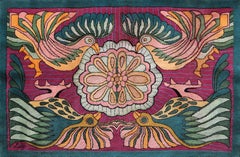
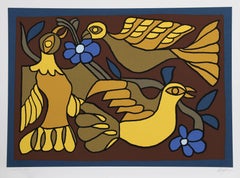
A vibrant tapestry by Peruvian artist Victor Delfin, depicting four birds feeding on the nectar from a large flower. Four Birds Victor Delfin, Peruvian (1927) Date: 1978 Tapestry Si...
Category

1970s Folk Art Victor Delfin Art

Materials

Tapestry

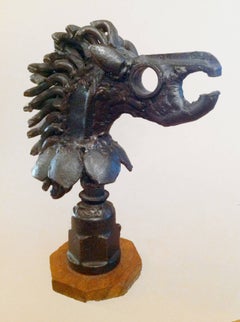
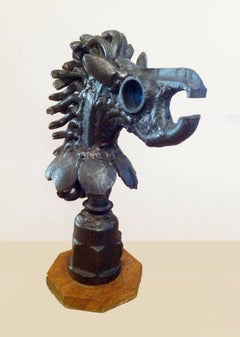
Cabeza de Caballo, Surrealist Iron Sculpture by Victor Delfin
By Victor Delfin
Located in Long Island City, NY
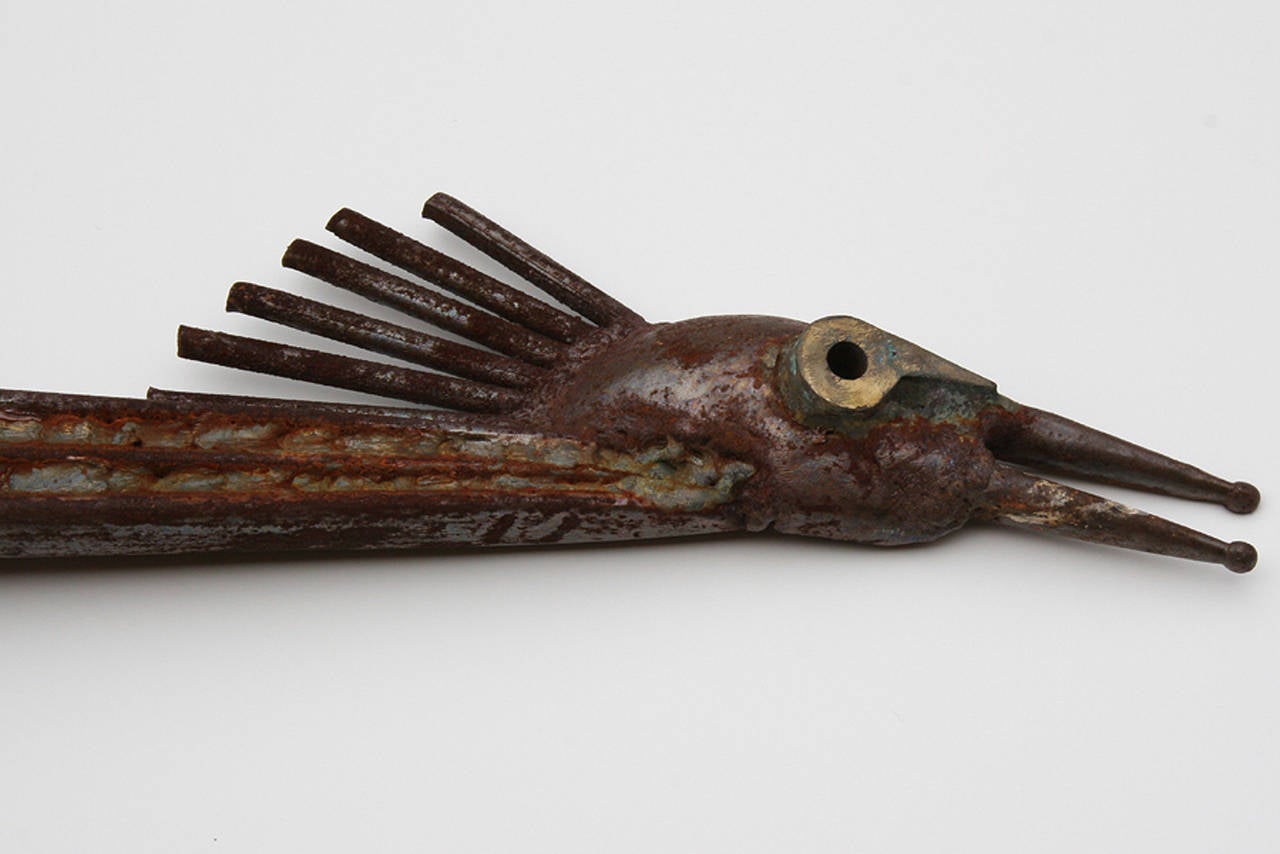
Title: Cabeza de Caballo Medium: Iron Sculpture Size: 9 x 7 x 3.5 in. (22.86 x 17.78 x 8.89 cm)
Category

20th Century Modern Victor Delfin Art

Materials

Iron

Baby Condor, Folk Art Bronze Sculpture by Victor Delfin
By Victor Delfin
Located in Long Island City, NY
A bronze sculpture by Victor Delfin circa 1970. A whimsical, abstracted bird figure in a blissful pose with wings spread. Artist: Victor Delfin, Peruvian (1927 - ) Title: Baby ...
Category

1970s Folk Art Victor Delfin Art

Materials

Bronze

Condor II, Folk Art Etching by Victor Delfin
By Victor Delfin
Located in Long Island City, NY
This print was created by Peruvian artist Victor Delfin. Delfin found the source of his inspiration in the ancient Paracan culture of Peru, part of the broader Incan civilization. De...
Category

1980s Folk Art Victor Delfin Art

Materials

Etching

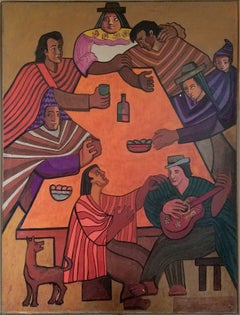
Adios Pueblo de Ayacucho
By Victor Delfin
Located in Long Island City, NY
Artist: Victor Delfin, Peruvian (1927 - ) Title: Adios Pueblo de Ayacucho Year: 1985 Medium: Oil on Canvas, signed l.r. Size: 64 x 52 in. (162.56 x 132.08 cm)
Category

1980s Modern Victor Delfin Art

Materials

Canvas, Oil

Four Red Birds and a Flower, Serigraph by Victor Delfin
By Victor Delfin
Located in Long Island City, NY
This print was created by Peruvian artist Victor Delfin. Delfin found the source of his inspiration in the ancient Paracan culture of Peru, part of the broader Incan civilization. De...
Category

1970s Folk Art Victor Delfin Art

Materials

Screen

Related Items
Purity of Soul (Blue Dog Series), George Rodrigue
By George Rodrigue
Located in Fairfield, CT
Artist: George Rodrigue (1944-2013) Title: Purity of Soul (Blue Dog Series) Year: 2005 Edition: 142/190, plus proofs Medium: Silkscreen on archival pap...
Category

Early 2000s Pop Art Victor Delfin Art

Materials

Screen

Henge, sculpture by Kerry Green, copper, bronze, abstract, figures, metal sculpt
By Kerry Green
Located in Santa Fe, NM
Henge, sculpture by Kerry Green, copper, bronze, abstract, figures, metal sculpture Since childhood, Kerry Green has always been creative; painting, drawing, sculpting, and sewing. Her family provided her with materials and encouraged her efforts. She literally grew up in her parents’ art galleries, and with them toured the U.S., Europe, Mexico, Japan, and New Zealand, seeing museums and visiting artists’ studios. Growing up in Arizona and New Mexico gave her the opportunity to explore the Native reservations there where she has made life-long friendships. Several of her very early influences were Dr. Harry Wood...
Category

2010s Contemporary Victor Delfin Art

Materials

Bronze, Copper

Rope Framed 19th Century Woolie featuring English Ship
Located in Austin, TX
19th Century British Woolie 11" x 13" Medium: Wool Framed Sailboat featuring British Flag
Category

Mid-19th Century Folk Art Victor Delfin Art

Materials

Wool

Ai Weiwei, Cats (Black) - Signed Print, Contemporary Art, Chinese Activist
By Ai Weiwei
Located in Hamburg, DE
Ai Weiwei (Chinese, b. 1957) Cats (Black), 2022 Medium: Screenprint on paper Sheet dimensions: 28 x 32.8 cm Frame dimensions: 36.1 x 41.2 cm Edition of 150: Hand-signed, numbered and...
Category

21st Century and Contemporary Contemporary Victor Delfin Art

Materials

Screen

Israeli Mod Arts & Crafts Copper Sculpture Bookends Bezalel Schatz Yaad Studio
By Bezalel Schatz
Located in Surfside, FL
Bezalel Schatz, (1912-1978), Yaad Studio Workshop Mid century modern The standing part is 6 X 5 inches. The copper sheet is 10 X 5 inches each. This is for a pair. they are copper w...
Category

Mid-20th Century Modern Victor Delfin Art

Materials

Copper

Large German Junge Wilde Rainer Fetting Screenprint Serigraph Print Wolf Pop Art
Located in Surfside, FL
Rainer Fetting, (Germany, 1949-) Wolf, 1984 Screenprint serigraph in colours, on wove paper, the full sheet. Hand signed and numbered 34.5 X 49 inches Rainer Fetting (Born 1949 in Wilhelmshaven, West Germany) is a German painter and sculptor. Rainer Fetting was one of the co-founders and main protagonists of the Galerie am Moritzplatz in Berlin, founded in the late 1970s by a group of young artists (mainly painters) from the class of Karl Horst Hödicke at the former Berliner Hochschule für Bildende Künste (Berlin Art Academy, today known as Universität der Künste). This group of artists, known as the “Moritzboys” and including, among others, Salomé, Bernd Zimmer, and Helmut Middendorf, subsequently achieved international acclaim as the “Junge Wilde” or “Neue Wilde” in the early 1980s. In 1978, the Junge Wilde painting style arose in the German-speaking world in opposition to established avant garde, minimal art and conceptual art. It was linked to the similar Transavanguardia movement in Italy, USA (neo-expressionism) and France (Figuration Libre). The Junge Wilde painted their expressive paintings in bright, intense colors and with quick, broad brushstrokes very much influenced by Professor at the Academy of Art in Berlin, Karl Horst Hödicke They were also known as the Neue Wilde. Artists included; Austria: Siegfried Anzinger, Erwin Bohatsch, Herbert Brandl, Gunter Damisch, Hubert Scheibl...
Category

1980s Victor Delfin Art

Materials

Screen

Wool Felt Applique Israeli Folk Art Signed Tapestry Kopel Gurwin Bezalel School
By Kopel Gurwin
Located in Surfside, FL
This depicts KIng David reciting Psalms, Hallelujah in Hebrew Kopel Gurwin (Hebrew: קופל גורבין‎) (1923–1990) was an Israeli tapestry wall hanging, painter and graphic artist. Kopel (Kopke') Gurwin (Gurwitz) was born and raised in Vilna, the capital of Lithuania. He spoke Yiddish at home, but simultaneously studied Hebrew at their school which was part of the Tarbut educational network. Kopel was active in the Hashomer Hatzair youth movement. In the 1930s, as a teenager, Kopel helped his parents with the home finances by working in a suit workshop, there he first encountered the art of sewing. With the outbreak of the Second World War and the German invasion of Vilna, the Jews were imprisoned in camps and ghettos. Kopel and his brother Moshe were separated from their parents and were put to work in coal mines and peat. Kopel's parents were taken to the Stutthof Nazi concentration camp where they died of typhus within a month of each other. Kopel's 12-year-old sister Chava was turned over to the Germans by a Polish family and murdered. The brothers were arrested by the Germans, but were saved thanks to the connections of Nina Gerstein, Kopel's drama teacher. They hid in an attic until they were discovered, fled and moved to Riga, where they were caught and sent to the Stutthof concentration camp where they were imprisoned until the end of the war. They were put to work maintaining and cleaning trains and took part in one of the death marches. In July 1946, Kopel and Moshe sailed to Helsingborg, Sweden, as part of operation "Folke Bernadotte", in which Sweden took in ill survivors for rehabilitation. Once he recovered, Kopel worked in a publishing house and later was appointed director of the local branch of the Halutz movement. In 1950 Kopel and Moshe made aliyah to Israel. Kopel worked as a survey for the Survey of Israel Company. In 1951, he enlisted to the Communication Corps and served as a military draftsman. There he won first prize for the design of the front cover of the Communication Corps bulletin. With his discharge from the army at 29 he started studying drawing and graphics at the Bezalel Academy of Arts and Design in Jerusalem. Among his teachers were Isidor Ascheim, Shlomo Vitkin, Yossi Stern and Jacob Steinhardt. At the end of his first year of study, Kopel won the Reuben and Sarah Lif Excellence Award in written studies. During his studies he also won additional prizes: In 1956 he won first prize from the Lethem Foundation in California for poster design. Later the same year, Kopel won the Hermann Struck prize for his drawing on the theme of Jerusalem. In 1957 he won an additional first prize from the Lethem Foundation and second place from the printing company Ortzel for a drawing for a Jewish New Year greeting card. In 1958 he won first prize in a competition to design a poster for Tel Aviv's jubilee. Two years later he won three other awards: First and third prize for designing a poster for Israel Independence Day, celebrating 12 years of the State of Israel. Also that year Kopel won first prize for a poster to mark the 25th Zionist Congress. In 1964 he entered the Independence Day poster competition on the theme of aliyah and won first and second prize. Four years later he again entered the competition on the theme of 20 years of Israel's independence and won first prize. The poster was styled like a Holy Ark curtain with two lions and a menorah at its centre. This poster appeared on the cover of the famous book Jewish Art and Civilization, edited by Geoffrey Wigoder as well as the record Voices of 20 Years, 1948-1968, edited by Yossi Godard. In April 1971 he won first prize in the Independence Day poster competition for the fourth time. Kopel's Folk Art tapestry won the Israeli Independence Day Poster Contest in 1968 With the completion of his studies at Bezalel Kopel moved to Tel Aviv and was hired by Shmuel Grundman's graphics and design studio. Grundman took him to Europe with him to design and supervise the construction of Israeli exhibition pavilions. During his time at Grundman's he discovered the fibrous felt from which he produced most of his wall hangings. At the 1964 Levant Fair exhibition he used felt stuck onto wooden panels for the first time. The first felt wall hanging that Kopel produced was intended for the American Cultural Centre in Jerusalem and its theme was the United States Declaration of Independence. The wall hanging, which measured 2.85 X 1.85 meters, was stuck on a wooden panel. Kopel ordered rolls of felt from France and began work on wall hangings based on bible stories. He used a needle, hand sewing small even stitches with black embroidery thread which framed and highlighted every detail in the work, as well as using appliqué. The interior designer, Alufa Koljer-Elem, introduced him to Ruth Dayan who managed the shop Maskit in September 1967 he opened his first solo exhibition at the Maskit 6 gallery, in which 12 wall hangings were displayed. In light of the exhibition at Maskit 6, Meira Gera, the director of artistic activity at the America-Israel Cultural Foundation, organized an additional exhibition of his works at the foundation's exhibition hall in New York City. The exhibition sparked immense press interest, and was also displayed for a few months at the New York Jewish Museum, from where it travelled throughout the United States. Followed by the exhibition at the Delson-Richter gallery in Old Jaffa, which was later also exhibited at the Jerusalem Theatre. Kopel's tapestry "The Time for Singing has Arrived" was printed on a UNICEF greeting card in 1978 and again in 1981. The Israeli Philatelic Service issued three stamps based on three of Kopel's holy ark curtains and one stamp based on an Independence Day poster he designed. Kopel's creations decorate a large number of synagogues, public buildings, hotels and private collections which were purchased in Israel and around the world. They have decorated, among others, the walls of the King David Hotel in Jerusalem, the VIP room at Ben Gurion Airport, the Kfar Saba theatre and the Plaza Hotel in Tel Aviv. Israel has had a Vibrant Folk Art, Naive art scene for a long time now artists like Israel Paldi, Nahum Guttman, Reuven Rubin had naive periods. The most well know of the strict naive artists are Shalom of Safed, David Sharir, Irene Awret, Gabriel Cohen, Natan Heber, Michael Falk and Kopel Gurwin. Exhibitions: 1995 The Knesset Jerusalem 1988 Temple Beth Shalom Miami, Florida 1988 University of Jewish Studies Los Angeles 1987 Israel Congregation on the Northern Coast Chicago 1985 Jerusalem Theatre Jerusalem 1984 Tenafly New Jersey 1983 Horace Richter Gallery Old Jaffa 1974 Jerusalem Theatre Jerusalem 1974 Delson Richter Gallery Old Jaffa 1972 University of Jewish Studies Miami, Florida 1971 Jewish Museum New York 1970 Norman Gallery Canada 1970 Sharei Tzedek Congregation Winnipeg, Canada 1970 Gallery of the Year Los Angeles 1970 Gallery of the Year Scottsdale 1969 Gleeman Gallery Chicago 1969 Israel Congregation of the Northern Coast Chicago 1967 Maskit 6 Tel Aviv Prizes: 1971 First Independence Day poster 1971, 23 yeaes of the State of Israel 1969 Second International Tel Aviv poster...
Category

20th Century Folk Art Victor Delfin Art

Materials

Wool, Felt

Judaica Copper Plaque Israeli Artist Mordechai Avniel, Palestine, Bezalel School
By Mordechai Avniel
Located in Surfside, FL
MORDECHAI AVNIEL Minsk, Belarus, b. 1900, d. 1989 Mordechai Avniel is best known for his deft and singular landscape work. He said of his scenes of Israel: "I loved the Israeli la...
Category

20th Century Modern Victor Delfin Art

Materials

Copper

ASANTE GOLD WEIGHT CONTAINER
Located in Three Oaks, MI
Elephant lidded kuduo container from the Ashanti peoples of Ghana. Kuduo were created to store valuable possessions such as gold dust and served the sym...
Category

Late 19th Century Tribal Victor Delfin Art

Materials

Brass, Bronze, Copper

ASANTE GOLD WEIGHT CONTAINER
$1,200
H 11 in W 7 in D 7 in
Wool Felt Applique Israeli Folk Art Lion Signed Tapestry Kopel Gurwin Bezalel
By Kopel Gurwin
Located in Surfside, FL
This tapestry depicts a Lion, In Hebrew Mazel Aryeh (the Zodiac symbol Leo,) all handmade. woven and stitched. Kopel Gurwin (Hebrew: קופל גורבין‎) (1923–1990) was an Israeli tapest...
Category

20th Century Folk Art Victor Delfin Art

Materials

Wool, Felt

Feeding the Ravens
Located in San Francisco, CA
This artwork titled "Feeding the Ravens" 1997 is a color offset lithograph on paper by noted American artist Rie Mounier Munoz, 1921-2015. It is hand signed and numbered 29/950 in pencil by the artist. The image size is 9.65 x 8.35 inches, sheet size is 13.85 x 12.25 inches. It is in excellent condition, has never been framed. About the artist: Alaska painter Rie Mounier Munoz was the child of Dutch parents who immigrated to California, where she was born and raised. She is known for her colorful scenes of everyday life in Alaska. Rie (from Marie) Munoz (moo nyos), studied art at Washington and Lee University in Virginia. In 1950, she traveled up the Inside Passage by steamship, fell in love with Juneau, and gave herself until the boat left the next day to find a job and a place to live. Since then Juneau has been home to Munoz. She began painting small vignettes of Alaska soon after arriving in Juneau, and also studied art at the University of Alaska-Juneau. Munoz painted in oils in what she describes as a "painstakingly realistic" style, which she found stiff and "somewhat boring." Her breakthrough came a few years later when an artist friend introduced her to a versatile, water-soluble paint called casein. The immediacy of this inexpensive medium prompted an entirely new style. Rie's paintings became colorful and carefree, mirroring her own optimistic attitude toward life. With her newfound technique she set about recording everyday scenes of Alaskans at work and at play. Of the many jobs she has held journalist, teacher, museum curator, artist, mother, Munoz recalls one of her most memorable was as a teacher on King Island in 1951, where she taught 25 Eskimo children. The island was a 13-hour umiak (a walrus skin boat) voyage from Nome, an experience she remembers vividly. After teaching in the Inupiat Eskimo village on the island with her husband during one school year, she felt a special affinity for Alaska's Native peoples and deliberately set about recording their traditional lifestyles that she knew to be changing very fast. For the next twenty years, Rie practiced her art as a "Sunday painter," in and around prospecting with her husband, raising a son, and working as a freelance commercial artist, illustrator, cartoonist, and curator of exhibits for the Alaska State Museum. During her years in Alaska, Munoz has lived in a variety of small Alaskan communities, including prospecting and mining camps. Her paintings reflect an interest in the day-to-day activities of village life such as fishing, berry picking, children at play, as well as her love of folklore and legends. Munoz says that what has appealed to her most were "images you might not think an artist would want to paint," such as people butchering crab, skinning a seal, or doing their laundry in a hand-cranked washing machine. In 1972, with her hand-cut stencil and serigraph prints selling well in four locations in Alaska, she felt confident enough to leave her job at the Alaska State Museum and devote herself full time to her art. Freed from the constraints of an office job, she began to produce close to a hundred paintings a year, in addition to stone lithograph and serigraph prints. From her earliest days as an artist, Rie had firm beliefs about selling her work. First, she insisted the edition size should be kept modest. When she decided in 1973 to reproduce Eskimo Story Teller as an offset lithography print and found the minimum print run to be 500, she destroyed 200 of the prints. She did the same with King Island, her second reproduction. Reluctantly, to meet market demand, she increased the edition size of the reproductions to 500 and then 750. The editions stayed at that level for almost ten years before climbing to 950 and 1250. Her work has been exhibited many solo watercolor exhibits in Alaska, Oregon and Washington State, including the Charles and Emma Frye Art Museum, Alaska State Museum in Juneau, Anchorage Historical and Fine Arts Museum, Tongass Historical Museum in Ketchikan, and Yukon Regional Library in Whitehorse; Yukon Territory, and included in exhibits at the Smithsonian Institute and Russell Senate Office Building in Washington, D.C. Munozs paintings have graced the covers of countless publications, from cookbooks to mail order catalogs, and been published in magazines, newspapers, posters, calendars, and two previous collections of her work: Rie Munoz...
Category

Late 20th Century Folk Art Victor Delfin Art

Materials

Lithograph

Feeding the Ravens
Feeding the Ravens
$450
H 13.85 in W 12.25 in D 0.01 in
Rein Og Pulk (Reindeer and Sleighs) - Laplander Sami in his Pulk
By Yuri Mot
Located in Soquel, CA
Joyful image of a woodcut print of a Reindeer pulling a Laplander Sami in his Pulk (small toboggan), a traditional scene in Lapland folklore and history by Yuri Mot. Signed indistinc...
Category

1970s Folk Art Victor Delfin Art

Materials

Woodcut, Laid Paper

Previously Available Items
Baby Condor, Peruvian Art by Victor Delfin 1979
By Victor Delfin
Located in Long Island City, NY
This print was created by Peruvian artist Victor Delfin. Delfin found the source of his inspiration in the ancient Paracan culture of Peru, part of the broader Incan civilization. De...
Category

1970s Folk Art Victor Delfin Art

Materials

Screen

Hens, Folk Art Screenprint by Victor Delfin 1980
By Victor Delfin
Located in Long Island City, NY
This print was created by Peruvian artist Victor Delfin. Delfin found the source of his inspiration in the ancient Paracan culture of Peru, part of the broader Incan civilization. De...
Category

1980s Folk Art Victor Delfin Art

Materials

Screen
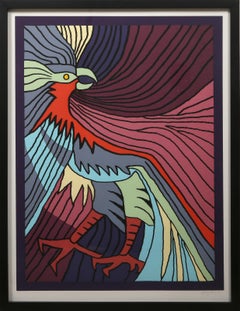
Hens, Serigraph by Victor Delfin 1980
By Victor Delfin
Located in Long Island City, NY
This print was created by Peruvian artist Victor Delfin. Delfin found the source of his inspiration in the ancient Paracan culture of Peru, part of the broader Incan civilization. De...
Category

1980s Folk Art Victor Delfin Art

Materials

Screen
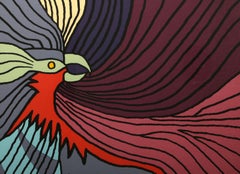
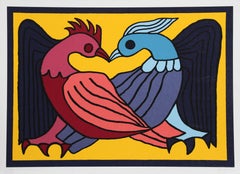
Two Kissing Doves, Silkscreen by Victor Delfin
By Victor Delfin
Located in Long Island City, NY
This print was created by Peruvian artist Victor Delfin. Delfin found the source of his inspiration in the ancient Paracan culture of Peru, part of the broader Incan civilization. De...
Category

1980s Folk Art Victor Delfin Art

Materials

Screen
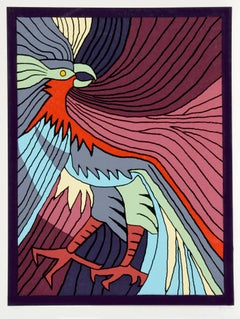
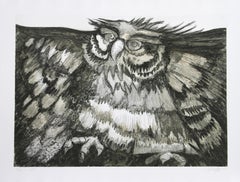
Old Owl, Etching by Victor Delfin
By Victor Delfin
Located in Long Island City, NY
This print was created by Peruvian artist Victor Delfin. Delfin found the source of his inspiration in the ancient Paracan culture of Peru, part of the broader Incan civilization. De...
Category

1980s Folk Art Victor Delfin Art

Materials

Etching

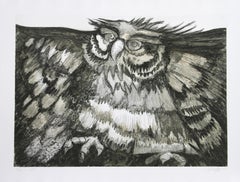
Old Owl, Etching by Victor Delfin
By Victor Delfin
Located in Long Island City, NY
This print was created by Peruvian artist Victor Delfin. Delfin found the source of his inspiration in the ancient Paracan culture of Peru, part of the broader Incan civilization. De...
Category

1980s Folk Art Victor Delfin Art

Materials

Etching

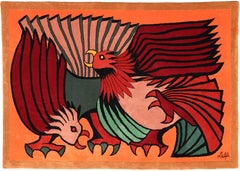
Orange Fighting Cocks, Woolen Rug Tapestry by Victor Delfin
By Victor Delfin
Located in Long Island City, NY
Artist: Victor Delfin, Peruvian (1927 - ) Title: Orange Fighting Cocks Year: 1978 Medium: Woolen Rug Tapestry, signed in the cache, label verso Edition: 1/...
Category

1970s Folk Art Victor Delfin Art

Materials

Wool

Orange Fighting Cocks, Screeprint by Victor Delfin
By Victor Delfin
Located in Long Island City, NY
Artist: Victor Delfin, Peruvian (1927 - ) Title: Orange Fighting Cocks Year: 1979 Medium: Serigraph, signed and numbered in pencil Edition: 200, AP 30 Image Size: 24 x 36.5 inches Si...
Category

1970s Folk Art Victor Delfin Art

Materials

Screen

Victor Delfin, "Three Doves, " Serigraph, circa 1980
By Victor Delfin
Located in Long Island City, NY
This print was created by Peruvian artist Victor Delfin. Delfin found the source of his inspiration in the ancient Paracan culture of Peru, part of the broader Incan civilization. De...
Category

1980s Folk Art Victor Delfin Art

Materials

Screen
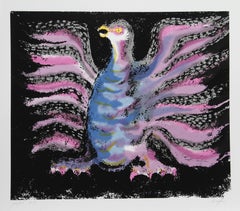
Victor Delfin, "Orange Fighting Cocks, " Serigraph, 1979
By Victor Delfin
Located in Long Island City, NY
This print was created by Peruvian artist Victor Delfin. Delfin found the source of his inspiration in the ancient Paracan culture of Peru, part of the broader Incan civilization. De...
Category

1970s Folk Art Victor Delfin Art

Materials

Screen

Condor, Folk Art Screenprint by Victor Delfin
By Victor Delfin
Located in Long Island City, NY
This print was created by Peruvian artist Victor Delfin. Delfin found the source of his inspiration in the ancient Paracan culture of Peru, part of the broader Incan civilization. De...
Category

1980s Folk Art Victor Delfin Art

Materials

Screen
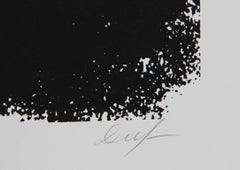
Victor Delfin, "Hens, " Serigraph, 1980
By Victor Delfin
Located in Long Island City, NY
This print was created by Peruvian artist Victor Delfin. Delfin found the source of his inspiration in the ancient Paracan culture of Peru, part of the broader Incan civilization. De...
Category

1980s Folk Art Victor Delfin Art

Materials

Screen
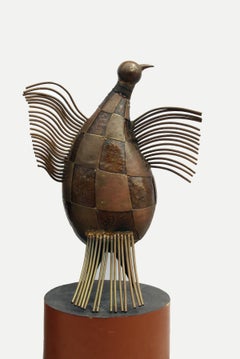
Victor Delfin art for sale on 1stDibs.

Find a wide variety of authentic Victor Delfin art available for sale on 1stDibs. You can also browse by medium to find art by Victor Delfin in screen print, metal, bronze and more. Much of the original work by this artist or collective was created during the 20th century and is mostly associated with the modern style. Not every interior allows for large Victor Delfin art, so small editions measuring 7 inches across are available. Customers who are interested in this artist might also find the work of Sergio Bustamante, Igor Galanin, and Gerard Cambon. Victor Delfin art prices can differ depending upon medium, time period and other attributes. On 1stDibs, the price for these items starts at $500 and tops out at $25,000, while the average work can sell for $750.
Artists Similar to Victor Delfin

Still Thinking About These?

All Recently Viewed