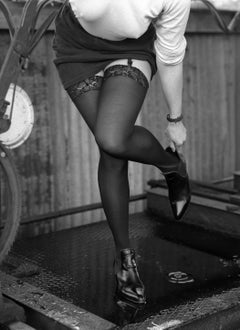
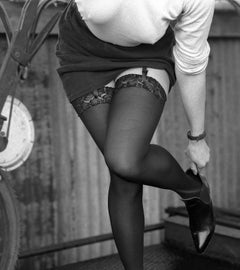
Virgil Apger Art
American, 1903-1994
Virgil Apger (1903-1994)
Virgil Apger was born in Indiana on June 25, 1903. Apger interest in photography began when he was a child in Goodland, Idaho. His father, the local sheriff, took photographs of the town's criminals. In 1929 his brother-in-law, Eugene Robert Richee, who was head of the portrait gallery at Paramount, hired Apger as his assistant. Apger developed Richee's negatives, worked with the dryers, and made prints.
He assisted Richee for a time and then went to work for MGM in 1931 doing the same thing Richee had done for years. He was an assistant to Clarence Sinclair Bull for awhile. Soon Jean Harlow gave Apger his start as a production still photographer by requested him to shoot photos on "China Seas" (1935). He had already worked for the publicity department. From then on he shot the stills on all her films. "Doing stills was invaluable training for gallery work," Apger explained.
Apger's enthusiasm on the set made him extremely popular with the stars, and Greer Garson, whose films he worked on, requested him for her portait photographer.
He is noteworthy in Oscar history as well for being the only photographer to receive an Academy Award for "Mrs. Miniver" in 1942 for Best Production Still.
Later, he was put in charge of the portrait gallery in 1947 for MGM, superseding C. S. Bull in that department and for the next 20 years he shot all of their stars: Esther Williams, Clark Gable, Lana Turner, Greer Garson, Judy Garland, Robert Taylor, Joan Crawford, Barbara Stanwyck, Kay Kendall, Stewart Granger, Ava Gardner, Grace Kelly and Elizabeth Taylor. Between 1948 and 1952, Apger had the distiction of having more magazine covers--among them, Life, Look and Photoplay--than all of the other photographers at all of the other studios combined.
He had a long career photographing stars on the set of great classics and as a portrait photographer, photographing many sexy shots of Ava Gardner in fishnet stockings and leotards. Gardner was one of his favorite subjects. Their work together is comparable to that of Hurrell's work with Crawford or that of Bull's work with Garbo but with more sexuality, glamour and a friendly sort of approachability.
Some of the many films he did still photography for are: "Spinout", "Bells Are Ringing", "That Forsyte Woman," "Julia Misbehaves", "A Date with Judy", "Homecoming", "Eyes in the Night," and the all time classic favorite, "The Wizard of Oz."
He also took photos of Debbie Reynolds, Bette Davis, Marlon Brando, Arlene Dahl, Ann Blyth, Ginger Rogers, Judy Garland, Ingrid Bergman, Cary Grant, and the Marx Brothers among others.
When Apger retired from his job as MGM's gallery portrait photographer in 1969, he had been there for 40 years. For twenty of those years he was the only gallery photographer on the lot.
He died at the ripe old age of 90 in San Diego, California on May 19, 1994.to
1
1
Overall Width
to
Overall Height
to
1
1
1
1
1
1
1
1
1
1
1
10,138
2,779
1,375
1,369
1
1
Artist: Virgil Apger
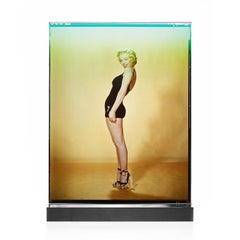
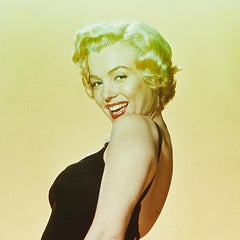
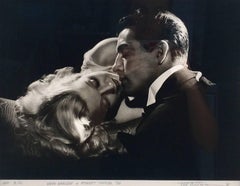
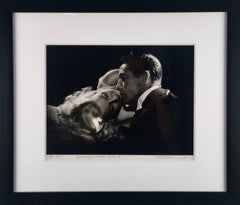
Marilyn Monroe Monkey business
By Virgil Apger
Located in CANNES, FR
EKtachrome Vintage 1953 .20x15cm
Category
1950s Modern Virgil Apger Art
Materials
Photographic Film
$670 Sale Price
49% Off
Related Items
Fire Hydrant, Harlem, Portrait Photography of African American Children 1960s
By Leonard Freed
Located in New york, NY
Punctuated by documentary photo essays such as Black in White America, Fire Hydrant is one of Leonard Freed's most iconic in the Harlem series. In the image of Fire Hydrant, two chil...
Category
1960s Contemporary Virgil Apger Art
Materials
Photographic Film, Archival Paper, Digital, Archival Pigment, Digital Pi...
Botero in his Studio, Paris, Photograph of Artist Fernando Botero, Edition
By Jean-Michel Voge
Located in New york, NY
Fernando Botero in his Studio, Paris, 1992 by Jean-Michel Voge is a 13" x 19" archival pigment print in an edition of 5, printed by the photographer on handmade Japanese Awagami pape...
Category
1990s Contemporary Virgil Apger Art
Materials
Photographic Film, Archival Ink, Archival Paper, Rag Paper, Digital, Arc...
Nicola (Nicky) Weymouth, unique acetate positive of British socialite provenance
By Andy Warhol
Located in New York, NY
Andy Warhol
Nicola (Nicky) Weymouth, ca. 1976
Acetate positive, acquired directly from Chromacomp, Inc. Andy Warhol's printer in the 1970s. Accompanied by a Letter of Provenance from the representative of Chromacomp
Unique
Frame included:
Elegantly framed in a museum quality white wood frame with UV plexiglass:
Measurements:
Frame:
18 x 15.5 x 1.5 inches
Acetate:
11 x 8 inches
This is the original, unique photographic acetate positive taken by Andy Warhol as the basis for his portrait of Nicky Weymouth, that came from Andy Warhol's studio, The Factory to his printer. It was acquired directly from Chromacomp, Inc. Andy Warhol's printer in the 1970s. It is accompanied by a Letter of Provenance from the representative of Chromacomp. This is one of the images used by Andy Warhol to create his iconic portrait of the socialite Nicola Samuel Weymouth, also called Nicky Weymouth, Nicky Waymouth, Nicky Lane Weymouth or Nicky Samuel. Weymouth (nee Samuel) was a British socialite, who went on to briefly marry the jewelry designer Kenneth Lane, whom she met through Warhol. This acetate positive is unique, and was sent to Chromacomp because Warhol was considering making a silkscreen out of this portrait. As Bob Colacello, former Editor in Chief of Interview magazine (and right hand man to Andy Warhol), explained, "many hands were involved in the rather mechanical silkscreening process... but only Andy in all the years I knew him, worked on the acetates." An acetate is a photographic negative or positive transferred to a transparency, allowing an image to be magnified and projected onto a screen. As only Andy worked on the acetates, it was the last original step prior to the screenprinting of an image, and the most important element in Warhol's creative process for silkscreening. Warhol realized the value of his unique original acetates like this one, and is known to have traded the acetates for valuable services. This acetate was brought by Warhol to Eunice and Jackson Lowell, owners of Chromacomp, a fine art printing studio in NYC, and was acquired directly from the Lowell's private collection. During the 1970s and 80s, Chromacomp was the premier atelier for fine art limited edition silkscreen prints; indeed, Chromacomp was the largest studio producing fine art prints in the world for artists such as Andy Warhol, Leroy Neiman, Erte, Robert Natkin, Larry Zox, David Hockney and many more. All of the plates were done by hand and in some cases photographically. Famed printer Alexander Heinrici worked for Eunice & Jackson Lowell at Chromacomp and brought Andy Warhol in as an account. Shortly after, Warhol or his workers brought in several boxes of photographs, paper and/or acetates and asked Jackson Lowell to use his equipment to enlarge certain images or portions of images. Warhol made comments and or changes and asked the Lowells to print some editions; others were printed elsewhere. Chromacomp Inc. ended up printing Warhol's Mick Jagger Suite and the Ladies & Gentlemen Suite, as well as other works, based on the box of photographic acetates that Warhol brought to them. The Lowell's allowed the printer to be named as Alexander Heinrici rather than Chromacomp, since Heinrici was the one who brought the account in. Other images were never printed by Chromacomp- they were simply being considered by Warhol.
Warhol left the remaining acetates with Eunice and Jackson Lowell. After the Lowells closed the shop, the photographs were packed away where they remained for nearly a quarter of a century. This work is exactly as it was delivered from the factory. Unevenly cut by Warhol himself. This work is accompanied by a signed letter of provenance from the representative of Chromacomp, Andy Warhol's printer for many of his works in the 1970s.
About Andy Warhol:
Isn’t life a series of images that change as they repeat themselves?
—Andy Warhol
Andy Warhol’s (1928–1987) art encapsulates the 1960s through the 1980s in New York. By imitating the familiar aesthetics of mass media, advertising, and celebrity culture, Warhol blurred the boundaries between his work and the world that inspired it, producing images that have become as pervasive as their sources.
Warhol grew up in a working-class suburb of Pittsburgh. His parents were Slovak immigrants, and he was the only member of his family to attend college. He entered the Carnegie Institute of Technology (now Carnegie Mellon University) in 1945, where he majored in pictorial design. After graduation, he moved to New York with fellow student Philip Pearlstein and found steady work as a commercial illustrator at several magazines, including Vogue, Harper’s Bazaar, and the New Yorker. Throughout the 1950s Warhol enjoyed a successful career as a commercial artist, winning several commendations from the Art Directors Club and the American Institute of Graphic Arts. He had his first solo exhibition at the Hugo Gallery in 1952, showing drawings based on the writings of Truman Capote; three years later his work was included in a group show at the Museum of Modern Art for the first time.
The year 1960 marked a turning point in Warhol’s prolific career. He painted his first works based on comics and advertisements, enlarging and transferring the source images onto canvas using a projector. In 1961 Warhol showed these hand-painted works, including Little King (1961) and Saturday’s Popeye (1961), in a window display at the department store Bonwit Teller; in 1962 he painted his famous Campbell’s Soup Cans, thirty-two separate canvases, each depicting a canned soup of a different flavor. Soon after, Warhol began to borrow not only the subject matter of printed media, but the technology as well. Incorporating the silkscreen technique, he created grids of stamps, Coca-Cola bottles, shipping and handling labels, dollar bills, coffee labels...
Category
1970s Pop Art Virgil Apger Art
Materials
Photographic Film
$20,000
H 18 in W 15.5 in D 1.5 in
Paris, France, Cities, Documentary Portrait Photography, Parisian Shopkeeper
By Roberta Fineberg
Located in New york, NY
A black-and-white photograph (analog) of a Parisian magazine/newspaper shopkeeper who exhibits a unique brand of French quirkiness and expressiveness in Paris of the 1980s.
Shot on film, Shopkeeper, 1989 by Roberta Fineberg is a 14” x 11” gelatin silver print in an edition of 5. Signed, dated, and titled on recto (photo front) by the artist.
Provenance: RF Studio
***
Artist's Bio:
As a visual artist, Roberta Fineberg (RF) focuses on the themes of serendipity, inventiveness, the development of ideas and color fields for her mixed media works. Drawn to experimentation, she explores diverse mediums and concepts such as the ephemeral (Butterfly Series), stolen moments (documentary), play, timelessness, the enduring, and the significance of matter.
RF’s selected exhibitions: Women of Spirit Zurcher Gallery New York (2025); Sojourner Gallery New York (2022); Phyllis Harriman Gallery New York studio shows (2020, 2022); CADAF online art...
Category
1980s Contemporary Virgil Apger Art
Materials
Silver Gelatin, Photographic Film, Photographic Paper
Photography 1950s, John Huston, Film Director of The Misfits, Photo History
By Burt Glinn
Located in New york, NY
A black and white photograph from 1956 that captures John Huston, celebrated film director during the filming of The Misfits featuring Marilyn Monroe.
John Huston, 1956 by Burt Gli...
Category
1950s Contemporary Virgil Apger Art
Materials
Photographic Film, Photographic Paper, Silver Gelatin
Jack Kerouac, Writer, Beat Generation Couple, 1950s, Photography History
By Burt Glinn
Located in New york, NY
The black and white photograph from the 1950s captures beatnik hipster writer Jack Kerouac in dark glasses, wearing a beret and friend Barbara Ferrara.
Beat Couple, 1959 by Burt G...
Category
1950s Contemporary Virgil Apger Art
Materials
Photographic Film, Photographic Paper, Silver Gelatin
Provence, Le Café de France, Iconic French Black and White Photograph 1970s
By Willy Ronis
Located in New york, NY
Interested in “ordinary people with ordinary lives,” photographer Willy Ronis among the postwar French photographers spent his career roaming the streets of Paris, photographing people in love, at work, and at play. Le Café de France...
Category
1970s Contemporary Virgil Apger Art
Materials
Photographic Film, Photographic Paper, Silver Gelatin
Warhol and Basquiat, Black and White Photographic Portrait of Famous Artists
By Christopher Makos
Located in New york, NY
Warhol and Basquiat, 1982 by Christopher Makos is an 8 x 10in vintage gelatin silver print on fiber paper of downtown New York celebrity artists Andy Warhol and Jean-Michel Basquiat. The photograph is stamped (black ink) on verso (photo back). Provenance: Private Collector *** Artist’s Bio: Christopher Makos (1948- ) is an American photographer and visual artist. He studied architecture in Paris and was an apprentice to Man Ray. Andy Warhol was Makos' good friend and frequent portrait subject. His photographs of Andy Warhol have been exhibited in galleries and museums, including the Guggenheim Museum in Bilbao,Tate Modern in London, Whitney Museum of American Art in New York, IVAM in Valencia (Spain), Reina Sofia Museum in Madrid, among others. Makos’ pictures have appeared in publications, including Paris Match and the Wall Street Journal. The visual artist is the author of numerous books, such as Warhol/Makos In Context (2007), Andy Warhol China...
Category
1980s Contemporary Virgil Apger Art
Materials
Photographic Film, Photographic Paper, Silver Gelatin
New York City, Harlem, Photograph of African American Life 1950s
By Leonard Freed
Located in New york, NY
Harlem, 1954 by Leonard Freed, is a 14” x 11” photograph from the photographer's Black in White America book (p. 91). The gelatin silver print from the estate is stamped verso (back ...
Category
1950s Contemporary Virgil Apger Art
Materials
Photographic Film, Photographic Paper, Silver Gelatin
$2,500
H 14 in W 11 in
Paul and Linda McCartney
By Henry Diltz
Located in Missouri, MO
Paul and Linda McCartney, 1971
Henry Diltz (American, b. 1938)
Photo Print
Laid to Foamcore Board
17 x 11 inches (image)
20 x 16 inches (overall)
Hand-signed Lower Right
Titled and D...
Category
1970s American Modern Virgil Apger Art
Materials
Photographic Film, Color
Moscow, Russia, Photograph of Dancer, Russian Ballerina, Maya Plisetskaya
By Roberta Fineberg
Located in New york, NY
Drawn to street photography, Roberta Fineberg visited Moscow for extended periods in 1989-1990, witnessing Russian President Mikhail Gorbachev's politics of "Glasnost/Perestroika" ("Openness").
The celebrated Soviet dancer and choreographer Maya Plisetskaya...
Category
1980s Contemporary Virgil Apger Art
Materials
Silver Gelatin, Photographic Film, Photographic Paper
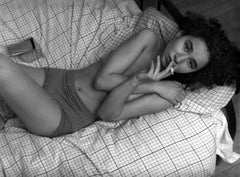
Female Nude, Contemporary Black and White Photography, Kate by Leonard Freed
By Leonard Freed
Located in New york, NY
Kate, from the Kate series, Garrison, New York, 2002 by American photographer Leonard Freed is an 11” x 14” gelatin silver photograph signed verso (on back of photo) by the estate. I...
Category
Early 2000s Contemporary Virgil Apger Art
Materials
Silver Gelatin, Photographic Film, Photographic Paper
Virgil Apger art for sale on 1stDibs.
Find a wide variety of authentic Virgil Apger art available for sale on 1stDibs. You can also browse by medium to find art by Virgil Apger in film, photographic film, silver gelatin print and more. Much of the original work by this artist or collective was created during the 20th century and is mostly associated with the modern style. Not every interior allows for large Virgil Apger art, so small editions measuring 8 inches across are available. Customers who are interested in this artist might also find the work of Clarence Sinclair Bull, Morris Engel, and Ed Feingersh. Virgil Apger art prices can differ depending upon medium, time period and other attributes. On 1stDibs, the price for these items starts at $176 and tops out at $176, while the average work can sell for $176.