By Stanley Bate
Located in Westport, CT
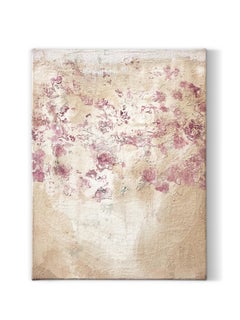
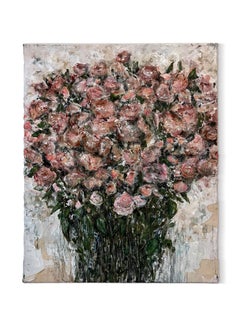
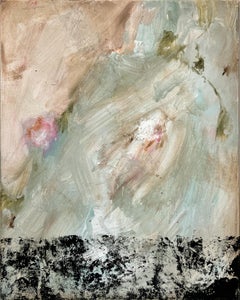
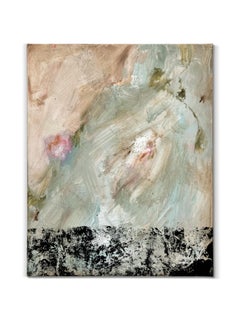
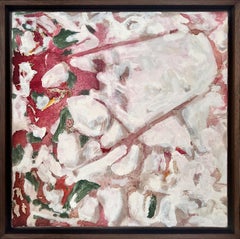
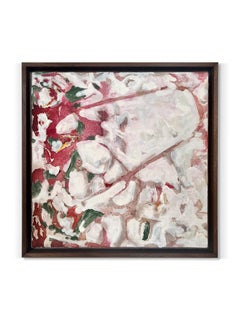
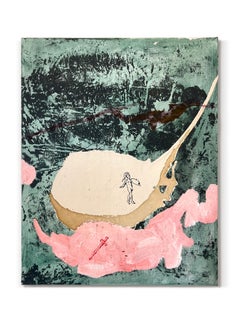
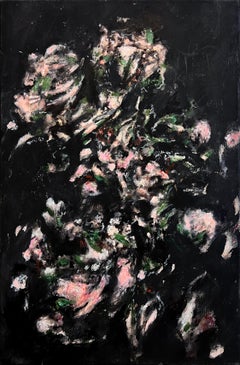
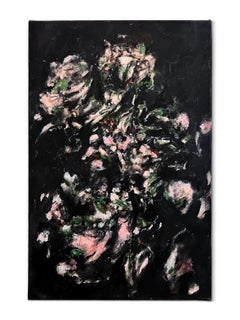
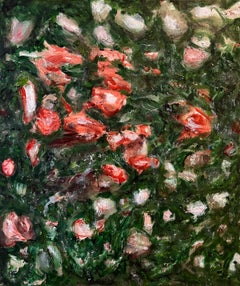
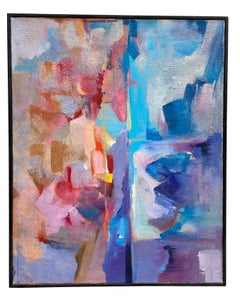
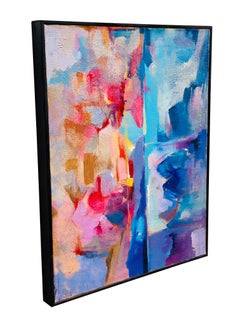
This Modern Abstract Expressionist painting by Stanley Bate is made with oil paint on canvas and features a light, neutral palette with a grid-like pattern throughout the abstract composition. The artist layers paint on the canvas, creating texture among softly blended colors. The painting itself is 24" x 36" and measures 27" x 37" 1.5" framed. It is signed by the artist in the lower right-hand corner of the painting and is framed in a very thin floater frame with a silver face and brown sides. It is ready to hang.
Stanley Bate was born on March 26, 1903 in Nashville, Tennessee. The Bates were an established Tennessee family, in fact, Henry’s brother William Bate was the governor of Tennessee from 1883-1887 and a United States Senator from 1887-1905. Stanley studied art at the Watkins Institute in Nashville.
In the 1920’s Bate moved to New York City to study at the Art Students League under Frederick Bridgman. He soon landed a job with Encyclopedia Britannica, and from 1927-1929 served as art editor. From 1929 until his death in 1972, Stanley was a self-employed artist. He taught art classes at both the Art Students League and the Albany Institute of History and Art and brought in extra income by making illustrations for magazines such as “Outdoor Life” and “Popular Science”.
On January 27, 1934 Stanley married Emilie Rossel. Emilie had emigrated from Switzerland to New York in 1923. She found work as a governess to Alfred Vanderbilt and later as an executive secretary for Wall Street investment brokers Kahn, Loeb and Co. Emilie met Stanley in New York in the early 1930’s when she attended one of his art exhibitions with a friend. The couple, who had no children, lived on 34th Street in Manhattan. During this period, Bate was producing and exhibiting his art and joined several artists groups. Stanley and Emilie became part of the New York art scene, dining weekly at the Society of Illustrators Clubhouse.
Stanley Bate’s time in New York was pivotal in the formation of his painting style. He lived in New York during the inception of one of the most important Modern Art movements, one that helped New York replace Paris as the center of avant-garde art. This movement, which was called the New York School...
Category
1960s Abstract Vittorio La Spina Art