Wiener Keramik Werkstätte Decorative Objects
to
1
3
3
3
1
1
2
1
3
1
3
3
3
Height
to
Width
to
3
3
3
3
1,325
720
486
468
Creator: Wiener Keramik Werkstätte
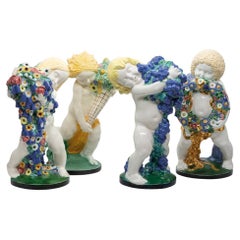
Michael Powolny Four Seasons Putti Sculpture, Glazed Ceramic, 1906
By Michael Powolny, Wiener Keramik Werkstätte
Located in Klosterneuburg, AT
four seasons Putti, Michael Powolny, Wiener Keramik, ca. 1906
Michael Powolny's renowned design is one of the most famous example of Jugendstil ceramics. They were produced by Wiene...
Category
Early 1900s Austrian Jugendstil Antique Wiener Keramik Werkstätte Decorative Objects
Materials
Ceramic
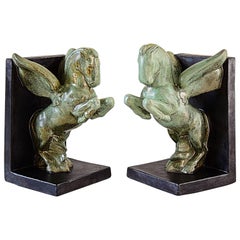
Pair of Art Deco Wienerberger Ceramics Bookholder Showing Pegasus, circa 1925s
By Wiener Keramik Werkstätte
Located in Wien, AT
Pair of Wienerberger ceramics bookholder showing pegasus.
Excellent original condition.
Category
1920s Austrian Art Deco Vintage Wiener Keramik Werkstätte Decorative Objects
Materials
Ceramic

$602 Sale Price / set
72% Off
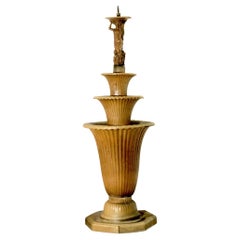
Original and Unique Ceramic Fountain by Otto Prutscher and Michael Powolny, 1914
By Otto Prutscher, Wiener Keramik Werkstätte, Michael Powolny
Located in Vienna, AT
Executed by Michael Powolny for the Wienerberger Keramikwerkstätten, ceramic and stoneware, ochre colored, body holding a dish in her outstretched arms standing above a three-tired C...
Category
Early 20th Century Austrian Jugendstil Wiener Keramik Werkstätte Decorative Objects
Materials
Ceramic, Stoneware
Related Items
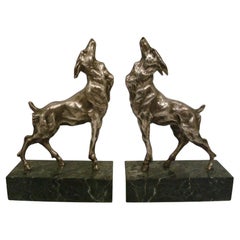
Art Deco Emile Carlier Figural Goat Bookends, France 1925
By Émile Nestor Joseph Carlier 1
Located in Buenos Aires, Olivos
Art Deco Bookends. Emile Joseph Nestor Carlier, (French, 1849-1927). Figural Goat Bookends. Silvered Metal mounted over Green Marble bases. Nice and heav...
Category
Early 20th Century French Art Deco Wiener Keramik Werkstätte Decorative Objects
Materials
Marble, Metal
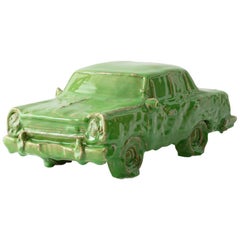
"Leaf Rambler" Glazed Ceramic Car Sculpture
By Keith Simpson
Located in Brooklyn, NY
Keith Simpson, who grew up in St. John Washington, a farming community of about 600 people in eastern WA state, always makes the underdog models of cars. He says, "They are like the ...
Category
2010s American Modern Wiener Keramik Werkstätte Decorative Objects
Materials
Ceramic, Stoneware
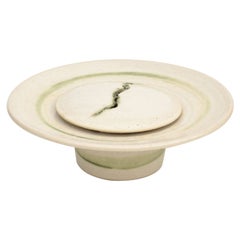
Architectural Studio Pottery Fountain by Piet Knepper
By Piet Knepper, Mobach
Located in London, GB
Fountain with two different tops by Piet Knepper for Mobach white glaze with copper oxide details and cracked surface, hand turned studio ceramic .
This is an example of Modern Scho...
Category
1980s European Vintage Wiener Keramik Werkstätte Decorative Objects
Materials
Ceramic
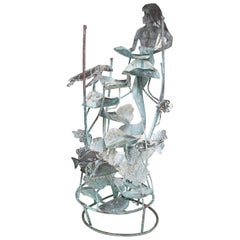
Copper Mermaid Fountain by Glen Mayo
By Glen Mayo
Located in West Palm Beach, FL
Whimsical fountain sculpture, of copper, by metal artist Glen Mayo; its mermaid focal point holding a leaf which cascades water down the fountain, among turtles, angel fish, other se...
Category
1990s North American Wiener Keramik Werkstätte Decorative Objects
Materials
Copper
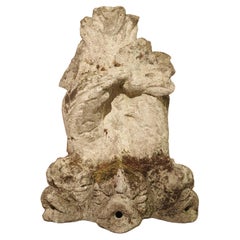
Antique French Stone Fountain Piece with Triple Dolphin Spouts, Circa 1900
Located in Dallas, TX
This charming French fountain piece with triple dolphin spouts was made circa 1900. The dolphins are made from reconstituted stone, which is natural lim...
Category
Early 1900s French Antique Wiener Keramik Werkstätte Decorative Objects
Materials
Stone
$2,700
H 17.5 in W 13.25 in D 10 in
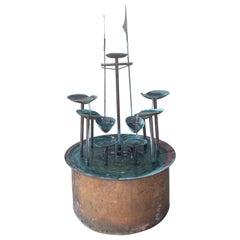
Wonderful Modernist Kenetic Motion Copper Fountain / Water Feature, Hand Made
Located in Buffalo, NY
Ingenious copper fountain / water feature, solid copper construction, Modernist design Artisan made, hand executed. Sculpture in motion, great for garden, or indoor space.
Category
1970s American Mid-Century Modern Vintage Wiener Keramik Werkstätte Decorative Objects
Materials
Copper
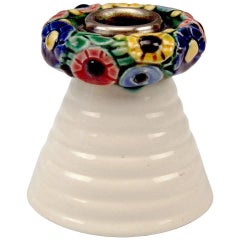
Michael Powolny VWGK Vienna Candlestick Made, circa 1907
By Michael Powolny
Located in Vienna, AT
Elegant candlestick for holding one candle
Modelled by Michael Powolny (1871-1954), circa 1907
Hallmarked:
Manufactured by Wiener Keramik and Gmundner Keramik
(union Of Vienna Ceramics & Gmunden Ceramics - VWGK / Hallmarked)
Material is Ceramics (glossy finish / multicolored painted).
Model Number 142
Made circa 1913
Subject: The cream white candlestick is decorated with horizontal lines attached to surface. The Grommet is surrounded/encircled by A Wreath Of Flowers' blossoms.
Height: 8.0 cm (= 3.14 inches)
Diameter: 8.0 cm (= 3.14 inches)
Bibliography:
Waltraud Neuwirth, Markenlexikon fu¨r Kunstgewerbe (3), Wiener Keramik / Modelle 1906-13; page 122
Experts of Fine Arts assess Michael Powolny's work nowadays as result of activity of one the most important ceramics...
Category
Early 20th Century Austrian Art Nouveau Wiener Keramik Werkstätte Decorative Objects
Materials
Ceramic
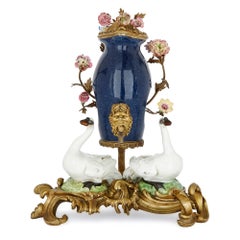
Meissen style porcelain and gilt bronze table fountain by Samson
Located in London, GB
This colourful porcelain table fountain, fashioned in the German Meissen style, was crafted in the 19th Century by the French porcelain company Samson et Cie.
The table fountain co...
Category
19th Century German Louis XV Antique Wiener Keramik Werkstätte Decorative Objects
Materials
Ormolu
$24,989
H 12.21 in W 10.63 in D 5.91 in
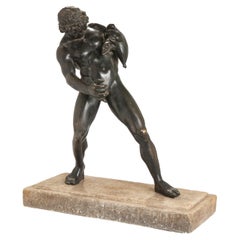
Nude Male Bronze Sculpture Fountain
Located in Malibu, CA
Bronze male sculpture signed. Fonderia Giorgio Sommer Calabritto Napoli
Thomas, sculptor, lived and worked in the Naples area, and especially on Capri, from 1889 to 1906. Given this ...
Category
20th Century Italian Renaissance Wiener Keramik Werkstätte Decorative Objects
Materials
Carrara Marble, Bronze
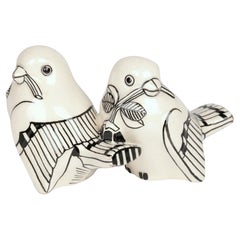
Michael Powolny Rare Pottery Pair Sparrows Figure c.1907
By Michael Powolny
Located in Bishop's Stortford, Hertfordshire
A delightful and rare Austrian Wiener Keramik pair of pottery sparrows by renowned sculptor and ceramicist Michael Powolny (Austrian, 1871-1954) and dating from around 1907.
Michael...
Category
Early 1900s Austrian Art Nouveau Antique Wiener Keramik Werkstätte Decorative Objects
Materials
Pottery
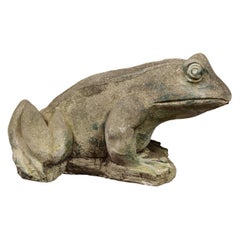
American Giant Stone Frog with Patina, Originally Used as a Fountain
Located in Atlanta, GA
An American giant stone frog from the 20th century, with great patina. Made in the USA in 1987, this giant stone stone frog used to be a fountain (notice the remnants of a pipe below...
Category
1980s American Vintage Wiener Keramik Werkstätte Decorative Objects
Materials
Stone
$2,750
H 12.75 in W 15.5 in D 22.5 in
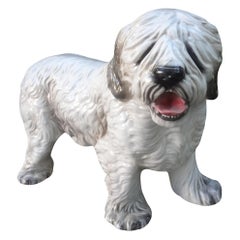
Italian Glazed Ceramic Dog Sculpture
Located in Houston, TX
Italian Glazed Ceramic Dog Sculpture.
Well detailed Italian glazed ceramic dog statue or sculpture of a Sheep Dog.
Stamped Ronzan, Made In Italy.
Category
1960s Italian Hollywood Regency Vintage Wiener Keramik Werkstätte Decorative Objects
Materials
Ceramic
Previously Available Items
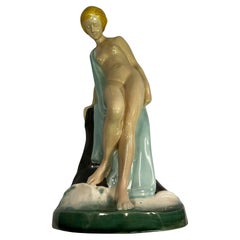
Bathing woman figure, Wiener Kunstkeramische Werkstätte, ceramics, 1915, Vienna
By Wiener Keramik Werkstätte
Located in Wien, AT
Very rare figure, the bathing woman designed by Johanna Meier-Michel, executed by the Vienna Kunstkeramische Werkstätte, during the Art Nouveau period.
This ceramic piece, model "Di...
Category
1910s Austrian Jugendstil Vintage Wiener Keramik Werkstätte Decorative Objects
Materials
Ceramic
H 10.24 in W 5.12 in D 4.72 in
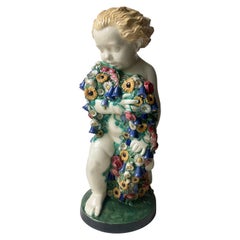
Michael Powolny Ceramic Pottery Sculpture, Large Putto "Spring" Winer Keramik
By Wiener Keramik Werkstätte, Michael Powolny
Located in Los Angeles, CA
Beautiful, ceramic / pottery Putto. "Figure of Spring" designed by Michael Powolny 1871-1954, made by Wiener Ceramic, marked with MP and WK as shown in picture. This is one of the la...
Category
Early 20th Century Austrian Art Nouveau Wiener Keramik Werkstätte Decorative Objects
Materials
Ceramic
Excellent Centerpiece of Two Cherubs Wiener Kunstkeramische Werkstaette c.1910
By Wiener Keramik Werkstätte
Located in Vienna, AT
Excellent Centrepiece Supported By Two Cherubs
Made by Wiener Kunstkeramische Werkstaette (Busch & Ludescher), Vienna
Most lovely appearance: Two cher...
Category
Early 20th Century Austrian Art Nouveau Wiener Keramik Werkstätte Decorative Objects
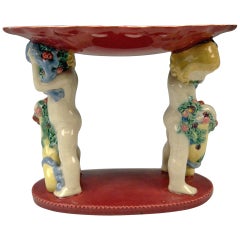
H 8 in W 10 in D 4.4 in
Wiener Keramik Werkstätte decorative objects for sale on 1stDibs.
Wiener Keramik Werkstätte decorative objects are available for sale on 1stDibs. These distinctive items are frequently made of ceramic and are designed with extraordinary care. There are many options to choose from in our collection of Wiener Keramik Werkstätte decorative objects, although brown editions of this piece are particularly popular. Many of the original decorative objects by Wiener Keramik Werkstätte were created in the Art Nouveau style in europe during the early 20th century. If you’re looking for additional options, many customers also consider decorative objects by Woka Lamps, Argentor of Vienna, and K.K. Kunst-Erzgiesserei Wien. Prices for Wiener Keramik Werkstätte decorative objects can differ depending upon size, time period and other attributes — on 1stDibs, these items begin at $2,010 and can go as high as $160,819, while a piece like these, on average, fetch $28,000.