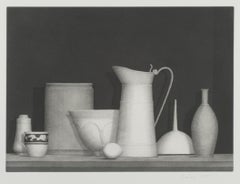
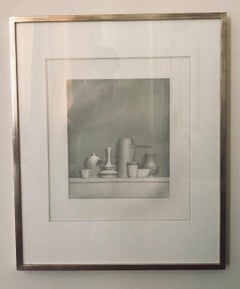
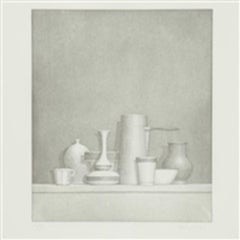
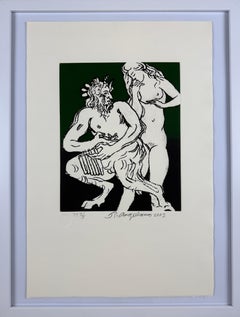
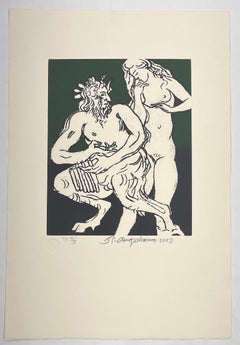
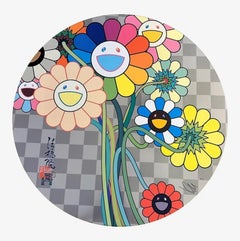
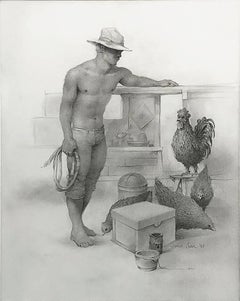
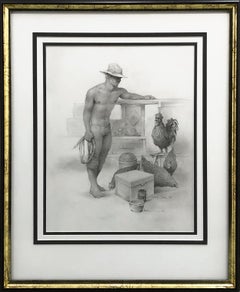
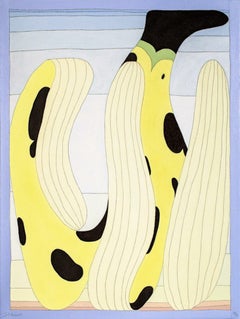
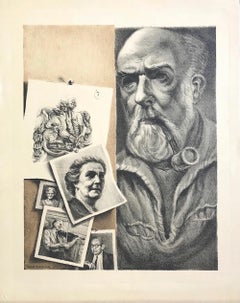
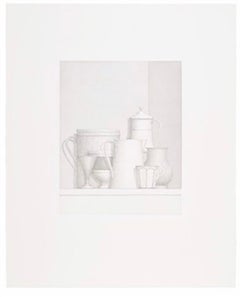
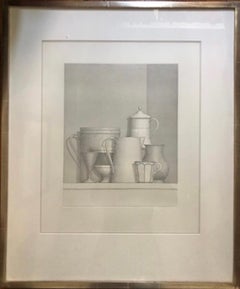
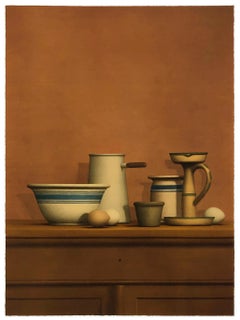
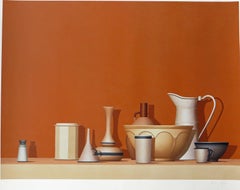
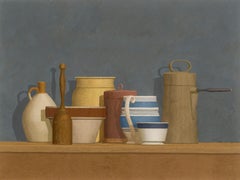
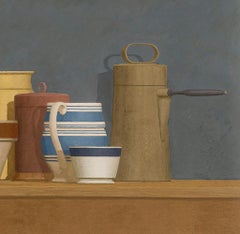
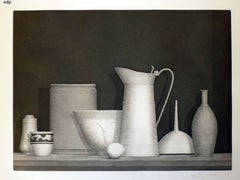
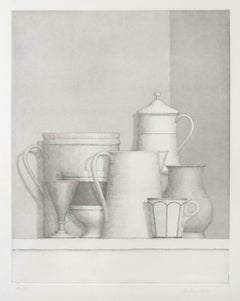
Untitled (Still Life)
Etching, aquatint and soft ground, 2001
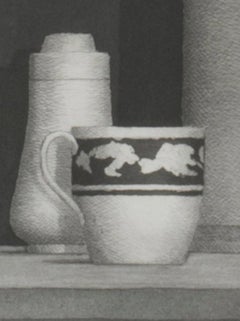
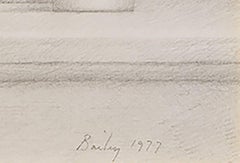
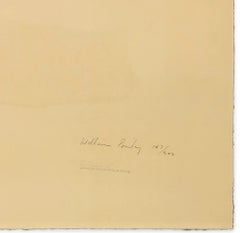
Signed in pencil (see photo)
Edition: 260
Published by the Print Club of Cleveland, Publication 80, 2002
Printed by Felix Harlan at Harlan and Weaver, New York
William Bailey, Modernist Figurative Painter, Dies at 89
He swathed his nudes and still lifes of eggs, vases, bottles and bowls in a breathless, deceptively serene atmosphere heavy with mystery.
The painter William Bailey in 2009. He was never given a career survey in a major museum, but his influence, particulary on students at Yale, was deep.Credit...Ford Bailey
By William Grimes for the New York Times
April 18, 2020
William Bailey, whose pristine, idealized still lifes and female nudes made him one of the leading figures in the return of figurative art in the 1980s, died on April 13 at his home in Branford, Conn. He was 89.
His death was confirmed by his daughter, Alix Bailey.
Beyond his painting, Mr. Bailey influenced generations of students in his many years as a teacher at the Yale School of Art.
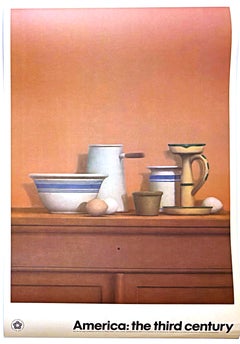
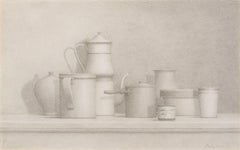
In some of his best-known work, Mr. Bailey arranged simple objects — the eggs, bowls, bottles and vases that he once called “my repertory company” — along a severe horizontal shelf, or on a plain table, swathing them in a breathless, deceptively serene atmosphere heavy with mystery.
His muted ochres, grays and powdery blues conjured up a still, timeless world inhabited by Platonic forms, recognizable but uncanny, in part because he painted from imagination rather than
“They are at once vividly real and objects in dream, and it is the poetry of this double life that elevates all this humble crockery to the realm of pictorial romance,” Hilton Kramer wrote in The New York Times in 1979.
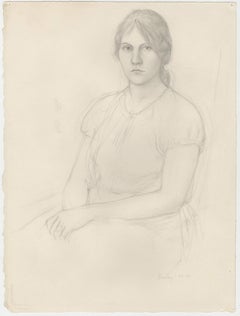
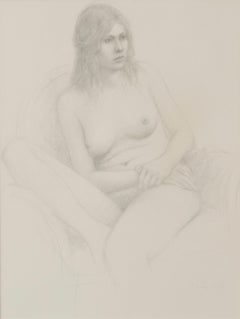
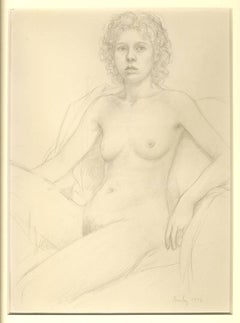
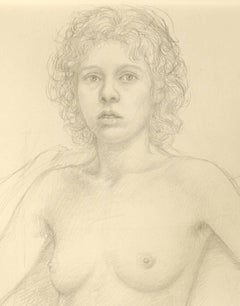
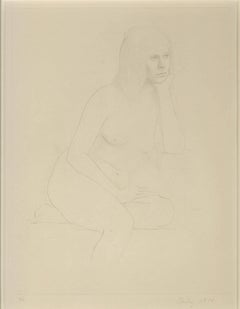
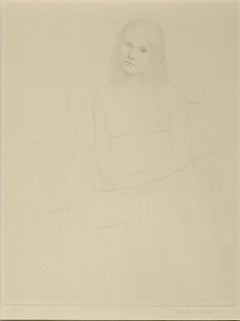
Mr. Bailey’s female figures, some clothed in a simple shift or robe and others partly or entirely nude, are disconcertingly impassive, implacable and unreadable, fleshly presences breathing an otherworldly air.
The critic Mark Stevens, writing in Newsweek in 1982, credited Mr. Bailey with helping to “restore representational art to a position of consequence in modern painting.”
But his version of representation was entirely idiosyncratic, seemingly traditional but in fact “a modernism so contrarian,” the artist Alexi Worth wrote in a catalog essay for the Betty Cuningham Gallery in 2010, “that it feels, despite its historical sophistication, almost like a brand of outsider art.”
William Harrison Bailey...
Category
Early 2000s Contemporary William Bailey Art