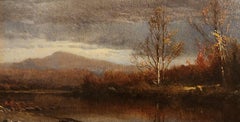
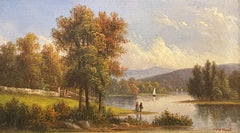
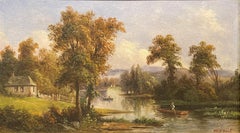
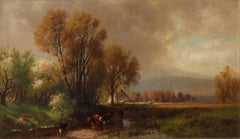
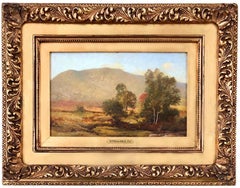
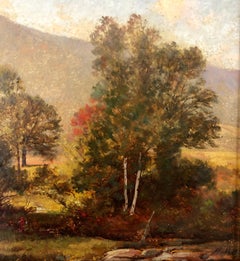
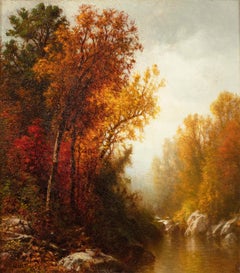
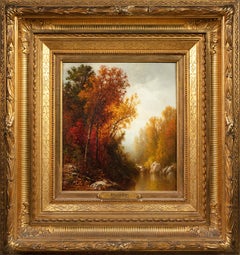
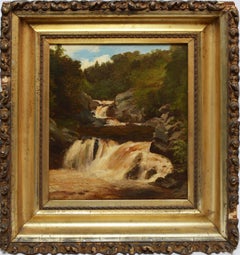
By William Hart
Located in New York, NY
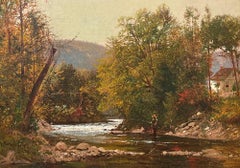
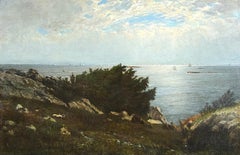
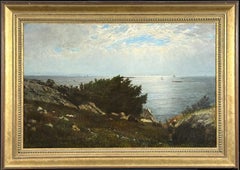
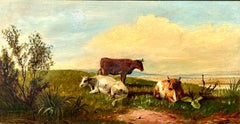
William M. Hart (1823 - 1894)
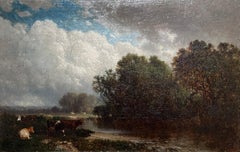
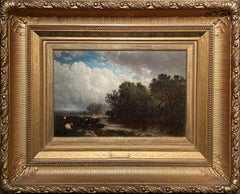
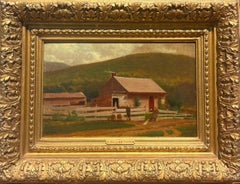
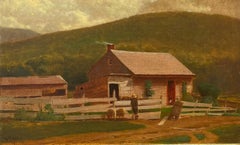
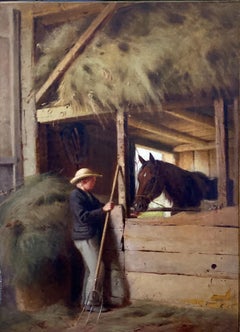
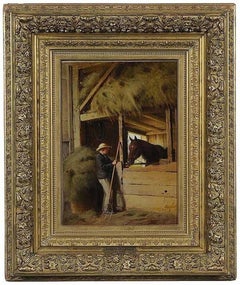
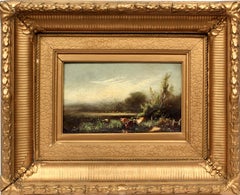
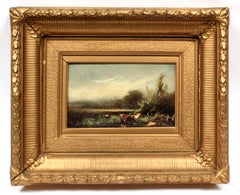
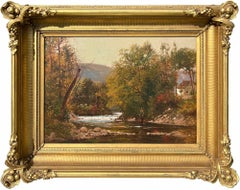
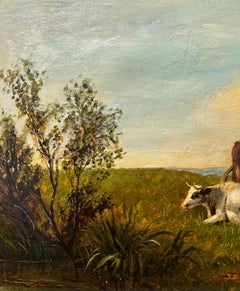
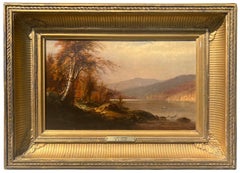
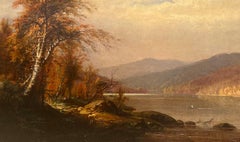
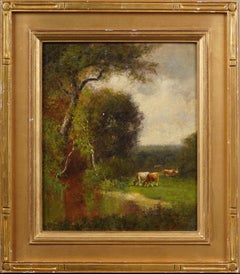
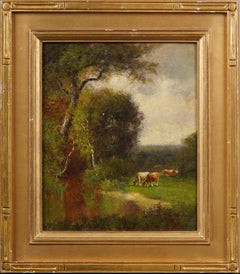
Interior of a Stable
Oil on canvas
17 x 12 inches
Provenance
William Macbeth Gallery, New York
Mrs. Mabel Brady Garvan Collection
Christie's New York, Sporting Art, November 28, 1995, Lot 116
Ann Carter Stonesifer, Maryland
Estate of above
Brunk Auctions, Asheville, North Carolina, January 27 2018, Lot 777
Exhibited
New York, The Metropolitan Museum of Art, Life in America, April 24 - October 29, 1939, no. 123, illustrated.
New York, Macbeth Gallery, 1892: Sixtieth Anniversary Exhibition, April 1952, p. 5, no. 18.
Literature
Turner Reuter Jr, Animal and Sporting Artists in America, Middleburg, Virginia, 2008, p. 306.
Gary Stiles, William Hart: Catalogue Raisonné and Artistic Biography, no. 1126, illustrated.
It should be noted that the Francis Patrick Garvan and Mrs. Mabel Brady Garvan collection, of which this painting was a part of, was one of the foremost American Art collections and now makes up a large part of the Smithsonian American Art Museum and the Yale University Art Gallery collections.
Born in 1823 in Paisley, Scotland, William Hart emigrated with his parents to the United States at the age of nine and settled in Albany, New York. It was here that Hart first began his artistic training when he was placed under the tutelage of Messrs, Eaton & Gilbert, the prestigious coach-makers from Troy, New York. During this time, Hart learned how to decorate coach panels, covering them with either landscapes or figurative compositions. At the age of seventeen, he was eagerly contemplating an artist’s profession. Consequently, he left the mechanical trade of coach-making and began expanding his artistic pursuits to more refined endeavors.
Hart followed coach-making with decorating window shades and later developed an interest in portraiture. Around 1840, he established his first formal studio in his father’s woodshed in Troy. There, he created many likenesses of individuals, affording him a nominal income. Once, he remarked that he felt prouder over his first fee of five dollars for painting a head then for the larger sums he would command later in his career. Nevertheless, his wages from portraits during this early period proved insufficient. Thus, he expanded into landscape painting, allowing him to barter his works or sell them for modest prices.
In 1842, Hart moved to Michigan in an attempt to further his success; portraiture remained his primary means of support. Unfortunately, his experiences in the West were disappointing. Hart spent three years living a rough existence until he finally returned to Albany in 1845. Upon his return, he fully devoted himself to the art of landscape painting. Despite his failing health, he worked diligently to perfect his skill until 1849 when he traveled abroad to his native land of Scotland. This trip was made possible through the generosity of his patron and advisor, Dr. Ormsby of Albany. For three years, he studied in the open-air, creating brilliant sketches of the Scottish Highlands and the surrounding British Isles.
Returning to Albany once more in 1852, Hart enjoyed improved health and was reinvigorated with purpose. The following year, he moved to New York and opened a studio, promoting himself as a specialist in landscape painting. Hart became a regular contributor to the National Academy of Design. His works received a great deal of attention from artists and connoisseurs alike, all of whom praised him for his fresh, self-taught style. In 1855, he was designated as an associate of the National Academy of Design; three years later he was elected to Academician. In 1865, he was unanimously chosen to be the first president of the Brooklyn Academy of Design. It was during his tenure there that he delivered his famous lecture The Field and Easel, which emphasized the distinguishing principles of landscape art in America. Hart argued that landscape painters should express the “look of the place” being depicted.Critics during the 1870s noted his sensitive balance between capturing a strict “real” interpretation of nature and that of a more “ideal” sentimental tone. For instance, in 1869, Putnam Magazine noted that Hart brought back “exquisite studies” of the surrounding Tappan...
Category
19th Century Hudson River School William Hart Art