Yongjin Han Decorative Objects

Korean, 1934-2019

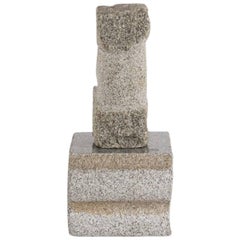
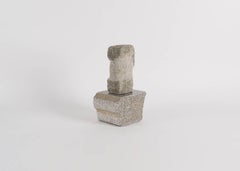
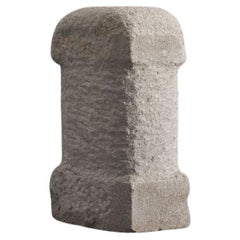
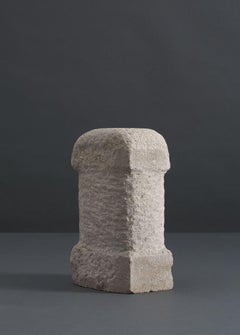
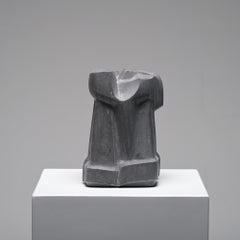
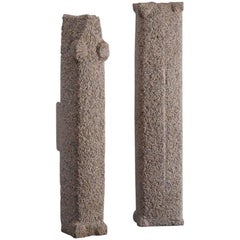
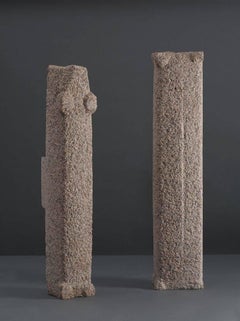
Yongjin Han (1934-2019) is a distinguished sculptor known for bridging the Korean tradition of direct stone carving with Western modernism. Born in Seoul and educated at Seoul National University under abstract pioneer Kim Chong Yung, Han relocated to the United States in 1967 to study at Dartmouth and Columbia.

Han’s work is defined by a deep spiritual harmony with nature. Working alone and utilizing manual tools, he engaged in an arduous dialogue with his material—primarily granite—to draw out the stone's inherent character. The result is work described as possessing "gentle grace and warmth" despite its rugged medium. Han’s sculptures are held in prestigious collections worldwide, including the National Museum of Contemporary Art in Seoul, the Herning Kunst Museum in Denmark, and the Smart Museum of Art at the University of Chicago.

to
7
6
7
6
7
1
2
2
8
7
4
1
1
13
13
13
Height
to
Width
to
13
13
13
13
1,311
725
484
482
Creator: Yongjin Han
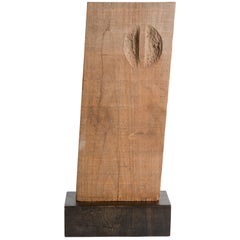
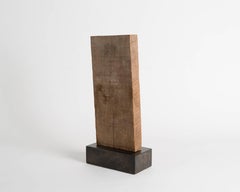
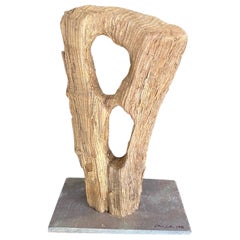
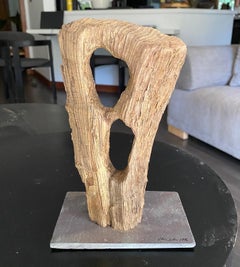
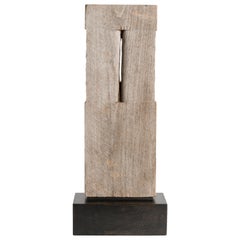
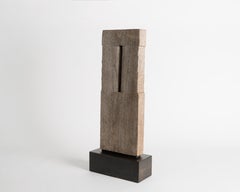
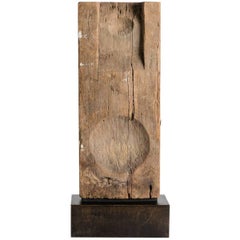
Yongjin Han, a Piece of Wood, Sculpture, United States, 1976
By Yongjin Han
Located in New York, NY
Unique piece. Sculpted in 1976, this is a rare piece for the famed sculptor Yongjin Han, who usually worked in stone. Nonetheless, it is a quintessential example of his serene com...
Category

Late 20th Century American Yongjin Han Decorative Objects

Materials

Wood

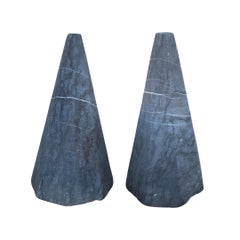
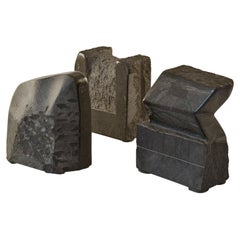
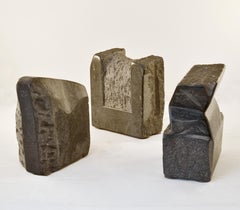
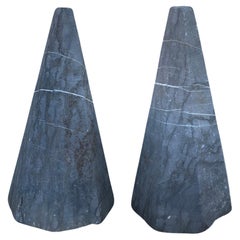
Yongjin Han, Two Pieces of Bluestone, Sculpture, United States, 2010
By Yongjin Han
Located in New York, NY
Yongjin Han was born in Seoul, South Korea in 1934. After the Korean War—in which he fought, lying about his age in order to enlist—he was one of six students admitted to the sculpture program at the Seoul National University. At the time of his enrollment little of his native city remained intact; nonetheless, he had never felt more responsible to his work, firm in the conviction that artistic expression is every bit as essential to life and human nature as eating, drinking, or breathing. One of Han’s teachers was Kim Chong Yung, a pioneer of Korean abstract sculpture, and by the time of his graduation he had adopted the abstraction that had seized both Europe and the United States several years before. . In 1967 he relocated to the USA, where he studied at Dartmouth and Columbia. Over the course of his long career the artist returned to Korea with frequency and made extended stays in Japan and Europe. Trips to Korea signified something more than mere homesickness: Han’s work, though made largely in America, remained grounded in his rich cultural heritage. Korea rests on a bedrock of granite, and freestanding sculpture produced of the stone has for centuries demarcated sites of historical and religious significance. Han’s sculpture bridges this past with modernity. Richard A. Born, former Curator at the Smart Museum at the University of Chicago, has said that Han “brought Korea’s tradition of direct stone carving out of figuration into a refined, non-objective abstraction.” For his part, Han put very little stock in designations; his focus, instead, was on the stone itself. His pieces explore a certain harmonization with nature. Han, when describing his work, said, "As stone has been around since the beginning of time, it has much to teach us if we care to slow down and listen." He believed that each stone has its own history, character, and energy and that his task was to draw out these inherently spiritual qualities. He described his process as a “dialogue” with his material: "The stone tells me it has an itch in a certain spot, so I scratch it—and we both feel better!" Han worked alone and with manual tools, and the process is arduous. Carving stone this way takes time, and, what’s more, required great force—yet Han’s sculptures, even the monumental ones, are, as friend and fellow artist David Parker...
Category

21st Century and Contemporary American Yongjin Han Decorative Objects

Materials

Stone

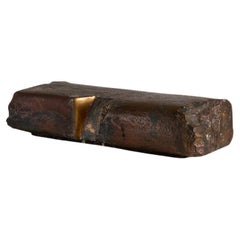
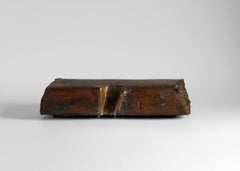
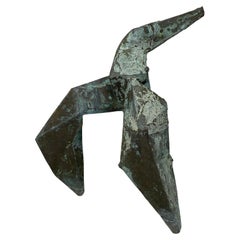
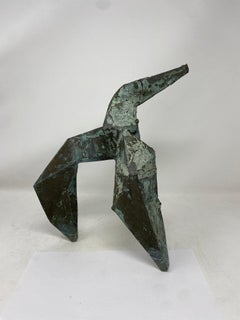
Yongjin Han, Untitled, Sculpture in Bronze, United States, 1996
By Yongjin Han
Located in New York, NY
Yongjin Han was born in Seoul, South Korea in 1934. After the Korean War—in which he fought, lying about his age in order to enlist—he was one of six students admitted to the sculpture program at the Seoul National University. At the time of his enrollment little of his native city remained intact; nonetheless, he had never felt more responsible to his work, firm in the conviction that artistic expression is every bit as essential to life and human nature as eating, drinking, or breathing. One of Han’s teachers was Kim Chong Yung, a pioneer of Korean abstract sculpture, and by the time of his graduation he had adopted the abstraction that had seized both Europe and the United States several years before. . In 1967 he relocated to the USA, where he studied at Dartmouth and Columbia. Over the course of his long career the artist returned to Korea with frequency and made extended stays in Japan and Europe. Trips to Korea signified something more than mere homesickness: Han’s work, though made largely in America, remained grounded in his rich cultural heritage. Korea rests on a bedrock of granite, and freestanding sculpture produced of the stone has for centuries demarcated sites of historical and religious significance. Han’s sculpture bridges this past with modernity. Richard A. Born, former Curator at the Smart Museum at the University of Chicago, has said that Han “brought Korea’s tradition of direct stone carving out of figuration into a refined, non-objective abstraction.” For his part, Han put very little stock in designations; his focus, instead, was on the stone itself. His pieces explore a certain harmonization with nature. Han, when describing his work, said, "As stone has been around since the beginning of time, it has much to teach us if we care to slow down and listen." He believed that each stone has its own history, character, and energy and that his task was to draw out these inherently spiritual qualities. He described his process as a “dialogue” with his material: "The stone tells me it has an itch in a certain spot, so I scratch it—and we both feel better!" Han worked alone and with manual tools, and the process is arduous. Carving stone this way takes time, and, what’s more, required great force—yet Han’s sculptures, even the monumental ones, are, as friend and fellow artist David Parker says, “all gentle grace and warmth” … [the sculptor] “engages with the stone as an equal—like wayfarers meeting on a path, Han and a stone spend time together and when they part, both are marked and changed forever.” Yongjin Han's career spanned decades and continents, and included several prestigious large-scale public commissions. In Seoul his work can be found at the National Museum of Contemporary Art, the IE Young Museum of Contemporary Art, the Whanki Museum, the Ewha Woman’s University Museum, Posong High School, and the 88 Olympics...
Category

21st Century and Contemporary American Yongjin Han Decorative Objects
Materials

Bronze

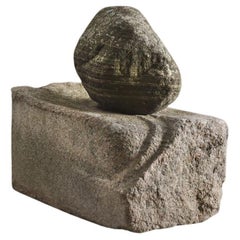
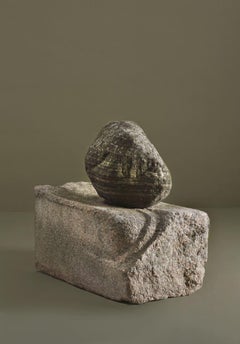
Yongjin Han, a Piece of Stone, Sculpture, United States, 2002
By Yongjin Han
Located in New York, NY
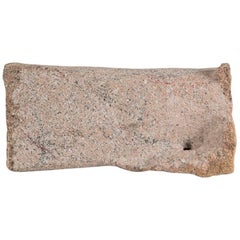
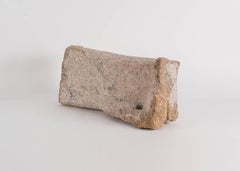
A piece of stone, a sculpture by Korean-American artist Yongjin Han.
Category

21st Century and Contemporary American Yongjin Han Decorative Objects

Materials

Granite

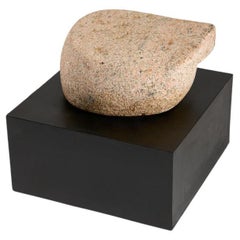
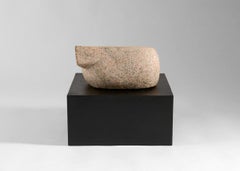
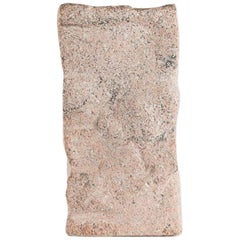
Yongjin Han, Untitled, Sculpture in Pink Granite, United States
By Yongjin Han
Located in New York, NY
Yongjin Han was born in Seoul, South Korea in 1934. After the Korean War—in which he fought, lying about his age in order to enlist—he was one of six students admitted to the sculpture program at the Seoul National University. At the time of his enrollment little of his native city remained intact; nonetheless, he had never felt more responsible to his work, firm in the conviction that artistic expression is every bit as essential to life and human nature as eating, drinking, or breathing. One of Han’s teachers was Kim Chong Yung, a pioneer of Korean abstract sculpture, and by the time of his graduation he had adopted the abstraction that had seized both Europe and the United States several years before. . In 1967 he relocated to the USA, where he studied at Dartmouth and Columbia. Over the course of his long career the artist returned to Korea with frequency and made extended stays in Japan and Europe. Trips to Korea signified something more than mere homesickness: Han’s work, though made largely in America, remained grounded in his rich cultural heritage. Korea rests on a bedrock of granite, and freestanding sculpture produced of the stone has for centuries demarcated sites of historical and religious significance. Han’s sculpture bridges this past with modernity. Richard A. Born, former Curator at the Smart Museum at the University of Chicago, has said that Han “brought Korea’s tradition of direct stone carving out of figuration into a refined, non-objective abstraction.” For his part, Han put very little stock in designations; his focus, instead, was on the stone itself. His pieces explore a certain harmonization with nature. Han, when describing his work, said, "As stone has been around since the beginning of time, it has much to teach us if we care to slow down and listen." He believed that each stone has its own history, character, and energy and that his task was to draw out these inherently spiritual qualities. He described his process as a “dialogue” with his material: "The stone tells me it has an itch in a certain spot, so I scratch it—and we both feel better!" Han worked alone and with manual tools, and the process is arduous. Carving stone this way takes time, and, what’s more, required great force—yet Han’s sculptures, even the monumental ones, are, as friend and fellow artist David Parker says, “all gentle grace and warmth” … [the sculptor] “engages with the stone as an equal—like wayfarers meeting on a path, Han and a stone spend time together and when they part, both are marked and changed forever.” Yongjin Han's career spanned decades and continents, and included several prestigious large-scale public commissions. In Seoul his work can be found at the National Museum of Contemporary Art, the IE Young Museum of Contemporary Art, the Whanki Museum, the Ewha Woman’s University Museum, Posong High School, and the 88 Olympics...
Category

21st Century and Contemporary American Yongjin Han Decorative Objects
Materials

Granite

Yongjin Han, A Piece of Stone, Granite Sculpture, United States, c. 1984
By Yongjin Han
Located in New York, NY
Yongjin Han was born in Seoul, South Korea in 1934. After the Korean War—in which he fought, lying about his age in order to enlist—he was one of six students admitted to the sculptu...
Category

1980s American Vintage Yongjin Han Decorative Objects

Materials

Granite

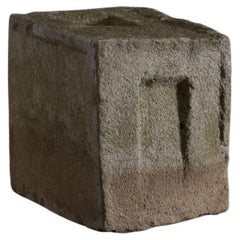
Yongjin Han, Two Pieces of Stone, Granite Sculpture, United States, 1993
By Yongjin Han
Located in New York, NY
Yongjin Han was born in Seoul, South Korea in 1934. After the Korean War—in which he fought, lying about his age in order to enlist—he was one of six students admitted to the sculptu...
Category

1990s American Yongjin Han Decorative Objects
Materials

Granite

Yongjin Han, a Piece of Wood, Sculpture, United States, circa 1985
By Yongjin Han
Located in New York, NY
Sculpted in 1985, this is a rare piece for the famed sculptor Yongjin Han, who usually worked in stone. Nonetheless, it is a quintessential example of his serene compositions. Uni...
Category

1980s American Vintage Yongjin Han Decorative Objects

Materials

Wood

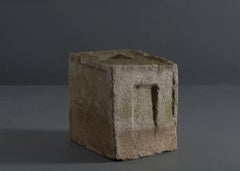
Yongjin Han, Two Pieces of Granite, Sculpture, United States, 2005
By Yongjin Han
Located in New York, NY
Two pieces of granite, a sculpture by Korean-American artist Yongjin Han.
Category

21st Century and Contemporary American Yongjin Han Decorative Objects
Materials

Granite

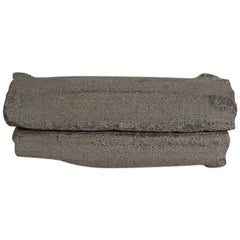
Yongjin Han, a Piece of Stone, Sculpture, United States, 2002
By Yongjin Han
Located in New York, NY
A piece of stone, a sculpture by Korean-American artist Yongjin Han.
Category

21st Century and Contemporary American Yongjin Han Decorative Objects
Materials

Granite

Yongjin Han, a Piece of Wood, Sculpture, United States, 1976
By Yongjin Han
Located in New York, NY
Yongjin Han was born in Seoul, South Korea in 1934. After the Korean War—in which he fought, lying about his age in order to enlist—he was one of six students admitted to the sculpture program at the Seoul National University. At the time of his enrollment little of his native city remained intact; nonetheless, he had never felt more responsible to his work, firm in the conviction that artistic expression is every bit as essential to life and human nature as eating, drinking, or breathing. One of Han’s teachers was Kim Chong Yung, a pioneer of Korean abstract sculpture, and by the time of his graduation he had adopted the abstraction that had seized both Europe and the United States several years before. . In 1967 he relocated to the USA, where he studied at Dartmouth and Columbia. Over the course of his long career the artist returned to Korea with frequency and made extended stays in Japan and Europe. Trips to Korea signified something more than mere homesickness: Han’s work, though made largely in America, remained grounded in his rich cultural heritage. Korea rests on a bedrock of granite, and freestanding sculpture produced of the stone has for centuries demarcated sites of historical and religious significance. Han’s sculpture bridges this past with modernity. Richard A. Born, former Curator at the Smart Museum at the University of Chicago, has said that Han “brought Korea’s tradition of direct stone carving out of figuration into a refined, non-objective abstraction.” For his part, Han put very little stock in designations; his focus, instead, was on the stone itself. His pieces explore a certain harmonization with nature. Han, when describing his work, said, "As stone has been around since the beginning of time, it has much to teach us if we care to slow down and listen." He believed that each stone has its own history, character, and energy and that his task was to draw out these inherently spiritual qualities. He described his process as a “dialogue” with his material: "The stone tells me it has an itch in a certain spot, so I scratch it—and we both feel better!" Han worked alone and with manual tools, and the process is arduous. Carving stone this way takes time, and, what’s more, required great force—yet Han’s sculptures, even the monumental ones, are, as friend and fellow artist David Parker...
Category

1970s American Vintage Yongjin Han Decorative Objects

Materials

Wood

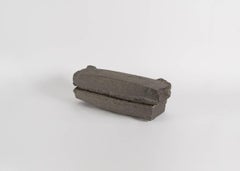
Yongjin Han, Piece of Wood, Sculpture, United States, 1976
By Yongjin Han
Located in New York, NY
Yongjin Han was born in Seoul, South Korea in 1934. After the Korean War—in which he fought, lying about his age in order to enlist—he was one of six students admitted to the sculpture program at the Seoul National University. At the time of his enrollment little of his native city remained intact; nonetheless, he had never felt more responsible to his work, firm in the conviction that artistic expression is every bit as essential to life and human nature as eating, drinking, or breathing. One of Han’s teachers was Kim Chong Yung, a pioneer of Korean abstract sculpture, and by the time of his graduation he had adopted the abstraction that had seized both Europe and the United States several years before. . In 1967 he relocated to the USA, where he studied at Dartmouth and Columbia. Over the course of his long career the artist returned to Korea with frequency and made extended stays in Japan and Europe. Trips to Korea signified something more than mere homesickness: Han’s work, though made largely in America, remained grounded in his rich cultural heritage. Korea rests on a bedrock of granite, and freestanding sculpture produced of the stone has for centuries demarcated sites of historical and religious significance. Han’s sculpture bridges this past with modernity. Richard A. Born, former Curator at the Smart Museum at the University of Chicago, has said that Han “brought Korea’s tradition of direct stone carving out of figuration into a refined, non-objective abstraction.” For his part, Han put very little stock in designations; his focus, instead, was on the stone itself. His pieces explore a certain harmonization with nature. Han, when describing his work, said, "As stone has been around since the beginning of time, it has much to teach us if we care to slow down and listen." He believed that each stone has its own history, character, and energy and that his task was to draw out these inherently spiritual qualities. He described his process as a “dialogue” with his material: "The stone tells me it has an itch in a certain spot, so I scratch it—and we both feel better!" Han worked alone and with manual tools, and the process is arduous. Carving stone this way takes time, and, what’s more, required great force—yet Han’s sculptures, even the monumental ones, are, as friend and fellow artist David Parker...
Category

Late 20th Century American Yongjin Han Decorative Objects
Materials

Wood

Yongjin Han, A Piece of Stone, Granite Sculpture, United States, 1993
By Yongjin Han
Located in New York, NY
Yongjin Han was born in Seoul, South Korea in 1934. After the Korean War—in which he fought, lying about his age in order to enlist—he was one of six students admitted to the sculptu...
Category

1990s American Yongjin Han Decorative Objects
Materials

Granite

Related Items
Metal Sculpture of Two Parrots
By Curtis Jeré
Located in Los Angeles, CA
Metal sculpture of two parrots by Curtis Jere.
Category

Late 20th Century American Yongjin Han Decorative Objects
Materials

Metal

Metal Sculpture of Two Parrots
$2,600
H 33 in W 13 in D 13 in
Stone Monkeys Set of 3 Large Sculpture in Stone
Located in Paris, FR
Sculpture stone monkeys set of 3 large in carved stone. Measures: L 16 x D 12 x H 32cm each.
Category

21st Century and Contemporary Indonesian Yongjin Han Decorative Objects
Materials

Stone

Stone Monkeys Set of 3 Large Sculpture in Stone
$939 / set
H 12.6 in W 6.3 in D 4.73 in
14.5" Jade 2 piece Sculpture of Grapes and Birds
Located in Pasadena, TX
This sculpture is carved from Jade. The carving is depicting a pair of birds, perching on a grapevine, perhaps eating fruit or singing and getting some much needed rest. The sculptur...
Category

Late 20th Century Chinese Chinese Export Yongjin Han Decorative Objects
Materials

Jade

14.5" Jade 2 piece Sculpture of Grapes and Birds
$1,190 / set
H 14.5 in W 12 in D 4 in
Pair of Antique Chinese Stone Figures Statues Han Style
Located in Somis, CA
A pair of vintage solid stone court attendants. Of tall slender form, wearing long flowing robes flaring at the bottom with hands within wide, decorative cuffs. The realistically mod...
Category

Mid-20th Century Chinese Han Yongjin Han Decorative Objects
Materials

Stone

Pair of Antique Chinese Stone Figures Statues Han Style
$6,500 Sale Price / set
58% Off
H 40 in W 11 in D 8 in
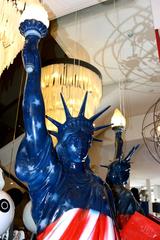
Liberty Statue United States Flag Sculpture
Located in Paris, FR
Sculpture Liberty Statue United States flag painted. Sculpture in melting. Unique and Exceptional Piece.
Category

21st Century and Contemporary French Yongjin Han Decorative Objects
Materials

Aluminum

Liberty Statue United States Flag Sculpture
$14,146
H 96.46 in W 33.08 in D 22.64 in
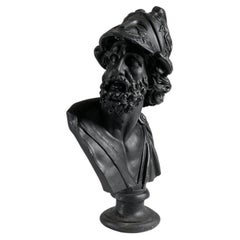
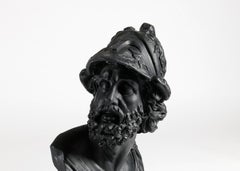
Bronze Sculpture Soldier in Armor
Located in Buenos Aires, Argentina
Bronze sculpture soldier in armor Onix base origin France circa 1900 natural wear Very good condition the measurements are with its base.
Category

Early 1900s French Neoclassical Antique Yongjin Han Decorative Objects
Materials

Bronze

Bronze Sculpture Soldier in Armor
$560 Sale Price
20% Off
H 11.42 in W 4.34 in D 4.34 in
Huge Carved Stone Garden Statue Sculpture of Regal Big Cat Lion Center Piece
Located in West Hollywood, CA
Huge Carved Stone Garden Statue Sculpture of Regal Big Cat Lion Center Piece . Exquisite monumental Hand carved Stone Figure of a regal lion Garden Statue Sculpture , as a fountain C...
Category

19th Century European Antique Yongjin Han Decorative Objects
Materials

Stone, Limestone

Large Prehistoric Natural Piece of Petrified Wood
Located in Meer, VAN
Large Prehistoric Natural Piece of Petrified Wood A large and very decorative piece of prehistoric petrified wood in its natural form. Truly a gem on you console table, cabinet or...
Category

15th Century and Earlier Antique Yongjin Han Decorative Objects
Materials

Wood

Large Prehistoric Natural Piece of Petrified Wood
$2,942
H 5.71 in W 17.33 in D 5.91 in
Abstract Stone Sculpture in the style of Jean Hans Arp Mid Century Modern 24.5"
Located in Atlanta, GA
Large Abstract Stone Sculpture, in the style of Jean Arp, artist unknown, probably American, circa 1950s. It measures an impressive 24.5...
Category

1960s American Mid-Century Modern Vintage Yongjin Han Decorative Objects
Materials

Stone

Minimalist Abstract Sculpture in Stainless Steel, Granite, Lucite, Unsigned
Located in Miami, FL
Minimalist Abstract sculpture in stainless steel, granite, Lucite and is Unsigned Offered for sale is a large minimalist abstract sculp...
Category

Late 20th Century American Minimalist Yongjin Han Decorative Objects
Materials

Granite, Stainless Steel

Minimalist Abstract Sculpture in Stainless Steel, Granite, Lucite, Unsigned
$1,500 Sale Price
37% Off
H 63.75 in W 13 in D 13 in
Heather Jansch Signed British United Kingdom Sculptor Abstract Wood Sculpture
Located in Studio City, CA
A wonderful and engaging organic natural elements sculpture by renowned UK/United Kingdom artist Heather Jansch (1948-2021). Jansch was widely recognized in the British artworld for...
Category

1980s British Modern Vintage Yongjin Han Decorative Objects
Materials

Wood, Driftwood

1900s Belgian Bluestone Decoration
Located in High Point, NC
This 1900s Belgian Bluestone Decoration exemplifies early 20th-century European craftsmanship, carved from dense natural bluestone with a soft, time-weathered patina. Its sculptural ...
Category

Early 20th Century Belgian Yongjin Han Decorative Objects
Materials

Stone

1900s Belgian Bluestone Decoration
$1,395
H 17.6 in W 11.7 in D 11.7 in
Previously Available Items
Yongjin Han, "Two Standing Stones, " Vertical Sculpture, United States, 2017
By Yongjin Han
Located in New York, NY
Yongjin Han was born in Seoul, South Korea in 1934. After the Korean War—in which he fought, lying about his age in order to enlist—he was one of six students admitted to the sculptu...
Category

Late 20th Century American Other Yongjin Han Decorative Objects
Materials

Granite

Yongjin Han decorative objects for sale on 1stDibs.

Yongjin Han decorative objects are available for sale on 1stDibs. These distinctive items are frequently made of stone and are designed with extraordinary care. There are many options to choose from in our collection of Yongjin Han decorative objects, although brown editions of this piece are particularly popular. If you’re looking for additional options, many customers also consider decorative objects by Silas Seandel, Larry Mohr, and David Haskell. Prices for Yongjin Han decorative objects can differ depending upon size, time period and other attributes — on 1stDibs, these items begin at $18,000 and can go as high as $180,000, while a piece like these, on average, fetch $40,000.
Still Thinking About These?

All Recently Viewed