Keith Sheridan, LLC

to
67
389
258
104
99
86
79
24
18
17
15
14
13
10
10
8
7
7
6
6
6
6
6
4
3
3
3
3
3
2
1
1
1
1
1
1
16
13
12
11
9
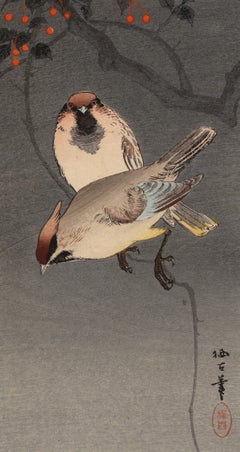
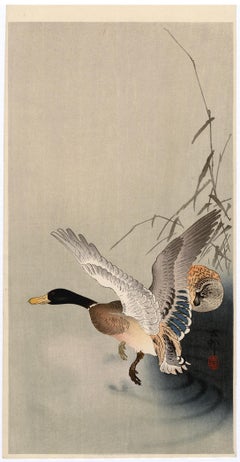
'Pair of Mallard Ducks' — Japanese Woodblock kachō-ga

'Pair of Mallard Ducks' — Japanese Woodblock kachō-ga

By Ohara Koson

Located in Myrtle Beach, SC

Ohara Koson, 'Pair of Mallard Ducks', color woodblock, c. 1920s. Signed 'Koson' in black ink with the artist’s red seal beneath, lower right. A superb, skillfully-inked impression, w...

Category

Early 1900s Showa Animal Prints

Materials

Woodcut

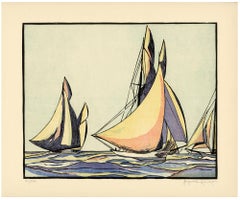
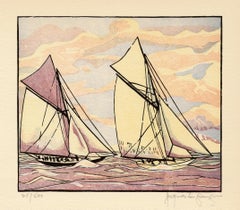
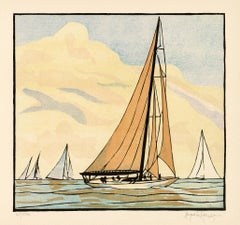
'The Magic Is Ahead' — 1870 America's Cup, 1930s Color Woodcut

'The Magic Is Ahead' — 1870 America's Cup, 1930s Color Woodcut

By Jacques La Grange

Located in Myrtle Beach, SC

Jacques La Grange, 'The Magic Is Ahead, 1870', color woodcut, edition 500, 1934. Signed and numbered '21/500' in pencil. A fine impression, with fresh colors, on cream wove paper, wi...

Category

1930s American Modern Figurative Prints

Materials

Woodcut

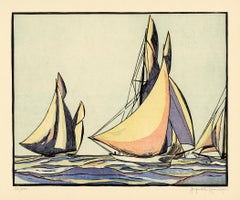
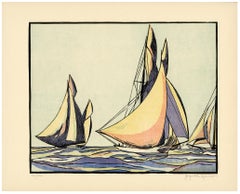
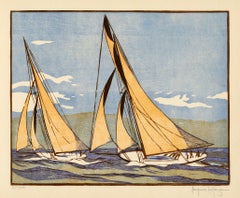
'Columbia Passes Shamrock II' — 1901 America's Cup, 1930s Color Woodcut

'Columbia Passes Shamrock II' — 1901 America's Cup, 1930s Color Woodcut

By Jacques La Grange

Located in Myrtle Beach, SC

Jacques La Grange, 'Columbia Passes Shamrock II', color woodcut, edition 500, 1934. Signed and numbered '25/500' in pencil. A fine impression, with fresh colors, on cream wove paper,...

Category

1930s American Modern Figurative Prints

Materials

Woodcut

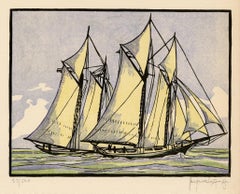
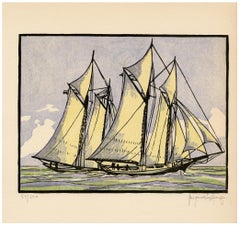
'Sappho Passes Livonia' — 1871 America's Cup, 1930s Color Woodcut

'Sappho Passes Livonia' — 1871 America's Cup, 1930s Color Woodcut

By Jacques La Grange

Located in Myrtle Beach, SC

Jacques La Grange, 'Sappho Passes Livonia, 1871', color woodcut, edition 500, 1934. Signed and numbered '25/500' in pencil. A fine impression, with fresh colors, on cream wove paper,...

Category

1930s American Modern Figurative Prints

Materials

Woodcut

'The Yankee' — 1934 America's Cup, 1930s Color Woodcut

'The Yankee' — 1934 America's Cup, 1930s Color Woodcut

By Jacques La Grange

Located in Myrtle Beach, SC

Jacques La Grange, 'The Yankee', color woodcut, edition 500, 1934. Signed and numbered '25/500' in pencil. A fine impression, with fresh colors, on cream wove paper, with margins (1 ...

Category

1930s American Modern Figurative Prints

Materials

Woodcut

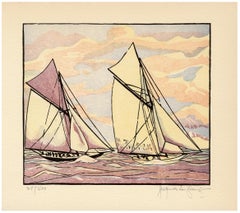
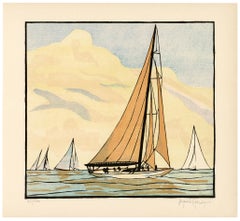
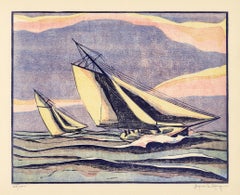
'The Magic Is Ahead' — 1870 America's Cup, 1930s Color Woodcut

'The Magic Is Ahead' — 1870 America's Cup, 1930s Color Woodcut

By Jacques La Grange

Located in Myrtle Beach, SC

Jacques La Grange, 'The Magic Is Ahead, 1870', color woodcut, edition 500, 1934. Signed and numbered '25/500' in pencil. A fine impression, with fresh colors, on cream wove paper, wi...

Category

1930s American Modern Figurative Prints

Materials

Woodcut

'Racing in a Storm' — 1885 America's Cup, 1930s Color Woodcut

'Racing in a Storm' — 1885 America's Cup, 1930s Color Woodcut

By Jacques La Grange

Located in Myrtle Beach, SC

Jacques La Grange, 'Racing in a Storm, 1885', color woodcut, edition 500, 1934. Signed and numbered '25/500' in pencil. A fine impression, with fresh colors, on cream wove paper, wit...

Category

1930s American Modern Figurative Prints

Materials

Woodcut

'The Start of the Race' — 1899 America's Cup, 1930s Color Woodcut

'The Start of the Race' — 1899 America's Cup, 1930s Color Woodcut

By Jacques La Grange

Located in Myrtle Beach, SC

Jacques La Grange, 'The Start of the Race, 1899', color woodcut, edition 500, 1934. Signed and numbered '21/500' in pencil. A fine impression, with fresh colors, on cream wove paper,...

Category

1930s American Modern Figurative Prints

Materials

Woodcut

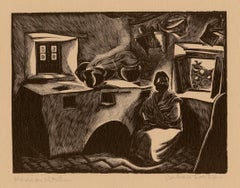
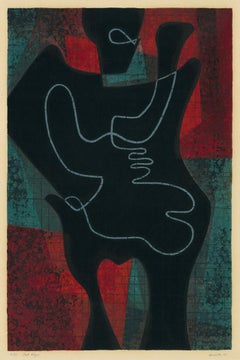
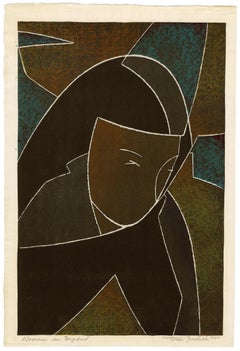
'Woman In Bagdad' — 1950s Japanese Sôsaku-hanga Abstraction

'Woman In Bagdad' — 1950s Japanese Sôsaku-hanga Abstraction

Located in Myrtle Beach, SC

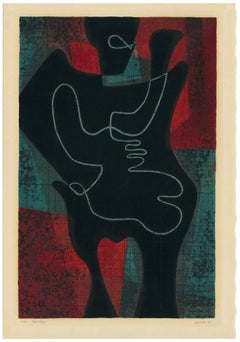
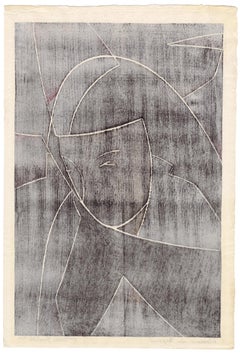
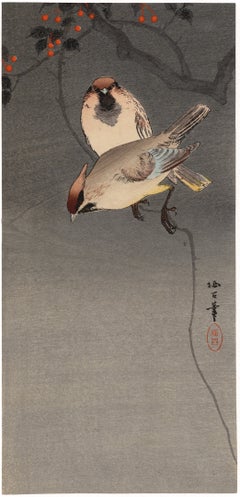
Toshi Yoshida, 'Woman In Bagdad', color woodblock print, 1954, edition not stated. Signed, dated, and titled, in pencil. A fine, richly-inked impression, with fresh colors, on cream-wove Japan paper; the full sheet with margins (1/2 to 7/8 inch); minor toning in the margins, otherwise in excellent condition. Self-carved, self-printed. Archivally sleeved, unmatted. Image size 14 13/16 x 9 7/8 inches; sheet size 16 1/4 x 11 inches (oban tate-e). Exhibited: 'Color in Relief: Wood Block Prints from Origins to Abstraction', Georgetown University Library, 2016. Literature: Oliver Statler, Modern Japanese Prints: An Art Reborn, 1959, pp.168-169; Eugene M. Skibbe, Yoshida Toshi 1911-1999: Diversity, Change, and Continuity in the Yoshida Art Tradition, Andon 53, Society for Japanese Arts, 1996, pp. 5-14; Kendall H. Brown, Yoshida Toshi: The Nature of Tranquility, in, A Japanese Legacy: Four Generations of Yoshida Family Artists, The Minneapolis Institute of Arts, 2002, pp. 72-80; p. 91, no. 55 Exhibition: Japan & Beyond: The Yoshida Family Legacy in Japanese Woodblock Prints, curated by Kendall Brown and Quyen Le, The Ruth and Sherman Lee Institute for Japanese Art, Hanford, CA. February 3, 2004 - March 27, 2004. Collections: Art Institute of Chicago, Clark Center for Japanese Art and Culture, Minneapolis Institute of Art, University of California Merced, University of Oregon (The Lavenberg Collection of Japanese Prints). ABOUT THE ARTIST Yoshida Toshi (1911-1995) began training at the age of 14 under his father, Yoshida Hiroshi, one of the most acclaimed artists of the Japanese 20th-century printmaking revival movement shin-hanga (’new prints’ created in the traditional collaborative system of Japanese printmaking). He studied from 1932 to 1935 at the Taiheiyo-Gakai (Pacific Painting Association), co-founded by his father. Before the Pacific War, Toshi traveled widely with his father in Asia, Europe, Egypt, and the United States. Later he continued his worldwide travels, especially in Mexico, the United States, Canada, and Africa. Following his father’s death in 1950, Toshi began his very personal exploration of abstraction, joining the sôsaku-hanga movement (’creative prints’ wherein the artist is creator, carver, and printer). During this richly creative period (1954 to 1973), Toshi created over three hundred nonobjective designs. In the early 1960s, Toshi returned to large-scale figurative work, concentrating on scenes of African wildlife in its natural habitat, and in 1984 he published the first of many illustrated children's books on African wildlife (Dobutsu Ehon Shirizu), which he continued to produce until the early 1990s. In 1966 he published a book with the artist Yuki Rei...

Category

1960s Abstract Abstract Prints
Materials

Woodcut

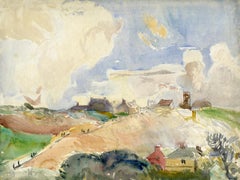
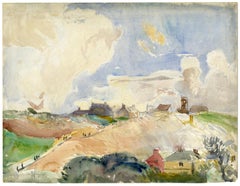
Storm Clouds Over Douarnenez, France — British Impressionism

Storm Clouds Over Douarnenez, France — British Impressionism

By Hayley Lever

Located in Myrtle Beach, SC

Hailey Lever 'Storm Clouds Over Douarnenez, Brittany, France', watercolor, 1904. Signed 'HL' in pencil, lower left. Titled and dated in pencil, on the original mat backing. A fine sp...

Category

Early 1900s Impressionist Landscape Drawings and Watercolors

Materials

Watercolor

'Hyde Park, England, 1904' — British Impressionism

'Hyde Park, England, 1904' — British Impressionism

By Hayley Lever

Located in Myrtle Beach, SC

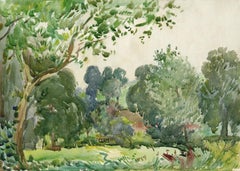
Hailey Lever 'Hyde Park, London, England, 1904', watercolor, 1904. Signed 'HL' in pencil, lower right. Titled and dated in pencil, on the original mat backing. A fine spontaneous wor...

Category

Early 1900s Impressionist Landscape Drawings and Watercolors

Materials

Watercolor

'Bridge, Venice' — Turn of the Century American Impressionism

'Bridge, Venice' — Turn of the Century American Impressionism

By John Marin

Located in Myrtle Beach, SC

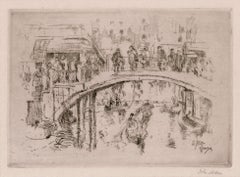
John Marin, 'Bridge, Venice', etching, 1907, Zigrosser 59. Signed in pencil. Signed and dated 'Marin 07' in the plate, lower center; titled 'Le Pont Venezia' in the plate lower right. A superb, delicately inked impression, on antique cream laid paper, the full sheet with margins (5/8 to 3/4 inches); slight lightening to the paper within the original mat opening, otherwise in excellent condition. Printed by George Haskell, New York. Matted to museum standards, unframed. Image size 5 x 7 1/16 inches; sheet size 6 5/8 x 8 11/16 inches. Literature: 'John Marin: Peintre Graveur', Charles Saunier, L' Art Décoratif, Paris, January, 1908 (illustrated). 'The Complete Etchings of John Marin', Carl Zigrosser, Philadelphia Museum of Art, 1969 (illustrated). Impressions of this work are in the following museum collections: Art Institute of Chicago (Stieglitz Collection), Cleveland Museum of Art, Fine Arts Museums of San Francisco, Metropolitan Museum of Art, and the Philadelphia Museum of Art. ABOUT THE ARTIST "How to paint the landscape: First, you make your bow to the landscape. Then you wait, and if the landscape bows to you, then, and only then, can you paint the landscape." —John Marin “I would say to a person who thinks he wants to paint, go and look at the way a bird flies, a man walks, the sea moves. There are certain laws, certain formulae. You have to know them. They are nature's laws and you have to follow them just as nature follows them... You don't create the formulae... You see them." —John Marin, conversation with Dorothy Norman...

Category

Early 1900s American Impressionist Landscape Prints

Materials

Etching

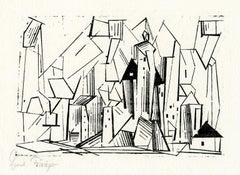
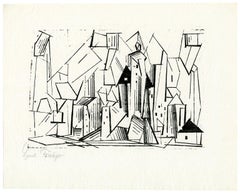
'Die Architektur' (Architecture) — Bauhaus Modernism

'Die Architektur' (Architecture) — Bauhaus Modernism

By Lyonel Feininger

Located in Myrtle Beach, SC

Lyonel Feininger, 'Die Architektur' (Architecture), also 'Stadtbild' (Cityscape), woodcut, edition proofs only in 1920; 50 in 1921. Prasse W 232. Signed in pencil. A fine, black impression, on off-white Japan, with full margins (1 1/4 to 2 1/8 inches), in excellent condition. Matted to museum standards, unframed. Image size 6 x 8 7/8 inches (152 x 229 mm); sheet size 9 1/2 x 11 7/8 inches (241 x 302 mm). No. 11 of the portfolio 'Zwolf Holzschnitte von Lyonel Feininger', 1921. Provenance: Peter Deitsch collection; exhibited Weimar Museum, 1968. Impressions of this work are in the permanent collection of: Busch-Reisinger Museum (Cambridge, Mass.), Bauhaus-Archiv (Germany), Hamburger Kunsthalie (Germany), Pfaizische Landesgewerbeanstalt (Germany), Kaiser Wilhelm Museum (Germany), Staatliche Graphische Sammlung (Germany), Philadelphia Museum of Art. ABOUT THE ARTIST Lyonel Feininger was born in New York City into a musical family—his father was a violinist and composer, his mother was a singer and pianist. He studied violin with his father, and by the age of 12, he was performing in public, but he also drew incessantly, most notably the steamboats and sailing ships on the Hudson and East Rivers, and the landscape around Sharon, Conn., where he spent time on a farm owned by a family friend. At the age of 16 he left New York to study music and art in Germany, from where his parents emigrated. Drawn more to the visual arts, he attended schools in Hamburg, Berlin, and Paris from 1887 to 1892. After completing his studies, Feininger began his artistic career as a cartoonist and illustrator, his originality leading him to great success. In 1906, after working for a dozen years in Germany, he was offered a job as a cartoonist at the Chicago Tribune, the largest circulation newspaper in the Midwest. He worked there for a year, inventing what became the standard design for the comic strip: in the words of John Carlin, “an overall pattern. . . that allowed the page to be read both as a series of elements one after the other, like language and as a group of juxtaposed images, like visual art.” His originality did not end there: he went on to become one of the great abstract painters. Like Kandinsky, music was his model, but Kandinsky only knew music from the outside—as a listener (inspired initially by Wagner, then by Schoenberg)—while Feininger knew it from the inside. He lived in Paris from 1906 to 1908, during which time he met and was influenced by the work of progressive painters Robert Delaunay and Jules Pascin, as well as that of Paul Cezanne and Vincent van Gogh. He began painting full-time, developing his distinctive Iyrical style based on Cubist and Expressionist idioms and a concern for the emotive qualities of light and color. He exhibited with the Der Blaue Reiter group in 1913, and in 1917, he had his first solo exhibition at Galerie Der Sturm in Berlin. One year after his solo exhibition, in 1918, Feininger began making woodcuts. He became enamored with the medium, producing an impressive 117 in his first year of exploring the printmaking medium. In 1919 at the invitation of the architect Walter Gropius, he was appointed the first master at the newly formed Staatliches Bauhaus in Weimar. His woodcut of a cathedral...

Category

1920s Bauhaus Landscape Prints

Materials

Woodcut

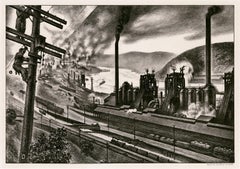
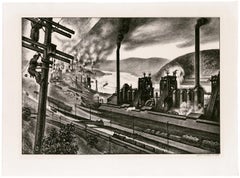
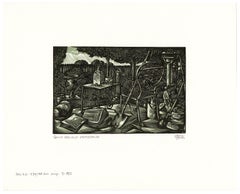
'Steel Valley' — Mid-Century Modernism, Pittsburg

'Steel Valley' — Mid-Century Modernism, Pittsburg

By Louis Lozowick

Located in Myrtle Beach, SC

Louis Lozowick, 'Steel Valley', lithograph, 1936; edition 15; edition 250 AAA (1942); Flint 141. Signed in pencil, with the artist's monogram in the stone, lower left. A fine, richly...

Category

1930s American Modern Landscape Prints

Materials

Lithograph

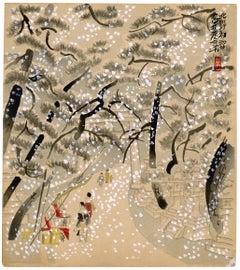
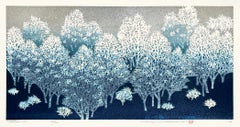
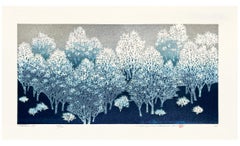
Winter Trees — Sōsaku Hanga Japanese Woodblock Print

Winter Trees — Sōsaku Hanga Japanese Woodblock Print

Located in Myrtle Beach, SC

Hajime Namiki, 'Tree Scene 159', color woodcut, edition 200, 2022. Signed in pencil and with the artist’s red seal. Titled, numbered '37/200' and dated, in pencil. A very fine impres...

Category

21st Century and Contemporary Contemporary Landscape Prints

Materials

Woodcut

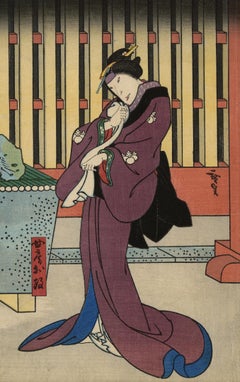
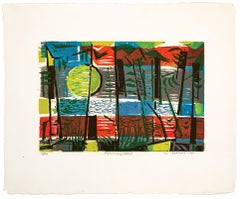
'Shimmering Waters' — Mid-Century Modernist Abstraction

'Shimmering Waters' — Mid-Century Modernist Abstraction

By Werner Drewes

Located in Myrtle Beach, SC

Werner Drewes, 'Shimmering Waters', color woodcut, 1960, edition 16 in 1960, and 210 in 1962, Rose III.209. Signed, dated, and numbered I2/210 in pencil. Annotated 415 (the artist's ...

Category

1960s American Modern Abstract Prints
Materials

Woodcut

'Hollyhock and Dragonflies' — Showa Woodblock, Lifetime Impression

'Hollyhock and Dragonflies' — Showa Woodblock, Lifetime Impression

By Ohara Koson

Located in Myrtle Beach, SC

Ohara Koson, 'Hollyhock and Dragonflies', color woodblock, 'oban tate-e', 1934. Signed 'Shoson' with the 'Shoson' red seal, lower right. A superb, life-time impression, with fresh, ...

Category

1930s Showa Animal Prints

Materials

Woodcut

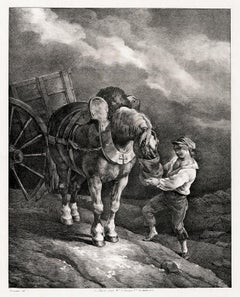
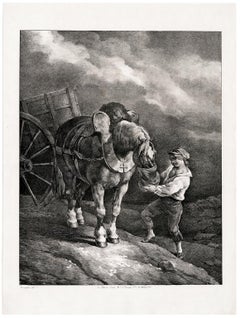
'Garçon donnant l'avoine à un cheval dételé' — 19th Century French Romanticism

'Garçon donnant l'avoine à un cheval dételé' — 19th Century French Romanticism

By Jean Louis Andre Theodore Gericault

Located in Myrtle Beach, SC

Théodore Géricault, 'Garçon donnant l'avoine à un cheval dételé' (Boy Giving Oats to a Hitched Horse), lithograph, 1822, 2nd state of 2, Delteil 89...

Category

1820s Romantic Animal Prints

Materials

Lithograph

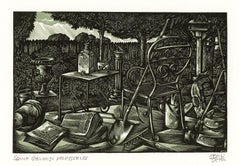
Some Garden Accessories

Some Garden Accessories

By John DePol

Located in Myrtle Beach, SC

John DePol, 'Some Garden Accessories', chiaroscuro wood engraving, 1979, proofs only from the block created in 1979, edition 200, 1983. Signed, dated, and titled in pencil. Signed in...

Category

Mid-20th Century American Modern Figurative Prints

Materials

Woodcut

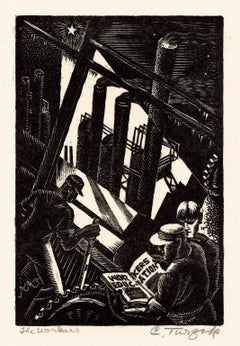
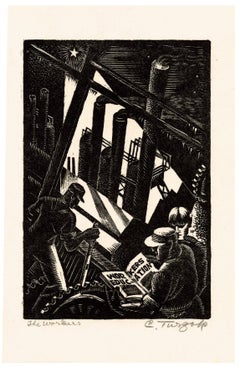
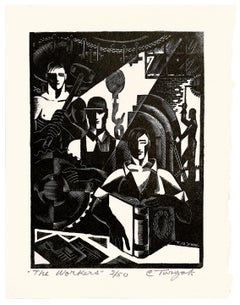
'The Workers (No. 1)' — 1930s WPA Modernist Woodcut

'The Workers (No. 1)' — 1930s WPA Modernist Woodcut

By Charles Turzak

Located in Myrtle Beach, SC

Charles Turzak, 'The Workers (No. 1)', woodcut, edition c. 50, c. 1935. Signed and titled in pencil. Signed in the block, lower right. A fine, richly-inked impression, on cream wove...

Category

1930s American Modern Figurative Prints

Materials

Woodcut

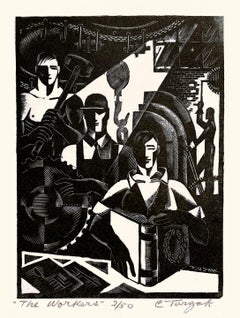
'The Workers (No. 2)' — 1930s WPA Modernist Woodcut

'The Workers (No. 2)' — 1930s WPA Modernist Woodcut

By Charles Turzak

Located in Myrtle Beach, SC

Charles Turzak, 'The Workers (No. 2)', woodcut, edition 50, c. 1935. Signed and numbered 2/50 in pencil. A fine, richly-inked impression, on cream wove Japan paper, with full margin...

Category

1930s American Modern Figurative Prints

Materials

Woodcut

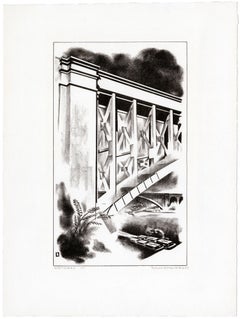
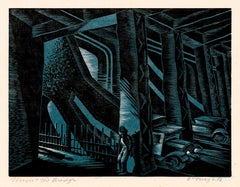
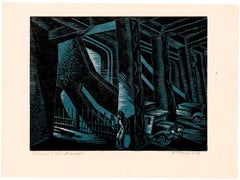
'Under the Bridge' — 1930s Chicago, Modernist Color Woodcut

'Under the Bridge' — 1930s Chicago, Modernist Color Woodcut

By Charles Turzak

Located in Myrtle Beach, SC

Charles Turzak, 'Under the Bridge', color woodcut, edition c. 50, 1934. Signed and titled in pencil. A fine, richly-inked impression, with fresh colors, on cream wove Japan paper; th...

Category

1930s American Modern Figurative Prints

Materials

Woodcut

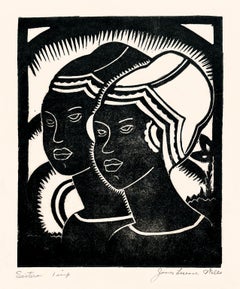
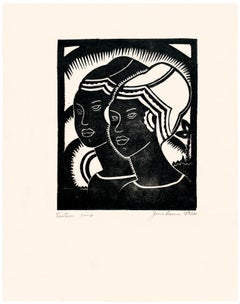
'Sisters' — Renowned Black American, Harlem Renaissance Artist

'Sisters' — Renowned Black American, Harlem Renaissance Artist

Located in Myrtle Beach, SC

James Lesesne Wells, 'Sisters', linocut, edition not stated but small, 1928. Signed, titled, and annotated 'imp' in pencil. A fine impression on off-white wove Japan paper, with wide margins (1 7/8 to 3 3/4 inches), in excellent condition. Printed by the artist. Very scarce. Matted to museum standards, unframed. Image size 8 3/16 x 6 3/4 inches (208 x 171 mm); sheet size 13 1/2 x 10 3/4 inches (343 x 273 mm). Exhibition and Literature: 'Narratives of African American Art and Identity: The David C. Driskell Collection,' The Art Gallery at the University of Maryland, extensive touring exhibition, 1998-2000. Collections: Pennsylvania Academy of the Fine Arts, Smithsonian Institution (Anacostia Community Museum). ABOUT THE ARTIST “Wells is more than an artist with a deep concern for his fellow man. He carries many of his themes a step further into an apocalyptic world, a world of revelation and shifting lights. … He works on large blocks in a bold free style. … His work has a vigor, therefore, that is not often used in the medium today.” —Jacob Kainen (painter, critic, and collector) from Richard J. Powell’s 1986 essay Phoenix Ascending: The Art of James Lesesne Wells. James Lesesne Wells was an American painter, printmaker, educator, and pioneering figure of the Harlem Renaissance, whose work established a vital connection between African heritage, modernist form, and African American cultural identity. Known for his innovative use of linoleum and woodblock printing, Wells played a key role in shaping 20th-century African American art and inspired countless students throughout his lengthy career as a teacher at Howard University. Born in Atlanta, Georgia, Wells' early exposure to the arts came through church and community, where African American cultural traditions were central. He pursued formal artistic training at Lincoln University in Pennsylvania (earning a B.A. in 1924), followed by studies at the Pennsylvania Academy of the Fine Arts and the Barnes Foundation, where he encountered European modernists as well as traditional African sculpture, which profoundly influenced his style. Wells moved to New York in the late 1920s, swiftly immersing himself in the lively artistic and intellectual scene of Harlem. There, he became associated with artists, writers, and thinkers of the Harlem Renaissance, contributing to the growth of Black cultural identity. Considered a mentor to many famed artists of the Harlem Renaissance, Wells served as director of a summer art workshop in Harlem where his assistants included Charles Alston, Jacob Lawrence, and Palmer Hayden...

Category

1920s American Modern Figurative Prints

Materials

Linocut

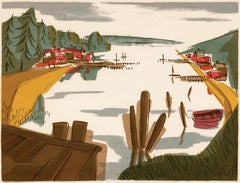
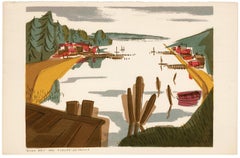
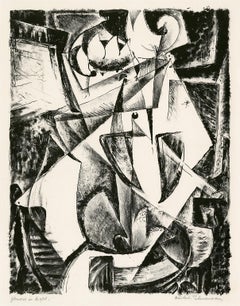
'River View' — Mid-Century American Modernism

'River View' — Mid-Century American Modernism

By Edward August Landon

Located in Myrtle Beach, SC

Edward Landon 'River View, color serigraph, 1942, edition 50, Ryan 159. Signed in pencil in the image, lower right. Titled, dated, and annotated '9 COLORS – 50 PRINTS' in the screen,...

Category

1940s American Modern Abstract Prints
Materials

Screen

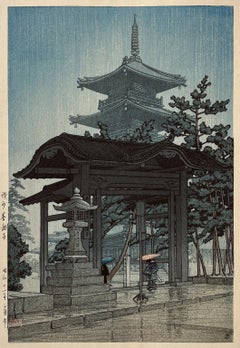
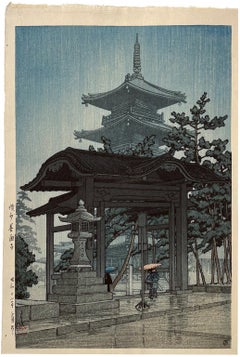
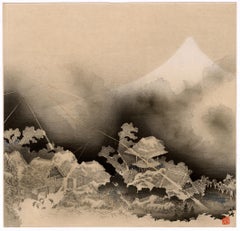
Zentsuji Temple in the Rain —  from the series Collected Views of Japan II

Zentsuji Temple in the Rain — from the series Collected Views of Japan II

By Kawase Hasui

Located in Myrtle Beach, SC

Kawase Hasui, 'Zentsuji Temple in the Rain' from the seres 'Collected Views of Japan II', color woodblock print, 1937. Signed Hasui in black ink, with the artist’s red seal Kawase, ...

Category

1930s Showa Landscape Prints
Materials

Woodcut

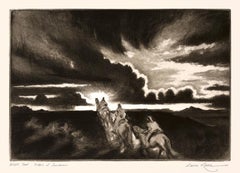
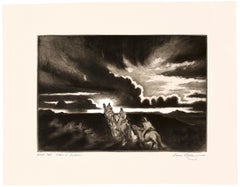
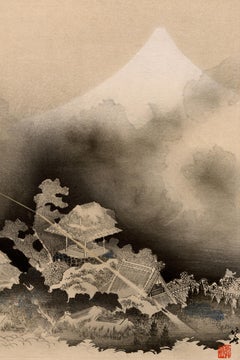
'Riders at Sundown' — Mid-Century Southwest Regionalism

'Riders at Sundown' — Mid-Century Southwest Regionalism

By Gene Kloss

Located in Myrtle Beach, SC

'Riders at Sundown', aquatint and drypoint, edition 75, 1953, Kloss 451. Signed, titled, and annotated 'Artist's Proof' in pencil. A superb, richly-inked, atmospheric impression, in ...

Category

1950s American Modern Landscape Prints
Materials

Drypoint, Aquatint

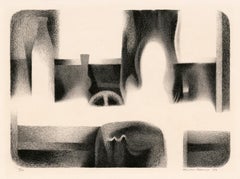
'September Still Life' — Mid-Century Modernism

'September Still Life' — Mid-Century Modernism

By Clinton Adams

Located in Myrtle Beach, SC

Clinton Adams, 'September Still Life', lithograph, 1956, edition 20. A superb impression, on cream wove paper, with full margins (1 1/2 to 3 1/8 inches);...

Category

1950s American Modern Still-life Prints
Materials

Lithograph

'A Wind Is Rising and the Rivers Flow'  — Mid-Century American Modernism

'A Wind Is Rising and the Rivers Flow' — Mid-Century American Modernism

By Benton Murdoch Spruance

Located in Myrtle Beach, SC

Benton Spruance, 'A Wind is Rising and the Rivers Flow', color lithograph, 1945, edition 40, Fine and Looney 242. Signed, dated, and titled, and annotated 'Ed 40' in pencil. A fine ...

Category

1940s American Modern Figurative Prints
Materials

Lithograph

'The Garden' — Celebrated Contemporary African American Artist

'The Garden' — Celebrated Contemporary African American Artist

By Margo Humphrey

Located in Myrtle Beach, SC

Margo Humphrey, 'The Garden (Adam and Eve)', reductive color woodcut, 1989. Signed, dated, and annotated 'A/P' in pencil. Signed and dated in the image, lower right. A fine, richly-inked, artist's proof impression, with fresh, vivid colors, on BFK Rives, heavy, off-white wove paper; the full sheet with margins (1 to 1 3/8 inches), in excellent condition. Archivally sleeved, unmatted. Scarce. Image size 27 1/4 x 39 1/8 inches (692 x 994 mm); sheet size 29 1/2 x 42 inches (749 x 1,067 mm). ABOUT THIS WORK "Humphrey continued to reinterpret stories from the Bible with African American figures. In 1989 she published the woodcut print 'The Garden' at Magnolia Editions in Oakland, CA. For this rare foray into relief printmaking, she employed the reductive method, which uses only one block that is successively carved for each color segment, reducing the block with each cutting. Technically challenging, this lush and elaborate print is a testament to Humphrey’s skills as a printmaker. A youthful Adam and Eve are depicted in a luxuriant tropical landscape. Here, Humphrey chooses not to include the traditional symbols of humanity’s downfall but instead portrays them as being protected by angels in an atmosphere of idyllic bounty. ...Although Humphrey challenges traditional representation of Christian themes, her images are not iconoclastic but present a broader, more inclusive engagement with religious spirituality." — Adrienne L. Childs, 'Margo Humphrey, The David C. Driskell Series of African American Art: Volume VII,' Pomegranate Communications, Inc., 2009, page 71. ABOUT THE ARTIST American printmaker, illustrator, and art teacher Margo Humphrey was born in Oakland, California, in 1942. She earned a BFA in Painting and Printmaking from the California College of Arts and Crafts and a Master of Fine Arts degree in Printmaking from Stanford University. Humphrey began teaching in 1973 at the University of California Santa Cruz and has since taught at the University of Texas at San Antonio, the San Francisco Art Institute, and the School of the Art Institute of Chicago. She has also taught at the University of the South Pacific in Suva, Fiji; Yaba Technological Institute of Fine Art, Ekoi Island, Nigeria; the University of Benin in Benin City, Nigeria; the Margaret Trowell School of Fine Art in Kampala, Uganda, and the Fine Art School of the National Gallery of Art, Harare, Zimbabwe. In 1989, she was appointed Department Head of Printmaking at the University of Maryland in College Park. Humphrey has worked in lithography, monoprint, and woodcut with significant printmaking ateliers, including the Rutgers Center for Innovative Print and Paper, the Bob Blackburn Printmaking Workshop, and the Tamarind Institute in New Mexico. She was one of the earliest African-American woman artists to distinguish herself as a lithographer in a highly technical, male-dominated profession and was the first to have her prints published by Tamarind in 1974. Humphrey’s imagery combines historical perspective, autobiography, and fantasy to illuminate her experience as an African American woman. Bold, saturated color, animated figures, and syncopated rhythmic arrangements are hallmarks of Humphrey's oeuvre. Though Humphrey labels her distinctive style "sophisticated naive," the narrative complexity and technical skill of her works attest to her artistic virtuosity. Joyful, expressive, and at times humorous, her works offer engaging commentary on the presumptions of American culture and myth while embracing her personal vision of authenticity and spirituality. She developed her 1987 work The Last Bar-B-Que, a vividly colored transformation of the Last Supper, following a three-year period during which she examined portrayals of the iconic subject by artists from Pietro Lorenzetti to Emil Nolde. Her narrative work The Garden, a monumentally scaled reductive woodcut, is a further example of an archetypal subject—Adam and Eve in the Garden of Eden—debunked and rendered with fresh, life-affirming vibrancy. Since her first solo exhibition in 1965, Humphrey’s works have been exhibited internationally. They are held in major institutions, including the Museum of Modern Art, The Smithsonian American Art Museum, the Philadelphia Museum of Art, the Hampton University Museum, the Victoria and Albert Museum (London), the Museum of Modern Art, Rio de Janeiro, and the National Gallery of Modern Art, Lagos. In 1996, she was invited to be part of the World Printmaking Survey at the Museum of Modern Art, New York. In 2011, Hampton University Museum mounted a 45-year retrospective of Humphrey’s work Her Story: Margo Humphrey Lithographs and Works on Paper, jointly curated by Robert E. Steele, executive director of the David Driskell...
Category

1980s Expressionist Figurative Prints

Materials

Woodcut

'Body and Soul' — Mid-20th Century Surrealism

'Body and Soul' — Mid-20th Century Surrealism

By Federico Castellon

Located in Myrtle Beach, SC

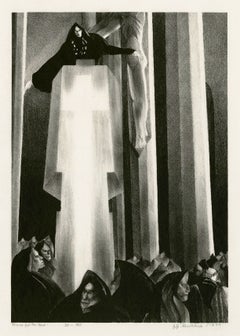
Federico Castellon, 'Body and Soul', 1938, lithograph, edition 30, Freundlich 3. Signed in pencil. Signed in the stone, lower left. A fine, richly-inked, atmospheric impression on cr...

Category

1940s Surrealist Figurative Prints
Materials

Lithograph

'Seated Figure' — American Expressionism

'Seated Figure' — American Expressionism

By Max Weber

Located in Myrtle Beach, SC

Max Weber, 'Seated Figure", woodcut, edition not stated, 1919-20, Rubenstein 17. Signed in pencil. A fine impression on cream Japan paper; the full sheet with margins (2 to 3 1/8 in...

Category

1920s Expressionist Figurative Prints
Materials

Woodcut

'Diver' — 1930s American Modernism

'Diver' — 1930s American Modernism

By Rockwell Kent

Located in Myrtle Beach, SC

Rockwell Kent, 'Diver', wood engraving, 1931, edition 150, Burne Jones 88. Signed, and titled 'The Diver' in pencil.. A brilliant, black impression, on cream, wove Japan paper; the f...

Category

1930s American Modern Nude Prints
Materials

Woodcut

'Plowing It Under' — WPA Era American Regionalism

'Plowing It Under' — WPA Era American Regionalism

By Thomas Hart Benton

Located in Myrtle Beach, SC

Thomas Hart Benton, 'Goin' Home', lithograph, 1937, edition 250, Fath 14. Signed in pencil. Signed in the stone, lower right. A fine, richly-inked impression, on off-white, wove pape...

Category

1930s American Realist Figurative Prints
Materials

Lithograph

'The Bath' — Meji Era Cross-Cultural Woman Artist

'The Bath' — Meji Era Cross-Cultural Woman Artist

By Helen Hyde

Located in Myrtle Beach, SC

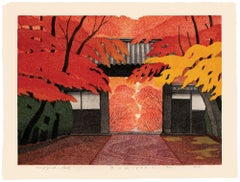
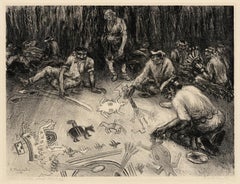
Helen Hyde, 'The Bath', color woodblock print, edition not stated, 1905, Mason & Mason 59. Signed in pencil in the image, lower right. Numbered '96' in pencil in the image, lower left. The artist's monogram in the block, lower left, and 'Copyright, 1905, by Helen Hyde.' upper right. A superb impression with fresh colors on tissue-thin cream Japanese paper; the full sheet with margins (7/16 to 1 5/8 inches), in excellent condition. Matted to museum standards, unframed. Image size 16 1⁄4 x 10 1⁄8 in. (413 x 260 mm); sheet size: 19 1⁄4 x 11 1⁄8 in. (489 x 283 mm). Literature and Exhibition: Back cover illustration of the catalog of the artist’s prints, 'Helen Hyde', Smithsonian Institution Press, 1990; 'The International Block Print Renaissance, Then And Now, Block Prints In Wichita, Kansas, A Centennial Celebration — 1922-2022', Barbara J. Thompson, Wichita Art Museum, 2022 (back cover). Impressions of this work are held in the following collections: Achenbach Foundation for Graphic Arts, Art Institute of Chicago, Fine Arts Museums of San Francisco (De Young), Harvard Art Museums, Library of Congress, Metropolitan Museum of Art, New York Public Library, Smithsonian American Art Museum, Terra Foundation for American Art, University of Oregon Museum of Art. ABOUT THE ARTIST Helen Hyde (1868-1919) was a pioneer American artist best known for advancing Japanese woodblock printmaking in the United States and for bridging Western and Japanese artistic traditions. Hyde was born in Lima, New York, but after her father died in 1872, her family relocated to Oakland, California, where she spent much of her youth. Hyde pursued formal art education in the United States and Europe. She enrolled in the San Francisco School of Design, where she took classes from the Impressionist painter Emil Carlsen; two years later, she transferred to the Art Students League in New York, studying there with Kenyon Cox. Eager to expand her artistic repertoire, Hyde traveled to Europe, studying under Franz Skarbina in Berlin and Raphael Collin in Paris. While in Paris, she first encountered Japanese ukiyo-e prints, sparking a lifelong fascination with Japanese aesthetics. After ten years of study, Hyde returned to San Francisco, where she continued to paint and began to exhibit her work. Hyde learned to etch from her friend Josephine Hyde in about 1885. Her first plates, which she etched herself but had professionally printed, represented children. On sketching expeditions, she sought out quaint subjects for her etchings and watercolors. In 1897, Hyde made her first color etchings—inked á la poupée (applying different ink colors to a single printing plate)—which became the basis for her early reputation. She also enjoyed success as a book illustrator, and her images sometimes depicted the children of Chinatown. After her mother died in 1899, Hyde sailed to Japan, accompanied by her friend Josephine, where she would reside, with only brief interruptions, until 1914. For over three years, she studied classical Japanese ink painting with the ninth and last master of the great Kano school of painters, Kano Tomonobu. She also studied with Emil Orlik, an Austrian artist working in Tokyo. Orlik sought to renew the old ukiyo-e tradition in what became the shin hanga “new woodcut prints” art movement. She immersed herself in the study of traditional Japanese printmaking techniques, apprenticing with master printer Kanō Tomonobu. Hyde adopted Japanese tools, materials, and techniques, choosing to employ the traditional Japanese system of using craftsmen to cut the multiple blocks and execute the exacting color printing of the images she created. Her lyrical works often depicted scenes of family domesticity, particularly focusing on women and children, rendered in delicate lines and muted colors. Through her distinctive fusion of East and West, Hyde’s contributions to Western printmaking were groundbreaking. At a time when few Western women ventured to Japan, she mastered its artistic traditions and emerged as a significant figure in the international art scene. Suffering from poor health, she returned to the United States in 1914, moving to Chicago. Having found restored health and new inspiration during an extended trip to Mexico in 1911, Hyde continued to seek out warmer climates and new subject matter. During the winter of 1916, Hyde was a houseguest at Chicora Wood, the Georgetown, South Carolina, plantation illustrated by Alice Ravenel Huger Smith in Elizabeth Allston Pringle’s 1914 book A Woman Rice Planter. The Lowcountry was a revelation for Hyde. She temporarily put aside her woodcuts and began creating sketches and intaglio etchings of Southern genre scenes and African Americans at work. During her stay, Hyde encouraged Smith’s burgeoning interest in Japanese printmaking and later helped facilitate an exhibition of Smith’s prints at the Art Institute of Chicago. During World War I, Hyde designed posters for the Red Cross and produced color prints extolling the virtues of home-front diligence. In ill health, Hyde traveled to be near her sister in Pasadena a few weeks before her death on May 13, 1919. She was buried in the family plot near Oakland, California. Throughout her career, Hyde enjoyed substantial support from galleries and collectors in the States and in London. She exhibited works at the St. Louis Exposition in 1897, the Pan-American Exhibition in Buffalo in 1901, the Tokyo Exhibition for Native Art (where she won first prize for an ink drawing) in 1901, the Alaska-Yukon-Pacific Exhibition in Seattle in 1909 (received a gold medal for a print), the Newark Museum in 1913, a solo show at the Chicago Art Institute in 1916, and a memorial exhibition in 1920, Detroit Institute of Arts, Color Woodcut Exhibition in 1919, New York Public Library, American Woodblock Prints...
Category

Early 1900s Showa Figurative Prints

Materials

Woodcut

'Two Boys On A Beach, No. 1' — Erotic Realism

'Two Boys On A Beach, No. 1' — Erotic Realism

By Paul Cadmus

Located in Myrtle Beach, SC

Paul Cadmus, 'Two Boys On A Beach, No. 1', etching, 1938, edition 75, Johnson & Miller 85. Signed in pencil and initialed in the plate in the lower right image corner. Annotated by t...

Category

1930s American Realist Figurative Prints

Materials

Etching

Bird Abstraction Gouache Painting, Mid-Century Modern, Signed, 1953

Bird Abstraction Gouache Painting, Mid-Century Modern, Signed, 1953

Located in Myrtle Beach, SC

Stephen Harty, Untitled (Bird Abstraction), gouache, 1953. Signed and dated lower left. A fine, meticulously rendered, mid-century, modernist gouache painting, with fresh colors on 1...

Category

1950s American Modern Abstract Paintings

Materials

Gouache

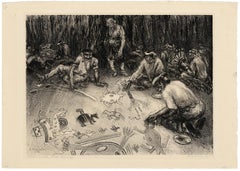
'Children's Ward' — Mid-Century Socially-Conscious Realism

'Children's Ward' — Mid-Century Socially-Conscious Realism

By Robert Riggs

Located in Myrtle Beach, SC

Robert Riggs, 'Children's Ward', 2-color lithograph, c. 1940, edition c. 50, Beall 11, Bassham 76. Signed, titled, and numbered '12' in pencil. Signed in the stone, lower right. A su...

Category

1940s Realist Figurative Prints

Materials

Lithograph

"East Gloucester, Massachusetts' — Cape Ann Regionalism

"East Gloucester, Massachusetts' — Cape Ann Regionalism

By Hayley Lever

Located in Myrtle Beach, SC

Hailey Lever, 'East Gloucester, Massachusetts', watercolor, c. 1930. Signed 'HL' in pencil, lower left. A fine, spontaneous watercolor with fresh colors on off-white watercolor paper...

Category

1930s Impressionist Landscape Drawings and Watercolors

Materials

Watercolor

'Loop Alley' — Modernist Chicago Cityscape, WPA

'Loop Alley' — Modernist Chicago Cityscape, WPA

By Charles Turzak

Located in Myrtle Beach, SC

Charles Turzak, 'Loop Alley (Chicago)', color woodcut, edition c. 25, c. 1935. Signed and titled in pencil. A fine, richly-inked impression, with fresh colors, on cream wove Japan pa...

Category

1930s American Modern Figurative Prints

Materials

Woodcut

Untitled (Seated Nude) — Black Woman Artist

Untitled (Seated Nude) — Black Woman Artist

Located in Myrtle Beach, SC

Ann Graves Tanksley, Untitled (Seated Nude), oil and marker, 1984. Signed and dated, lower right. A fine, expressionist rendering, with fresh colors, on cream wove paper, painted to the sheet edges, in excellent condition. Archivally matted to museum standards, unframed. Image size/sheet size: 24 1/16 x 18 inches (611 x 457 mm). ABOUT THE ARTIST “Her work reflects the influence of her travels, the residential colors, the simple work habits, the loneliness, and the love and devotion to one’s spiritual beliefs. There is a oneness of artist and concept. Her love of life, despite social barriers and frustrations, is promoted in her work for audiences to witness and accept... Her paintings evoke a spiritual awakening. One is drawn to the intensity of color that prevails and identifies the moods of feasts and celebrations. ...Life is full of anticipation and dedication, of acceptance and hope, of faith and survival. These are all present in the works of Ann Tanksley.” —Robert Henke, The Art of Black American Women: Works of Twenty-Four Artists of the Century, McFarland & Company, Inc., 1993. Ann Graves was born in 1934 and raised in the Homewood community in Pittsburgh, Pennsylvania. Drawn to art at an early age, Tanksley graduated from Carnegie Institute of Technology (now Carnegie Mellon University) in 1956 with a Bachelor of Fine Arts degree. Following graduation from college, she married fellow Homewood native John Tanksley, and the couple moved to Brooklyn, New York. He worked as a photo retoucher in the advertising industry. Tanksley devoted herself to raising her daughters while working as an art instructor before fully pursuing her artistic pursuits. She was an art instructor at Queens Youth Center for the Arts from 1959-62, the Arts Center of Northern New Jersey in 1963, and a substitute art instructor at Malvern Public Schools in 1971. She also served as an adjunct art instructor at Suffolk County Community College from 1973-1975. Tanksley continued her art education with studies at the Arts League of New York, The New School, the Paulette Singer Workshop in Great Neck, and the Robert Blackburn Printmaking Workshop, where she learned monotype printmaking. In addition to Blackburn and Singer, Tanksley studied with several renowned artists throughout her career, including Norman Lewis (artist), Balcomb Greene, and Samuel Rosenberg (artist). Tanksley was one of the first members of Where We At: Black Women Artists, Inc., a New York-based women’s art collective founded by artists Kay Brown...

Category

1980s Expressionist Nude Paintings

Materials

Oil

Mother and Child — Seasonal Greeting, Black Woman Artist

Mother and Child — Seasonal Greeting, Black Woman Artist

Located in Myrtle Beach, SC

Ann Graves Tanksley, Untitled (Mother and Child), mixed media on Japan paper, c. 1960s. Signed 'A. Tanksley' in gold in the image, lower right. Linoleum cut in black ink on Japanese paper, with blue and gold brushed ink; cloth batik collage, and metallic gold star laid onto black construction paper. Created as a seasonal greeting. Inscribed on the inside panel is 'Merry Christmas and a Happy New Year. Love, John & Ann.' Archivally matted to museum standards. Unique. Image size 7 3/8 x 4 7/16 inches (187 x 113 mm); front panel size 8 11/16 x 5 3/4 inches (221 x 146 mm). ABOUT THE ARTIST “Her work reflects the influence of her travels, the residential colors, the simple work habits, the loneliness, and the love and devotion to one’s spiritual beliefs. There is a oneness of artist and concept. Her love of life, despite social barriers and frustrations, is promoted in her work for audiences to witness and accept... Her paintings evoke a spiritual awakening. One is drawn to the intensity of color that prevails and identifies the moods of feasts and celebrations. ...Life is full of anticipation and dedication, of acceptance and hope, of faith and survival. These are all present in the works of Ann Tanksley.” —Robert Henke, The Art of Black American Women: Works of Twenty-Four Artists of the Century, McFarland & Company, Inc., 1993. Ann Graves was born in 1934 and raised in the Homewood community in Pittsburgh, Pennsylvania. Drawn to art at an early age, Tanksley graduated from Carnegie Institute of Technology (now Carnegie Mellon University) in 1956 with a Bachelor of Fine Arts degree. Following graduation from college, she married fellow Homewood native John Tanksley, and the couple moved to Brooklyn, New York. He worked as a photo retoucher in the advertising industry. Tanksley devoted herself to raising her daughters while working as an art instructor before fully pursuing her artistic pursuits. She was an art instructor at Queens Youth Center for the Arts from 1959-62, the Arts Center of Northern New Jersey in 1963, and a substitute art instructor at Malvern Public Schools in 1971. She also served as an adjunct art instructor at Suffolk County Community College from 1973-1975. Tanksley continued her art education with studies at the Arts League of New York, The New School, the Paulette Singer Workshop in Great Neck, and the Robert Blackburn Printmaking Workshop, where she learned monotype printmaking. In addition to Blackburn and Singer, Tanksley studied with several renowned artists throughout her career, including Norman Lewis (artist), Balcomb Greene, and Samuel Rosenberg (artist). Tanksley was one of the first members of Where We At: Black Women Artists, Inc., a New York-based women’s art collective founded by artists Kay...

Category

1960s Expressionist Mixed Media

Materials

Fabric, Paper, Ink, Mixed Media

Fish & Underwater Flowers 1 — Hopei Folk Art, 1950s Chinese Cut Paper Watercolor

Fish & Underwater Flowers 1 — Hopei Folk Art, 1950s Chinese Cut Paper Watercolor

Located in Myrtle Beach, SC

'Fish & Flowers', Chinese Hopei Folk Art, 1956. Paper-cut with watercolor, mounted on cream, wove backing paper, with fresh, vivid colors, in excellent condition. Matted to museum standards, unframed. Image size 3 3/8 x 2 3/4 inches; sheet size 8 7/8 x 6 1/4 inches; mat size 13 x 10 inches. ABOUT THIS WORK Hopei or Hebei is a province of North East China, on the Gulf of Chihli near Beijing that is home to Chengde Mountain Resort, the imperial summer residence of the Qing-dynasty emperors. Chengde contains 18th-century palaces, gardens, and pagodas ringed...

Category

Mid-20th Century Folk Art Figurative Drawings and Watercolors

Materials

Watercolor

Butterfly & Flowers 2 — Hopei Folk Art, Mid-Century Chinese Cut Paper Watercolor

Butterfly & Flowers 2 — Hopei Folk Art, Mid-Century Chinese Cut Paper Watercolor

Located in Myrtle Beach, SC

'Butterfly & Flowers', Chinese Hopei Folk Art, 1956. Paper-cut with watercolor, mounted on cream, wove backing paper, with fresh, vivid colors, in excellent condition. Matted to museum standards, unframed. Image size 5 1/8 x 3 1/8 inches; sheet size 8 7/8 x 6 1/4 inches; mat size 14 x 11 inches. ABOUT THIS WORK Hopei or Hebei is a province of North East China, on the Gulf of Chihli near Beijing that is home to Chengde Mountain Resort, the imperial summer residence of the Qing-dynasty emperors. Chengde contains 18th-century palaces, gardens, and pagodas ringed...

Category

Mid-20th Century Folk Art Figurative Drawings and Watercolors

Materials

Watercolor

Fish & Underwater Flowers 3 — Hopei Folk Art, 1950s Chinese Cut Paper Watercolor

Fish & Underwater Flowers 3 — Hopei Folk Art, 1950s Chinese Cut Paper Watercolor

Located in Myrtle Beach, SC

'Fish & Flowers', Chinese Hopei Folk Art, 1956. Paper-cut with watercolor, mounted on cream, wove backing paper, with fresh, vivid colors, in excellent condition. Matted to museum st...

Category

Mid-20th Century Folk Art Figurative Drawings and Watercolors

Materials

Watercolor

Fish & Underwater Flowers 2 — Hopei Folk Art, 1950s Chinese Cut Paper Watercolor

Fish & Underwater Flowers 2 — Hopei Folk Art, 1950s Chinese Cut Paper Watercolor

Located in Myrtle Beach, SC

'Fish & Flowers', Chinese Hopei Folk Art, 1956. Paper-cut with watercolor, mounted on cream, wove backing paper, with fresh, vivid colors, in excellent condition. Matted to museum standards, unframed. Image size 3 3/4 x 2 1/2 inches; sheet size 8 7/8 x 6 1/4 inches; mat size 13 x 10 inches. ABOUT THIS WORK Hopei or Hebei is a province of North East China, on the Gulf of Chihli near Beijing that is home to Chengde Mountain Resort, the imperial summer residence of the Qing-dynasty emperors. Chengde contains 18th-century palaces, gardens, and pagodas ringed...

Category

Mid-20th Century Folk Art Figurative Drawings and Watercolors

Materials

Watercolor

Birds & Flowers — Hopei Folk Art, Mid-Century Chinese Cut paper and Watercolor

Birds & Flowers — Hopei Folk Art, Mid-Century Chinese Cut paper and Watercolor

Located in Myrtle Beach, SC

'Birds & Flowers', Chinese Hopei Folk Art, 1956. Paper-cut with watercolor, mounted on cream, wove backing paper, with fresh, vivid colors, in excellent condition. Matted to museum s...

Category

Mid-20th Century Folk Art Figurative Drawings and Watercolors

Materials

Watercolor

Bird & Flowers 1 — Hopei Folk Art, Mid-Century Chinese Cut Paper and Watercolor

Bird & Flowers 1 — Hopei Folk Art, Mid-Century Chinese Cut Paper and Watercolor

Located in Myrtle Beach, SC

'Bird & Flowers', Chinese Hopei Folk Art, 1956. Paper-cut with watercolor, mounted on cream, wove backing paper, with fresh, vivid colors, in excellent condition. Matted to museum standards, unframed. Image size 5 1/4 x 3 1/4 inches; sheet size 8 7/8 x 6 1/4 inches; mat size 14 x 11 inches. ABOUT THIS WORK Hopei or Hebei is a province of North East China, on the Gulf of Chihli near Beijing that is home to Chengde Mountain Resort, the imperial summer residence of the Qing-dynasty emperors. Chengde contains 18th-century palaces, gardens, and pagodas ringed...

Category

Mid-20th Century Folk Art Figurative Drawings and Watercolors

Materials

Watercolor

Birds & Flowers 2 — Hopei Folk Art, Mid-Century Chinese Cut Paper and Watercolor

Birds & Flowers 2 — Hopei Folk Art, Mid-Century Chinese Cut Paper and Watercolor

Located in Myrtle Beach, SC

'Birds & Flowers', Chinese Hopei Folk Art, 1956. Paper-cut with watercolor, mounted on cream, wove backing paper, with fresh, vivid colors, in excellent condition. Matted to museum standards, unframed. Image size 4 7/8 x 3 1/8 inches; sheet size 8 7/8 x 6 1/4 inches; mat size 14 x 11 inches. ABOUT THIS WORK Hopei or Hebei is a province of North East China, on the Gulf of Chihli near Beijing that is home to Chengde Mountain Resort, the imperial summer residence of the Qing-dynasty emperors. Chengde contains 18th-century palaces, gardens, and pagodas ringed...

Category

Mid-20th Century Folk Art Figurative Drawings and Watercolors

Materials

Watercolor

Butterfly & Flowers 1 — Hopei Folk Art, Mid-Century Chinese Cut Paper Watercolor

Butterfly & Flowers 1 — Hopei Folk Art, Mid-Century Chinese Cut Paper Watercolor

Located in Myrtle Beach, SC

'Butterfly & Flowers', Chinese Hopei Folk Art, 1956. Paper-cut with watercolor, mounted on cream, wove backing paper, with fresh, vivid colors, in excellent condition. Matted to museum standards, unframed. Image size 4 5/8 x 3 1/8 inches; sheet size 8 7/8 x 6 1/4 inches; mat size 14 x 11 inches. ABOUT THIS WORK Hopei or Hebei is a province of North East China, on the Gulf of Chihli near Beijing that is home to Chengde Mountain Resort, the imperial summer residence of the Qing-dynasty emperors. Chengde contains 18th-century palaces, gardens, and pagodas ringed...

Category

Mid-20th Century Folk Art Figurative Drawings and Watercolors

Materials

Watercolor