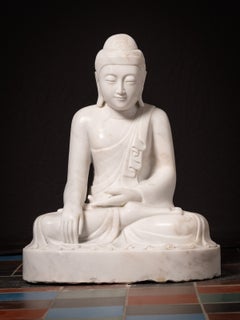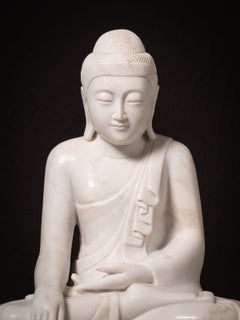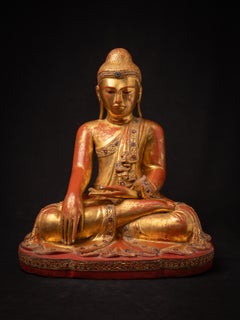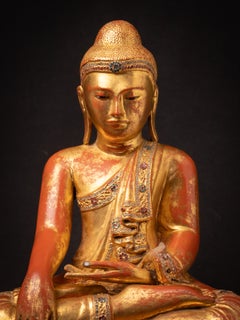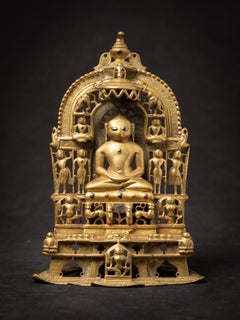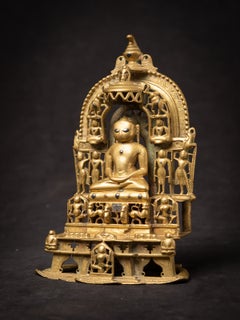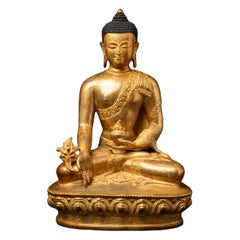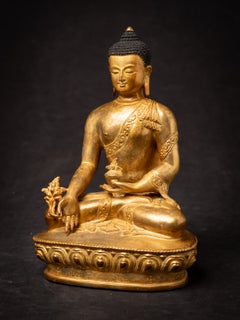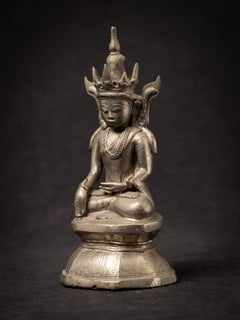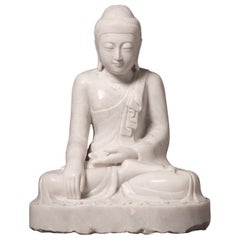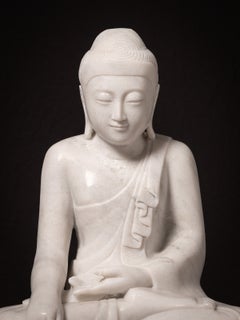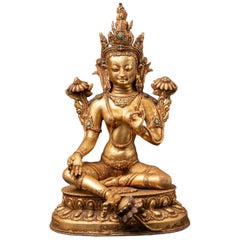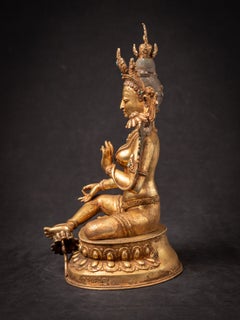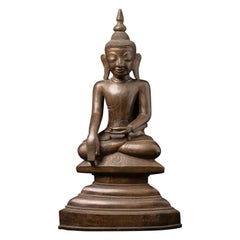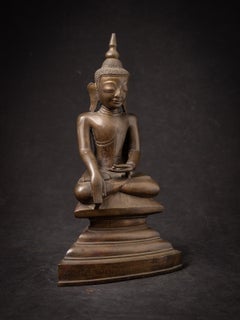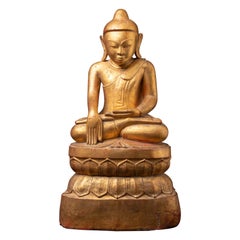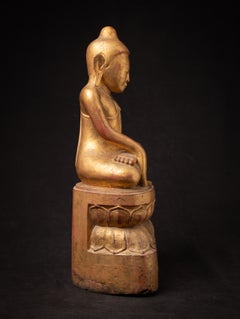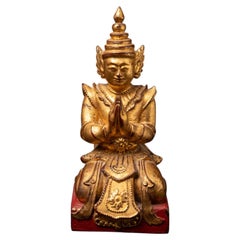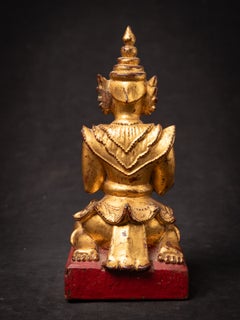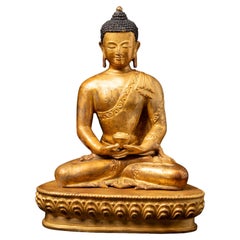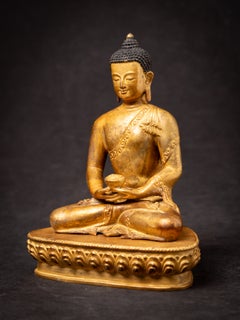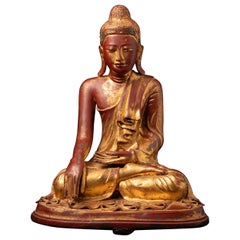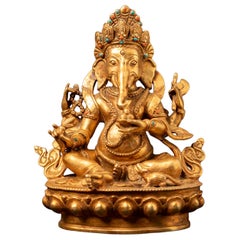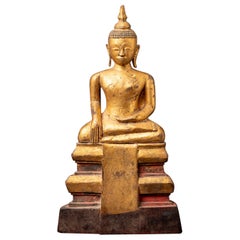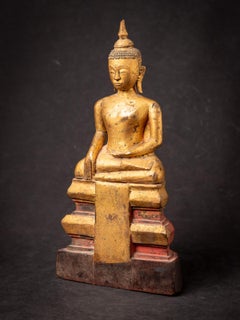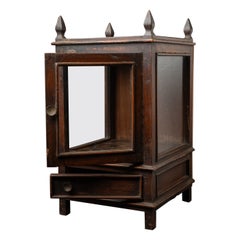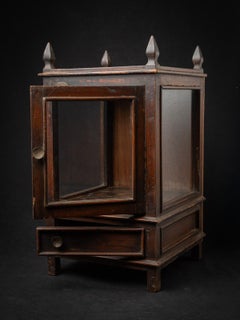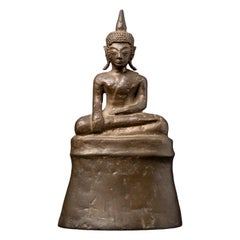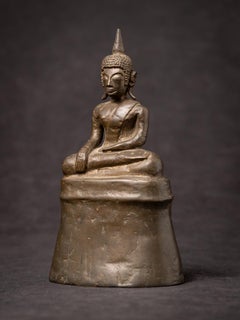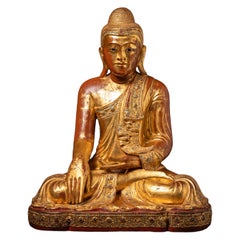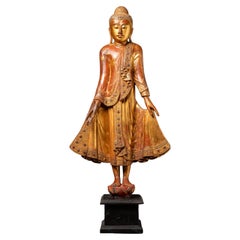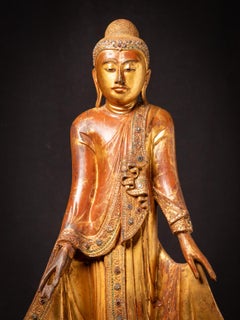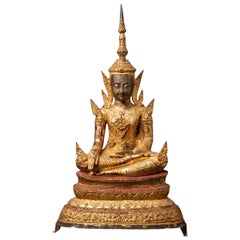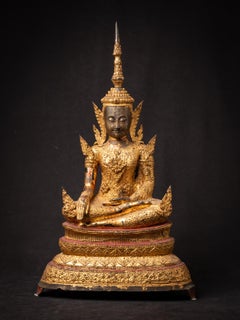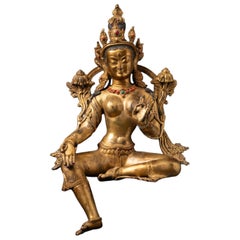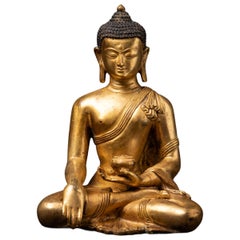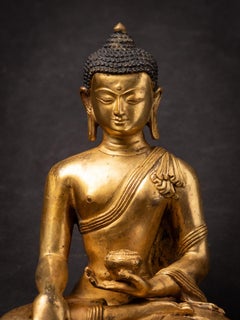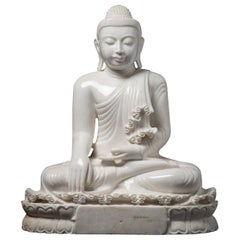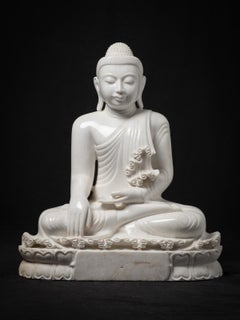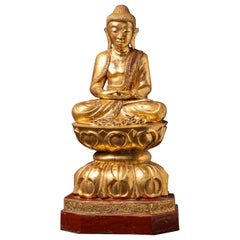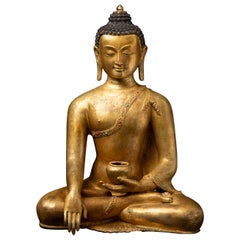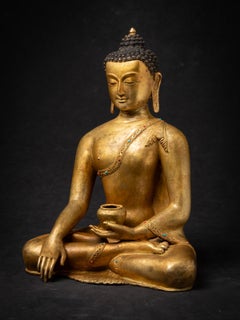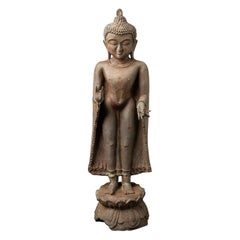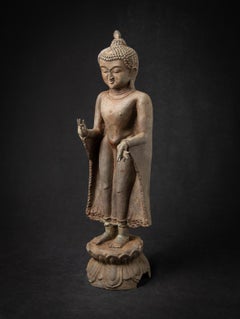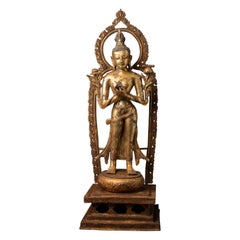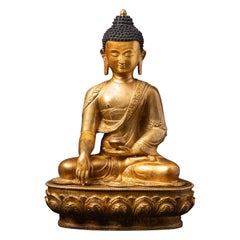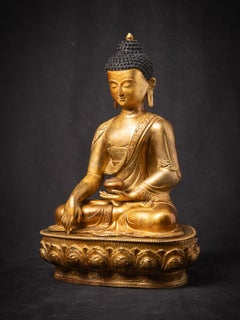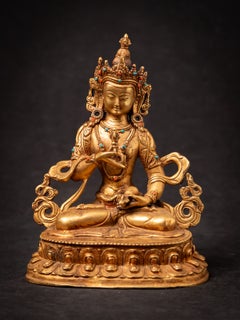
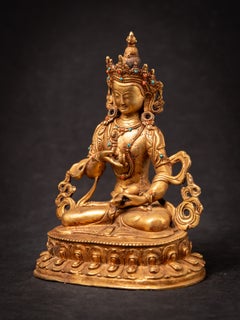
This special antique Japanese Amida Buddha statue is an outstanding example of 18th-century Japanese Buddhist art from the Edo period, a time renowned for its refinement in religious sculpture and craftsmanship. Originating from Japan, this exceptional work combines spiritual elegance, artistic sophistication, and remarkable preservation.
The complete sculpture measures 73.5 cm high, 36 cm wide, and 28.5 cm deep, while the central Buddha figure itself stands 29 cm high. Despite its relatively light weight of 3.55 kgs, the composition possesses a commanding visual presence thanks to its elaborate architectural and symbolic elements.
The figure represents Amida Buddha, one of the most revered Buddhas in Japanese Buddhism. Amida is associated with boundless compassion and the promise of rebirth in the Pure Land, making him a central figure in many Japanese Buddhist traditions.
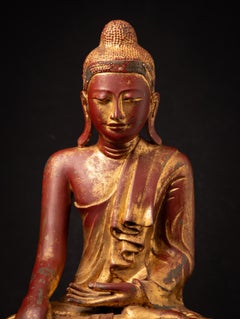
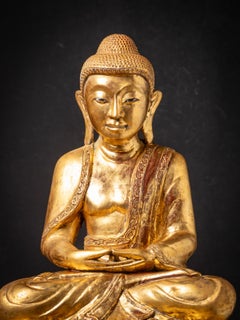
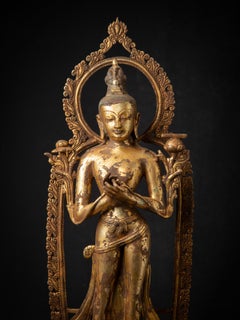
Depicted in the Dhyana mudra, the gesture of meditation, the Buddha conveys profound serenity, inner balance, and spiritual contemplation. The sculpture is richly gilded with 24-carat gold, creating a radiant and sacred appearance that beautifully complements its refined carving.
Among its most remarkable features are the magnificent open mandorla (halo), the finely crafted pedestal, and the inlaid eyes, which lend extraordinary vitality and depth to the figure. The harmonious proportions and delicate execution demonstrate the skill of a highly accomplished sculptor.
Particularly noteworthy is its condition: the statue is described as being in excellent condition with no repairs, a rare attribute for a wooden Japanese sculpture of this age. The survival of its original details, gilding, and structural integrity significantly enhances its historical and artistic value.
Most striking of all is the Buddha’s expression—gentle, compassionate, and deeply contemplative. Such expressive quality is often regarded as the hallmark of masterful Japanese Buddhist sculpture...
Category
Antique 18th Century Japanese Sculptures and Carvings