La Galerie d'Art Moderne à Southampton

Platinum
4.9 / 5
Southampton, NY
THANKS!
Follow

About La Galerie d'Art Moderne à Southampton

La Galerie d'Art Moderne à Southampton is a distinguished online art gallery, specializing in the representation of modern masterworks, available exclusively for sale on 1stdibs.com. Our gallery is dedicated to connecting collectors with exceptional objects that embody the spirit of creativity and innovation. Based in the historic town of Southampton, New York, in partnership with 1stdibs.com, we expertly curate a collection of modern art that showcases the genius of renowned artists. Each artwork is chosen for its unique ability to inspire and provoke thought, making o...Read More

La Galerie d'Art Moderne à Southampton

Established in 19781stDibs seller since 2021

Featured Pieces

Marc Chagall, The Creation, from Drawings for the Bible, 1960
By Marc Chagall
Located in Southampton, NY
This exquisite lithograph by Marc Chagall (1887–1985), titled Creation (The Creation), from Marc Chagall, Dessins Pour La Bible (Drawings for the Bible), Verve: Revue Artistique et L...
Category

1960s Expressionist Abstract Prints

Materials

Lithograph

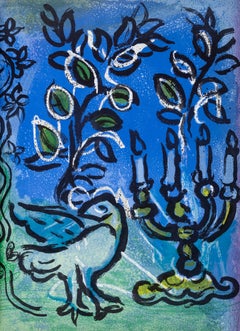
Marc Chagall, The Candelabrum, from The Jerusalem Windows, 1962
By Marc Chagall
Located in Southampton, NY
This exquisite lithograph by Marc Chagall (1887–1985), titled Le Chandelier (The Candelabrum), from the album Marc Chagall, The Jerusalem Windows, originates from the 1962 edition pu...
Category

1960s Expressionist Figurative Prints

Materials

Lithograph

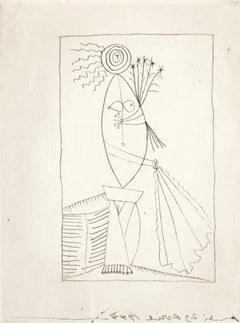
Pablo Picasso, The Female Bullfighter, from The Age of the Sun, 1950
By Pablo Picasso
Located in Southampton, NY
This exquisite engraving by Pablo Picasso (1881–1973), titled La Torera (The Female Bullfighter), from L'Age de Soleil (The Age of the Sun), originates from the 1950 edition publishe...
Category

1950s Cubist Abstract Prints

Materials

Engraving, Drypoint

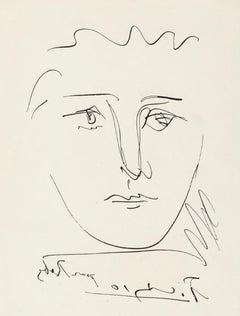
Pablo Picasso, For Roby, from The Age of the Sun, 1950
By Pablo Picasso
Located in Southampton, NY
This exquisite engraving by Pablo Picasso (1881–1973), titled Pour Roby (For Roby), from L’Age de Soleil (The Age of the Sun), originates from the 1950 edition published by Aux Depen...
Category

1950s Cubist Abstract Prints

Materials

Engraving

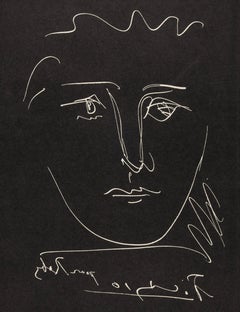
Pablo Picasso, For Roby, from The Age of the Sun, 1950
By Pablo Picasso
Located in Southampton, NY
This exquisite engraving by Pablo Picasso (1881–1973), titled Pour Roby, Etat noir (For Roby, black state), from L’Age de Soleil (The Age of the Sun), originates from the 1950 editio...
Category

1950s Cubist Abstract Prints

Materials

Engraving

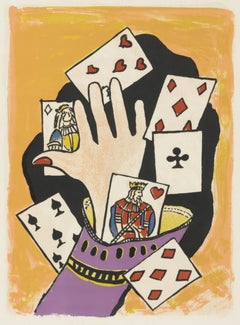
Fernand Leger, Untitled, from Circus, 1950
By Fernand Léger
Located in Southampton, NY
This exquisite lithograph by Fernand Leger (1881–1955), titled Sans titre (Untitled), from the album Cirque, Lithographies Originales (Circus, Original Lithographs), originates from ...
Category

1950s Cubist Figurative Prints

Materials

Lithograph

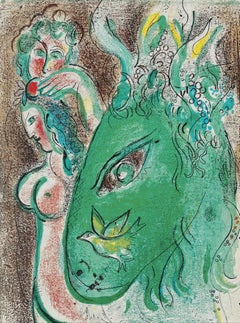
Marc Chagall, Paradise II, from Drawings for the Bible, 1960
By Marc Chagall
Located in Southampton, NY
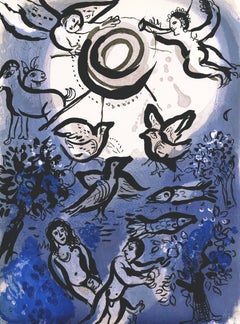
This exquisite lithograph by Marc Chagall (1887–1985), titled Paradise II (Paradise II), from Marc Chagall, Dessins Pour La Bible (Drawings for the Bible), Verve: Revue Artistique et Litteraire, Vol. X, No. 37-38, originates from the July 29, 1960 issue published by Editions de la revue Verve, Paris, under the direction of Teriade, Editeur, Paris, and printed by Mourlot Freres, Paris, 1960. This visionary composition reflects Chagall’s poetic interpretation of the biblical paradise, evoking a realm of harmony, innocence, and divine presence through his luminous color and dreamlike symbolism. The flowing forms and radiant imagery convey a sense of spiritual unity and transcendence, capturing the timeless serenity and mystical beauty of Eden within Chagall’s distinctive visual language. Infused with movement and lyricism, the work transforms sacred narrative into a meditative vision of paradise and the enduring connection between humanity and the divine. The piece forms part of Chagall’s celebrated series of lithographs and drawings created for Dessins Pour La Bible, a monumental project uniting art, scripture, and mysticism in one of the artist’s most important achievements. Executed as a lithograph on velin du Marais paper, this work measures 14 x 10.5 inches (35.56 x 26.67 cm). Unsigned and unnumbered as issued. The edition exemplifies the superb craftsmanship of the Mourlot Freres atelier, renowned for its collaborations with the greatest modern masters of the 20th century. Artwork Details: Artist: Marc Chagall (1887–1985) Title: Paradise II (Paradise II), from Marc Chagall, Dessins Pour La Bible (Drawings for the Bible), Verve: Revue Artistique et Litteraire, Vol. X, No. 37-38, July 29, 1960 Medium: Lithograph on velin du Marais paper Dimensions: 14 x 10.5 inches (35.56 x 26.67 cm) Inscription: Unsigned and unnumbered as issued Date: 1960 Publisher: Editions de la revue Verve, Paris, under the direction of Teriade, Editeur, Paris Printer: Mourlot Freres, Paris Catalogue raisonne references: Chagall, Marc, et al. Chagall Lithographe. Andre Sauret, 1960-1986, illustration 230-276. Cramer, Patrick, and Meret Meyer. Marc Chagall: Catalogue Raisonne des Livres Illustres. P. Cramer ed., 1995, illustration 42. Condition: Well preserved, consistent with age and medium Provenance: From Marc Chagall, Dessins Pour La Bible (Drawings for the Bible), Verve: Revue Artistique et Litteraire, Vol. X, No. 37-38, published by Editions de la revue Verve, Paris, 1960 Notes: Excerpted from the folio (translated from French), This double issue of Verve includes the drawings that Marc Chagall executed in 1958 and 1959 on biblical themes that he had not generally dealt with in his illustration for the Bible, engraved with etching and which were included in issue 33/34 of Verve. This album has 96 renderings in black and 24 color litbographies as well as the cover that were specially made for this album. It was completed printing on July 29, 1960 by Draeger Freres for black gravures and by Mourlot Freres for color lithography. About the Publication: Marc Chagall, Dessins Pour La Bible (Drawings for the Bible), published as Verve Vol. X, No. 37-38 on July 29, 1960, represents a significant continuation and expansion of Chagall’s profound engagement with biblical imagery and spiritual narrative. Conceived and directed by the visionary publisher Teriade, the publication builds upon the earlier Verve issue devoted to Chagall’s Bible illustrations by presenting a new body of work executed in 1958 and 1959, exploring themes and episodes that had not been fully addressed in the initial series. Printed in Paris by Draeger Freres for black gravures and Mourlot Freres for color lithography, the edition demonstrates an exceptional level of technical refinement and artistic collaboration. The publication includes an extensive suite of ninety six black reproductions and twenty four color lithographs, as well as specially created cover imagery, reflecting Chagall’s continued innovation in translating sacred themes into graphic form. As part of the broader tradition of Verve, one of the most important artistic and literary publications of the twentieth century, this issue exemplifies the fusion of text, image, and craftsmanship at the highest level. Today, Verve Vol. X, No. 37-38 stands as a major achievement within Chagall’s graphic oeuvre, reaffirming his role as one of the foremost interpreters of biblical narrative in modern art. About the Artist: Marc Chagall (1887–1985) was a Belarus-born French painter, printmaker, and designer whose visionary imagination, radiant color, and deeply poetic symbolism made him one of the most beloved and influential artists of the 20th century. Rooted in the imagery of his Jewish heritage and the memories of his childhood in Vitebsk, Chagall’s art wove together themes of faith, love, folklore, and fantasy with a dreamlike modern sensibility. His unique style merging elements of Cubism, Fauvism, Expressionism, and Surrealism defied categorization, transforming ordinary scenes into lyrical meditations on memory and emotion. Influenced by Russian icon painting, medieval religious art, and the modern innovations of artists such as Pablo Picasso, Henri Matisse, and Georges Braque, Chagall developed a profoundly personal visual language filled with floating figures, vibrant animals, musicians, and lovers that symbolized the transcendent power of imagination and love. During his early years in Paris, he became an integral part of the Ecole de Paris circle, forming friendships with Amedeo Modigliani, Fernand Leger, and Sonia Delaunay, and his creative spirit resonated with that of his peers and successors Alexander Calder, Alberto Giacometti, Salvador Dali, Joan Miro, Wassily Kandinsky, Marcel Duchamp, and Man Ray, artists who sought to push the boundaries of perception, emotion, and form. Over a prolific career that spanned painting, printmaking, stained glass, ceramics, and stage design, Chagall brought an unparalleled poetic sensibility to modern art, infusing even the most abstract subjects with human warmth and spiritual depth. His works are held in the most prestigious museums around the world, including the Museum of Modern Art, the Centre Pompidou, the Tate, and the Guggenheim, where they continue to inspire generations of artists and collectors. The highest price ever paid for a Marc Chagall artwork is approximately 28.5 million USD, achieved in 2017 at Sotheby’s New York for Les Amoureux (1928). Marc Chagall Paradis...
Category

1960s Expressionist Abstract Prints

Materials

Lithograph

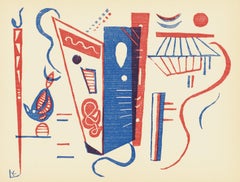
Wassily Kandinsky, Komposition, from XXe siecle, 1939
By Wassily Kandinsky
Located in Southampton, NY
This exquisite woodcut by Wassily Kandinsky (1866–1944), titled Komposition (Composition), from the album XXe siecle, Chroniques du jour, 13 rue Valette (5e), Directeur G. di San Laz...
Category

1930s Modern Abstract Prints

Materials

Woodcut

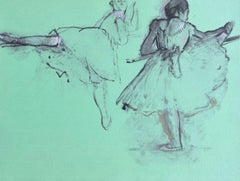
Edgar Degas, Dancer at the Barre, 1945 (after)
By Edgar Degas
Located in Southampton, NY
This exquisite lithograph after Edgar Degas (1834–1917), titled Danseur au bar (Dancer at the Barre), originates from the 1945 folio Degas, Ten Ballet Sketches. Published by The Studio Publications, Inc., New York, rendered and printed by Albert Carman, City Island, 1945, this work reflects Degas’s sensitive mastery of line, movement, and the intimate psychological nuances of the ballet studio. Executed as a lithograph and pochoir on velin paper, this work measures 13 x 17 inches (33.02 x 43.18 cm). Signed in the plate and unnumbered as issued. Rendered and printed by Albert Carman, City Island. Artwork Details: Artist: After Edgar Degas (1834–1917) Title: Danseur au bar (Dancer at the Barre), from Degas, Ten Ballet Sketches, 1945 Medium: Lithograph and pochoir on velin paper Dimensions: 13 x 17 inches (33.02 x 43.18 cm) Inscription: Signed in the plate and unnumbered as issued Date: 1945 Publisher: The Studio Publications, Inc., New York Printer: Albert Carman, City Island Condition: Well preserved, consistent with age and medium Provenance: From the 1945 folio Degas, Ten Ballet Sketches, published by The Studio Publications, Inc., New York Notes: Excerpted from the album, Born in Paris in 1834, Edgar Degas lived, and surely loved the life of that city during most of his years. These continued somewhat sadly beyond those of most of his friends— into the debacle of the first World War, during which he died in 1917. Judging by the frequency with which he used them as models, he must have had an especial admiration for the ballet girls who followed a profession that at the time brought none of the glory and prosperity which attend it today. New aspects of the human body, revealed in movement, fascinated him. But his occupation with the simply anatomical side of his subjects never resulted in a cold interpretation. On the contrary there is a warmth and sympathy that pervades all of his work. The drawings here represent the painter in one important phase of his multi-sensitive view of life; and permit an insight which a more ambitious work might not do-into the operation of the creative process, the artist's transformation of reality as it passes through the mesh of his sensibilities. The Edition of this Portfolio is limited to MMMD examples. Rendered by Albert Carman. About the Publication: Degas, Ten Ballet Sketches (1945) is one of the earliest and most significant American postwar fine art portfolios devoted to Edgar Degas’s intimate works on paper. Published by The Studio Publications, Inc., New York, and rendered and printed by Albert Carman at City Island, the album sought to faithfully reproduce a group of Degas’s ballet-related drawings through a combination of lithography and hand-applied pochoir coloring. This hybrid technique allowed the edition to preserve the immediacy, tonal subtlety, and gestural delicacy central to Degas’s draftsmanship. Conceived as a fine art publication rather than a commercial book, the portfolio provided American audiences unprecedented access to Degas’s private, spontaneous studies—images that reveal the artist’s fascination with movement, anatomy, and the psychological atmosphere of the rehearsal studio. The album exemplifies the mid-20th-century revival of pochoir as a means of recreating the texture and coloristic nuance of original works on paper, and it remains an important document of how Degas’s legacy was translated into high-quality printed form for collectors, museums, and connoisseurs. About the Artist: Edgar Degas (1834–1917) was a French painter, draughtsman, printmaker, and sculptor whose groundbreaking fusion of classical draftsmanship, modern experimentation, and psychological depth helped define the trajectory of Western art, positioning him as one of the most influential figures of the nineteenth and early twentieth centuries; renowned for his depictions of ballet dancers, racehorses, theater scenes, cafe life, domestic interiors, milliners, laundresses, and women at their toilette, Degas reimagined observational realism through radical compositional innovation—employing extreme cropping, asymmetrical framing, oblique viewpoints, and dramatic lighting that anticipated photographic and cinematic language long before these technologies shaped visual culture, and although associated with Impressionism, he rejected plein-air spontaneity in favor of studio-based discipline rooted in the linear precision of Jean-Auguste-Dominique Ingres, the expressive chromaticism of Eugene Delacroix, and the modernity of Edouard Manet while also drawing inspiration from Japanese ukiyo-e prints, classical sculpture, and early photography; his independent artistic philosophy resonated with and helped shape the innovations of Pablo Picasso, Alexander Calder, Alberto Giacometti, Salvador Dali, Joan Miro, Wassily Kandinsky, Marcel Duchamp, and Man Ray, whose explorations of movement, form, dream logic, abstraction, and conceptualism all find antecedents in Degas’s investigations into seriality, temporality, and the fragmented figure, and his pioneering use of pastel, monotype, and wax sculpture fundamentally transformed each medium, influencing artists from Henri Matisse, Francis Bacon, Lucian Freud, and Giacomo Manzu to Paula Rego, contemporary realists, experimental photographers, and choreographers; his works are held in nearly every major museum collection worldwide—including the Musee dOrsay, the Louvre, the Metropolitan Museum of Art, the National Gallery of Art, the Art Institute of Chicago, the Courtauld Institute, and the National Gallery, London—affirming his central place in the history of art, and the highest auction record for Degas was achieved at Sothebys London on February 3, 2015, when Danseuses en Bleu sold for 37,033,000 GBP, cementing his status as one of the most sought-after and enduringly significant artists of the Western canon. Degas pochoir, Degas lithograph...
Category

1940s Impressionist Figurative Prints

Materials

Lithograph

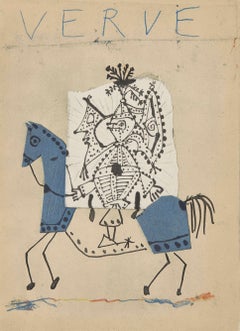
Pablo Picasso, The Blue Rider, from Verve, Revue Artistique, 1951 (after)
By Pablo Picasso
Located in Southampton, NY
This exquisite lithograph after Pablo Picasso (1881–1973), titled Le cavalier bleu (The Blue Rider), from Verve, Revue Artistique et Litteraire, Vol. VII, No. 25–26, originates from ...
Category

1950s Cubist Abstract Prints

Materials

Lithograph

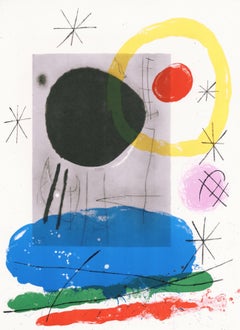
Joan Miro, The Black Sun, from Derriere le miroir, 1965
By Joan Miró
Located in Southampton, NY
This exquisite lithograph by Joan Miro (1893–1983), titled Le Soleil Noir (The Black Sun), from the folio Derriere le miroir, No. 151–152, originates from the 1965 edition published ...
Category

1960s Surrealist Figurative Prints

Materials

Lithograph

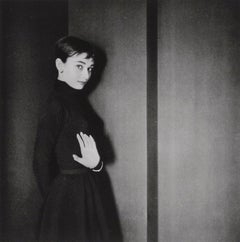
Cecil Beaton, Audrey Hepburn, from Electa Editrice Portfolios, 1981 (after)
By Cecil Beaton
Located in Southampton, NY
This exquisite heliogravure after Sir Cecil Beaton (1904–1980), titled Audrey Hepburn, from the folio Cecil Beaton, Electa Editrice Portfolios, 1981, originates from the 1981 edition...
Category

1980s Modern Portrait Photography

Materials

Lithograph