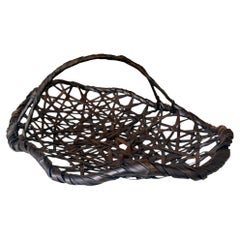
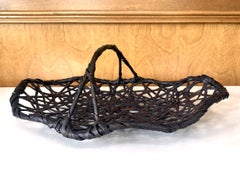
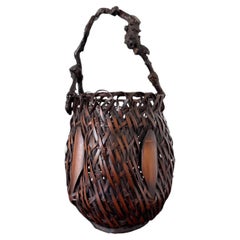
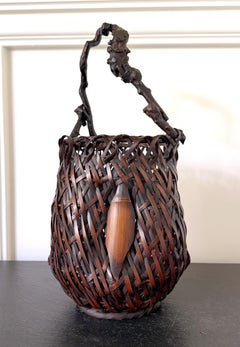
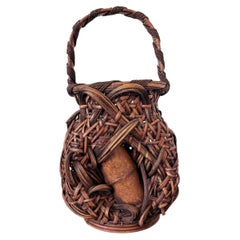
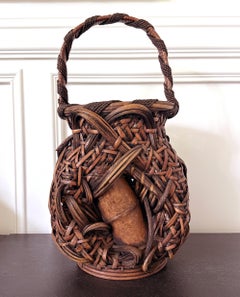
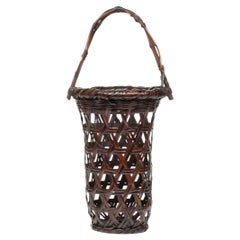
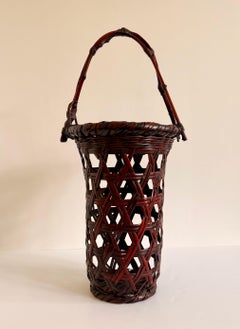
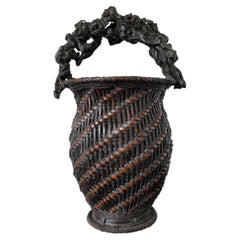
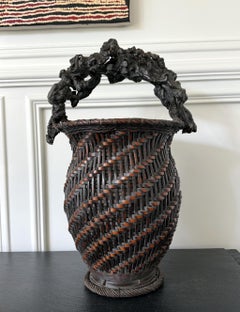
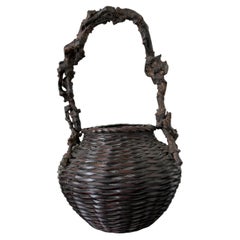
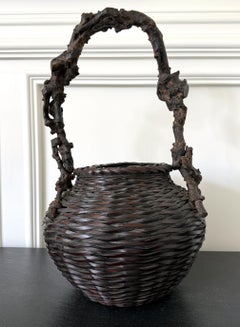
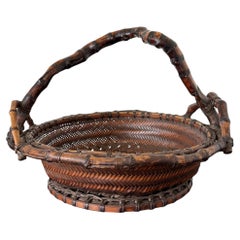
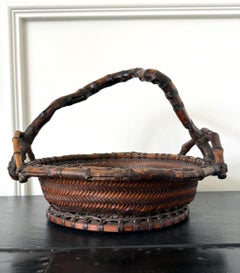
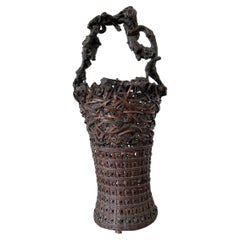
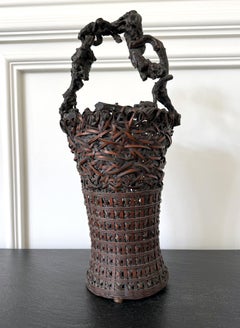
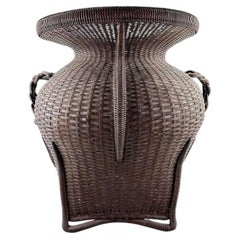
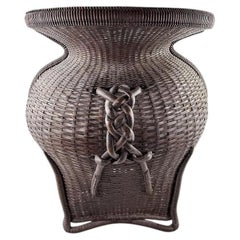
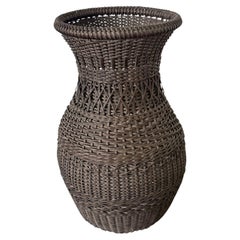
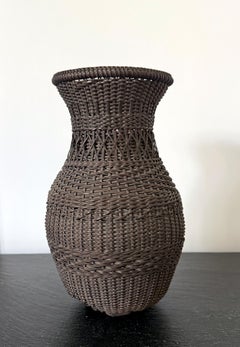
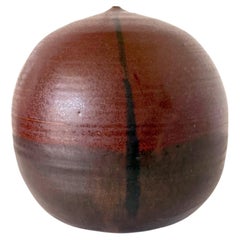
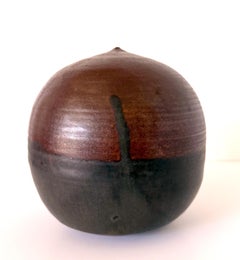
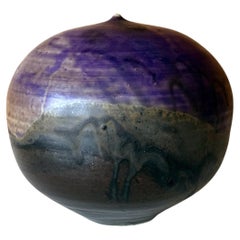
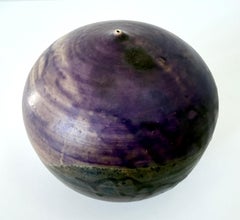
A lovely antique Japanese hanging basket woven from thin bamboo stripes, circa late 19th to early 20th century (toward the end of Meiji to Taisho period). The basket was constructed in a classic baluster vase form with tight weaves that form distinct pattern in sections. It seems that the artist was trying to show off his mastery in various techniques. From top to the bottom, the techniques consist of Mat plaiting, small pine needle plaiting, large plover plaiting, a transitional band of twill plaiting, medium variation of Pine Needle, small plover, Mat, Large Pine Needle and finally Mat again. The artist did impressively demonstrate his skill as the transition appears seamless and the overall pattern is interesting, diverse but also harmonious. The base of the ikebana was quite unusual as well. We haven't seen a similar finish. A bronze ring with a chrysanthemum plate...
Category
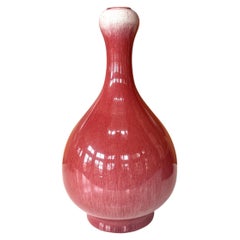
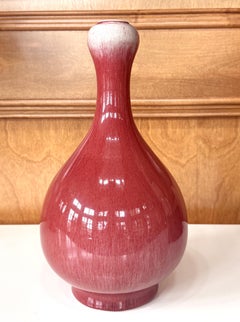
Antique Late 19th Century Japanese Meiji Vases