Located in West Palm Beach, FL
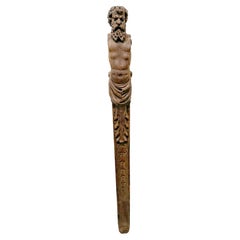
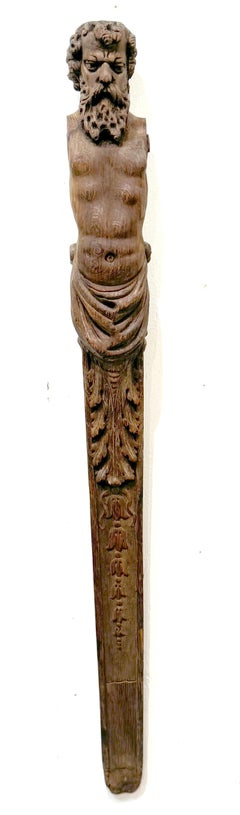
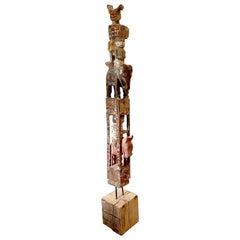
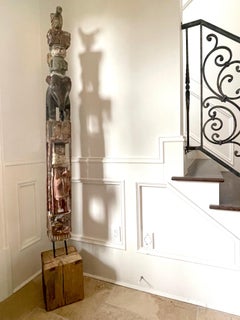
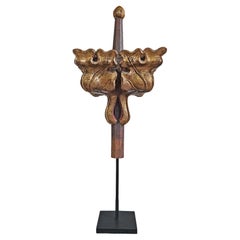
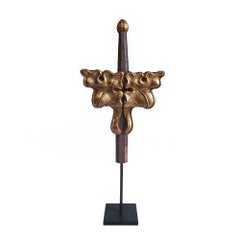
19th Century European Hercules Herm Architectural Carving
Hand-carved wood, 42" high × 4" wide × 3.5" deep
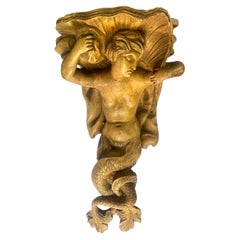
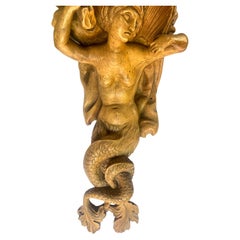
A finely carved wood architectural fragment in the form of a Herm of Hercules, dating to the 19th century and drawing upon Renaissance and Baroque precedents. The sculpture shows the muscular torso of a mature, bearded male figure with a deeply furrowed brow, curling hair, and a voluminous beard. His body is rendered in tapering herm form, with a draped cloth across the midsection leading into a long rectangular plinth decorated with foliate carving.
The herm derives from classical antiquity, where stone posts surmounted by the head or bust of Hermes (and later other gods or heroes) served as boundary markers and architectural supports. During the Renaissance and Neoclassical revivals, this form was adapted into decorative architecture, furniture, and garden ornaments, often featuring heroic or mythological figures such as Hercules to convey strength and guardianship.
The stern expression, powerful musculature, and prominent beard allude to Hercules, the archetype of heroic masculinity. Such carvings were often installed as newel posts, pilaster ornaments, or architectural appliqués...
Category
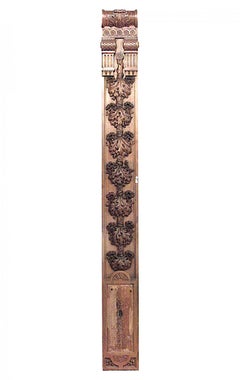
Late 19th Century European Greco Roman Antique Hardwood Architectural Elements