By Tiffany Studios
Located in Los Angeles, CA
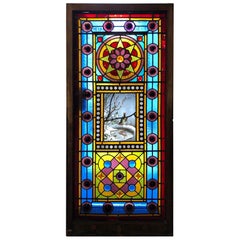
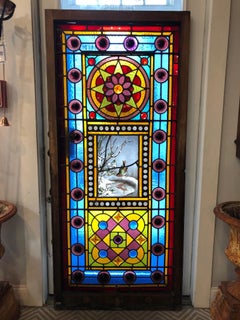
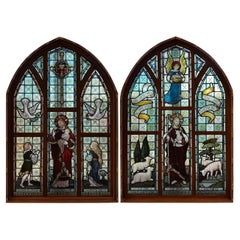
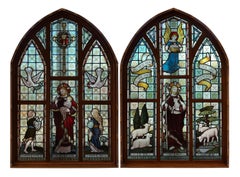
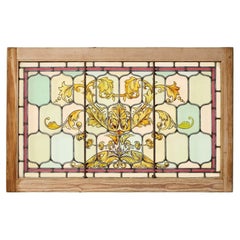
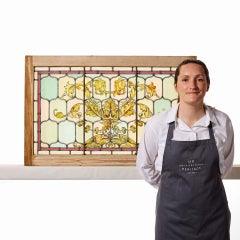
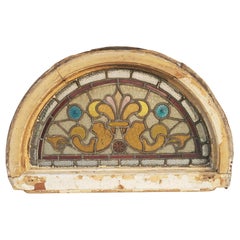
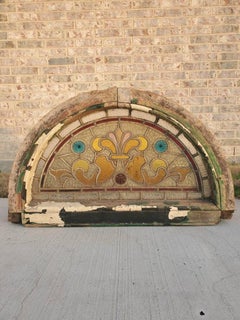
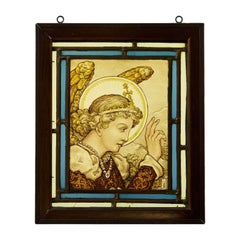
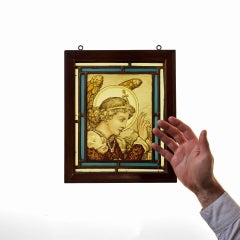
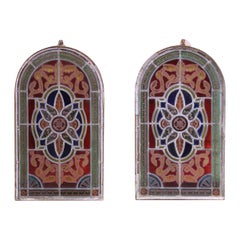
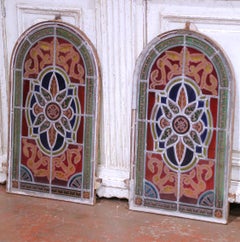
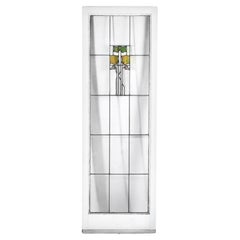
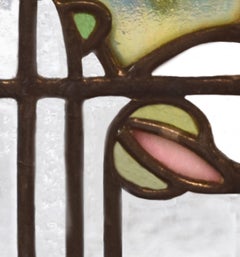
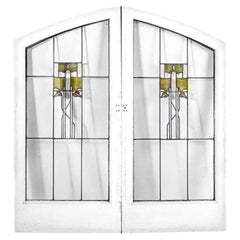
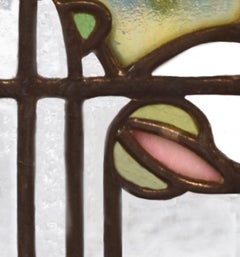
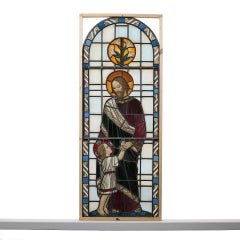
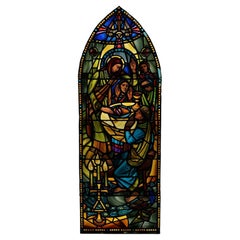
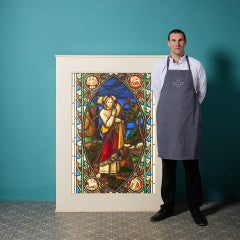
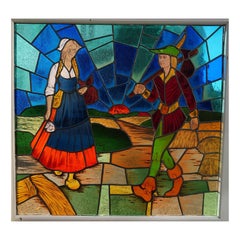
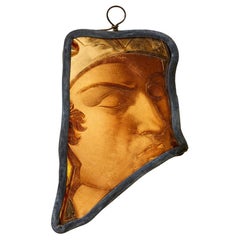
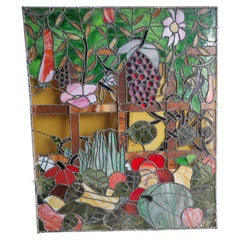
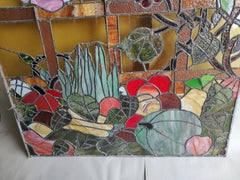
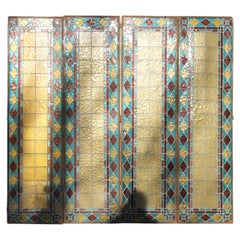
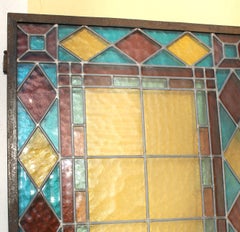
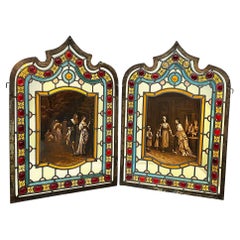
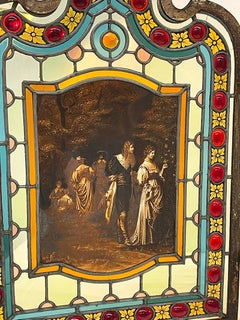
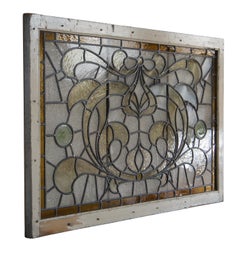
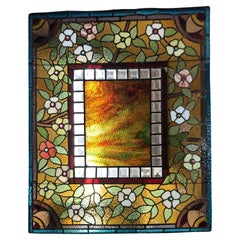
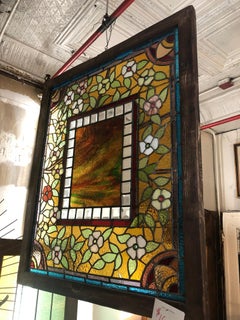
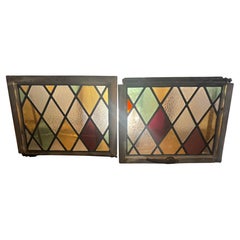
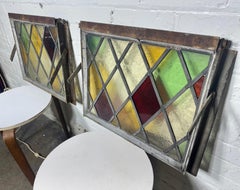
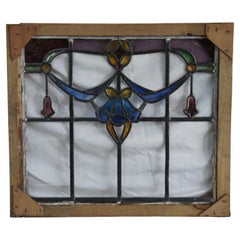
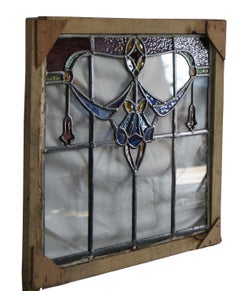
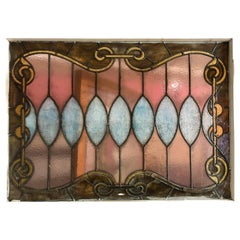
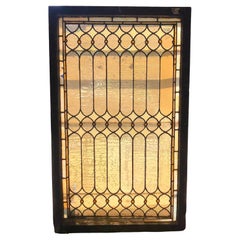
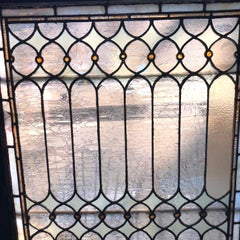
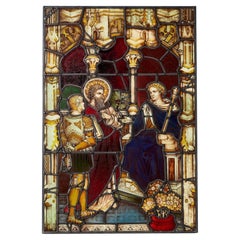
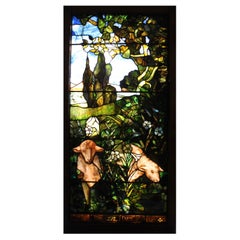
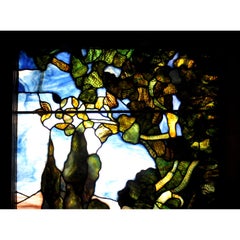
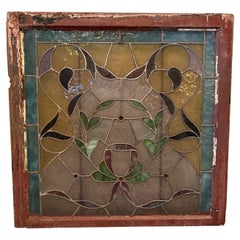
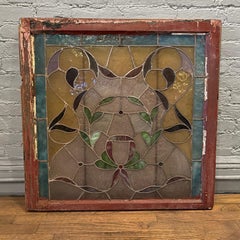
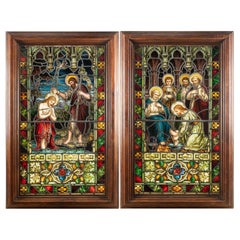
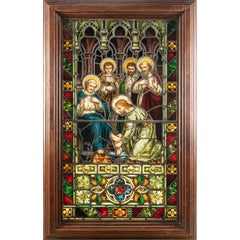
An American 19th Century Stained-Glass Panel depicting sheep/lambs amongst flowers and shrubs, in the manner Louis Comfort Tiffany - Tiffany Studios, within an oak frame. The bottom reads "Born 1872 - Died 1878". No signature or markings found. Circa: 1878.
Louis Comfort Tiffany (February 18, 1848 – January 17, 1933) was an American artist and designer who worked in the decorative arts and is best known for his work in stained glass. He is the American artist most associated with the Art Nouveau and Aesthetic movements. He was affiliated with a prestigious collaborative of designers known as the Associated Artists, which included Lockwood de Forest, Candace Wheeler, and Samuel Colman. Tiffany designed stained glass windows and lamps, glass mosaics, blown glass, ceramics, jewellery, enamels, and metalwork.[2] He was the first design director at his family company, Tiffany & Co., founded by his father Charles Lewis Tiffany.
Tiffany started out as a painter, but became interested in glassmaking from about 1875 and worked at several glasshouses in Brooklyn between then and 1878. In 1879 he joined with Candace Wheeler, Samuel Colman, and Lockwood de Forest to form Louis Comfort Tiffany and Associated American Artists. The business was short-lived, lasting only four years. The group made designs for wallpaper, furniture, and textiles. He later opened his own glass factory in Corona, New York, determined to provide designs that improved the quality of contemporary glass. Tiffany's leadership and talent, as well as his father's money and connections, led this business to thrive.
Works:
The Entrance Hall of the White House in 1882, showing the newly installed Tiffany glass screens
The Alhambra in Granada, by Louis Comfort Tiffany
In 1881 Tiffany did the interior design of the Mark Twain House in Hartford, Connecticut, which still remains, but the new firm's most notable work came in 1882 when President Chester Alan Arthur refused to move into the White House until it had been redecorated. He commissioned Tiffany, who had begun to make a name for himself in New York society for the firm's interior design work, to redo the state rooms, which Arthur found charmless. Tiffany worked on the East Room, the Blue Room, the Red Room, the State Dining Room, and the Entrance Hall, refurnishing, repainting in decorative patterns, installing newly designed mantelpieces, changing to wallpaper with dense patterns, and, of course, adding Tiffany glass to gaslight fixtures and windows and adding an opalescent floor-to-ceiling glass screen in the Entrance Hall. The Tiffany screen...
Category
19th Century American Baroque Revival Antique Painted Windows
MaterialsStained Glass, Oak