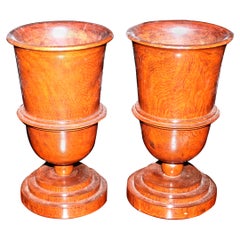
Pair of German Art Deco Treen Ware Urns
Located in Sharon, CT
Beautiful early pair, and surfaces.
Category
Early 20th Century German Art Deco Urns
Materials
Wood
Pair of German Art Deco Treen Ware Urns
Located in Sharon, CT
Beautiful early pair, and surfaces.
Wood
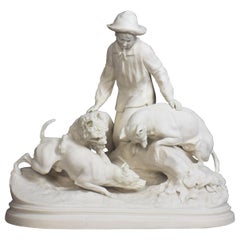
Parian Ware Figure Group
Located in Cheshire, GB
Parian group of a hunting scene depicting a man kneeling on a fallen tree with his dogs looking at a burrow. Dimensions Height 12.5 Inches Width 13 Inches Depth 6.5 Inches
Porcelain
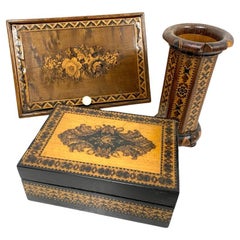
Group Of Tunbridge Ware Victorian Table Top Boxes
By Tunbridge Ware
Located in Bridgeport, CT
Included in this group: Rectangular inlaid box with hinged lid revealing silk and paper lining. The box with mosaic central cartouche, geometric banding. Dimensions: 3 1/4" W x 4 5/8...
Mother-of-Pearl, Fabric, Wood, Paper
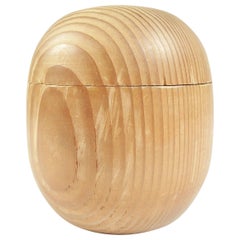
Antique Scandinavian Pine Canister, Treen Ware, Early 20th Century
Located in Chatham, ON
Antique lathe turned - treen ware - pine wood canister/covered box - lovely aged patina with beautiful grain - Scandinavia - early 20th century. Excellen...
Pine
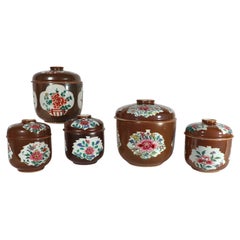
Chinese Export Porcelain Group of Batavia-ware Urns & Covers
Located in Downingtown, PA
Collection of Five Chinese Export 'Batavia-ware' and Famille Rose Jars and Covers Qianlong Period, China, Circa 1750s This handsome collection of five graduated covered jars is a magnificent and rare example of mid-18th-century Chinese Export porcelain, illustrating the highly successful fusion of Chinese ceramic technology and European market demand during the height of the global trade era. ________________________________________ Description and Aesthetic Medium: Porcelain with underglaze brown glaze and overglaze Famille Rose enamels. Period: Qianlong (1736–1795). Origin: Jingdezhen kilns, China, made for the European export market. The collection comprises two large, two medium, and one small jar, intended to be displayed together as a garniture—a decorative set prized for mantelpieces and cabinets in opulent European interiors. • The 'Batavia' Ground: Each piece is characterized by a luxurious, deep chocolate-brown glaze covering the exterior, a distinctive aesthetic known historically as "Batavia-ware" or descriptively as café au lait. This rich, monochrome ground was achieved by bathing the porcelain in an iron-rich slip before glazing and firing. • The Famille Rose Reserves: The dark ground provides a dramatic backdrop for finely painted, leaf-shaped reserves (panels). These panels are adorned with exquisite floral sprays executed in the vibrant Famille Rose palette (meaning "pink family"), which was introduced to China from Europe in the early 18th century. The opaque enamels—dominated by the rose-pink created from colloidal gold—allow for subtle shading and realism, brilliantly depicting the peony (mudan), the Chinese flower of wealth, nobility, and honor. • The Covers: The domed covers maintain this contrast, with a high, lustrous brown glaze broken by Famille Rose floral sprays that echo the motifs on the body. ________________________________________ Historical Context: Global Trade and Naming The name "Batavia-ware" is a crucial historical reference, even though the porcelain was manufactured in the kilns of Jingdezhen. 1. The Dutch East India Company (VOC): Batavia (modern-day Jakarta, Indonesia) served as the fortified administrative and trading headquarters of the Dutch East India Company (VOC) in Asia. 2. The Trade Route: Porcelain destined for the European market was collected from various Chinese ports and then centrally transshipped through Batavia. This particular style became famously associated with that major transit port among Western collectors, hence the name, which links the sophisticated manufacturing of China to the powerful trade infrastructure of the Dutch. 3. 18th-Century Opulence: Garnitures like this were highly desirable statements of wealth and worldliness in 18th-century Europe. Their acquisition signified participation in the exotic, global market and a cosmopolitan taste capable of appreciating the high technical and artistic quality of Chinese porcelain. The successful combination of the deep, rich brown glaze—which evokes a feeling of luxurious Eastern lacquer or polished wood—with the delicate, luminous European-inspired Famille Rose palette represents a brilliant convergence of East-West artistic demands at the height of the Qianlong Emperor’s reign. ________________________________________ Dimensions Largest Jar: 7 1/2 inches high x 7 1/2 inches diameter; Second Jar: 7 1/4 inches high x 6 1/2 inches diameter; Third Jar: 5 1/2 inches high x 5 inches diameter; Pair of Smaller Jars...
Porcelain
$482
H 3 in W 10.5 in D 4 in
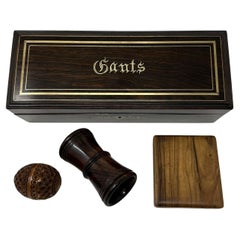
Antique Treen Ware Coquilla Nut, Glove Box, Chess Dice Shaker, Lady's Card Case
Located in Dublin, Ireland
A Stunning Collection of Hand Made Hand Carved Tureen Items to include a Ladys French Brass Inlaid Glove Box. Stylish Flame Mahogany French Glove Box of traditional form, complete ...
Brass
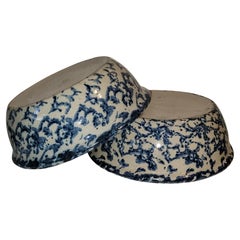
Pair of Sponge ware Bowls
Located in Los Angeles, CA
19Thc Sponge ware berry bowls or cereal bowls in pristine condition.These bowls are very hard to come by and in good condition.
Pottery
$439Sale Price|20% Off
H 4 in Dm 3 in
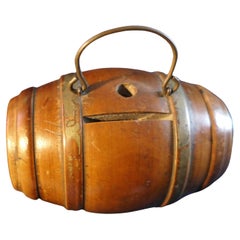
19th Century Treen Money Box A fine 19th century treen money box
Located in Godshill, Isle of Wight
19th Century Treen Money Box A fine 19th century treen money box, made in fruitwood with brass feet and handle, the money box is in good condition for its age, lovely colour and pat...
Fruitwood
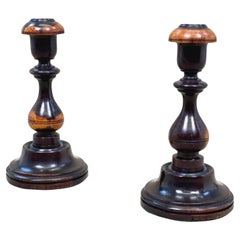
Pair Of 19th Century Lignum Vitae Treen Candlesticks
Located in Bedfordshire, GB
A Very Attractive Pair Of Early 19th Century Antique Treen, Lignum Vitae Candlesticks, Of Good Rich Colour And Patina, Having Bulbous Sockets Over Broadening Baluster Stems, Terminat...
Other
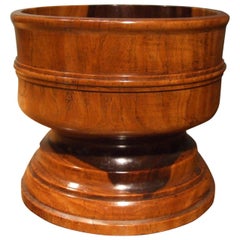
English 19th Century Treen Salt
Located in Greenwich, CT
A fine mid 19th century English turned Lignum Vitae communal open salt. The striking grain on this treen vessel shows the beauty of this timber and the great ability of the turner, ...