Located in West Hollywood, CA
------------------- 14% will expire Monday Sep 27th-------
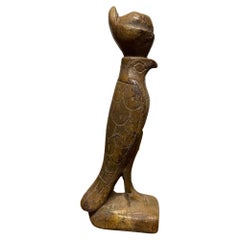
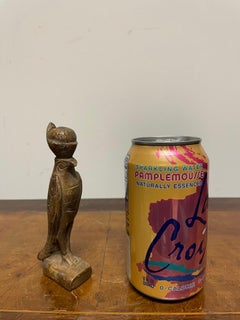
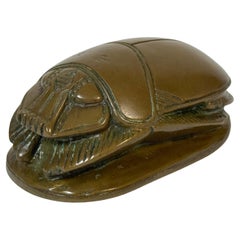
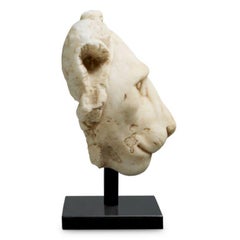
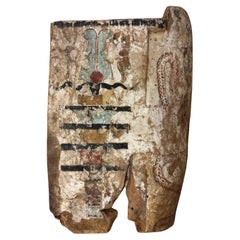
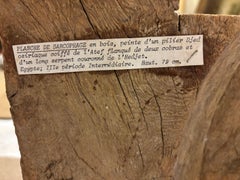
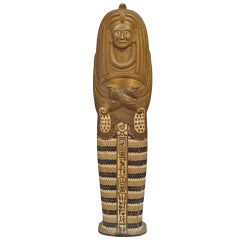
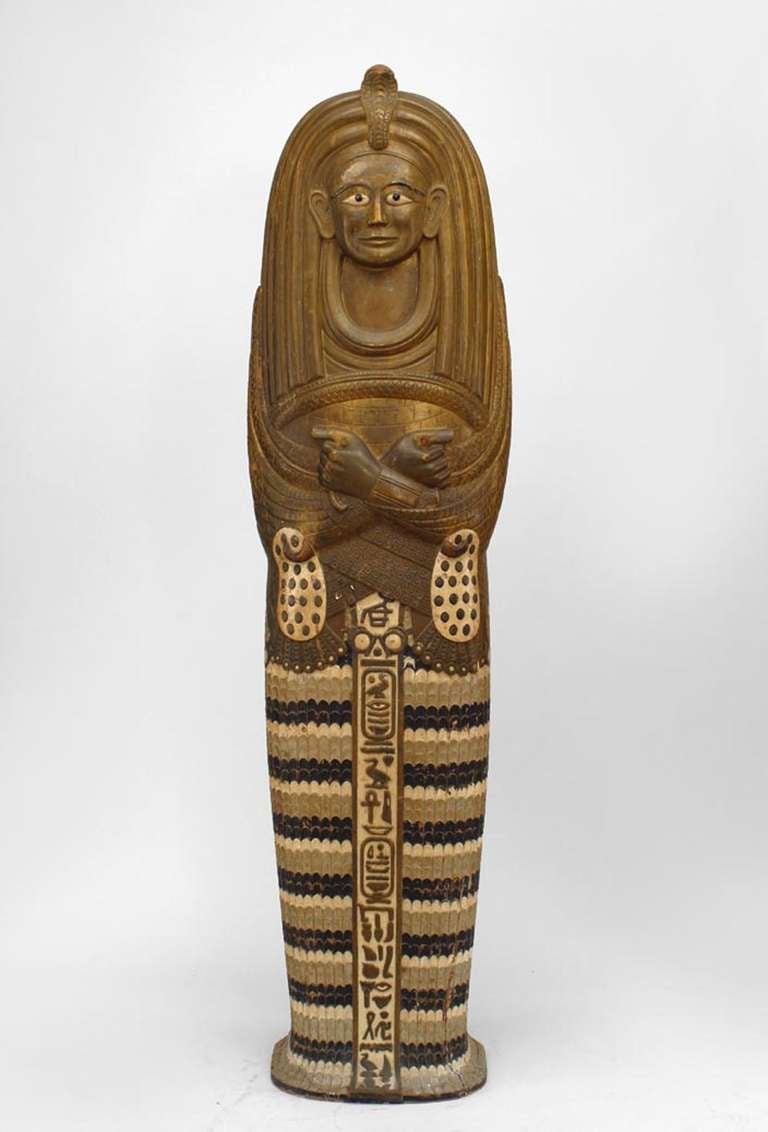
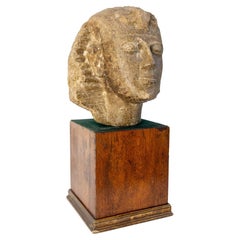
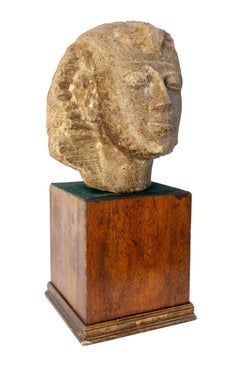
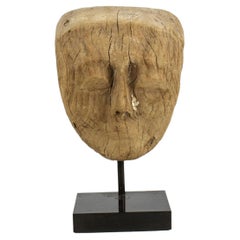
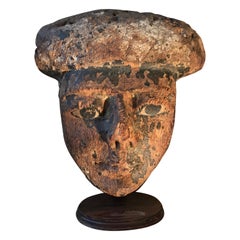
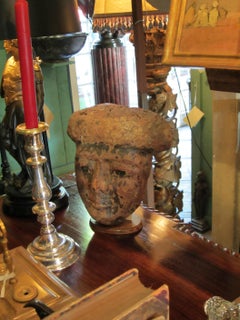
Egyptian poly-chrome wood mask 100-200 BC garniture
Historic. An ancient Egyptian wooden face mask, once part of a large anthropoid sarcophagus.
Sensitively carved from a large piece of cedar wood, with large almond shaped eyes,Once covered in thick paint, remnants of which survive, now dark in color. Beautifully weathered, revealing the grain of the wood beneath.
Provenance: Anthony Duquette an american artist specialized in designs for stage and film. Duquette was born in Los Angeles, California. He grew up between Los Angeles, where he wintered with his family, and Three Rivers, Michigan, where they lived the rest of the year. As a student, Duquette was awarded scholarships at both the Chouinard Art Institute in Los Angeles and the Yale School of the Theatre. After graduating from Chouinard, he began working in advertising, creating special environments for the latest seasonal fashions. He also began to free-lance for designers such as William Haines, James Pendleton and Adrian. In the early 1940s, Duquette's parents and siblings moved permanently to Los Angeles, where Duquette had been living since 1935. During this time Duquette was discovered by designer and socialite Elsie de Wolfe. Through the patronage of de Wolfe and her husband Sir Charles Mendl, Duquette established himself as one of the leading designers in Los Angeles. He worked increasingly for films, including many Metro Goldwyn Mayer productions under the auspices of producer Arthur Freed and director Vincente Minnelli.
Upon his return from Europe in 1947, Duquette continued his works for private clients and for the theatre and motion pictures. He presented his first exhibition at the Mitch Liesen Gallery in Los Angeles and shortly thereafter was asked to present his works at the Pavilion de Marsan of the Louvre Museum, Paris. Duquette was the first American artist to have a one-man show at the Louvre.[citation needed] Returning from a year in France, where he received design commissions from the Duke and Duchess of Windsor and the Alsatian industrialist Commandant Paul Louis Weiller, Duquette held a one-man showing of his works at the Los Angeles County Museum of Art.
There followed other one-man exhibitions of Duquette's works, including at the M. H. de Young Museum and Palace of the Legion of Honor in San Francisco, the California Museum of Science and Industry and Municipal Art Gallery in Los Angeles, the El Paso Museum of Art, the Santa Barbara Museum of Art, the Museum of the City of New York, as well as one-man exhibitions in Dallas, Chicago, Rio de Janeiro and Phoenix, Arizona.
In 1956, with his wife Elizabeth (known as Beegle), he opened a salon in the converted silent film studios of actress Norma Talmadge, where they entertained friends such as Arthur Rubenstein, Aldous Huxley, Jascha Heifitz and Greta Garbo.
1960–1970s
During the 1960s and '70s, the Duquettes continued to travel extensively, working in Austria, Ireland and France as well as New York, Dallas, San Francisco, South America and Asia. Duquette created interiors for Doris Duke, Norton Simon, and J. Paul Getty, a castle in Ireland for Elizabeth Arden and a penthouse in the Hawaiian Islands. He also designed interiors for commercial and public spaces like the Hilton Hawaiian Village, Sheraton Universal Hotel, and sculptures and tapestries for the Ritz Carlton Hotel in Chicago as well as the Los Angeles Music Center and the University of California at Los Angeles. Designs for film and theatre include Yolanda and the Thief, Lovely to Look At, Kismet, and Ziegfeld Follies for MGM, as well as Jest of Cards, Beauty and the Beast, and Danses Concertantes for the San Francisco Ballet. Operas for which Duquette designed both costumes and settings include Der Rosenkavelier, The Magic Flute, and Salome. His designs for the original Broadway production of Camelot won Duquette the Tony Award for Best Costume Design.
His monumental work of environmental art Our Lady Queen of the Angels was created as a gift to the people of Los Angeles in honor of that city's lyrical name[2] and in celebration of the bicentennial. This hugely successful multi-sensorial exhibit was seen by hundreds of thousands of visitors over a three-year period at the California State Museum of Science and Industry at Exposition Park. As part of the unique experience of "ethnic angels," Duquette included a poetic narration by Ray Bradbury, spoken by Charlton Heston. Duquette embellished the celebratory experience with original music by Garth Hudson (reissued in 2005). The immense size of the building added to the effect, where from the 80 foot ceiling hung an 18-foot Madonna, dressed in an ornate and symbolic gown. She was surrounded by angels and alters and jeweled tapestries. All of this was enhanced by special lighting effects which changed the Madonna's facial color "to represent the four races."[2] Duquette researched angels and learned every major world religion (Catholic, Jewish, Moslem, Buddhist, Hindu believes in the same eight archangels.[3] "Duquette writes that his 'Angels' exhibit stresses over and over again 'the brotherhood of man, which is an implied theme of this 'celebration." He stated, "It is my hope that this celebrational environment, into which I have poured the aspirations of a lifetime, will transport the viewer to another dimension."[4]
In 1979, the Duquettes formed the Anthony and Elizabeth Duquette...
Category
15th Century and Earlier Egyptian Antique Egyptian Mounted Objects