Gothic Urns

GOTHIC STYLE

The Gothic Revival movement (also called Victorian Gothic or Neo-Gothic) emerged in Britain in the 1740s, and reached its height in the late-19th century. The style is characterized by such decorative flourishes as pointed arches, floral details, finials, heraldic motifs and linenfold carving. The movement was rooted in religious and social conservatism. Its proponents, who included Charles Barry and A.W.N. Pugin, the architects of London’s Houses of Parliament (designed in 1840), believed that the art and architecture of the Middle Ages were authentically spiritual and inherently moral.

In the United States, the Gothic Revival movement shaped both public buildings and private houses. Numerous American schools were built in the early-19th century in a style now called Collegiate Gothic. Many builders and craftsmen were inspired by Andrew Jackson Downing’s widely read 1850 book Architecture for Country Houses, which posited that a family’s home should exemplify their values — and that the Gothic Revival style was particularly well-suited to scholars and clergymen. Furniture with detailing that mirrored that of Gothic Revival buildings appeared in the same period. Such pieces typically feature dark, intricately carved wood, and upholstery in velvet or leather.

Much like the castle or cathedral that inspired it, a Gothic Revival chair makes a bold design statement. And while you probably don’t have to cross a moat or raise a portcullis to get through your front door, a Gothic Revival piece might make a statement that your home is indeed your castle.

to
2
2
203
173
165
139
70
62
48
35
33
32
31
30
25
19
18
16
6
6
1
1
1
2
2
1
1
1
Height
to
Width
to
2
2
2
Style: Gothic
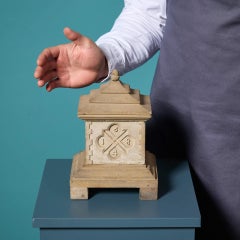
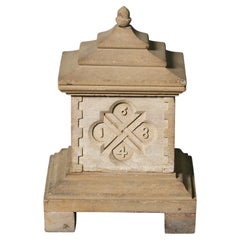
Antique Hand Carved Stone Sarcophagus

Antique Hand Carved Stone Sarcophagus

Located in Wormelow, Herefordshire

An Antique Hand Carved Stone Sarcophagus. This unusual yet charming architectural model has been carved from York Stone with exceptional attention to detail. Standing on block feet...

Category

17th Century English Antique Gothic Urns

Materials

Stone

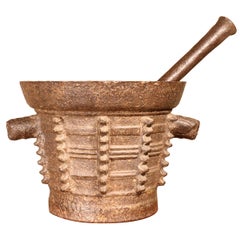
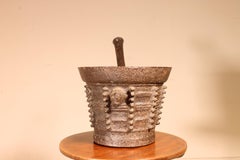
Mortar and Pilar End 15th Century Gothic Period

Mortar and Pilar End 15th Century Gothic Period

Located in Brussels, Brussels

Iron mortar with its original pestle end 15th beginning 16th century Gothic period, France Beautiful original object with a beautiful patina and in good condition   

Category

16th Century French Antique Gothic Urns

Materials

Iron

Related Items
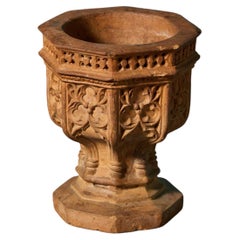
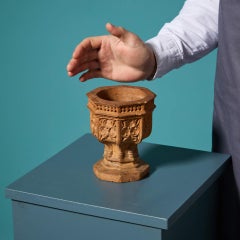
19th Century Victorian Terracotta Model Of A Gothic Font

19th Century Victorian Terracotta Model Of A Gothic Font

Located in Wormelow, Herefordshire

A 19th century Victorian terracotta model of a gothic font. An English architectural model of a font in the ecclesiastical style dated to circa 1850. The octagonal design has a repeating trefoil design on all sides. A pleasing object modelled after an unknown church font...

Category

19th Century English Antique Gothic Urns

Materials

Terracotta

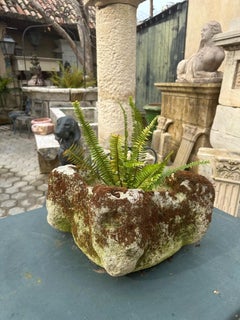
Hand Carved Stone Vide poche Basin Jardinière Bowl Planter Vessel Sink Antiques

Hand Carved Stone Vide poche Basin Jardinière Bowl Planter Vessel Sink Antiques

Located in West Hollywood, CA

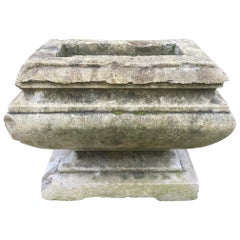
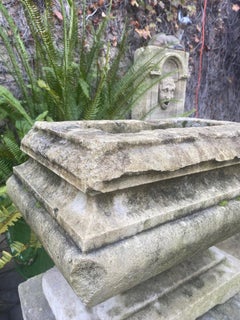
Hand Carved Stone Vide poche Basin Jardinière bowl planter vessel sink Antiques . 17th C. Possibly earlier Gothic Container . A Water Trough Benitier in a ...

Category

17th Century French Antique Gothic Urns

Materials

Stone, Limestone

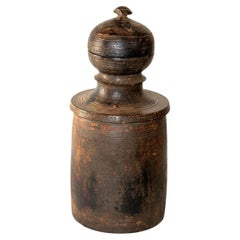
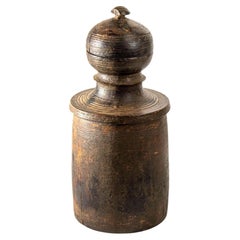
Antique Tekhi Wooden Pot from Nepal, Hand-Carved Hardwood, 1900s

Antique Tekhi Wooden Pot from Nepal, Hand-Carved Hardwood, 1900s

Located in Moreno Valley, CA

Antique Wooden Pot or Tekhi, from Nepal, 13" Tall, circa 1900s Early 20th century wood pot from Nepal, this particular style of wooden container, pot has a r...

Category

Early 20th Century Nepalese Gothic Urns

Materials

Hardwood

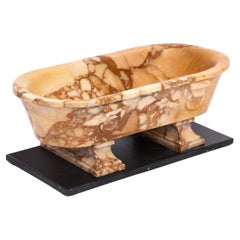
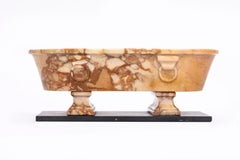
Antique 19th Century Italian Grand Tour Siena Marble Model of a Sarcophagus

Antique 19th Century Italian Grand Tour Siena Marble Model of a Sarcophagus

By Benedetto Boschetti

Located in New York, NY

A Magnificent Antique 19th Century Italian Grand Tour Hand-Carved Siena Marble Model of a Sarcophagus on a Black Marble Base. This gorgeous grand tour piece is modeled after the Fon...

Category

1840s Italian Antique Gothic Urns

Materials

Marble, Siena Marble

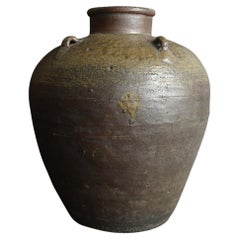
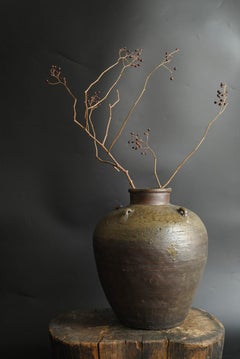
Japanese antique Bizen ware vase / 15th-16th century / Wabi-sabi vase/Tsubo

Japanese antique Bizen ware vase / 15th-16th century / Wabi-sabi vase/Tsubo

Located in Sammu-shi, Chiba

This Bizen ware jar was fired in the Bizen region of Okayama Prefecture. Bizen ware is one of Japan's Six Ancient Kilns and is known as one of the oldest pottery styles in Japan. Its...

Category

16th Century Japanese Antique Gothic Urns

Materials

Pottery

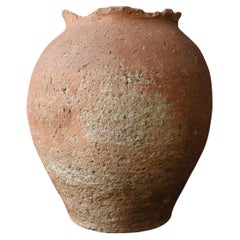
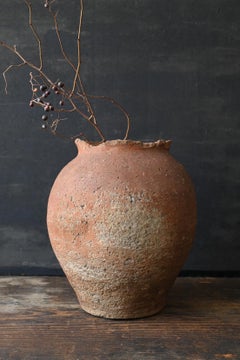
Japanese Antique Pottery Jar 15th-16th Century/ Wabi-Sabi Jar/Tokoname Vase

Japanese Antique Pottery Jar 15th-16th Century/ Wabi-Sabi Jar/Tokoname Vase

Located in Sammu-shi, Chiba

It is a very old jar in Japan. This is a pottery called Tokoname ware. Tokoname is a kiln located in Aichi prefecture, Japan. It is said to have originated around the 12th century. A...

Category

16th Century Japanese Antique Gothic Urns

Materials

Pottery

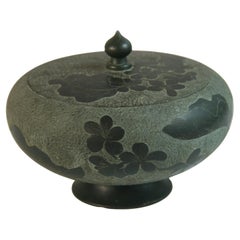
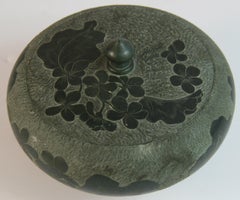
Chinese Snuff Bottle Hand Carved Natural Serpentine Stone Spoon Top, circa 1920s

Chinese Snuff Bottle Hand Carved Natural Serpentine Stone Spoon Top, circa 1920s

Located in Lincoln, Lincolnshire

This is a beautiful Chinese snuff bottle, heavy for its size and hand carved from a hardstone with a celadon color, which we attribute to Serpentine stone and dating to the early 20t...

Category

Early 20th Century Chinese Gothic Urns

Materials

Serpentine, Bronze

18th Century Georgian Lidded Jar, Hand-Carved Yew Wood, Antique

18th Century Georgian Lidded Jar, Hand-Carved Yew Wood, Antique

Located in Stamford, CT

Lovely 18th century Georgian lidded jar or condiment pot hand carved and turned from a beautiful piece of yew wood. Rich and warm patina from age and use...

Category

Mid-18th Century English Antique Gothic Urns

Materials

Yew

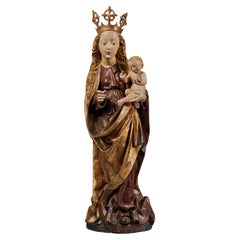
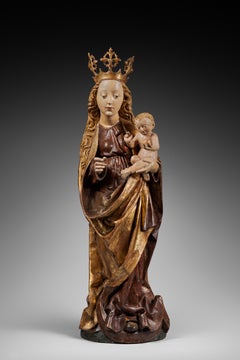
Polychrome carved wood Virgin and Child from the 15th Century

Polychrome carved wood Virgin and Child from the 15th Century

Located in Saint-Ouen, FR

POLYCHROME CARVED WOOD VIRGIN AND CHILD FROM THE 15TH CENTURY   ORIGIN: SOUTH GERMANY, SWABIA, NUREMBERG REGION PERIOD: 15th CENTURY   Height: 94,6cm Width : 28 cm Depth : 18 cm   Lime wood Original Polychromy Good state of conservation     From 1430 onwards, sculpture underwent a profound stylistic renewal which continued until 1530, the so-called late Gothic period. In the Germanic countries, original sculptures flourished in an expressive and sensitive vein.
This renewal was inspired by the art of Nicholas of Leiden, who was active in Strasbourg in the 1460's. His style broke with the refined and delicate art of the international Gothic style in force throughout Europe around 1400. The figures became more authentic and realistic. The bodies became denser. Clothes are animated by deep, broken folds, the fabrics are heavy and have a great decorative value. In addition, the polychromy is intended to be illusionistic. The painting makes it possible to restore the texture of the materials, the richness of the textiles and the natural skin tone of the characters.   The dissemination of images through engraving and the great mobility of the artists led to the success of this style, which conquered the Upper Rhine, Swabian, Tyrolean and Franconian regions, contributing to the formation of a common stylistic identity in these regions. The economic boom in the flourishing German cities was conducive to the development of original production. Attracted by this prosperity, numerous workshops were set up in order to meet the orders of religious communities, the Church and the laity, including a clientele of middle-class rockers.      This precious Virgin and Child is depicted standing on a crescent moon, her head encircled by a crown of tall flowers. Her long wavy hair spreads over her shoulders, framing her beautiful oval face. Under fine eyebrows drawn with a brushstroke, her almond-shaped, slightly drooping eyes look at the Child with infinite softness. She is dressed in a long red dress with a rounded neckline, belted under the chest. The heavy fabric of her dress spreads out in broken folds at her feet. On her shoulders she wears a golden cloak. The drapery has deep folds. She holds out her right hand while she holds the Christ Child with her left.   Christ, with his well-defined hair, is naked. His cheeks are highlighted with red, he holds an apple in his left hand and with the other hand makes a sign of blessing towards the faithful.   Virgins with Child on a crescent moon were very popular in the second half of the 15th century, especially as the central subject of altarpieces in southern Germany and Austria. The crescent moon on which Mary is standing is reminiscent of the Woman of the Apocalypse. Often equated with the Virgin Mary.    This episode is taken from the Book of Revelation (12:1-6)   1 Then a great sign appeared in heaven: a woman clothed with the sun, with the moon under her feet and a crown of twelve stars on her head. ; 2 She was pregnant, and she cried out because she was in labor, in pain from giving birth. ; 3 Then another sign appeared in heaven: it was a great fiery red dragon, with seven heads and ten horns, and seven royal crowns on his heads. ; 4 His tail swept down a third of heaven's stars and threw them to the earth. The dragon stood in front of the woman who was about to give birth so that when she gave birth, he might devour her child. ; 5 She gave birth to a son, a male child who is to rule all the nations with an iron rod. Her child was snatched up to God and his throne. ; 6 Then the woman fled into the desert, where God has prepared a place for her. There she will be taken care of for one thousand two hundred sixty days.   Some theologians see in this woman a reference to the Virgin Mary and in the child, Jesus.    
This remarkable work is a very fine example of sculpture from Swabian workshops in the last decades of the 15th century. It presents all the characteristic stylistic elements: a highly girdled silhouette, an abundant drapery with angular folds, but also a great physical presence accentuated by the polychromy that restores the anatomical details. This group is made of a wooden log. The deep folds of the drapery highlight the movement of the Virgin holding the child.       Bibliography :   Sophie Guillot de Suduiraut, Dévotion et Séduction, Sculptures souabes des musées de France, vers 1460-1530, Paris musée du Louvre-Éditions somogy, 2015   “Revelation 12 -   Common English Bible...

Category

15th Century and Earlier German Antique Gothic Urns
Materials

Wood

Lovely Large Hand Carved Corinthian Pillar Jardiner Stand for Antique Display

Lovely Large Hand Carved Corinthian Pillar Jardiner Stand for Antique Display

Located in West Sussex, Pulborough

Wimbledon-Furniture Wimbledon-Furniture is delighted to offer for sale this lovely hand carved Corinthian pillar with floral detailing Please note the delivery fee listed is j...

Category

19th Century English Antique Gothic Urns
Materials

Oak

Late 15th Century Polychrome Wood Carving Depicting the Nativity

Late 15th Century Polychrome Wood Carving Depicting the Nativity

Located in Saint-Ouen, FR

While the birth of Christ is briefly told in the Gospel of Luke (2, 7) it is in the apocryphal texts that we find most of the elements and details that have then inspired artists. As of the 14th century and even more of the 15th century the subject of the Adoration of the Child replaces in Western art the scene of the Birth, much favoured in Byzantine art. Instead of being depicted lying with the new-born swathed in the manger, the Virgin is now kneeling, her hands joined in prayer in front of the naked child. This change was probably hastened by the popularity of the visions of Saint Bridget of Sweden to whom the Virgin allegedly appeared to show how she had given birth to Jesus (Visions, VII, chap. 21). Sheltered by a thatch-roofed structure the Virgin is kneeling in front of the Child Jesus. She wears a magnificent red dress under a large gold cloak. Her curled blond hair is partially veiled. The newborn is lying on a straw mat. Joseph is depicted with a parted beard and stands opposite from the Virgin. He wears a tunic and a coat with a purse hanging from the belt. His costume reminds us of the long journey him and Mary have accomplished to reach Bethlehem. Two other women are present. One is looking through the stable’s window to observe the Holy Family while another one kneels in prayer in front of the divine child. The rich costume of the lady might indicate she is a donator. However they could also both represent the women who took part in the birth of Christ, Zelemi and Salome. Salome, incredulous did not believe in the virginal conception of Mary and she is represented far from the scene. The artist has depicted her with an expression of doubt on her face. Zelemi, on the contrary, is a believer. She is rewarded by a place of honour at the heart of the scene, close to Mary. To the left the donkey and ox that have accompanied Mary and Joseph to Bethlehem observe quietly the scene. On the foreground two angels hold a scroll reading an excerpt from the Gloria : “/Gloria/ in excelsis /Deo/.” One of the angels wears a blue cape while the other’s is red Those two colours are very significant as during Middle-Ages blue symbolises hope and red charity. Together they express the hope in redemption thanks to the advent of Christ and his sacrifice to come. Above the main scene, up a cliff, a small shepherd lets his herd of sheep graze amidst the trees. He is framed by two walled cities. This wood carving is the work of a very skilled and inventive artist. The piece bears witness to his exceptional talent. The realism of the scene is emphasised by the amount of details depicted. The refinement of the carving itself is highlighted by the well preserved polychromy. This key moment of the New Testament is set in a contemporary context thanks to the clothes of the characters and the scenes of rural life. The universal dimension of the scene is intensified while allowing contemporary viewers to grasp its meaning more easily. This care for details, the picturesque realism as well as the extraordinary rendition of the cloths suggest it was made by a Flemish artist during the late 15th century. This relief can be compared with the panel of the Nativity from the Saint-Vaast altarpiece made by Jacques Daret between 1433 and 1435, today in Madrid’s Thyssen-Bronemisza Museum. Literature Louis Réau, Iconographie de l’Art chrétien...

Category

15th Century and Earlier Dutch Antique Gothic Urns
Materials

Wood

Previously Available Items
Pair of 18th Century Coade Stone Gothic Stoops

Pair of 18th Century Coade Stone Gothic Stoops

Sold

H 10.63 in W 13 in D 10.63 in

Pair of 18th Century Coade Stone Gothic Stoops

Located in Gloucestershire, GB

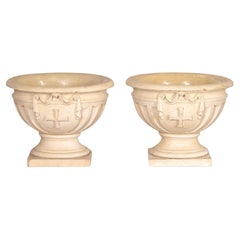
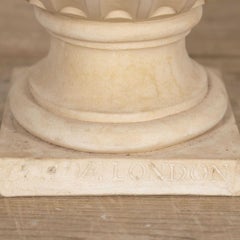
Pair of finely cast 18th Century Coade Stone gothic stoops. In super condition, stamped 'Coade London', these are glazed internally, for holding water which is an unusual design for...

Category

18th Century British Antique Gothic Urns
Materials

Terracotta

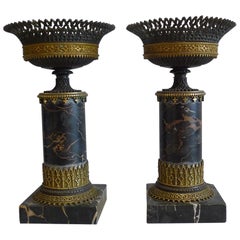
Pair of Gothic Urns in Ormolu, Patinated Bronze and Marble

Pair of Gothic Urns in Ormolu, Patinated Bronze and Marble

Located in London, GB

A Classic and quite beautiful pair of Gothic urns. French and early 19th century with pierced tracery patinated bronze urn tops with an ormolu waist falling to the gadrooned patinate...

Category

1830s French Antique Gothic Urns
Materials

Marble, Bronze, Ormolu

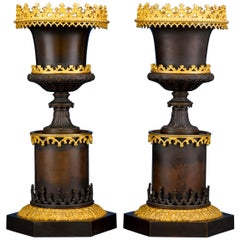
Gothic Two-Color Bronze Urns

Gothic Two-Color Bronze Urns

Sold

H 12 in Dm 5 in

Gothic Two-Color Bronze Urns

Located in New Orleans, LA

A striking pair of bronze urns, created in the dramatic Gothic style. Resembling classical Greco-Roman vases set upon pedestals, the urns are crafted in a two-toned design, with deep...

Category

19th Century French Antique Gothic Urns
Materials

Bronze, Ormolu

Gothic urns for sale on 1stDibs.

Find a broad range of unique Gothic urns for sale on 1stDibs. Many of these items were first offered in the Early 20th Century, but contemporary artisans have continued to produce works inspired by this style. If you’re looking to add vintage urns created in this style to your space, the works available on 1stDibs include decorative objects and other home furnishings, frequently crafted with ceramic, iron and other materials. If you’re shopping for used Gothic urns made in a specific country, there are Europe, France, and United Kingdom pieces for sale on 1stDibs. It’s true that these talented designers have at times inspired knockoffs, but our experienced specialists have partnered with only top vetted sellers to offer authentic pieces that come with a buyer protection guarantee. Prices for urns differ depending upon multiple factors, including designer, materials, construction methods, condition and provenance. On 1stDibs, the price for these items starts at $950 and tops out at $5,504 while the average work can sell for $2,965.