Located in London, by appointment only
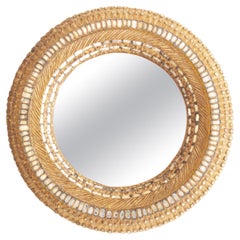
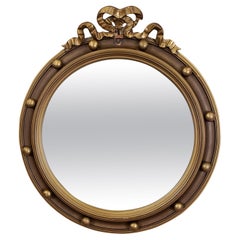
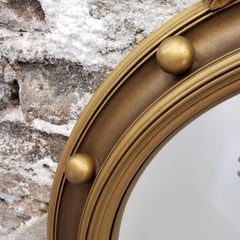
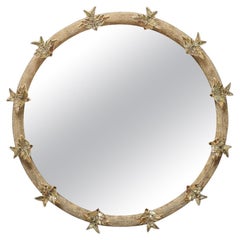
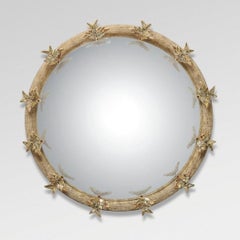
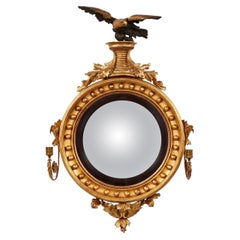
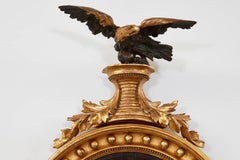
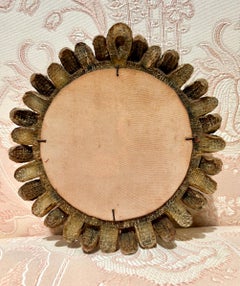
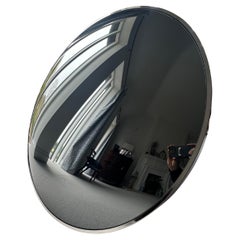
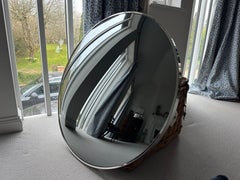
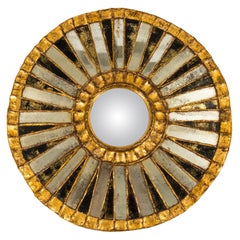
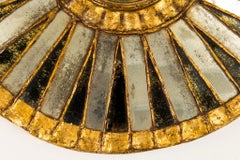
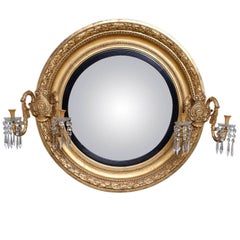
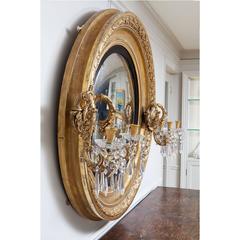
A truly fabulous, important, rare and grand proportioned Regency giltwood convex mirror. The substantial frame carved with overlapping laurel leaves and berries, supporting to boldly carved acanthus candelabra with original cut-glass drip pans and gilt bronze nozzles. The gilding has aged to a deep rich colour.
This fabulous and incredibly grand masterpiece retains its original convex mirror plate.
One of the finest period convex mirrors ever made.
The creation of convex mirrors became possible with the development of glass blowing. When the glassblower created a small glass bulb, they were filled with a metallic mixture of lead and tin while still hot. Once cooled, the bulbs were cut into smaller pieces and could be used as hand an pocket mirrors. They were used as fashionable pieces of jewelry and were often encased with gold, silver, ivory and tortoiseshell.
The Empire circular convex mirror was introduced from France, where they had been made as early as 1756. This style of mirror became so popular under the heading ‘Mirrors’, in Sheraton’s 'Cabinet Dictionary' (1803), that they are the only style mentioned.
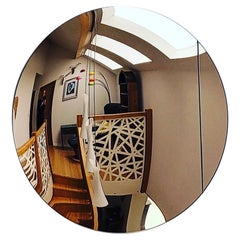
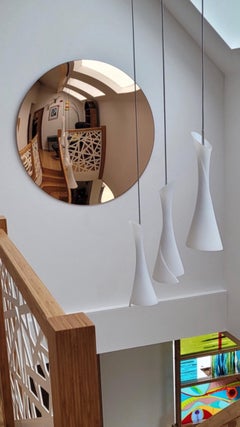
Convex mirrors were said to “strengthen the colour and take off the coarseness of objects by contracting them”. Convex mirrors produced on a larger scale were both practical and intriguing. While they distort the image that they reflect, they also magnify light...
Category
Early 19th Century English Regency Antique Cut Glass Convex Mirrors