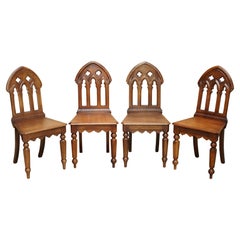
Located in Brighton, Sussex
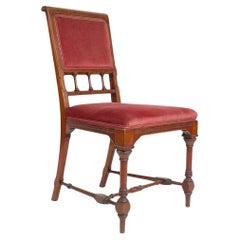
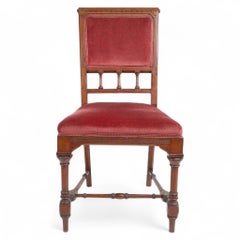
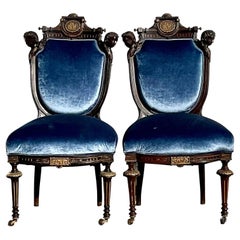
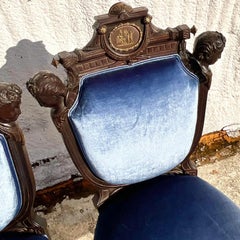
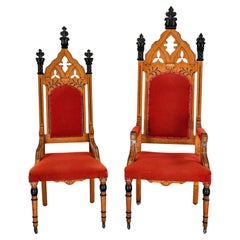
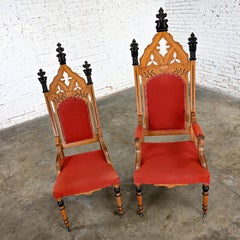
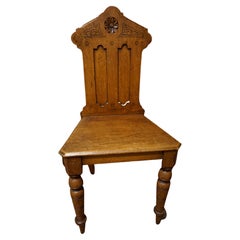
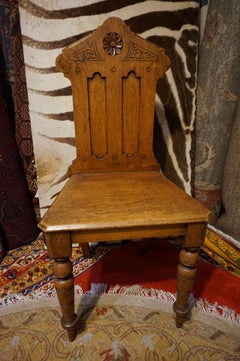
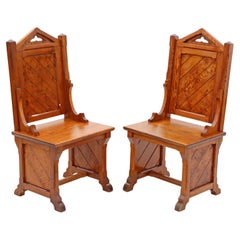
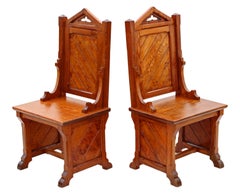
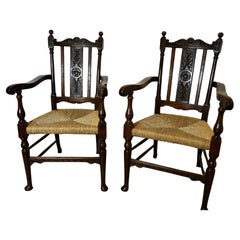
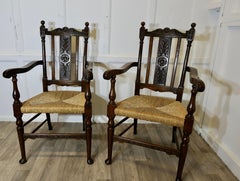
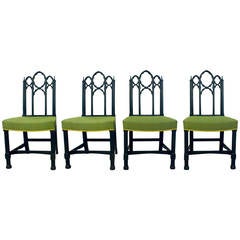
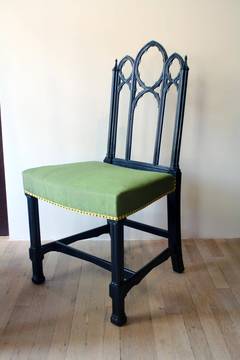
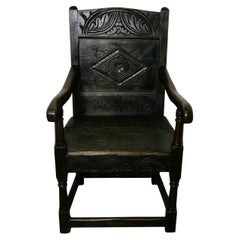
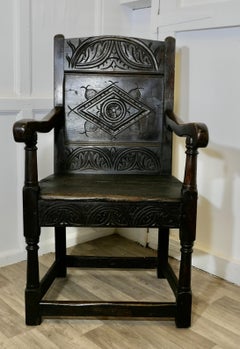
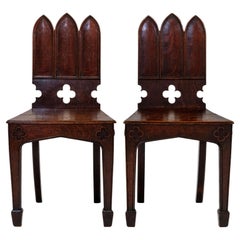
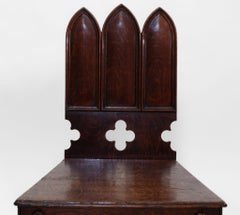
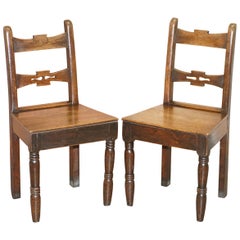
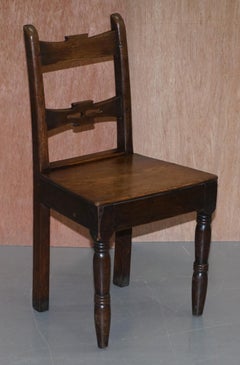
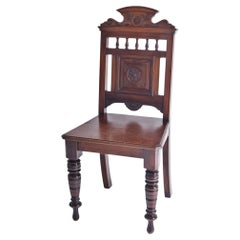
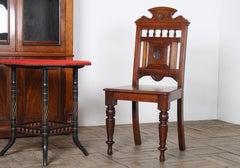
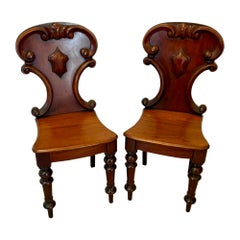
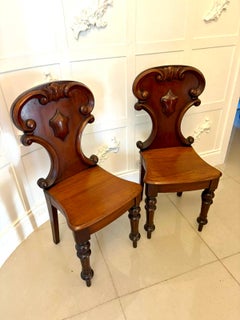
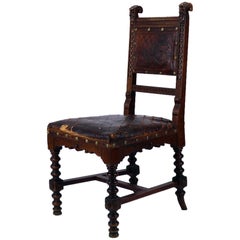
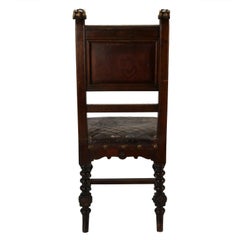
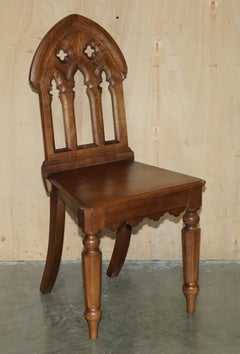
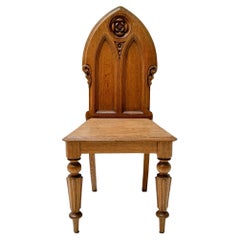
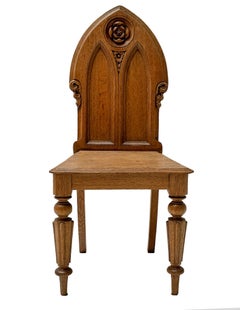
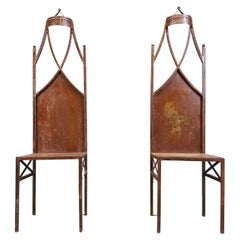
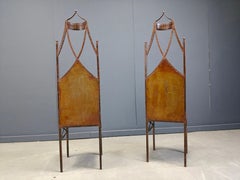
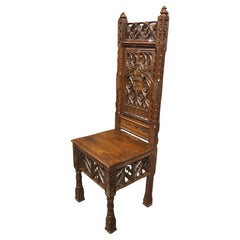
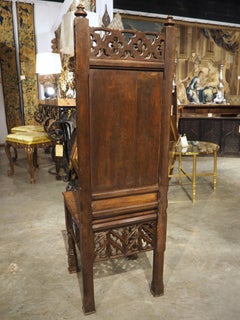
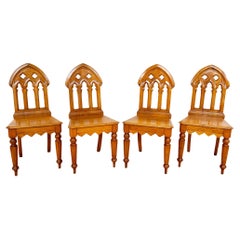
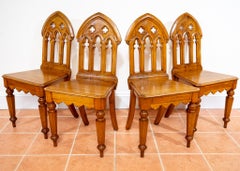
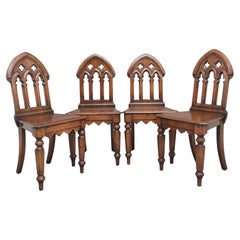
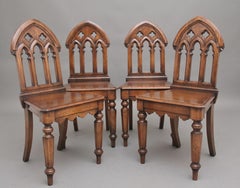
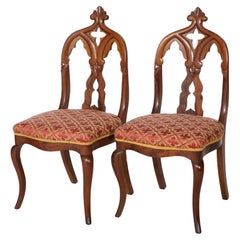
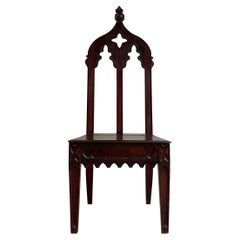
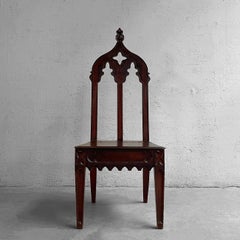
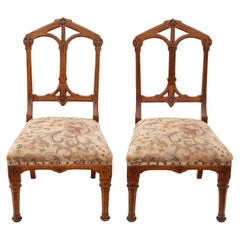
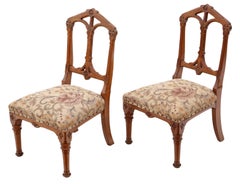
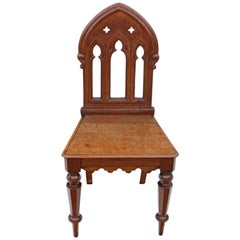
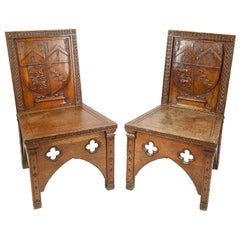
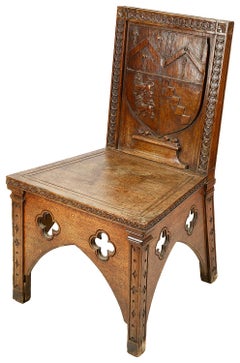
A rare pair of 18th century oak hall chairs made for col Ralph congreve of aldermaston manor/court.
Each having heraldic family crests.
Aldermaston manor/court berkshire:
1, Congreve family inheritance (1752–1843)
The Congreve coat of arms
In 1752 Forster direct descendants died out and the estate passed to Ralph Congreve as third husband of Sir Humphrey Forster, 2nd Baronet's grand-niece and heir.
In 1780 the estate passed to his second cousin, William (a relation of the dramatist of the same name.
On 13 January 1843, a serious fire destroyed more than a third of the manor house. William Congreve never recovered from the fire and died the same year.
Forster descendants (1490–1752)
The Forster coat of arms
Elizabeth's husband, George Forster, was the son of Sir Humphrey Forster I from Harpsden near Henley. When Elizabeth and George married, George became the owner of Aldermaston Manor along with other manors previously owned by the De la Mare family. He was knighted by Henry VII in 1501, becoming Sheriff of Berkshire and Oxford in 1517. He was made a Knight of the Bath in 1525. His assumed wealth meant that he was part of Henry VIII's entourage at the Field of the Cloth of Gold. George was succeeded by his son, Humphrey II, in 1533, a high sheriff.
During Humphrey II's lordship, he faced strong disputes with Francis Parkyns (alternatively spelled "Perkins", who was the brother of the Squire of Ufton and tenant of nearby Padworth Manor. Parkyns was unhappy with Forster's "over-lordship" of Aldermaston, and Forster retaliated by breaking into Parkyns's house and severely assaulting him while he ate breakfast. Anne Parkyns, Francis's wife, begged for his life. Forster along with an armed entourage dragged Francis to Ufton, where the family of his brother Richard were breakfasting. More violence broke out, with Lady Marvyn – Richard's wive – also begging for Francis's life to be spared. Francis was eventually taken to Aldermaston where he was jailed in the lock-up behind the village pub.
Humphrey was later succeeded by his son, William (who married Jane, daughter of Anthony Hungerford).
Elizabeth I visited Aldermaston twice. Her first visit, in 1558, was during the lordship of William, and the second – in 1592 – during his son Humphrey III's tenure.
Humphrey III's son, William II, fathered a son – Humphrey IV – in 1595. He and his wife Anne began building a mansion house, known as Aldermaston House, in 1618 by laying a new cornerstone. The house was completed in 1636.
Aldermaston saw military stationing in the English Civil War. In 1643, after the First Battle of Newbury, Robert Devereux's Parliamentarians were attacked by Prince Rupert of the Rhine in Padworth Lane. The road is now known as Red Lane...
Category
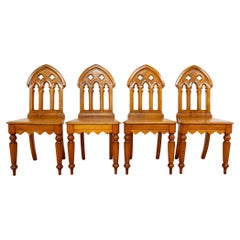
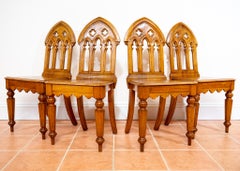
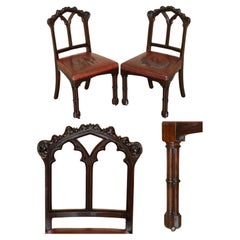
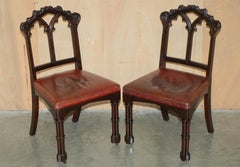
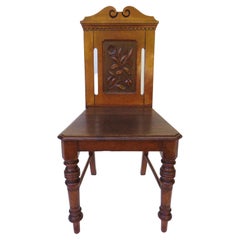
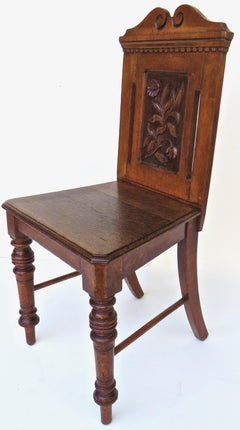
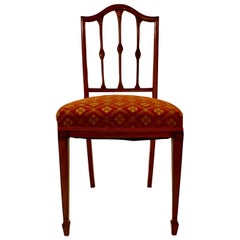
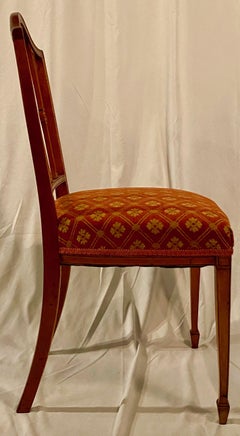
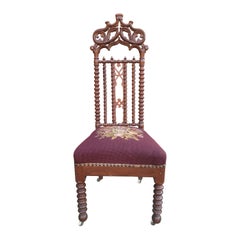
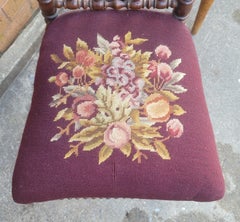
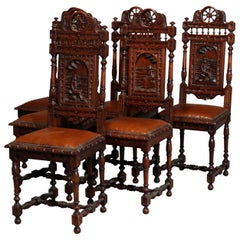
Late 18th Century English Antique Gothic Side Chairs