By (After) Caravaggio
Located in Milano, IT
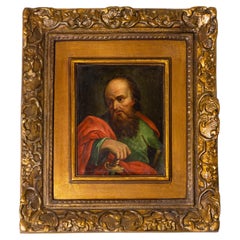
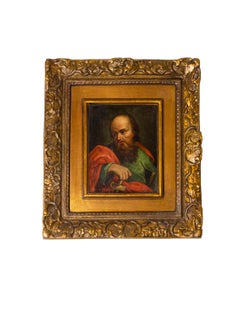
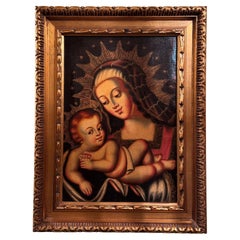
Splendid 17th-century Italian painting by unknown artist, but certainly a follower of Caravaggio, relying on style and drawing.
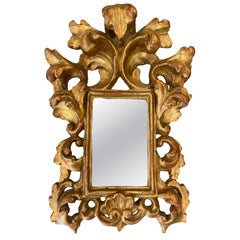
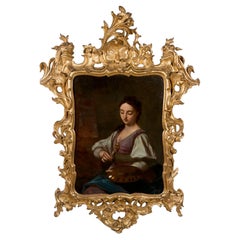
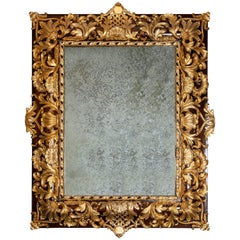
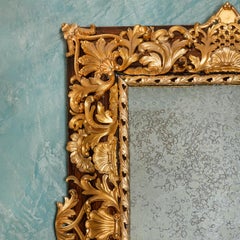
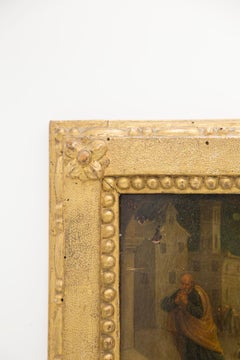
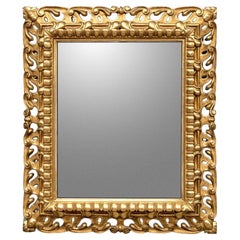
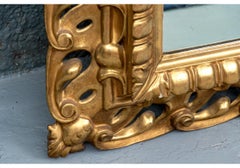
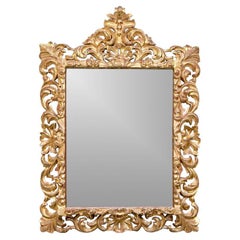
The painting has a very beautiful gilded wooden frame, with a subtle greek with spheres and an overlying rectangular frame with sinuous flowers on each corner, very elegant and beautiful.
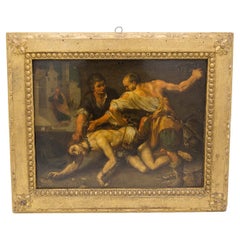
The painting depicts one of the most depicted religious scenes ever, the scourging of Christ, and is entirely done in oil on copper.
The scourging of Jesus is an episode narrated in the Gospels (Mk15:15-16; Mt27:26-27; Lk23:16-26; Jn19:1-17[1]).
Scourging is a flogging, particularly bloody, by means of sticks, rods or cat-o-nine-tails, the latter instrument consisting, in the Roman typology, of a short stick to which were secured several strings ending in metal claws, leads and bone splinters that caused tremendous lacerations and fractures to the tortured person. Chains are used in this scene, both to immobilize Jesus Christ and to flog him, as we can see in the upper right hand of the scourger.
According to some personal research, it turned out that the actual scourging of Christ was mostly depicted at the column, while this Christ is on the ground, so presumably Christ here is scourged during the Way of the Cross at one of those stages where he fell.
The painting has a very dark coloring, which is why this painting is believed to faithfully follow Caravaggio's style of dry, authoritarian brushstrokes. The painting shows a figure agonizing on the ground that continues to receive beatings and floggings of all kinds, representing Christ; his face is crucified in a loquacious expression of pain, he turns his eyes to heaven as if to invoke God, but at the same time those same eyes admonish the wickedness and arrogance inherent in humanity.
Christ has one hand resting on the ground in the act of holding himself, while the other takes a completely unnatural stance against the barren ground. His body appears hardened to wanting to parry the blows, his legs are curled up on his knees as he takes kicks from the soldier above him. Christ is depicted pinned down from the neck with a very large and strong black iron bolt held by the other soldier. The soldier on the right in the foreground wears a one-shoulder tunic with an orange tunic and blue pants. On his feet he wears gray shoes, at his waist he has a belt with an iron helmet...
Category
17th Century Italian Antique Baroque Furniture