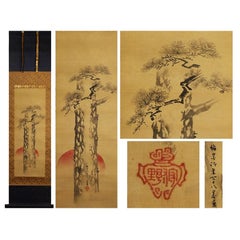
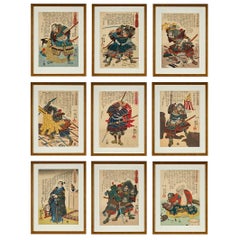
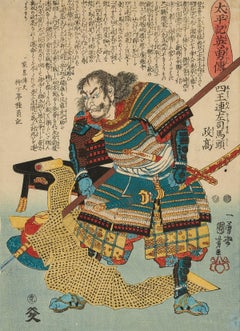
Edo Furniture

EDO STYLE

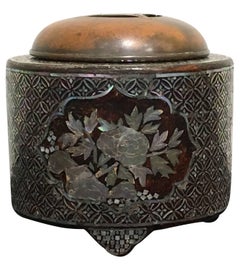
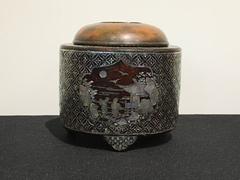
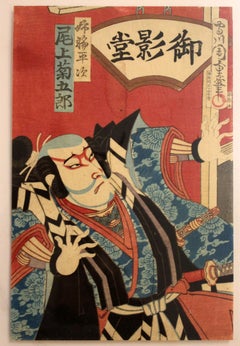
Edo furniture was created during a flourishing time for the decorative arts owing to the stability of the Tokugawa shogunate rule in Japan. Spanning from 1603 to 1867, this era of peace and economic growth supported artistic advancements in lacquer, woodblock printing, porcelain and other artisanal trades. Because the country was largely isolated, there was little outside influence, leading to centuries of exceptional attention to the design of its furnishings and the quality of its traditional arts.
Unlike during the Meiji period that followed, with an increase in domestic and international markets, furniture during the Edo period was predominately commissioned by the ruling class, although people from across social groups benefited from the burgeoning metropolitan hubs for artisanal trades. For instance, Kyoto became a major center for lacquer art. Most furniture pieces were made from wood such as cedar or ash, including the era’s sashimono cabinets, which involved fine joinery and were rooted in the Heian period.

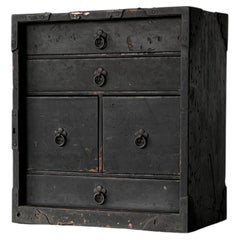
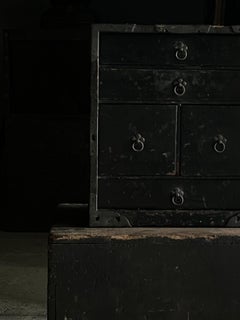
Sashimono cabinets, which were built by master craftsmen in a range of different wood types owing to the various trees that populate Japan, occasionally featured a stack of slender drawers as well as sliding doors. They were popular with everyone from samurai to kabuki actors. Tansu storage chests crafted from wood with metal fittings were also common in Edo-period homes. Some were designed to be easily portable while others were made to double as staircases.

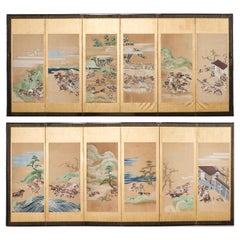
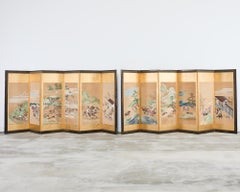
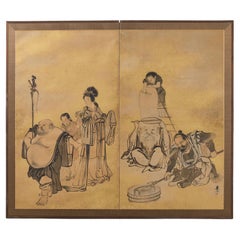
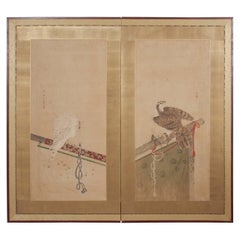
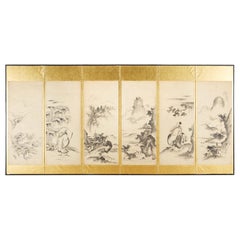
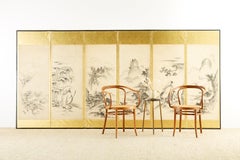
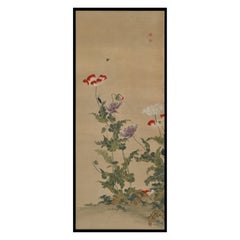
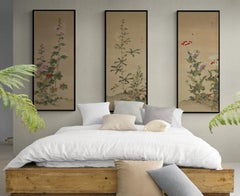
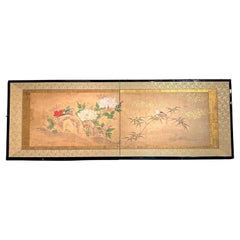
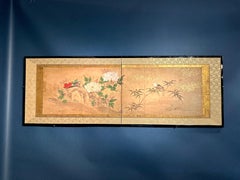
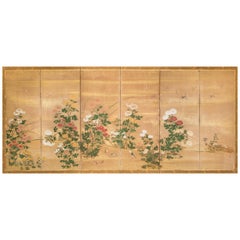
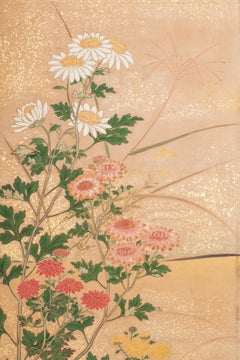
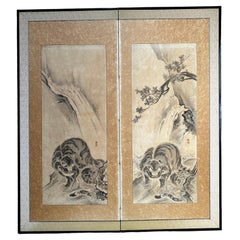
Painted folding screens, called byōbu, were also fashionable, with Japanese artists inspired by nature, literature and scenes of history and daily life to create vivid works. In Buddhist temples and the palatial homes of the aristocratic class, fusuma, or large sliding panels, would sometimes be adorned with gold or silver leaf. These dividers allowed interiors to change throughout the day, closing in small spaces for personal use or reflecting candlelight to illuminate communal spaces after dark.

Find a collection of Edo tables, lighting, decorative objects, wall decorations and more furniture on 1stDibs.

to
289
376
343
968
11
1
200,890
118,393
44,843
34,006
16,869
12,422
11,180
10,779
10,106
8,958
7,396
6,997
6,699
6,680
6,645
6,086
4,968
3,793
425
480
63
12
23
15
2
2
1
1
1
1
336
311
260
226
203
883
869
847
19
3
980
976
977
12
6
3
3
2
Style: Edo
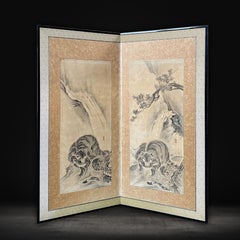
17th Century Japanese Screen Pair. Tiger & Dragon by Kaiho Yusetsu

17th Century Japanese Screen Pair. Tiger & Dragon by Kaiho Yusetsu

Located in Kyoto, JP

Kaiho Yusetsu (1598-1677) Tiger and Dragon Early Edo Period, Circa 1650 A Pair of Six-fold Japanese Screens. Ink and slight color on paper. Dimensions: Each screen: H. 171 cm x W. 380 cm (67.5’’ x 149.5’’) In this pair of early Edo period Japanese screens a group of tigers prowl in a bamboo grove whipped with fierce wind, while a dragon claws through clouds and mist. The dragon embodies elemental qualities - looming out of the mist, the coils of its body disappearing in the clouds. The dragon is calling for rain, symbolizing spring which is considered the fountain of life. On the other side, the tigers calls for the wind, symbolizing autumn which is considered the end of life. Tigers were familiar motifs within Japanese art from ancient times though the animals were imaginary to the people in the 17th century. While dragons and tigers are usually associated as sacred and ferocious, in this painting, both animals have rather amusing expressions. The tigers appear to glare at the dragon with cat-like eyes, and the look on the swirling dragon’s face appears almost affectionate - lending a playful flair to an otherwise magnificent theme. The tiger and dragon are cosmological symbols of the balancing forces in the world. Screens such as this were originally meant to express the fluctuating nature of the world. For Japanese in the early Edo period, they likely suggested the powers of the cosmos. In Japan the tiger and dragon motif was originally absorbed into the circles of Zen monasteries before spreading into the secular world. The theme especially appealed to the military classes with the Kano school, the official painters to the Shogun and the samurai, being the leading contributors. The painter of this pair of screens, Kaiho Yusetsu (1598-1677), was closely patronized by the third Shogun Tokugawa Iemitsu. In his later years he worked with Kano school artists...

Category

Mid-17th Century Japanese Antique Edo Furniture

Materials

Silk, Wood, Paper

Antique 17C Japanese Porcelain Blue White Edo Period Arita Vase Flowers

Antique 17C Japanese Porcelain Blue White Edo Period Arita Vase Flowers

Located in Amsterdam, Noord Holland

Nice & Beautiful Arita Japanese Porcelain Vase, beaker shape. Landscape scene with figures. Thanks to Pater Gratia Oriental Art Beaker vase Japan 1680-1700 A large cylindrical t...

Category

17th Century Antique Edo Furniture

Materials

Porcelain

1860s-90s wabi sabi Japanese thick black sliding lattice door, exterior door

1860s-90s wabi sabi Japanese thick black sliding lattice door, exterior door

Located in 常陸大宮市, JP

New finds from the old-established family house in Ibaraki pref, Kanto area, Japan. Had been kept with care at the 2nd floor to avoid the humidity , even it was used as the exterior ...

Category

Late 19th Century Japanese Antique Edo Furniture

Materials

Wood

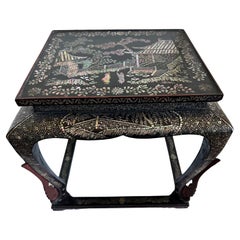
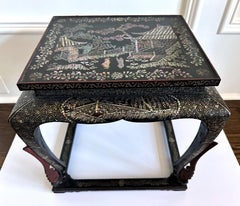
Antique Japanese Lacquer and Inlay Kang Table from Ryukyu Island

Antique Japanese Lacquer and Inlay Kang Table from Ryukyu Island

Located in Atlanta, GA

A small low table with lacquer and intricate mother-of-pearl inlay design from Ryukyu Islands kingdom circa 17-18th century. Ryukyuan kingdom was used to be an independent island cou...

Category

18th Century Japanese Antique Edo Furniture

Materials

Mother-of-Pearl, Lacquer

Japanese Two-Panel Screen, Deer in Cedar Landscape

Japanese Two-Panel Screen, Deer in Cedar Landscape

Located in Hudson, NY

Originally fusuma doors, three deer stand in a clearing in a pine forest with gold leaf mist. Mid Edo period painting in mineral pigments on gold leaf wi...

Category

18th Century Japanese Antique Edo Furniture

Materials

Gold

Antique Desk Drawer, Japanese Ebonised Pine Desktop Folio, Victorian, Edo Period

Antique Desk Drawer, Japanese Ebonised Pine Desktop Folio, Victorian, Edo Period

Located in Hele, Devon, GB

This is an antique desk drawer. A Japanese, ebonised pine desktop folio, dating to the early Victorian period, circa 1850. Attractive desk tidy with appealing hand-finished charm Displays a desirable aged patina and in good order Ebonised pine frame presents dark tonality Accentuated to the top with a saffron yellow hatched border Hand-painted Japanese motif adds a flourish to the front and sides Useful drawer dressed with a small brass pull for ease of opening Light crimson interior with remnants of a decorative lining Later faux crocodile dressing to the top surface and base This is a charming antique desk...

Category

Mid-19th Century Japanese Antique Edo Furniture

Materials

Pine

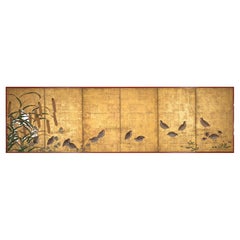
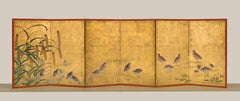
The Plovers over the Sea Shores Screen (2/2)

The Plovers over the Sea Shores Screen (2/2)

Located in Fukuoka, JP

The Plovers over the Sea Shores Screen Period: 18th century (Edo period) Size: 360 x 170 cm (141.7 x 66.9 inches) SKU: PA39 Travel back in time with this classic Edo period screen,...

Category

18th Century Japanese Antique Edo Furniture

Materials

Wood, Paper

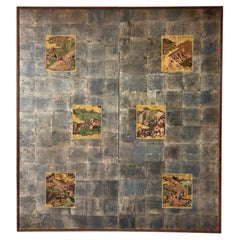
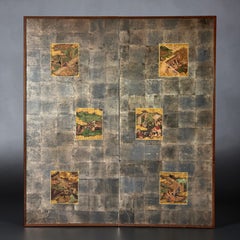
Pair of Japanese Edo/Tokugawa Screens Tale of Heiki

Pair of Japanese Edo/Tokugawa Screens Tale of Heiki

Located in Rio Vista, CA

Monumental pair of late 18th century Japanese Edo/Tokugawa period byobu screens depicting the battles between Taira and Minamoto. The screens have six panels each with individual sce...

Category

19th Century Japanese Antique Edo Furniture

Materials

Brass, Gold Leaf

Japanese Antique Sacred Horse Wooden Statue "Shinme" 1800s-1860s / Wabi Sabi

Japanese Antique Sacred Horse Wooden Statue "Shinme" 1800s-1860s / Wabi Sabi

Located in Chōsei District Nagara, JP

This is a very rare carved wooden statue of a sacred horse that was dedicated to a Japanese shrine. It was produced during the Edo period (1800s-1860s), and the main material used is...

Category

Mid-19th Century Japanese Antique Edo Furniture

Materials

Cedar

Antique Japanese Boy's Day Display Suit of Armor

Antique Japanese Boy's Day Display Suit of Armor

Located in Point Richmond, CA

Antique Japanese miniature model of a suit of armor made for the Boy’s day display. Constructed of a lacquered paper cuirass, upper arm guar...

Category

1850s Japanese Antique Edo Furniture

Materials

Textile, Wood, Lacquer, Paper

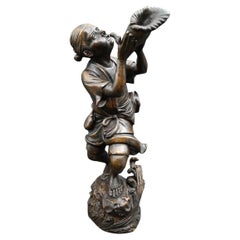
Japanese Bronze Usubata with Waves and Plovers, Edo Period, Mid-19th Century

Japanese Bronze Usubata with Waves and Plovers, Edo Period, Mid-19th Century

Located in Austin, TX

An impressive Japanese cast bronze usubata, vessel for ikebana, in the form of a large conical vessel being supported by crashing waves and flying chidori. Edo Period, mid-19th centu...

Category

Mid-19th Century Japanese Antique Edo Furniture

Materials

Bronze

Antique 18/19C Japanese Edo Porcelain Blue White Dish Figures Ladies Pagoda

Antique 18/19C Japanese Edo Porcelain Blue White Dish Figures Ladies Pagoda

Located in Amsterdam, Noord Holland

Description A very nicely decorated Japanese Porcelain dish in Chinese Kangxi style. Marked at base. There is an underglaze blue bird mark at the base, the marks on these kinds of d...

Category

18th Century Japanese Antique Edo Furniture

Materials

Porcelain

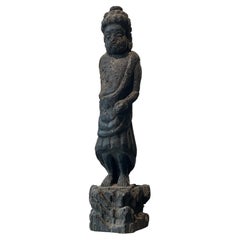
Japanese Edo Period Hand Carved Wood Polychrome Sculpture of Seated Temple Monk

Japanese Edo Period Hand Carved Wood Polychrome Sculpture of Seated Temple Monk

Located in Studio City, CA

This is truly a wonderful piece with clear age and a nice patina to it. Very unique. We have not seen another quite like it. The monk appears to have glass eyes which gives his expression a very humanistic feel. The head is removable (please see the last image). From a collection of Japanese arts and artifacts. Most likely dates back to the Edo period. Would make for a nice addition to any Japanese or Asian artifacts...

Category

18th Century Japanese Antique Edo Furniture

Materials

Wood, Lacquer

Japanese Life-Size, Edo Period, Red and Black Lacquered Palanquin or Norimono

Japanese Life-Size, Edo Period, Red and Black Lacquered Palanquin or Norimono

Located in Amsterdam, NL

A Japanese red and black lacquered palanquin or norimono Edo period, early 19th century Made of lacquered wood, latticework and bamboo, black velvet and gauze with gilt scroll...

Category

Early 19th Century Japanese Antique Edo Furniture

Materials

Textile, Silk, Rattan, Rope, Wood

Artist Mikawachi Yaki Vase 1989 Vintage Japanese Hirado Vase with Bird Scene

Artist Mikawachi Yaki Vase 1989 Vintage Japanese Hirado Vase with Bird Scene

Located in Amsterdam, Noord Holland

This is a most unusually made antique Hirado porcelain cachepot with playing boys. Crisply modelled with cobalt blue glaze About Hirado 平戸 Ware The origins of Hirado ware (it's als...

Category

19th Century Antique Edo Furniture

Materials

Porcelain

Edo Gold-Lacquer Writing Box with Samurai Warrior, Makie Suzuribako

Edo Gold-Lacquer Writing Box with Samurai Warrior, Makie Suzuribako

Located in Taichung, TW

This Edo-period makie suzuribako features the legendary Heian-period general Minamoto no Yoshiie, widely known as Yawata Tarō, shown charging forward on horseback with bow drawn. Cel...

Category

Mid-18th Century Japanese Antique Edo Furniture

Materials

Lacquer

Japanese Nihonga Painting 19th c Edo Scroll by Nakajima Raiaki  River landscape

Japanese Nihonga Painting 19th c Edo Scroll by Nakajima Raiaki River landscape

Located in Amsterdam, Noord Holland

 [Raisho Nakajima] lived from 1796 to 1871, at the end of the Edo period and early Meiji period. A person from Otsu, Omi Province (Shiga Prefecture). His name is Ziqing. His names i...

Category

19th Century Antique Edo Furniture

Materials

Silk

Japanese Kutani Sake Bottle, Tokkuri, Yoshidaya Style, Edo Period, early 19th c

Japanese Kutani Sake Bottle, Tokkuri, Yoshidaya Style, Edo Period, early 19th c

By Yoshidaya

Located in Austin, TX

A bold and dramatic Japanese Kutani porcelain square tokkuri (bottle for sake), decorated in the Yoshidaya style, and attributed to the Yoshidaya Kiln (1824 - 1831). The striking sa...

Category

1820s Japanese Antique Edo Furniture

Materials

Ceramic, Stoneware

Japanese Six Panel Screen with Hotei, Edo Period, Early 19th Century

Japanese Six Panel Screen with Hotei, Edo Period, Early 19th Century

Located in Austin, TX

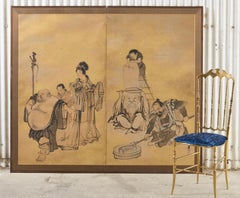
A delightful Japanese six panel painted paper screen featuring the beloved figure Hotei, Edo Period, early 19th century. Hotei, called Budai in China, and known as the Laughing Buddha or Fat Buddha in the West, is considered to be an emanation of Maitreya, the Buddha of the Future. In Japan, he also holds a special place as one of the Seven Lucky Gods, being the god of fortune, and protector of children. He is always portrayed as a mirthful and corpulent man, dressed in loose robes that show off his round belly. He carries a sack with him, said to be filled with treasure. As the protector of children, he is often portrayed with them playing on or around him, as he is here. The children portrayed in this screen are dressed in Chinese style clothing...

Category

Early 19th Century Japanese Antique Edo Furniture

Materials

Silk, Paper

Antique Edo period 18/19th century Japanese Bowl Washer for the Tea Ceremony

Antique Edo period 18/19th century Japanese Bowl Washer for the Tea Ceremony

Located in Amsterdam, Noord Holland

Description A lovely set for the Kaiseki meal. Condition Perfect. SizeL 24.5x24.5cm Period 19th century Meiji Periode (1867-1912)

Category

19th Century Japanese Antique Edo Furniture

Materials

Porcelain

Japanese antique pottery small vase / Karatsu ware / Edo period / Kyushu region

Japanese antique pottery small vase / Karatsu ware / Edo period / Kyushu region

Located in Sammu-shi, Chiba

This is Takeo Karatsu pottery, believed to have been fired during the Edo period (circa 17th to 19th centuries). Karatsu ware is traditional Japanese ceramics made in the Karatsu reg...

Category

19th Century Japanese Antique Edo Furniture

Materials

Pottery

1860s-80s Japanese antique wabi sabi Urushi mid Tansu chest of drawers

1860s-80s Japanese antique wabi sabi Urushi mid Tansu chest of drawers

Located in 常陸大宮市, JP

New finds from an farmer's Kura (traditional style warehouse) in Ibaraki pref., Japan. This mid-size, black Urushi lacquered Tansu chest of drawers is a product of late Edo to early...

Category

Late 19th Century Japanese Antique Edo Furniture

Materials

Wood

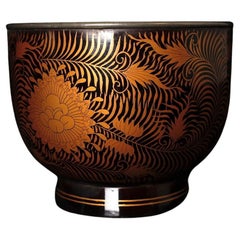
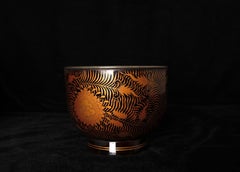
Elegant Arabesque-Design Lacquer Bowl with Metal Rim, Late Edo Period

Elegant Arabesque-Design Lacquer Bowl with Metal Rim, Late Edo Period

Located in Fukuoka, JP

This elegant Japanese lacquer bowl dates to the late Edo period (19th century) and is distinguished by its refined arabesque (karakusa) design. The flowing vegetal scrollwork, execut...

Category

19th Century Japanese Antique Edo Furniture

Materials

Metal

Rare Samurai Kote (Arm Guards), Mid Edo Period

Rare Samurai Kote (Arm Guards), Mid Edo Period

Located in Fukuoka, JP

This rare pair of samurai kote (arm guards) dates to the mid Edo period, circa 17th–18th century, and represents an authentic element of Japanese armor. Crafted from patinated iron a...

Category

Late 17th Century Japanese Antique Edo Furniture

Materials

Iron

18th Century Japanese Screen Pair. Plum & Young Pines. Kano School.

18th Century Japanese Screen Pair. Plum & Young Pines. Kano School.

Located in Kyoto, JP

Dimensions (Each screen): H. 176 cm x W. 378 cm (69’’ x 149’’) This pair of Japanese folding screens depict blossoming plum trees amongst young pines. They are designed to capture t...

Category

Late 18th Century Japanese Antique Edo Furniture

Materials

Gold Leaf

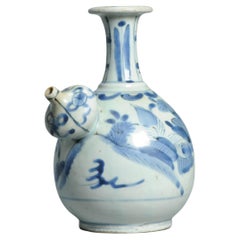
Antique 17C Japanese Porcelain Blue White Arita Ghendi Edo Period Kendi Flowers

Antique 17C Japanese Porcelain Blue White Arita Ghendi Edo Period Kendi Flowers

Located in Amsterdam, Noord Holland

Beautiful & Rare 17th Century Japanese Arita Porcelain Kendi This exquisite blue and white kendi (ewer or jug) was crafted in the Arita kilns of Japan during the late 17th century, ...

Category

17th Century Antique Edo Furniture

Materials

Porcelain

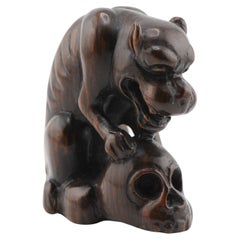
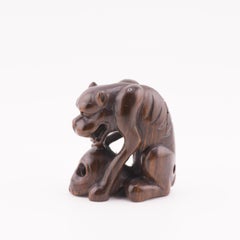
Netsuke Japanese Dog Eating Skull Sculpture, 20th Century

Netsuke Japanese Dog Eating Skull Sculpture, 20th Century

Located in Amsterdam, Noord Holland

Brutal piece. Signed. 20th century Provenance: From the collection of Clemens Merkelbach van Enkhuizen, A well known Dutch painter and artist from Amsterdam. Merkelbach van Enkhuiz...

Category

20th Century Edo Furniture

Materials

Porcelain

Japanese Negoro-Style Lacquered Table, 17th–18th Century

Japanese Negoro-Style Lacquered Table, 17th–18th Century

Located in Fukuoka, JP

This Japanese Negoro-style lacquered table dates to the 17th–18th century and exemplifies the restrained beauty and layered surface aesthetic characteristic of Negoro lacquerware. Tr...

Category

17th Century Japanese Antique Edo Furniture

Materials

Wood, Lacquer

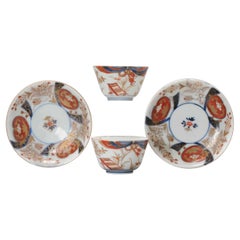
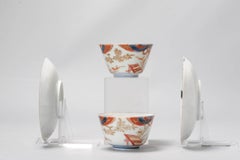
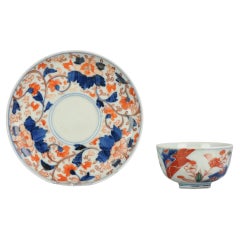
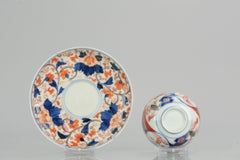
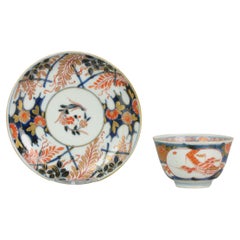
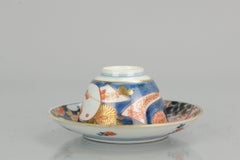
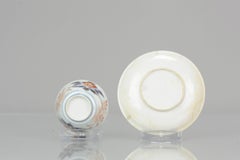
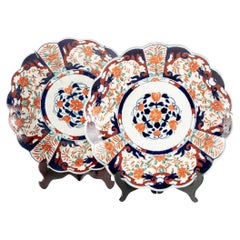
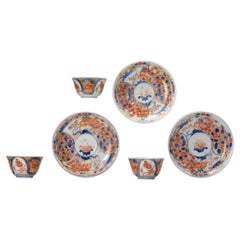
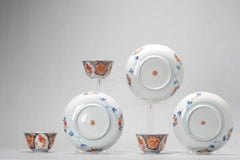
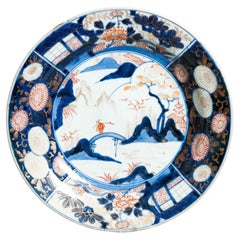
Antique Japanese Porcelain Edo Period Dish Floral Flowers Imari, 18th Century

Antique Japanese Porcelain Edo Period Dish Floral Flowers Imari, 18th Century

Located in Amsterdam, Noord Holland

Porcelain decorated with Imari palette in Japan, Saucer dish. Additional information: Material: Porcelain & Pottery Decoration Type / Colour: Imari Region of Origin: Japan Period: 1...

Category

18th Century Japanese Antique Edo Furniture

Materials

Porcelain

Japanese Six-Panel Screen

Japanese Six-Panel Screen

Located in Stamford, CT

A six-panel Japanese paper screen with poems, autumn flowers, bamboo fence and Mandarin ducks. Poems are believed to be earlier but were probably...

Category

Mid-19th Century Japanese Antique Edo Furniture

Materials

Paper

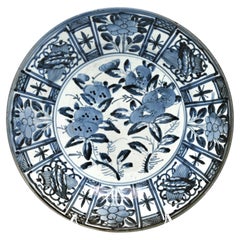
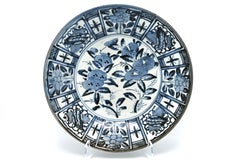
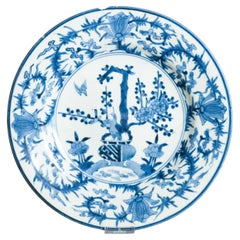
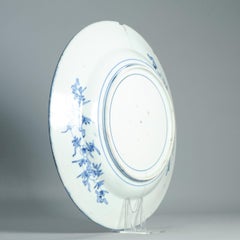
Antique Arita Edo Period 17th century Japanese Porcelain plate Top Quality

Antique Arita Edo Period 17th century Japanese Porcelain plate Top Quality

Located in Amsterdam, Noord Holland

Description A very nice blue and white dish with unusual design. Edo period, 17th century. Condition crackle lines in body, of which one at the back is a bit dirty. Size: 18.5x3CM ...

Category

17th Century Japanese Antique Edo Furniture

Materials

Porcelain

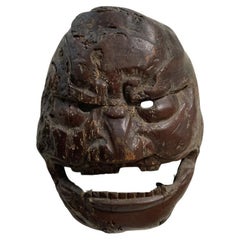
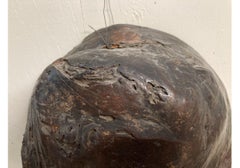
Japanese Antique Edo Hand Carved Wood Noh Theater Mask Otobide 17th-18th Century

Japanese Antique Edo Hand Carved Wood Noh Theater Mask Otobide 17th-18th Century

Located in Studio City, CA

A truly beautiful, wonderfully aged, alluring mask made for Japanese Noh theater. The naturally faded beauty and unique character drew us to this mask immediately. The mask is handcrafted and hand-carved from natural wood, clearly by a master of his trade. We believe this mask is of the Noh theatre character Otobide. This mask dates back to the Edo Period (1603-1868). It comes with a wooden storage box (which may have been added at a later date). A rare, unique, and exquisite mask. Finely carved and executed. Would be a great addition to any Japanese or Asian art/artifacts collection or an eye-catching stand-alone accent piece in about any setting. Mask dimensions: 7.7" high, 5.7" wide, 2.1" deep...

Category

18th Century Japanese Antique Edo Furniture

Materials

Wood, Lacquer, Paint

Japanese Painting 17th c Edo Scroll Triptyque  Kano Chikanobu Buddhist Painting

Japanese Painting 17th c Edo Scroll Triptyque Kano Chikanobu Buddhist Painting

Located in Amsterdam, Noord Holland

TheItem below was painted approximately 300 years ago by Kano Chikanobu. In the center is a depiction of a deer hermit, on the right is a landscape of a tower that gives a sense of ...

Category

17th Century Antique Edo Furniture

Materials

Silk

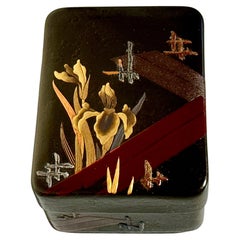
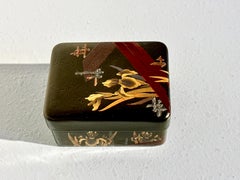
Japanese Rinpa Lacquer Box, "Irises at Yatsuhashi", by Santo Kyosui, Edo Period

Japanese Rinpa Lacquer Box, "Irises at Yatsuhashi", by Santo Kyosui, Edo Period

Located in Austin, TX

A very special Japanese Rinpa style small lacquer box for incense accessories, kobako, by Santo Kyosui (1816 to 1867), late Edo period (1603 to 1868), mid 19th century, Kyoto, Japan....

Category

Mid-19th Century Japanese Antique Edo Furniture

Materials

Copper, Pewter

Antique Japanese Ceramic Ko-Tanba Chaire Edo Period

Antique Japanese Ceramic Ko-Tanba Chaire Edo Period

Located in Atlanta, GA

A ceramic chaire (Tea caddies) of Ko-Tanba ware type from Edo period Japan circa 18th to early 19th century. This type of small jar was made of stoneware in old Seto kilns in Gifu pr...

Category

18th Century Japanese Antique Edo Furniture

Materials

Ceramic

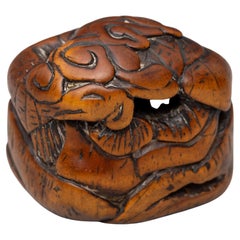
Japanese Netsuke in Boxwoord in the form of two chestnut

Japanese Netsuke in Boxwoord in the form of two chestnut

Located in PARIS, FR

Boxwood netsuke of two chestnuts, one smaller on top of the larger. Chestnuts are a central part of Japanese culture and gastronomy. Castanea Crenata or Japanese chestnut is an indi...

Category

Early 19th Century Japanese Antique Edo Furniture

Materials

Boxwood

Antique Edo Period Japanese Aoki Mokubei Jar Japan Figures Trees

Antique Edo Period Japanese Aoki Mokubei Jar Japan Figures Trees

Located in Amsterdam, Noord Holland

Description A Japanese Aoki Mokubei Jar. Edo Period. The inside base has a fish between the figures with gilt. A very powerfull piece and in our opinion most likely authentic by Aoki Mokubei (????) Mokubei AOKI (1767- July 2, 1833) was a painter and Kyo ware potter during the Edo Period . He was born in Kyoto . His childhood name was Yasoya. His Azana (alias) was Sahei. His pseudonyms included Seibei, Hyakurokusanjin, Kokikan, Teiunro, Kukurin, and Shubei. Biography Mokubei was born in 1767, in Kyoto . He studied calligraphy under Fuyo KO at a young age, showing great talent; however, when he found pottery, he opened a studio in Awataguchi, Kyoto at the age of 30 and won fame for his pottery. Five years later, he was invited by the Maeda Family of the Kaga clan, and he made efforts to revive Kaga Kutani ware. As a potter, he mainly produced green-tea sets. His pottery work is varied, including white porcelain, celadon, Akae ware (ceramic with red paintings) and dyed ceramics. As a result of his commitment to Chinese ceramics, he created a world of his own in making copies of Chinese ware...

Category

19th Century Japanese Antique Edo Furniture

Materials

Porcelain

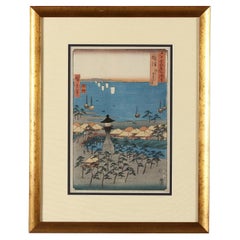
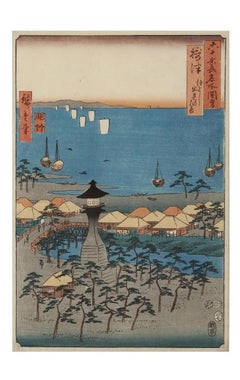
Japanese Woodblock Print One Hundred Famous Views of Edo by Utagawa Hiroshige

Japanese Woodblock Print One Hundred Famous Views of Edo by Utagawa Hiroshige

By Utagawa Hiroshige (Ando Hiroshige)

Located in Atlanta, GA

Artist: Utagawa Hiroshige (1797 - 1858) Series: One Hundred Famous Views of Edo (1856-58) Number: 39 Distant View of Kinryuzan Temple and Azuma Bridge Publisher: Uoya Eikichi Format: Vertical Oban Number of Prints: 120/120 (inc. title page and a replacement print by Hiroshige II) Medium: Woodblock Print Date: 1857 (Ansei 4), 8th month Size (H x W): 14" x 9.25" print only. Signature: Hiroshige ga Censor's seals: aratame, Snake 8 No blockcutter's mark Reference: For a similar print, see the collection of Art Institution Chicago Accession Number 1938.536 and 1965.1062; MFA Boston...

Category

1850s Japanese Antique Edo Furniture

Materials

Paper

Japanese Six-Panel Screen, Chrysanthemums

Japanese Six-Panel Screen, Chrysanthemums

Located in Hudson, NY

Japanese six-panel screen: Chrysanthemums, Edo period (circa 1800) painting of a variety of chrysanthemums in a garden landscape, with sparrows. Mineral p...

Category

Early 1800s Japanese Antique Edo Furniture

Materials

Gold Leaf

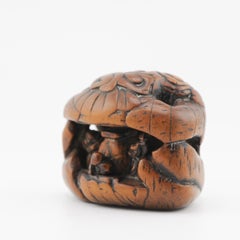
Antique Edo Netsuke 18/19th C Japanese Japan Ikkosai 'Different world in a cave'

Antique Edo Netsuke 18/19th C Japanese Japan Ikkosai 'Different world in a cave'

Located in Amsterdam, Noord Holland

Lovely and very detailed piece. Signed Ikkosai - Different world in a cave. It looks like a cave in a human brain. Very interesting Provenance: Collected in the 1980's. From the col...

Category

19th Century Japanese Antique Edo Furniture

Materials

Metal, Bronze

Antique Edo Period 1750-1800 Japanese Arita Plate with a Great landscape scene

Antique Edo Period 1750-1800 Japanese Arita Plate with a Great landscape scene

Located in Amsterdam, Noord Holland

Description Very happy with this new arrival. Arita plate with a landscape scene. Circa 1750-1800 Marked at the base with a six character mark. Condition Small Chip. Size: 21.4cm ...

Category

Late 18th Century Japanese Antique Edo Furniture

Materials

Porcelain

Japanese Nihonga Painting 19th c Edo Scroll by Tonomura Chokunyu River landscape

Japanese Nihonga Painting 19th c Edo Scroll by Tonomura Chokunyu River landscape

Located in Amsterdam, Noord Holland

[Authentic work] ◆Tanomura Chokunyu ◆Ink painting landscape ◆Japanese painting ◆Handpainted ◆ Paper ◆ Hanging scroll ◆ Chokunyu Tanomura 1814 (Bunka 11) - 1907 (Meiji 40) [Art yearbook appraised value 8 million yen] "A child prodigy in painting, Tanomura Chokunyu originally modeled himself after the style of the famous Tanomura Chikuden (1777-1835), who had adopted him at the age of eight. After Chikuden's death, Chokunyu took up an intense study of imported Chinese paintings." Paul Berry in: Literati Modern, p.136.) - The certificate box was inscribed by Tajika Chikuson (1864-1922), one of Chokunyu's key disciples. Around 1840, he studied Confucianism under Kotake Shinozaki in Osaka, deepened his friendships with Heihachiro Oshio and Tessai Tomioka through sencha, and began to be recognized as a painter. Furthermore, in 1862, he founded and hosted the Seiwan Tea Ceremony (a sencha tea ceremony), which achieved great fame. In 1868, he moved to Kyoto and participated in the establishment of the Kyoto Prefectural Painting School (opened in 1880), serving as its principal and making efforts to foster the next generation.Furthermore, in 1996, he established the Japan Nanga Association with Tessai and others, and established the Japan Nanga Association, which was established in modern Japan. He made a great contribution to painting and the southern painting...

Category

19th Century Antique Edo Furniture

Materials

Silk

Imari Porcelain Blue & Red Large Bowl, Early 19th century

Imari Porcelain Blue & Red Large Bowl, Early 19th century

Located in Worcester Park, GB

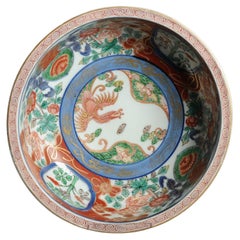
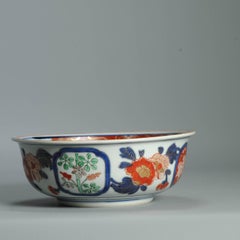
The image shows an Imari porcelain bowl, a distinctive style of Japanese export porcelain. Origin and Name: Imari ware originated in the Arita kilns of the former Hizen Province in n...

Category

Early 19th Century Japanese Antique Edo Furniture

Materials

Porcelain

Antique Ko-Imari Edo Period Japanese Porcelain Dish, 17th C

Antique Ko-Imari Edo Period Japanese Porcelain Dish, 17th C

Located in Amsterdam, Noord Holland

A very nice blue and white dish of moulded shape. Unusual painting. Early Edo period. Dating to 1680-1700 Reference: CJA Jorg - Fine and Curious Additional information: Material...

Category

17th Century Japanese Antique Edo Furniture

Materials

Porcelain

Miniature Antique Edo Period Ca 1700 Japanese Porcelain Ewer Blue White

Miniature Antique Edo Period Ca 1700 Japanese Porcelain Ewer Blue White

Located in Amsterdam, Noord Holland

Description Sharing with you this very sweet and small ewer from the edo period. We have never owned a piece like this before and think it's really sweet and delicate. With a lovely...

Category

17th Century Antique Edo Furniture

Materials

Porcelain

Japanese Antique Pottery Hanging Vase/Edo/1800s/Boat-Shaped Vase

Japanese Antique Pottery Hanging Vase/Edo/1800s/Boat-Shaped Vase

Located in Sammu-shi, Chiba

This is a black-glazed boat-shaped pottery made in the late Edo period of Japan. This will be a hanging vase. Pour water directly into this and decorate the flowers. Also, perhaps this is a pottery called Seto-yaki. Seto is an ancient kiln located in Aichi Prefecture. Various shapes and colors were produced there, and in the late Edo period, dark glazed pottery was also produced. When a dark brown glaze is applied, the areas with thick glaze look black, and the areas with thin glaze look brown. I put water directly into this and left it for a day, but there was no water leakage. I would say it is in very good condition. Although it is a small item, it has a very strong presence. It has a glossy and elegant appearance. There are many types of Seto pottery...

Category

19th Century Japanese Antique Edo Furniture

Materials

Pottery

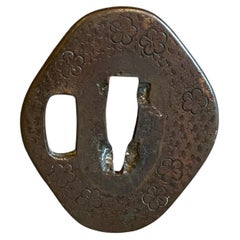
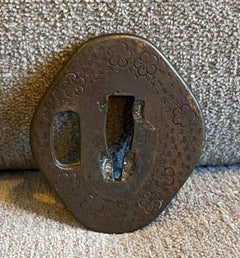
Japanese Nanban Tsuba with Dragons, Edo Period, early 19th century, Japan

Japanese Nanban Tsuba with Dragons, Edo Period, early 19th century, Japan

Located in Austin, TX

A dramatic Japanese iron tsuba in the nanban (foreign) style, decorated with dragons and openwork and inlaid with silver and gold, Edo Period, early 19th century, Japan. The fantast...

Category

Early 19th Century Japanese Antique Edo Furniture

Materials

Gold, Silver, Iron

Unique Antique Edo / Meiji Period Vase Green and Blue Japan 1830 Relief Hirado

Unique Antique Edo / Meiji Period Vase Green and Blue Japan 1830 Relief Hirado

Located in Amsterdam, Noord Holland

Sharing with you this very rare Japanese Edo / Meiji vase. Most likely Hirado ⁠ Condition 1 Bodyline : Size 30.5cm Period 19th century Edo Period (1603–1867)

Category

19th Century Antique Edo Furniture

Materials

Porcelain

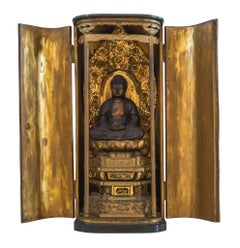
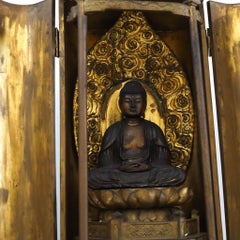
Japanese Zushi Traveling Shrine of Bishamonten, c. 1800

Japanese Zushi Traveling Shrine of Bishamonten, c. 1800

Located in Chicago, IL

This gorgeous Japanese red lacquer traveling shrine (zushi) protects a miniature statue of Bishamonten, the Buddhist God of Warfare here depicted as an armor-clad warrior. A fearsome protector, he is thought to defend sacred places, punish evil-doers, expel demons and bestow wealth. In this example, Bishamonten stands atop a crouching demon, dressed in finely painted armor...

Category

Mid-19th Century Japanese Antique Edo Furniture

Materials

Wood

Elegant Japanese Edo Period Rack

Elegant Japanese Edo Period Rack

Located in New York, NY

This refined object dates to the first half of the 19th century, and was probably used for obi, kimono sashes, which were hung over it. The gold decorations on the black-lacquered g...

Category

1830s Japanese Antique Edo Furniture

Materials

Lacquer

Rare Japanese Gilt Copper Temple Nail Cover (Nageshikazari), Edo Period

Rare Japanese Gilt Copper Temple Nail Cover (Nageshikazari), Edo Period

Located in Fukuoka, JP

A rare and finely crafted Japanese temple nail cover (nageshikazari), dating to the Edo period (18th–19th century). Executed in gilded copper, this architectural ornament was design...

Category

18th Century Japanese Antique Edo Furniture

Materials

Copper

Large Antique Imari Porcelain Plate with Shishi and Botan Motifs, Late Edo–Meiji

Large Antique Imari Porcelain Plate with Shishi and Botan Motifs, Late Edo–Meiji

By Imari Porcelain

Located in Fukuoka, JP

This impressive large antique Imari porcelain plate dates to the late Edo–Meiji period (19th century) and is finely decorated with a lively composition of playful shishi (mythical li...

Category

Mid-19th Century Japanese Antique Edo Furniture

Materials

Porcelain

Pair of Japanese Edo Period Parcel-Gilt Bronze Dragon Vases, Early 19th Century

Pair of Japanese Edo Period Parcel-Gilt Bronze Dragon Vases, Early 19th Century

Located in Austin, TX

A pair of well cast and dramatic Japanese parcel gilt bronze dragon vases, Edo period, early 19th century. The heavy bronze vases of pear shape, each with a single writhing dragon cast in high relief...

Category

Early 19th Century Japanese Antique Edo Furniture

Materials

Bronze

Antique 17C Japanese Porcelain Blue White Edo Period Arita Vase Flowers Lion

Antique 17C Japanese Porcelain Blue White Edo Period Arita Vase Flowers Lion

Located in Amsterdam, Noord Holland

Nice & Beautiful Arita Japanese Porcelain Vase, beaker shape. This is a beautiful 17th-century Japanese Arita porcelain vase, likely dating to the second half of the 1600s during the...

Category

17th Century Antique Edo Furniture

Materials

Porcelain

Edo furniture for sale on 1stDibs.

Find a broad range of unique Edo furniture for sale on 1stDibs. Many of these items were first offered in the 21st Century and Contemporary, but contemporary artisans have continued to produce works inspired by this style. If you’re looking to add vintage furniture created in this style to your space, the works available on 1stDibs include asian art and furniture, wall decorations, decorative objects and other home furnishings, frequently crafted with wood, metal and other materials. If you’re shopping for used Edo furniture made in a specific country, there are Asia, East Asia, and Japan pieces for sale on 1stDibs. While there are many designers and brands associated with original furniture, popular names associated with this style include Utagawa Hiroshige (Ando Hiroshige), Arita, Ryosuke Harashima, and Kitagawa Utamaro. It’s true that these talented designers have at times inspired knockoffs, but our experienced specialists have partnered with only top vetted sellers to offer authentic pieces that come with a buyer protection guarantee. Prices for furniture differ depending upon multiple factors, including designer, materials, construction methods, condition and provenance. On 1stDibs, the price for these items starts at $55 and tops out at $1,386,932 while the average work can sell for $2,989.