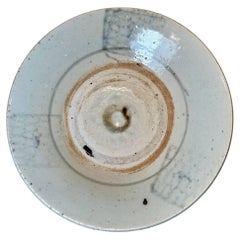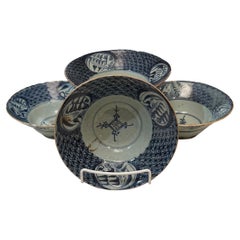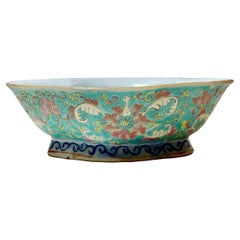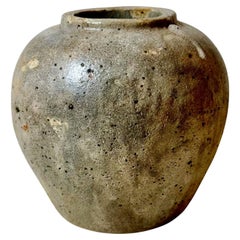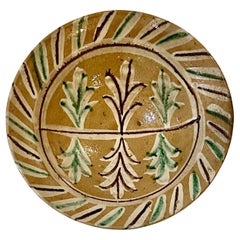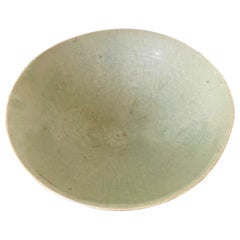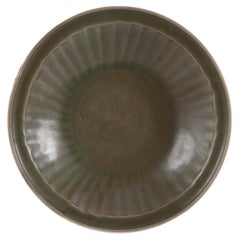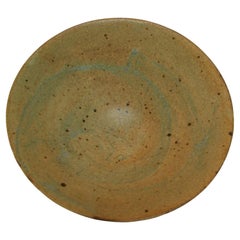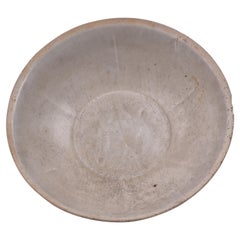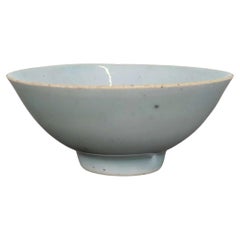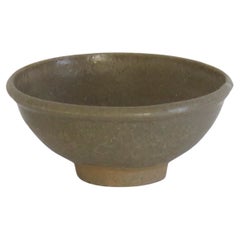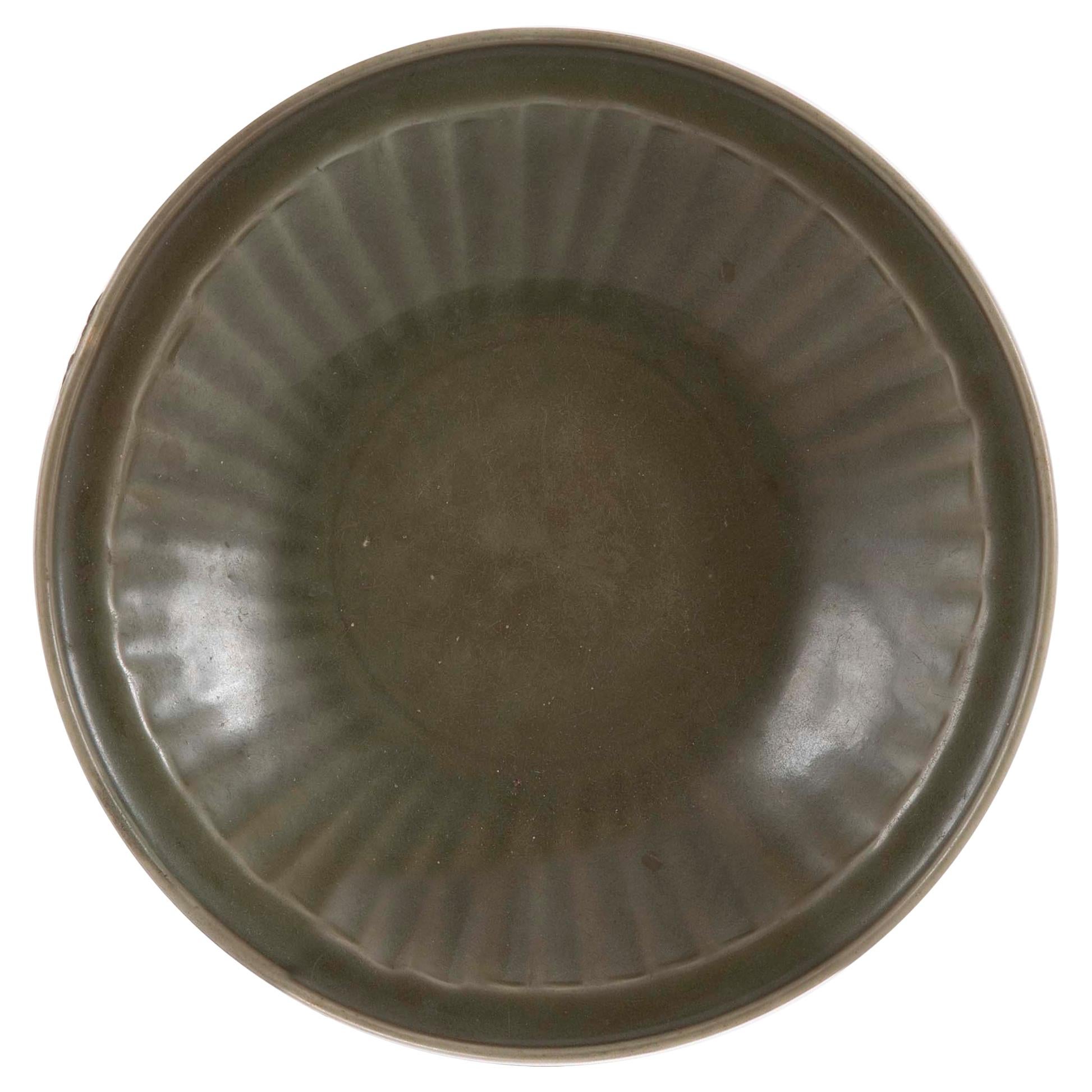
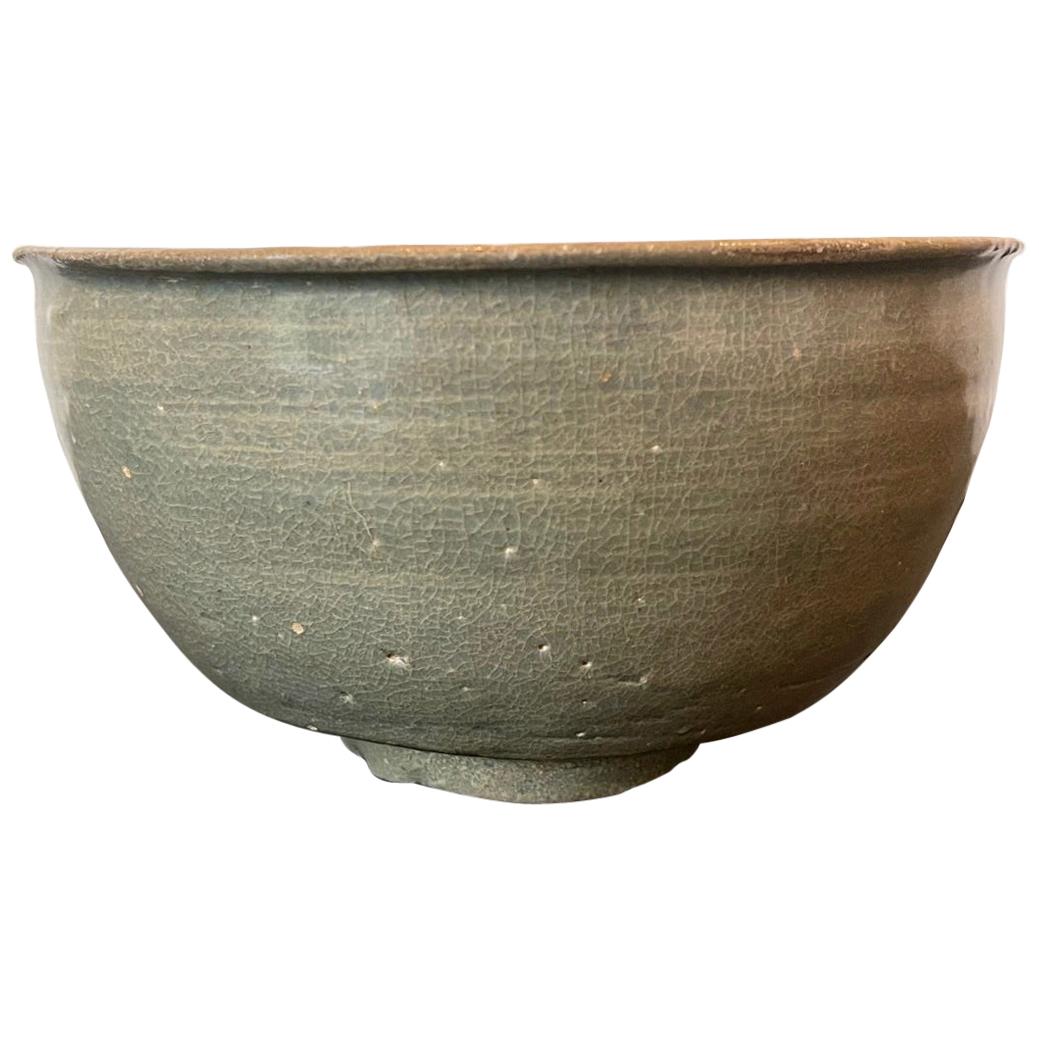
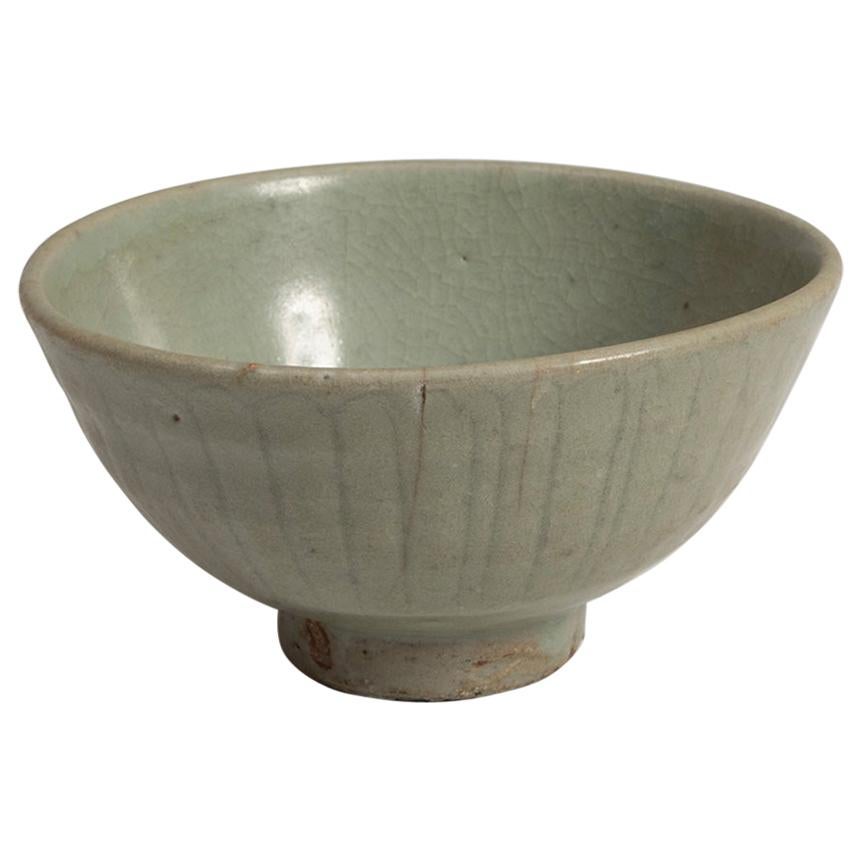
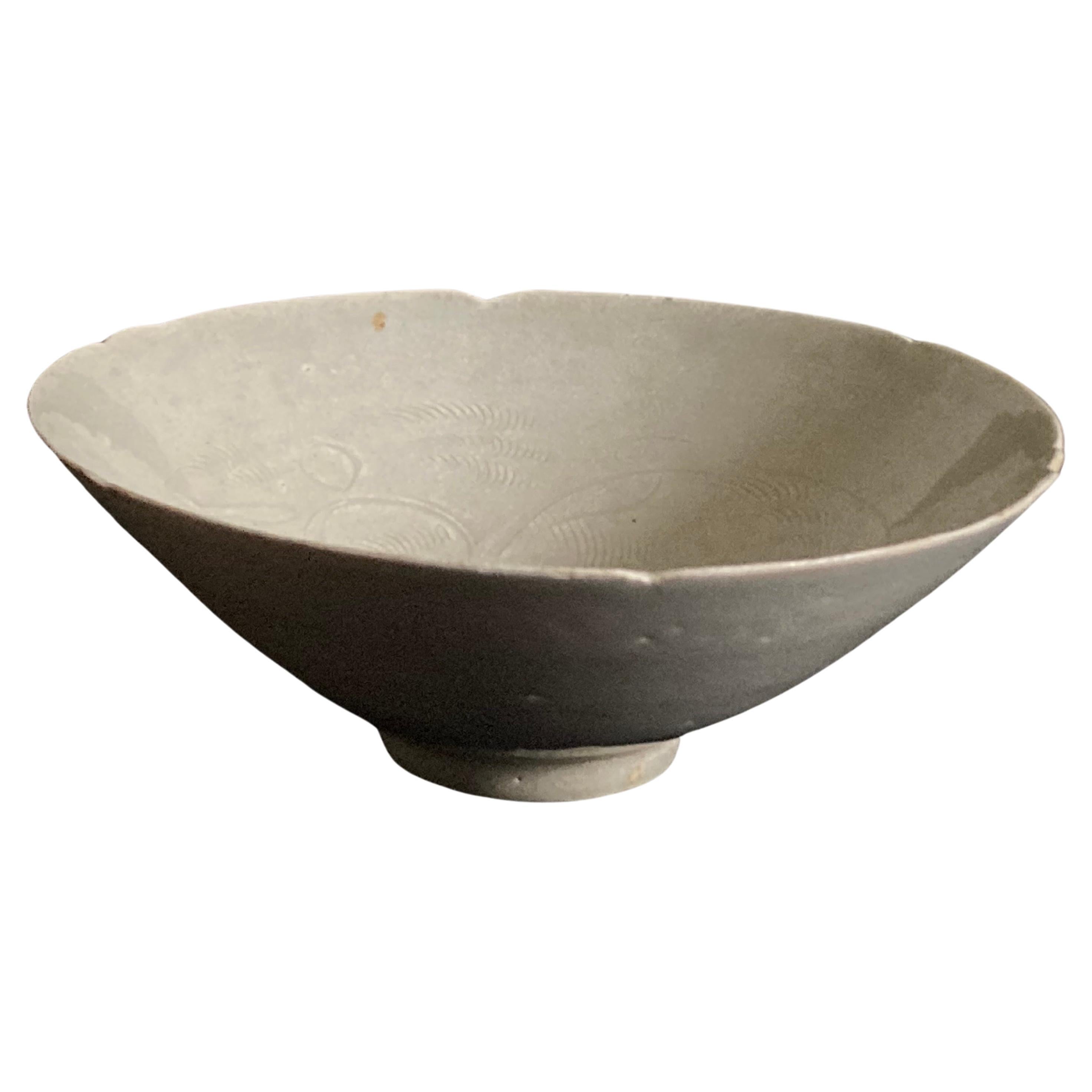
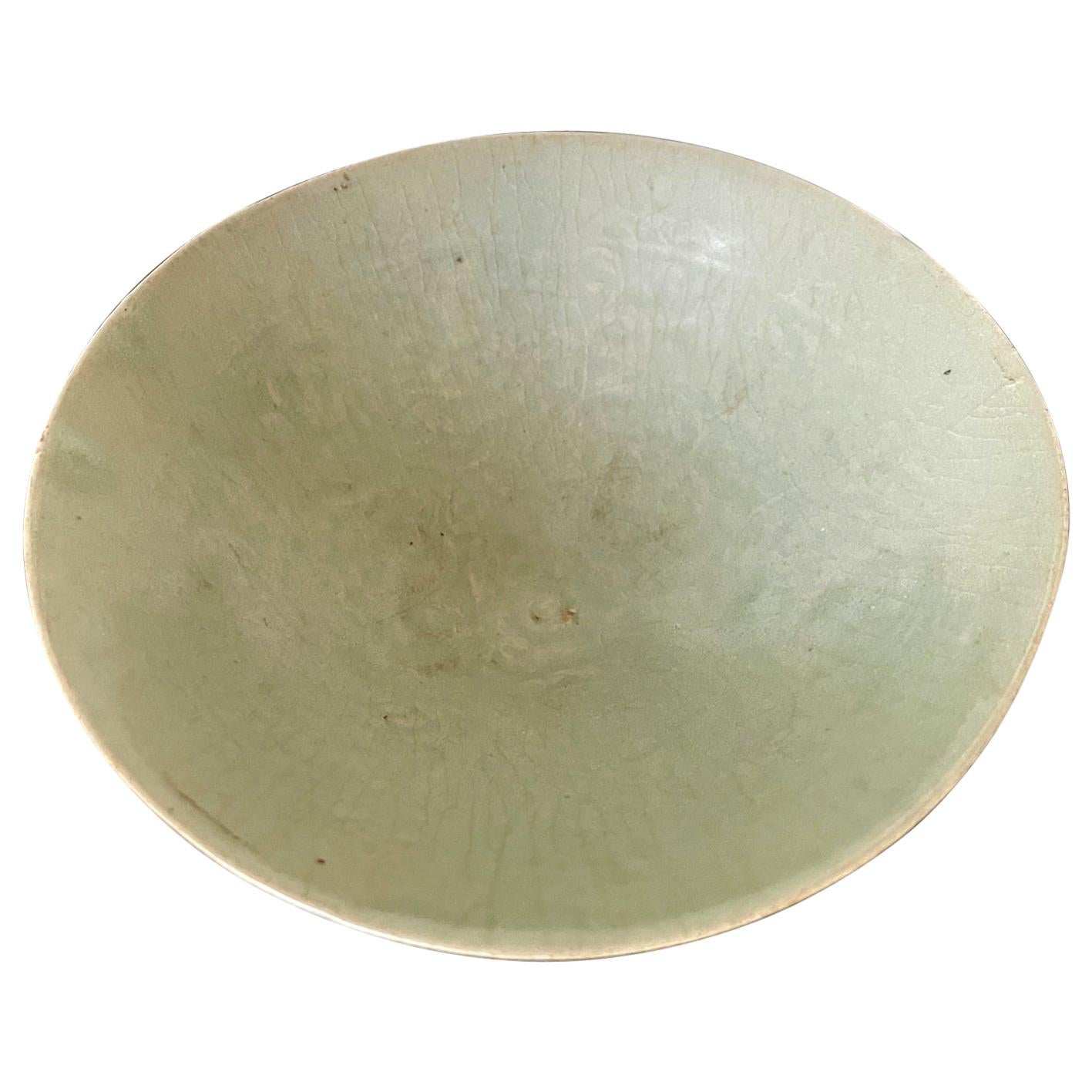
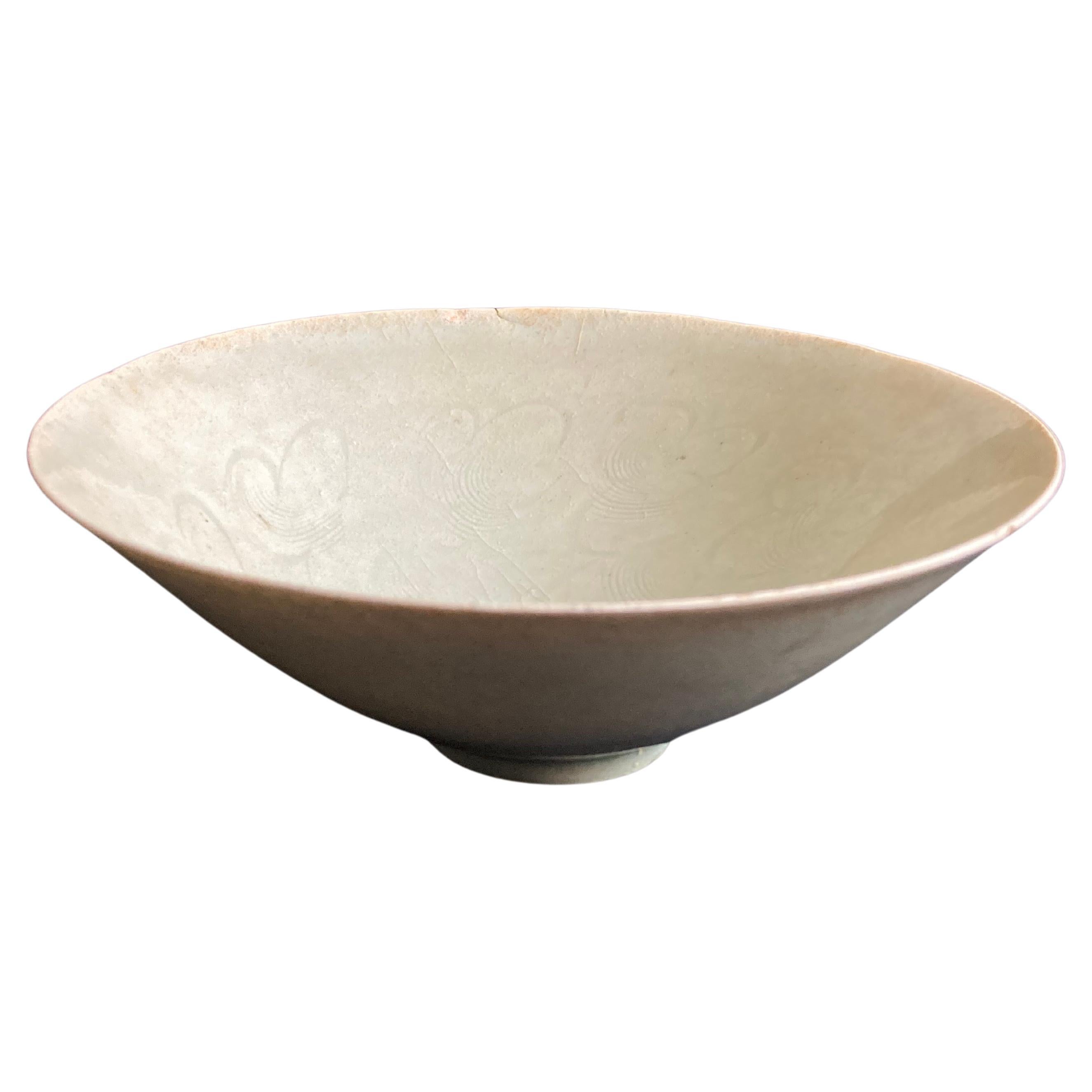
A ceramic bowl with celadon glaze from Korea, circa 14th century (late Goryeo Dynasty). The particular shape of the bowl suggests that it is likely a "Bo" (Chinese) or "Hattara" (Japanese "Oryoki"). This is a Buddhism term derived from Sanskrit word "patra", which means "vessel that contains just enough". The container was used traditionally by Buddhist monks to ask for alms (donated foods by laymen). The deep volume and the wide opening are conducive to its utility function. The bowl is covered in a jade-color celadon which has very fine and uniform crackles throughout. Upon close inspection of the exterior wall, one can detect a very light brush of white slip circumventing the body. The white slip brushing technique only became popular from 15th century on as a landmark of the Buncheong ceramics...
Category
Antique 15th Century and Earlier Korean Archaistic Ceramics