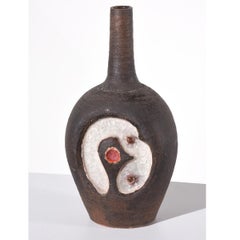
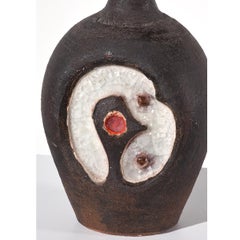
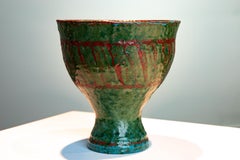
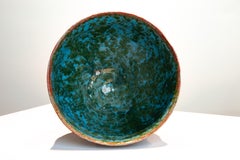
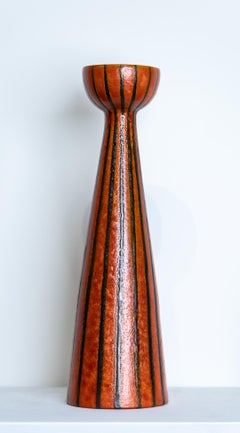
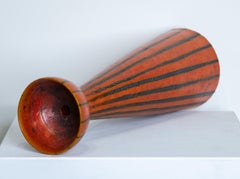
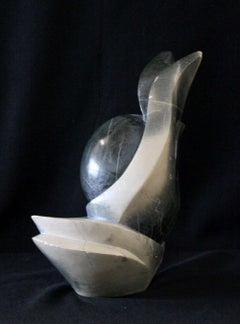
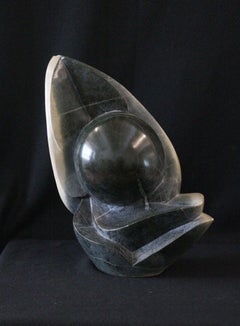
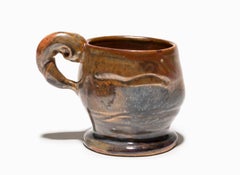
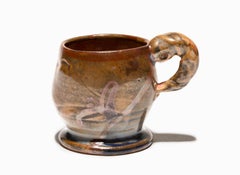
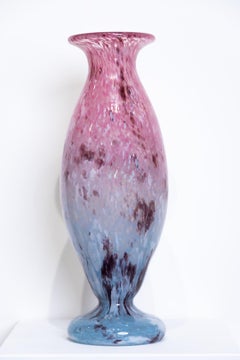
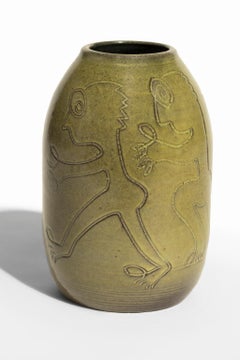
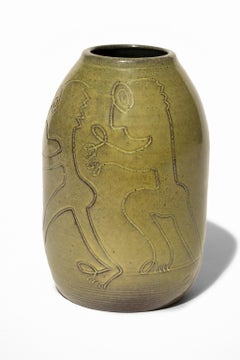
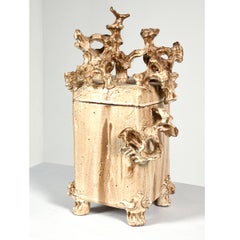
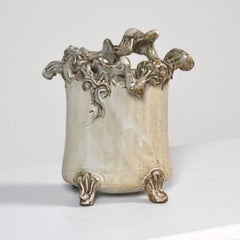
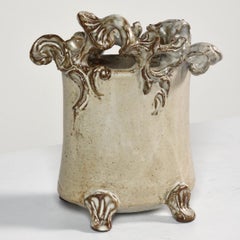
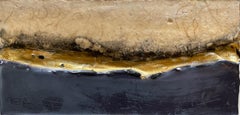
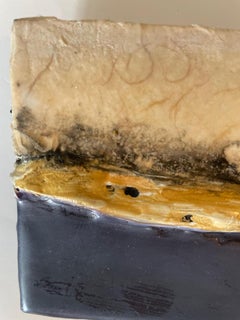
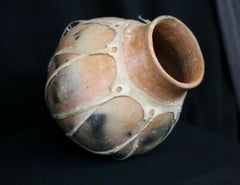
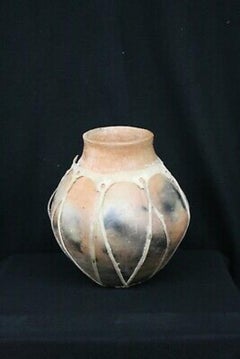
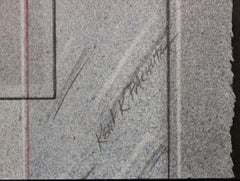
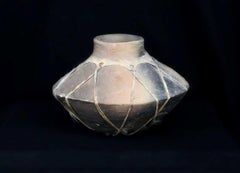
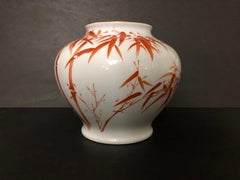
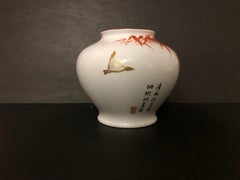
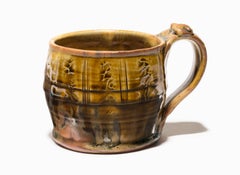
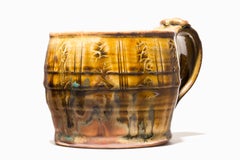
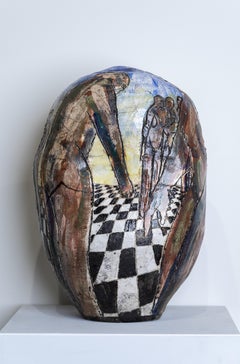
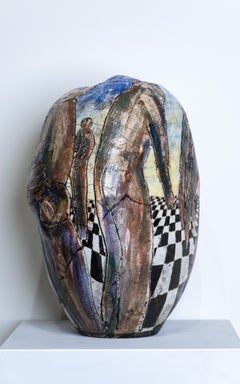
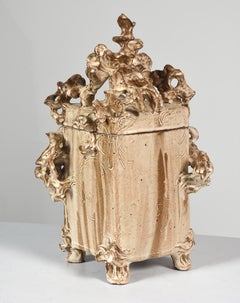
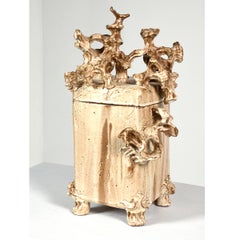
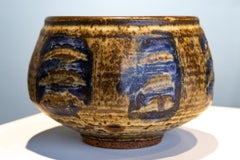
This ceramic salt glaze bowl with blue graphic design is a stunning example of the Heino’s collaborative creations. This piece is in perfect condition with no chips, no breaks and no repairs with a perfection as though it has just emerged from the kiln. The blue graphic design that surrounds the piece in a repeated pattern is beautifully incorporated into the shape of the bowl and the color enhances the basic glaze of the piece. The Heino’s worked together in a home/studio in California from mid to late 20th century.
Otto was one of twelve children born of Finnish immigrants, Lena and August Heino, in East Hampton, Connecticut, United States. His family ran a dairy farm in quiet farm country. Otto Heino's involvement with ceramics began while serving in the U.S. Air Force in England; during a military leave, he spent several days watching Bernard Leach throw pots. Following his return to the US, he used his GI Bill funding in 1949 to study ceramics at the League of New Hampshire Arts and Crafts, in Concord, New Hampshire.
Vivika was born Vivien Place in Caledonia, New York. In the mid 1930s, after getting a teaching degree at the Rochester Normal School, she spent two years with the Works Progress Administration theatre project, and headed the National Youth Administration in San Francisco. Discovering clay at this time, she studied at the California School of Fine Arts (now the San Francisco Art Institute), and with Glen Lukens at the University of Southern California. Lukens, a highly respected ceramist renowned for his glazes, gave her the opportunity to explore colored clays, develop new glazes, and experiment with raw materials. (In later years, she and Otto were to devote a day a week to measuring, mixing, and testing new glazes.) Her pots were exhibited at the 1939 Golden Gate International Exposition, in San Francisco.
Vivien Place started using the name Vivika while studying at the Swedish Applied Arts, in San Francisco, where teacher Margaret Gravandar thought everyone should have a Swedish name. (Even her mother started calling her that.)
In 1941, Vivika received an M.F.A. from New York State College of Ceramics at Alfred University, Alfred, New York. She was the second M.F.A. graduate from the ceramics program there (following Daniel Rhodes...
Category
Late 20th Century Contemporary Michigan - More Art
MaterialsCeramic, Stoneware, Glaze