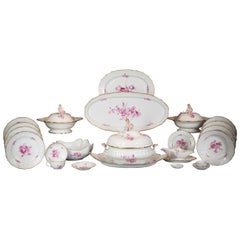
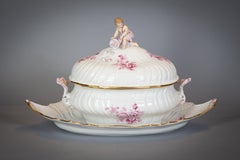
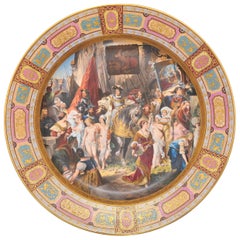
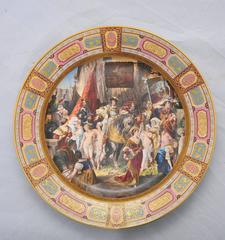
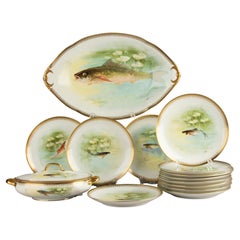
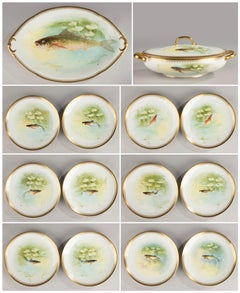
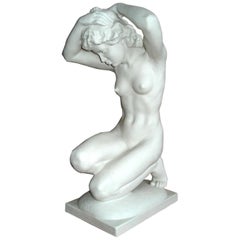
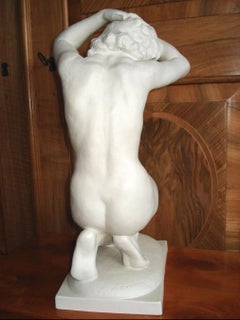
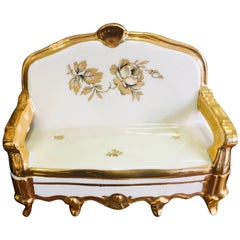
By Manufacture Nationale de Sèvres
Located in Sofia, BG
Royal and diplomatic gifts.
Just as at Meissen, Sèvres was a popular factory for the commission and production of royal and diplomatic gifts, as well as for direct purchases by royal families and the aristocracy. Marie Antoinette was an early supporter, ordering vase garnitures, teawares and dinner-services.
In 1784 the queen ordered a sumptuous service decorated with roses, faux pearls and pansies in medallions, on a carmine ground. It was intended for use at Versailles, but upon its completion it was given instead by Louis XVI to Gustav III as a diplomatic gift commemorating the Swedish king’s visit. Unused to self-sacrifice, the French queen did not wait long for her own replacement service in the same pattern.
Similarly, in 1782 Louis-Philippe de Bourbon, duc de Chartes, ordered an elaborate bleu celeste service for the common law wife of his friend, Nathaniel Parker Forth, British Special Envoy to France. Each piece is finely painted birds to the center and to the rim based on images found in The Natural History of Birds by the Comte de Buffon (see below). The service eventually came into the collection of Alfred de Rothschild at Halton House, Buckinghamshire, before being acquired by Desmarais family in late 1990s.
In the 18th century, porcelain was one of the most highly prized commodities in the world. Only the very wealthy could afford objects made of this fragile material, which was shipped at great expense from the Far East.
Porcelain was developed in China around 2,000 years ago but the recipe was a closely guarded secret. It was not until the early 18th century that Johann Friedrich Böttger discovered the magic formula for making true hard-paste porcelain, and in 1710 the Meissen factory was established.
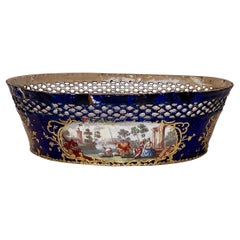
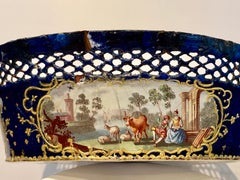
Magnificent Very fine antique Museum quality extremely rare enamel cobalt-blue 18-karat gold hand painted porcelain basket...
Category
18th Century French Baroque Antique Sofia - Porcelain