Questions & Answers
Our trusted network of 1stDibs sellers answer common questions
What is the difference between an offset lithograph and an original lithograph?
1 Answer
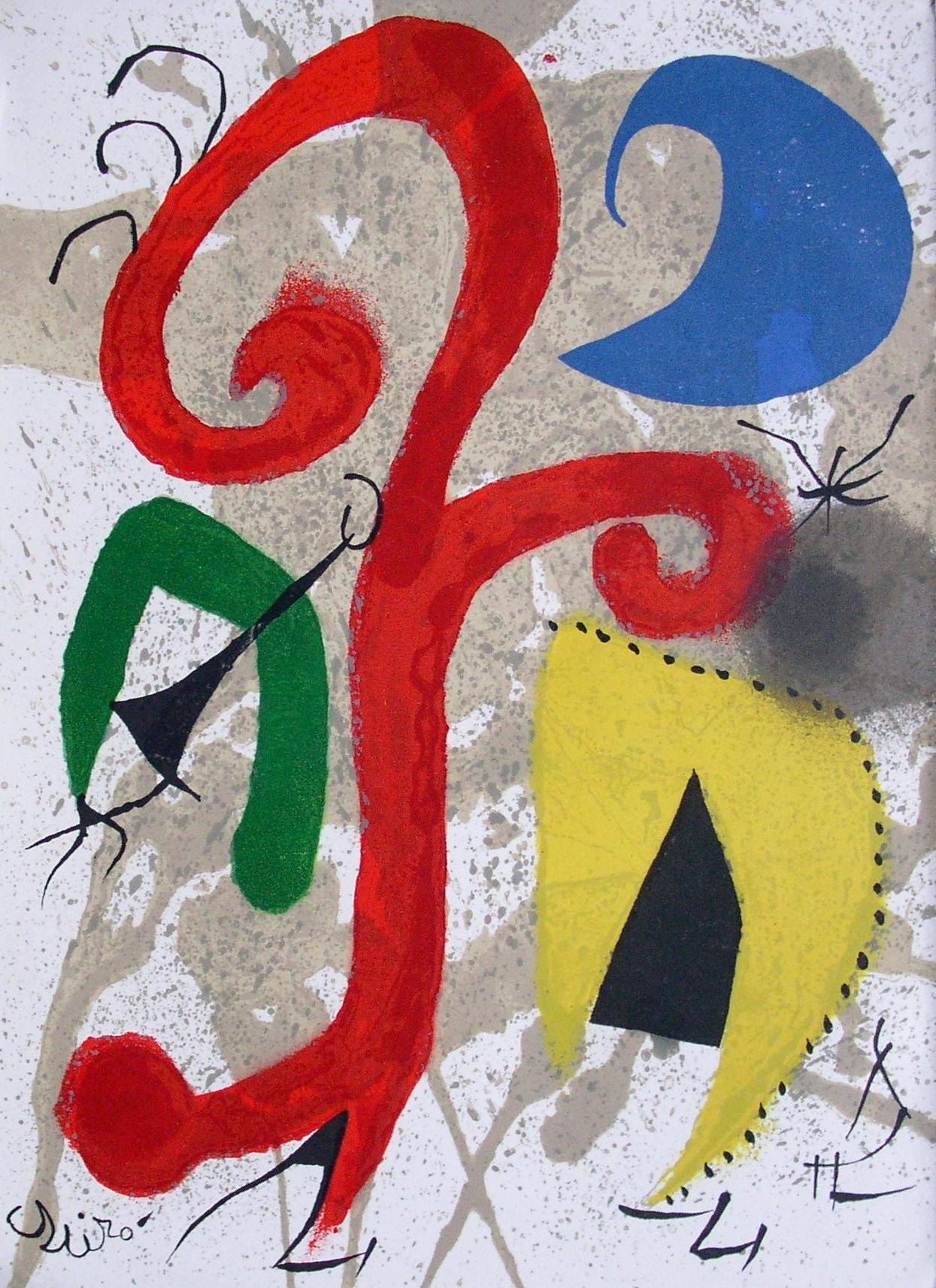
The difference between an offset lithograph and an original lithograph is that the former is made using the other. To produce an original lithograph, a printmaker begins by drawing on or painting on a stone surface with an oil-based substance. The stone is then covered with water, which is repelled by the oily areas. Oil-based ink is then applied to the wet stone, adhering only to the oily image. The stone is then covered with a sheet of paper and run through a press. An offset lithograph is a copy of an original lithograph produced with mechanical processes, usually without the artist's involvement. On 1stDibs, explore a collection of lithographs and other art prints.
1stDibs ExpertOctober 7, 2024
Related Questions
- What is the difference between an offset lithograph and a serigraph?1 Answer
- What is the difference between a lithograph and an original?1 Answer
- What is the difference between a hand-pulled lithograph and an offset lithograph?1 Answer
- What is the difference between a lithograph and a lithograph print?1 Answer
- How can you tell an offset lithograph?1 Answer
Shop for Art by Medium: Lithograph on 1stDibs
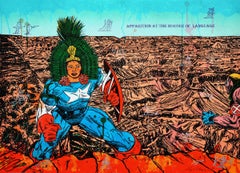
"Apparition at the Border of Language"
Located in Lyons, CO
This print presents a fictitious encounter between contemporary colonial forces and Native Americans who are defenders of immigrant refugees and displaced populations.
The artist de...
Category
2010s Contemporary More Prints
Materials
Lithograph
"Le port de New York" original lithograph
Located in Henderson, NV
Medium: original lithograph. Printed in Paris in 1964 by Mourlot Freres and issued in an edition of 2000 on Arches wove paper. Size: 10 x 7 1/2 inches (255 x 185 mm). Not signed.
Category
1960s Prints and Multiples
Materials
Lithograph
"L'Artisan Moderne" lithograph poster
Located in Henderson, NV
Medium: lithograph (after the poster). Printed in Paris in 1950 by Mourlot Freres, this multi-stone color lithograph faithfully reproduces the original Toulouse-Lautrec poster in a s...
Category
1950s Prints and Multiples
Materials
Lithograph
Acrobatics Lithograph by Marc Chagall, Signed, Framed, 1963 Edition
By Marc Chagall
Located in Brooklyn, NY
A vibrant and whimsical first edition lithograph from Marc Chagall’s celebrated Lithographs Volume II, showcasing the artist’s signature dreamlike composition. Floating figures, play...
Category
1960s Prints and Multiples
Materials
Lithograph
Salvador Dalì 1970s Surrealist Signed Original Work on Paper
Located in Roma, IT
Salvador Dalí "Spring"
Signed surrealist artist’s proof
Salvador Dalí “Spring” Colour lithograph from the cycle The Four Seasons, one of the most fascinating graphic series created ...
Category
1970s Surrealist Landscape Prints
Materials
Lithograph
Marc Chagall, Paradise I, from Drawings for the Bible, 1960
By Marc Chagall
Located in Southampton, NY
This exquisite lithograph by Marc Chagall (1887–1985), titled Paradise I (Paradise I), from Marc Chagall, Dessins Pour La Bible (Drawings for the Bible), Verve: Revue Artistique et Litteraire, Vol. X, No. 37-38, originates from the July 29, 1960 issue published by Editions de la revue Verve, Paris, under the direction of Teriade, Editeur, Paris, and printed by Mourlot Freres, Paris, 1960. This visionary composition reflects Chagall’s poetic interpretation of the biblical paradise, evoking a realm of harmony, innocence, and divine presence through his luminous color and dreamlike symbolism. The flowing forms and radiant imagery convey a sense of spiritual unity and transcendence, capturing the timeless serenity and mystical beauty of Eden within Chagall’s distinctive visual language. Infused with movement and lyricism, the work transforms sacred narrative into a meditative vision of paradise and the enduring connection between humanity and the divine. The piece forms part of Chagall’s celebrated series of lithographs and drawings created for Dessins Pour La Bible, a monumental project uniting art, scripture, and mysticism in one of the artist’s most important achievements.
Executed as a lithograph on velin du Marais paper, this work measures 14 x 10.5 inches (35.56 x 26.67 cm). Unsigned and unnumbered as issued. The edition exemplifies the superb craftsmanship of the Mourlot Freres atelier, renowned for its collaborations with the greatest modern masters of the 20th century.
Artwork Details:
Artist: Marc Chagall (1887–1985)
Title: Paradise I (Paradise I), from Marc Chagall, Dessins Pour La Bible (Drawings for the Bible), Verve: Revue Artistique et Litteraire, Vol. X, No. 37-38, July 29, 1960
Medium: Lithograph on velin du Marais paper
Dimensions: 14 x 10.5 inches (35.56 x 26.67 cm)
Inscription: Unsigned and unnumbered as issued
Date: 1960
Publisher: Editions de la revue Verve, Paris, under the direction of Teriade, Editeur, Paris
Printer: Mourlot Freres, Paris
Catalogue raisonne references: Chagall, Marc, et al. Chagall Lithographe. Andre Sauret, 1960-1986, illustration 230-276. Cramer, Patrick, and Meret Meyer. Marc Chagall: Catalogue Raisonne des Livres Illustres. P. Cramer ed., 1995, illustration 42.
Condition: Well preserved, consistent with age and medium
Provenance: From Marc Chagall, Dessins Pour La Bible (Drawings for the Bible), Verve: Revue Artistique et Litteraire, Vol. X, No. 37-38, published by Editions de la revue Verve, Paris, 1960
Notes:
Excerpted from the folio (translated from French), This double issue of Verve includes the drawings that Marc Chagall executed in 1958 and 1959 on biblical themes that he had not generally dealt with in his illustration for the Bible, engraved with etching and which were included in issue 33/34 of Verve. This album has 96 renderings in black and 24 color litbographies as well as the cover that were specially made for this album. It was completed printing on July 29, 1960 by Draeger Freres for black gravures and by Mourlot Freres for color lithography.
About the Publication:
Marc Chagall, Dessins Pour La Bible (Drawings for the Bible), published as Verve Vol. X, No. 37-38 on July 29, 1960, represents a significant continuation and expansion of Chagall’s profound engagement with biblical imagery and spiritual narrative. Conceived and directed by the visionary publisher Teriade, the publication builds upon the earlier Verve issue devoted to Chagall’s Bible illustrations by presenting a new body of work executed in 1958 and 1959, exploring themes and episodes that had not been fully addressed in the initial series. Printed in Paris by Draeger Freres for black gravures and Mourlot Freres for color lithography, the edition demonstrates an exceptional level of technical refinement and artistic collaboration. The publication includes an extensive suite of ninety six black reproductions and twenty four color lithographs, as well as specially created cover imagery, reflecting Chagall’s continued innovation in translating sacred themes into graphic form. As part of the broader tradition of Verve, one of the most important artistic and literary publications of the twentieth century, this issue exemplifies the fusion of text, image, and craftsmanship at the highest level. Today, Verve Vol. X, No. 37-38 stands as a major achievement within Chagall’s graphic oeuvre, reaffirming his role as one of the foremost interpreters of biblical narrative in modern art.
About the Artist:
Marc Chagall (1887–1985) was a Belarus-born French painter, printmaker, and designer whose visionary imagination, radiant color, and deeply poetic symbolism made him one of the most beloved and influential artists of the 20th century. Rooted in the imagery of his Jewish heritage and the memories of his childhood in Vitebsk, Chagall’s art wove together themes of faith, love, folklore, and fantasy with a dreamlike modern sensibility. His unique style merging elements of Cubism, Fauvism, Expressionism, and Surrealism defied categorization, transforming ordinary scenes into lyrical meditations on memory and emotion. Influenced by Russian icon painting, medieval religious art, and the modern innovations of artists such as Pablo Picasso, Henri Matisse, and Georges Braque, Chagall developed a profoundly personal visual language filled with floating figures, vibrant animals, musicians, and lovers that symbolized the transcendent power of imagination and love. During his early years in Paris, he became an integral part of the Ecole de Paris circle, forming friendships with Amedeo Modigliani, Fernand Leger, and Sonia Delaunay, and his creative spirit resonated with that of his peers and successors Alexander Calder, Alberto Giacometti, Salvador Dali, Joan Miro, Wassily Kandinsky, Marcel Duchamp, and Man Ray, artists who sought to push the boundaries of perception, emotion, and form. Over a prolific career that spanned painting, printmaking, stained glass, ceramics, and stage design, Chagall brought an unparalleled poetic sensibility to modern art, infusing even the most abstract subjects with human warmth and spiritual depth. His works are held in the most prestigious museums around the world, including the Museum of Modern Art, the Centre Pompidou, the Tate, and the Guggenheim, where they continue to inspire generations of artists and collectors. The highest price ever paid for a Marc Chagall artwork is approximately 28.5 million USD, achieved in 2017 at Sotheby’s New York for Les Amoureux (1928).
Marc Chagall Paradise...
Category
1960s Expressionist Abstract Prints
Materials
Lithograph
$956 Sale Price
20% Off
Free Shipping