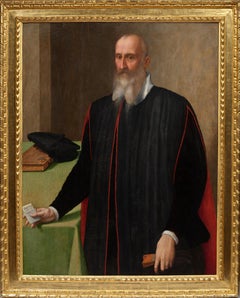
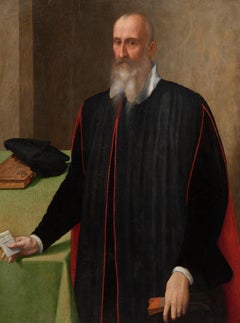
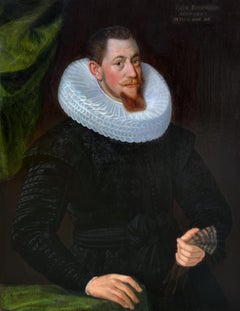
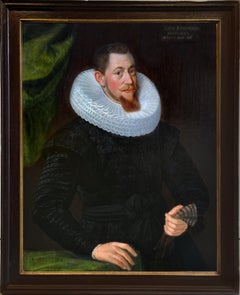
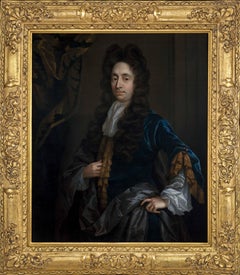
This recently rediscovered portrait of Santi di Tito depicts a Florentine senator, with a letter in his hand indicating that the painting was executed in 1574 when the sitter was 66 years old. On the basis of these clues, it is tempting to view it as a portrait of Bartolomeo Panciatichi, who was painted some thirty years before by Bronzino (1503 - 1572). While the treatment of the hands recalls the Florentine tradition of Mannerist portraits, the comparison with Bronzino's portrait illustrates Santi di Tito's search for greater realism, despite the stereotyped composition.
1. Santi di Tito, Counter-Reformation painter and portraitist
Santi di Tito was the great painter of the Florentine Counter-Reformation. He proposed a new artistic language that broke away from Mannerism.
Little is known about his training in Florence (perhaps alongside Bronzino or Baccio Bandinelli), but this period of training enabled him to join the Company of Saint Luke, the guild of Florentine painters, in 1554. Between 1560 and 1564, Santi di Tito spent time in Rome, where he frequented the workshop of Taddeo Zuccari. This stay had a fundamental influence on his work, thanks to the discovery of the late work of Raphael, but also his encounters with the painters Francesco Salviati and Federico Barocci.
Around 1565, Santi di Tito returned to Florence, where he remained until the end of his life, dividing his talents between the creation of important religious paintings and countless portraits. He became one of the city's leading painters, distinguishing himself, in particular, in the creation of large religious compositions in which the spirit of the Counter-Reformation was reflected.
In 1568, Santi di Tito became a member of the Confraternity of Saint Thomas Aquinas...
Category
16th Century Old Masters Art by Medium: Poplar