By Pansy Stockton
Located in Denver, CO
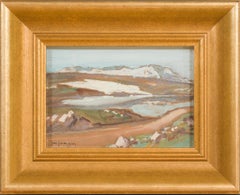
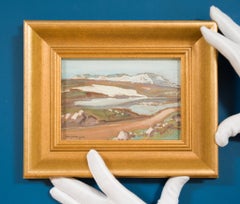
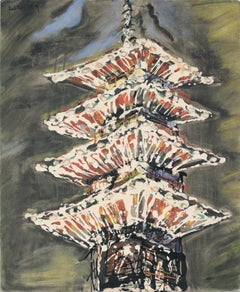
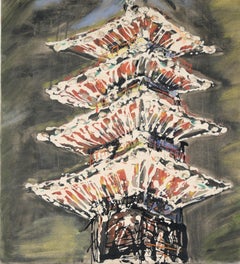
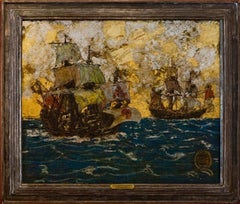
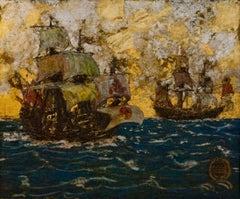
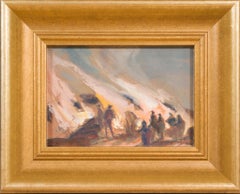
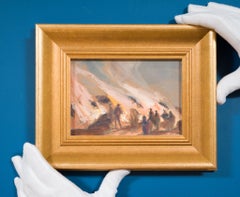
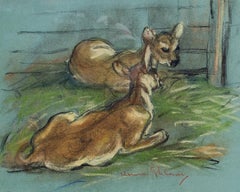
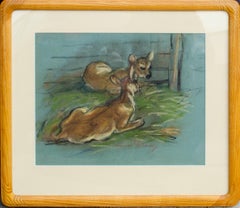
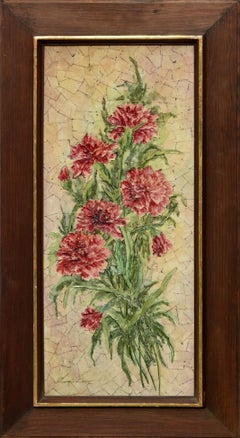
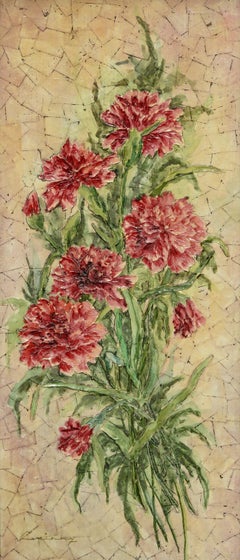
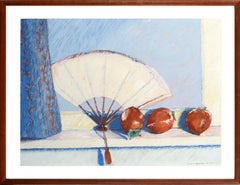
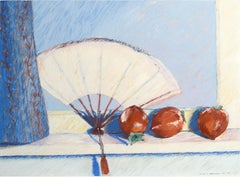
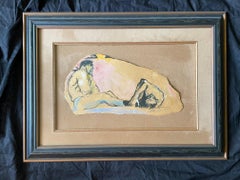
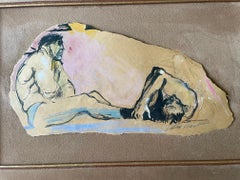
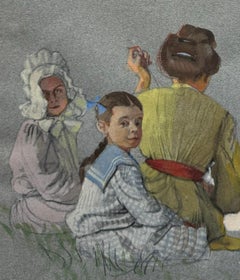
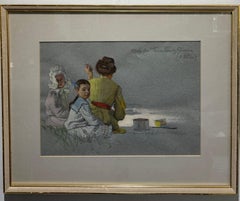
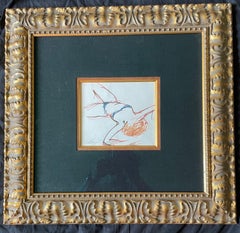
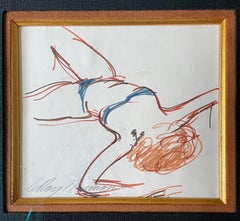
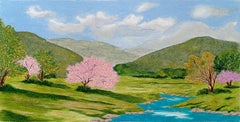
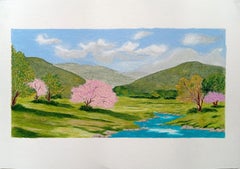
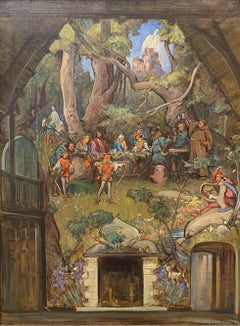
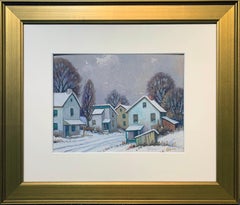
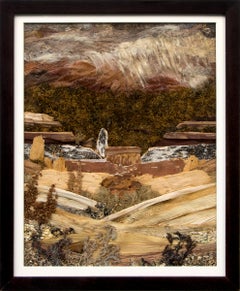
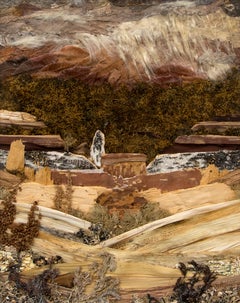
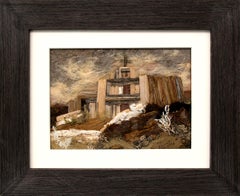
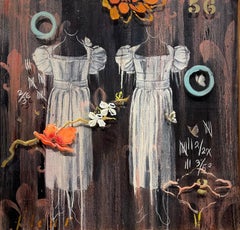
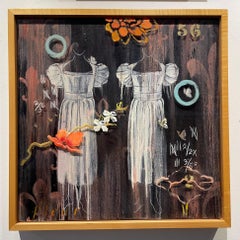
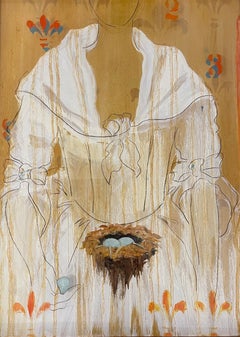
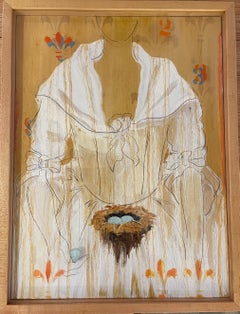
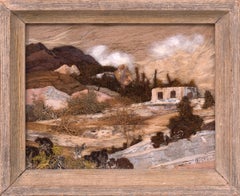
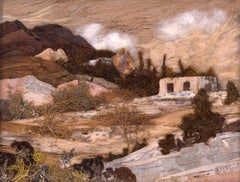
Sun Painting (mixed media assemblage of botanical elements). Presented in the original/vintage frame, outer dimensions measure 9 ¾ x 11 ½ x 1 ¼ inches. Image size is 7 ¾ x 10 inches.
About the artist:
Born Pansy Cornelia RePass, she relocated with her family to Colorado as a young girl, initially living in Durango and Grand Junction before finally settling in Eldorado Springs in Boulder County where her parents ran the Grand View Hotel. She began studying oil painting and watercolor in Durango, winning her first award at age nine in an adult art exhibition. She later studied at the Cory School of Art in Denver and artists with Robert Graham and Adma Green Kerr. She also studied with Eliot O’Hara, a widely respected watercolorist who ran the O’Hara Watercolor School in Kennebunkport, Maine.
In 1918 she married her first husband, Roscoe K. Stockton, a school principal and songwriter who later taught English and radio drama at the University of Denver. They had two sons, Oakley and Paul, and later divorced. In 1950 she married her second husband, Captain Howard W. Fatheree, whom she met in Taos, New Mexico, and who predeceased her.
Although initially painting in oil, watercolor and tempera, Pansy Stockton became best known for her “sun paintings.” She so named them because all of the organic materials she used got their colors from the sun. She started doing them in the search to give her paintings the quality of depth. They were creations composed of up to 250 types of vegetation such as ferns, bark, milkweed, leaves, twigs, feathers, and other ingredients which she collected and dried. As her work became better known people from all over the world sent her things to use in her sun paintings – birch bark from New England, shrubs from the Holy Land and kelp and sea grass from the depths of the Pacific Ocean.
In 1916 she first sold a sun painting to the president of the Colorado Fuel and Iron Company in Pueblo for the biggest $25 dollars of her life. Over the next five decades she did a thousand sun paintings. She started by gluing down the individual, unaltered organic elements in her paintings, weighing them down with an old flat iron until dry and then framing each completed composition under glass to give it the three-dimensionality of an oil painting. The reverse of each sun painting contains a “Botanical Personnel” listing the various pieces of vegetation she used in the painting.
Her Colorado pieces depict scenes of Mount of the Holy Cross, Spruce Tree House at Mesa Verde, Gateway of the Garden of the Gods, Copeland and Maroon Lakes, regattas on Grand Lake and the Long’s Peak Trail in Estes Park. In the 1920s she began showing her sun paintings at Chappell House, the first home of the Denver Art Museum. Over the years she exhibited in Santa Fe, Taos, Albuquerque, Los Angeles, Oklahoma City, Chicago and New York, as well as in Paris, London and Vienna.
In addition to her sun paintings, Stockton was one of fifty-two founding members in 1928 of the Denver Artists Guild that became the city’s leading art organization for the next twenty years. Its charter members contributed to the fine and decorative arts of Colorado and enhanced the state’s national reputation. In the 1930s she conducted public relations for Denver’s National Art Week celebrations, including interview programs on KOA radio publicizing the event.
“Poncita” (Sweet Girl), as she was known, became formally adopted into the Ogalala Lakota Sioux tribe in 1936 in thanks for interceding on their behalf to help preserve their land and rights. Her tribal father became Chief David Flies, a compatriot of Buffalo Bill. Her tribal name given to her by Native American dancer Charles Eagle Plume was Wanashta Wastaywin – “Flower that Beautifies the Earth.” She danced in Sioux tribal ceremonies in authentic tribal costume and rode in parades with her new kinsmen in Denver and Wyoming.
By the late 1930s she began spending most of her time in Santa Fe, New Mexico, relocating there permanently a few years later. At Fremont Ellis’ San Sebastian Ranch south of Santa Fe she built an adobe home with a replica of the Nambé Pueblo kiva, the round ceremonial building of the Pueblo Indians. The kiva housed her extensive Native American collection and hosted all night music sessions for the ranch’s resident artists. She lectured on “Customs and Costumes of American Indians” illustrated with Kachina dolls from her collection. She also cared for her little brother Paul who lived with her in Santa Fe in the latter years of his life.
She continued doing her sun paintings “to give people new vision when they wander over our Southwest mesas, mountains and deserts.” In addition to depictions of well-known locations in New Mexico and Arizona such as Sandia near Albuquerque, San Francisco Peaks, Mission at Rancho de Taos, Old Tesuque Plaza, and the Grand Canyon, she did some Native American portraits in the medium. Her friend and fellow artist, Gustave Baumann, of Santa Fe made the stamp for the back of her sun paintings.
Purchasers included, among others, the Prince of Wales in London and Juliana Force of the Whitney Museum in New York. Stockton gifted her sun painting, Navajo Woman...
Category
1950s American Impressionist Mixed Media