Bauhaus Art

to
9
35
7
14
13
9
Overall Width
to
Overall Height
to
51
28
2
9
10
2
3
9
4
2
1
115,049
63,536
57,530
26,930
14,687
9,370
6,495
5,639
4,180
3,029
2,481
2,380
2,241
648
39
28
10
13
8
6
6
5
5
4
3
2
2
2
2
2
2
2
2
1
1
1
1
28
22
13
13
12
12
10
4
4
3
15
10
56
20
Style: Bauhaus
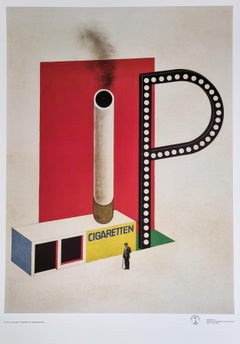
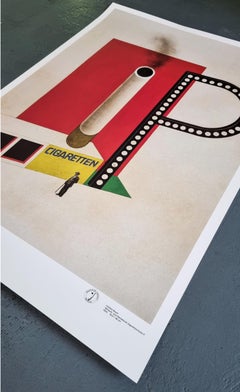
Bauhaus Exhibition Poster, Offset Print, Geometric Design, 1995

Bauhaus Exhibition Poster, Offset Print, Geometric Design, 1995

Located in Brooklyn, NY

Schmidt's 1923 poster for the Bauhaus Exhibition is celebrated for its innovative use of geometric forms and typographic elements, reflecting the school's avant-garde approach to des...

Category

Mid-20th Century Bauhaus Art

Materials

Offset

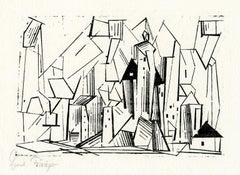
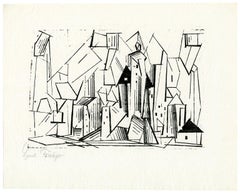
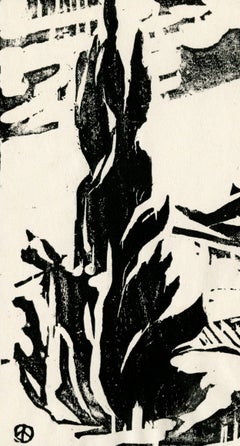
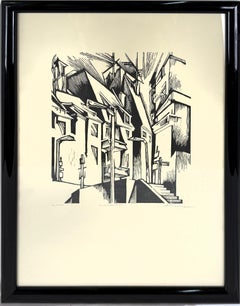
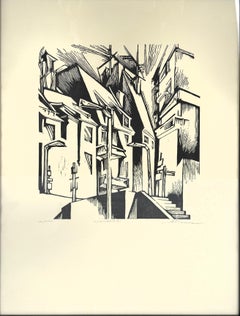
'Die Architektur' (Architecture) — Bauhaus Modernism

'Die Architektur' (Architecture) — Bauhaus Modernism

By Lyonel Feininger

Located in Myrtle Beach, SC

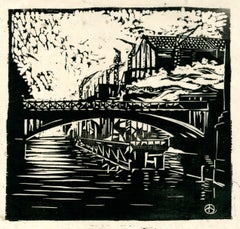
Lyonel Feininger, 'Die Architektur' (Architecture), also 'Stadtbild' (Cityscape), woodcut, edition proofs only in 1920; 50 in 1921. Prasse W 232. Signed in pencil. A fine, black impression, on off-white Japan, with full margins (1 1/4 to 2 1/8 inches), in excellent condition. Matted to museum standards, unframed. Image size 6 x 8 7/8 inches (152 x 229 mm); sheet size 9 1/2 x 11 7/8 inches (241 x 302 mm). No. 11 of the portfolio 'Zwolf Holzschnitte von Lyonel Feininger', 1921. Provenance: Peter Deitsch collection; exhibited Weimar Museum, 1968. Impressions of this work are in the permanent collection of: Busch-Reisinger Museum (Cambridge, Mass.), Bauhaus-Archiv (Germany), Hamburger Kunsthalie (Germany), Pfaizische Landesgewerbeanstalt (Germany), Kaiser Wilhelm Museum (Germany), Staatliche Graphische Sammlung (Germany), Philadelphia Museum of Art. ABOUT THE ARTIST Lyonel Feininger was born in New York City into a musical family—his father was a violinist and composer, his mother was a singer and pianist. He studied violin with his father, and by the age of 12, he was performing in public, but he also drew incessantly, most notably the steamboats and sailing ships on the Hudson and East Rivers, and the landscape around Sharon, Conn., where he spent time on a farm owned by a family friend. At the age of 16 he left New York to study music and art in Germany, from where his parents emigrated. Drawn more to the visual arts, he attended schools in Hamburg, Berlin, and Paris from 1887 to 1892. After completing his studies, Feininger began his artistic career as a cartoonist and illustrator, his originality leading him to great success. In 1906, after working for a dozen years in Germany, he was offered a job as a cartoonist at the Chicago Tribune, the largest circulation newspaper in the Midwest. He worked there for a year, inventing what became the standard design for the comic strip: in the words of John Carlin, “an overall pattern. . . that allowed the page to be read both as a series of elements one after the other, like language and as a group of juxtaposed images, like visual art.” His originality did not end there: he went on to become one of the great abstract painters. Like Kandinsky, music was his model, but Kandinsky only knew music from the outside—as a listener (inspired initially by Wagner, then by Schoenberg)—while Feininger knew it from the inside. He lived in Paris from 1906 to 1908, during which time he met and was influenced by the work of progressive painters Robert Delaunay and Jules Pascin, as well as that of Paul Cezanne and Vincent van Gogh. He began painting full-time, developing his distinctive Iyrical style based on Cubist and Expressionist idioms and a concern for the emotive qualities of light and color. He exhibited with the Der Blaue Reiter group in 1913, and in 1917, he had his first solo exhibition at Galerie Der Sturm in Berlin. One year after his solo exhibition, in 1918, Feininger began making woodcuts. He became enamored with the medium, producing an impressive 117 in his first year of exploring the printmaking medium. In 1919 at the invitation of the architect Walter Gropius, he was appointed the first master at the newly formed Staatliches Bauhaus in Weimar. His woodcut of a cathedral...

Category

1920s Bauhaus Art
Materials

Woodcut

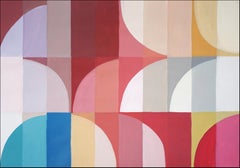
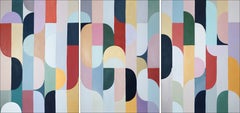
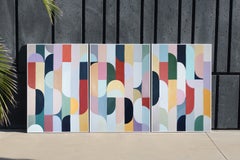
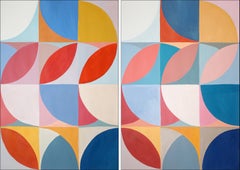
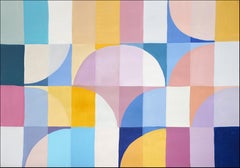
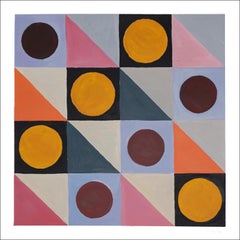
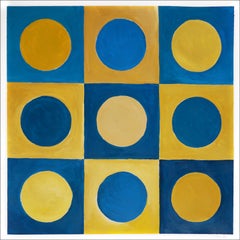
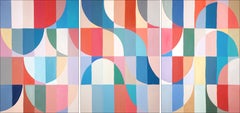
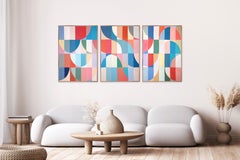
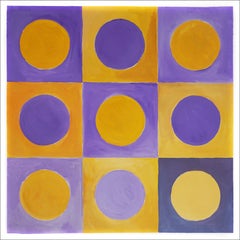
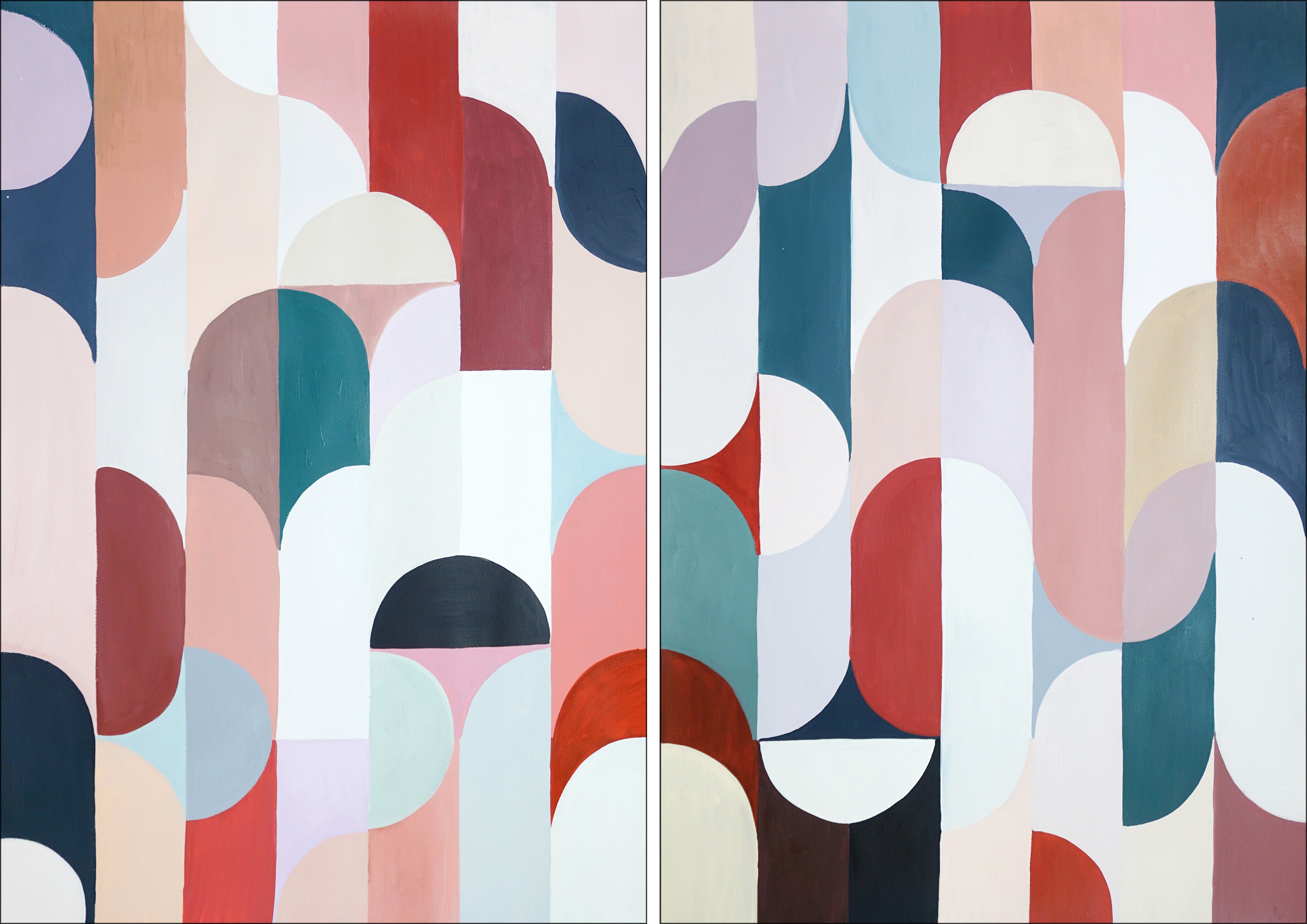
Fruit Salad Patchwork, Circles and Squares, Geometric Grid, Yellow, Blue, Pink

Fruit Salad Patchwork, Circles and Squares, Geometric Grid, Yellow, Blue, Pink

By Natalia Roman

Located in Barcelona, ES

These series of paintings by Natalia Roman gather their inspiration from geometric, minimalist shapes and paintings from the beginning of Modernism, with a special emphasis on Art De...

Category

2010s Bauhaus Art

Materials

Oil Pastel, Oil, Acrylic, Watercolor, Gouache

'Three Masted Ship, 2' – Artist's Personal Letterhead, Bauhaus Modernism

'Three Masted Ship, 2' – Artist's Personal Letterhead, Bauhaus Modernism

By Lyonel Feininger

Located in Myrtle Beach, SC

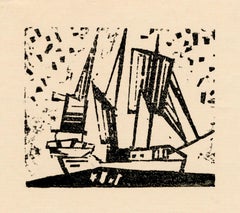
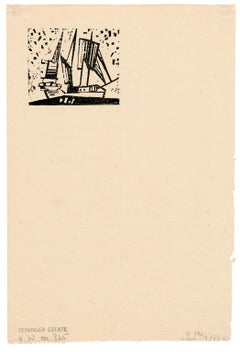
Lyonel Feininger, 'Three Masted Ship, 2 (Dreimastiges Schiff, 2)', woodcut, 1937, one of a small but unknown number of letterhead proofs; Prasse W296. Feininger estate stamp and inventory no. 'W 865' in pencil, bottom left sheet corner. Annotated 'W 296' and 'on block : 3702a' in pencil, bottom right sheet corner. A fine impression, on cream, laid, letterhead stock; hinge remains on the left and right top sheet edges, verso, in excellent condition. Very scarce. Image size 2 1/4 x 2 11/16 inches; sheet size 10 x 6 3/4 inches. Archivally sleeved, unmatted. Exhibited: 'Lyonel Feininer, Woodcuts Used As Letterheads'; Associated American Artists; Feb 4 - March 2, 1974; New York, NY. ABOUT THE ARTIST Lyonel Feininger (1871-1956) was born in New York City into a musical family—his father was a violinist and composer, his mother was a singer and pianist. He studied violin with his father, and by the age of 12, he was performing in public, but he also drew incessantly, most notably the steamboats and sailing ships on the Hudson and East Rivers, and the landscape around Sharon, Conn., where he spent time on a farm owned by a family friend. At the age of 16 he left New York to study music and art in Germany, from where his parents emigrated. Drawn more to the visual arts, he attended schools in Hamburg, Berlin, and Paris from 1887 to 1892. After completing his studies, Feininger began his artistic career as a cartoonist and illustrator, his originality leading him to great success. In 1906, after working for a dozen years in Germany, he was offered a job as a cartoonist at the Chicago Tribune, the largest circulation newspaper in the Midwest. He worked there for a year, inventing what became the standard design for the comic strip: in the words of John Carlin, “an overall pattern. . . that allowed the page to be read both as a series of elements one after the other, like language and as a group of juxtaposed images, like visual art.” His originality did not end there: he went on to become one of the great abstract painters. Like Kandinsky, music was his model, but Kandinsky only knew music from the outside—as a listener (inspired initially by Wagner, then by Schoenberg)—while Feininger knew it from the inside. He lived in Paris from 1906 to 1908, during which time he met and was influenced by the work of progressive painters Robert Delaunay and Jules Pascin, as well as that of Paul Cezanne and Vincent van Gogh. He began painting full-time, developing his distinctive Iyrical style based on Cubist and Expressionist idioms and a concern for the emotive qualities of light and color. He exhibited with the Der Blaue Reiter group in 1913, and in 1917, he had his first solo exhibition at Galerie Der Sturm in Berlin. One year after his solo exhibition, in 1918, Feininger began making woodcuts. He became enamored with the medium, producing an impressive 117 in his first year of exploring the printmaking medium. In 1919 at the invitation of the architect Walter Gropius, he was appointed the first master at the newly formed Staatliches Bauhaus in Weimar. His woodcut of a cathedral crowned...

Category

1930s Bauhaus Art

Materials

Woodcut

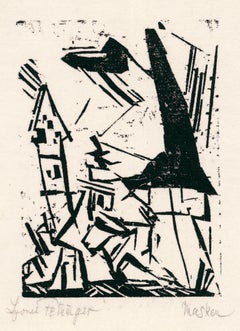
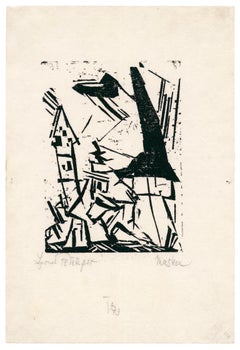
'Church with House and Tree' – Artist's Personal Letterhead, Bauhaus Modernism

'Church with House and Tree' – Artist's Personal Letterhead, Bauhaus Modernism

By Lyonel Feininger

Located in Myrtle Beach, SC

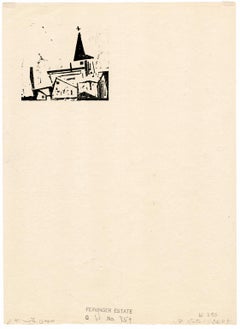
Lyonel Feininger, 'Church with House and Tree (Kirche mit Haus und Baum)', woodcut, 1936, one of a small but unknown number of letterhead proofs; Prasse W290 V. Inscribed 'J. F. note paper', in pencil, in the artist’s hand; with the Feininger estate stamp and catalog no. 'W 859' in pencil. Annotated 'W.290 V state 3609' in pencil, in the bottom right sheet corner. A fine impression, on cream, laid letterhead stock; hinge remains on the left and right top sheet edges, verso, in excellent condition. Very scarce. Image size 2 3/8 x 2 3/4 inches; sheet size 10 x 7 5/16 inches. Archivally sleeved, unmatted. Exhibited: 'Lyonel Feininer, Woodcuts Used As Letterheads'; Associated American Artists; Feb 4 - March 2, 1974; NY, NY. ABOUT THE ARTIST Lyonel Feininger (1871-1956) was born in New York City into a musical family—his father was a violinist and composer, his mother was a singer and pianist. He studied violin with his father, and by the age of 12, he was performing in public. Still, he also drew incessantly, most notably the steamboats and sailing ships on the Hudson and East Rivers, and the landscape around Sharon, Conn., where he spent time on a farm owned by a family friend. At the age of 16 he left New York to study music and art in Germany, from where his parents emigrated. Drawn more to the visual arts, he attended schools in Hamburg, Berlin, and Paris from 1887 to 1892. After completing his studies, Feininger began his artistic career as a cartoonist and illustrator, his originality leading him to great success. In 1906, after working for a dozen years in Germany, he was offered a job as a cartoonist at the Chicago Tribune, the largest circulation newspaper in the Midwest. He worked there for a year, inventing what became the standard design for the comic strip: in the words of John Carlin, “an overall pattern. . . that allowed the page to be read both as a series of elements one after the other, like language and as a group of juxtaposed images, like visual art.” His originality did not end there: he went on to become one of the great abstract painters. Like Kandinsky, music was his model, but Kandinsky only knew music from the outside—as a listener (inspired initially by Wagner, then by Schoenberg)—while Feininger knew it from the inside. He lived in Paris from 1906 to 1908, during which time he met and was influenced by the work of progressive painters Robert Delaunay and Jules Pascin, as well as that of Paul Cezanne and Vincent van Gogh. He began painting full-time, developing his distinctive Iyrical style based on Cubist and Expressionist idioms and a concern for the emotive qualities of light and color. He exhibited with the Der Blaue Reiter group in 1913, and in 1917, he had his first solo exhibition at Galerie Der Sturm in Berlin. One year after his solo exhibition, in 1918, Feininger began making woodcuts. He became enamored with the medium, producing an impressive 117 in his first year of exploring the printmaking medium. In 1919 at the invitation of the architect Walter Gropius, he was appointed the first master at the newly formed Staatliches Bauhaus in Weimar. His woodcut of a cathedral crowned...

Category

1930s Bauhaus Art

Materials

Woodcut

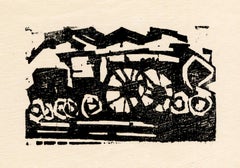
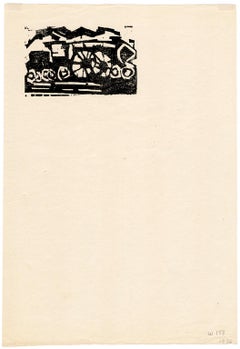
'Little Locomotive' – Artist's Personal Letterhead, Bauhaus Modernism

'Little Locomotive' – Artist's Personal Letterhead, Bauhaus Modernism

By Lyonel Feininger

Located in Myrtle Beach, SC

Lyonel Feininger, 'Little Locomotive (Kleine Lokomotive)', woodcut, 1936, one of a small but unknown number of letterhead proofs; Prasse W158. Annotated 'W 158' (Feininger catalogue number) and '1936' in pencil, in the bottom right sheet corner. A fine impression, on cream, laid letterhead stock; hinge remains on the left and right top sheet edges, verso, in excellent condition. Very scarce. Image size 2 1/4 x 3 5/16 inches; sheet size 10 x 7 inches. Archivally sleeved, unmatted. Exhibited: 'Lyonel Feininer, Woodcuts Used As Letterheads'; Associated American Artists; Feb 4 - March 2, 1974; New York, NY. Collections: Cleveland Museum of Art, Museum of Modern Art, Staatliche Museen zu Berlin (East Berlin KK). ABOUT THE ARTIST Lyonel Feininger (1871-1956) was born in New York City into a musical family—his father was a violinist and composer, his mother was a singer and pianist. He studied violin with his father, and by the age of 12, he was performing in public, but he also drew incessantly, most notably the steamboats and sailing ships on the Hudson and East Rivers, and the landscape around Sharon, Conn., where he spent time on a farm owned by a family friend. At the age of 16 he left New York to study music and art in Germany, from where his parents emigrated. Drawn more to the visual arts, he attended schools in Hamburg, Berlin, and Paris from 1887 to 1892. After completing his studies, Feininger began his artistic career as a cartoonist and illustrator, his originality leading him to great success. In 1906, after working for a dozen years in Germany, he was offered a job as a cartoonist at the Chicago Tribune, the largest circulation newspaper in the Midwest. He worked there for a year, inventing what became the standard design for the comic strip: in the words of John Carlin, “an overall pattern. . . that allowed the page to be read both as a series of elements one after the other, like language and as a group of juxtaposed images, like visual art.” His originality did not end there: he went on to become one of the great abstract painters. Like Kandinsky, music was his model, but Kandinsky only knew music from the outside—as a listener (inspired initially by Wagner, then by Schoenberg)—while Feininger knew it from the inside. He lived in Paris from 1906 to 1908, during which time he met and was influenced by the work of progressive painters Robert Delaunay and Jules Pascin, as well as that of Paul Cezanne and Vincent van Gogh. He began painting full-time, developing his distinctive Iyrical style based on Cubist and Expressionist idioms and a concern for the emotive qualities of light and color. He exhibited with the Der Blaue Reiter group in 1913, and in 1917, he had his first solo exhibition at Galerie Der Sturm in Berlin. One year after his solo exhibition, in 1918, Feininger began making woodcuts. He became enamored with the medium, producing an impressive 117 in his first year of exploring the printmaking medium. In 1919 at the invitation of the architect Walter Gropius, he was appointed the first master at the newly formed Staatliches Bauhaus in Weimar. His woodcut of a cathedral crowned...

Category

1930s Bauhaus Art

Materials

Woodcut

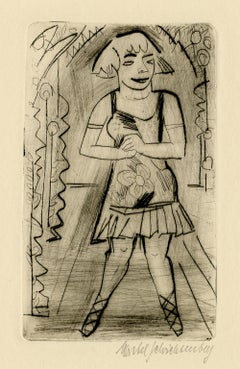
'Varietesoubrette, Schwalbennest' also Dancer — 1920s German Expressionism

'Varietesoubrette, Schwalbennest' also Dancer — 1920s German Expressionism

Located in Myrtle Beach, SC

Martel Schwichtenberg (1896-1945), 'Varietésoubrette, Schwalbennest (Variety Soubrette, Swallow’s Nest), drypoint, 1922. Signed in pencil. A fine, richly-inked impression; the full sheet of cream wove paper, with wide margins (3 3/4 to 5 1/4 inches), in excellent condition. Image size 7 3/16 x 4 5/16 inches; sheet size 16 3/8 x 12 1/8 inches. Archivally matted to museum standards, unframed. Published in Die Schaffenden...

Category

1920s Bauhaus Art
Materials

Drypoint

'Church with Star' – Artist's Personal Letterhead, Bauhaus Modernism

'Church with Star' – Artist's Personal Letterhead, Bauhaus Modernism

By Lyonel Feininger

Located in Myrtle Beach, SC

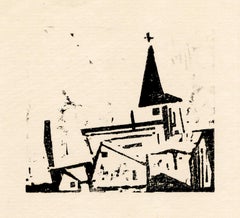
Lyonel Feininger, 'Church with Star (Kirche mit Stern)', woodcut, 1936, one of a small but unknown number of letterhead proofs; Prasse W265. Annotated 'W 265' (Feininger catalogue number) and inventory no. '2808' in pencil, in the bottom right sheet corner. A fine impression, on cream, laid letterhead stock; hinge remains on the left and right top sheet edges, verso, in excellent condition. Very scarce. Image size 2 3/8 x 2 3/8 inches; sheet size 10 1/16 x 7 1/16 inches. Archivally sleeved, unmatted. ABOUT THE ARTIST Lyonel Feininger (1871-1956) was born in New York City into a musical family—his father was a violinist and composer, his mother was a singer and pianist. He studied violin with his father, and by the age of 12, he was performing in public, but he also drew incessantly, most notably the steamboats and sailing ships on the Hudson and East Rivers, and the landscape around Sharon, Conn., where he spent time on a farm owned by a family friend. At the age of 16 he left New York to study music and art in Germany, from where his parents emigrated. Drawn more to the visual arts, he attended schools in Hamburg, Berlin, and Paris from 1887 to 1892. After completing his studies, Feininger began his artistic career as a cartoonist and illustrator, his originality leading him to great success. In 1906, after working for a dozen years in Germany, he was offered a job as a cartoonist at the Chicago Tribune, the largest circulation newspaper in the Midwest. He worked there for a year, inventing what became the standard design for the comic strip: in the words of John Carlin, “an overall pattern. . . that allowed the page to be read both as a series of elements one after the other, like language and as a group of juxtaposed images, like visual art.” His originality did not end there: he went on to become one of the great abstract painters. Like Kandinsky, music was his model, but Kandinsky only knew music from the outside—as a listener (inspired initially by Wagner, then by Schoenberg)—while Feininger knew it from the inside. He lived in Paris from 1906 to 1908, during which time he met and was influenced by the work of progressive painters Robert Delaunay and Jules Pascin, as well as that of Paul Cezanne and Vincent van Gogh. He began painting full-time, developing his distinctive Iyrical style based on Cubist and Expressionist idioms and a concern for the emotive qualities of light and color. He exhibited with the Der Blaue Reiter group in 1913, and in 1917, he had his first solo exhibition at Galerie Der Sturm in Berlin. One year after his solo exhibition, in 1918, Feininger began making woodcuts. He became enamored with the medium, producing an impressive 117 in his first year of exploring the printmaking medium. In 1919 at the invitation of the architect Walter Gropius, he was appointed the first master at the newly formed Staatliches Bauhaus in Weimar. His woodcut of a cathedral crowned...

Category

1930s Bauhaus Art

Materials

Woodcut

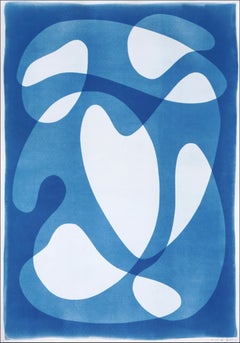
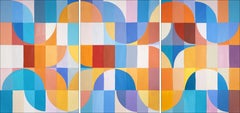
Mid-Century Shapes IV, White and Blue Abstract Floating Shapes, Unique Cyanotype

Mid-Century Shapes IV, White and Blue Abstract Floating Shapes, Unique Cyanotype

By Kind of Cyan

Located in Barcelona, ES

This is an exclusive handprinted unique cyanotype that takes its inspiration from the mid-century modern shapes. It's made by layering paper cutouts and different exposures using uv-...

Category

2010s Bauhaus Art

Materials

Photographic Film, Emulsion, Watercolor, Photographic Paper, Monotype, P...

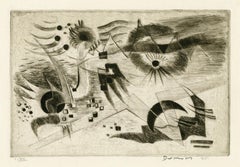
Pointed Shapes and Black Half Moon

Pointed Shapes and Black Half Moon

By Werner Drewes

Located in Myrtle Beach, SC

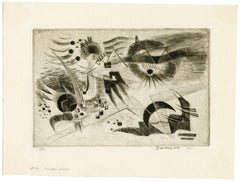
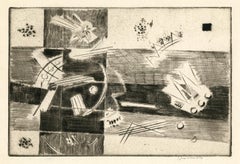
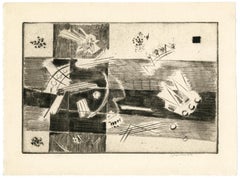
Werner Drewes, 'Pointed Shapes and Black Half Moon', etching, 1935, edition 20, Rose l.198. Signed, dated, and numbered 'I-XX' in pencil. A fine, rich impression, in warm black ink...

Category

1930s Bauhaus Art

Materials

Etching

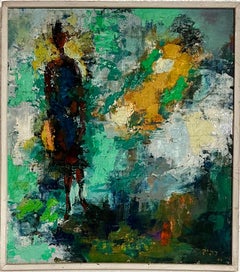
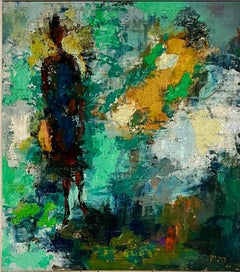
Bauhaus Moshe Raviv Moi Ver Abstract Oil Painting Lithuanian Israeli Modern

Bauhaus Moshe Raviv Moi Ver Abstract Oil Painting Lithuanian Israeli Modern

Located in Surfside, FL

Abstract, Figure of Woman, Safed Oil on Masonite. Signed. Moshé Raviv-Vorobeichic, known as Moi Ver, born Moses Vorobeichik (1904–1995) was an Israeli photographer and painter. Moi Ver (Moshe Raviv) was born in 1904 in Vilnius, Lithuania as Moshe Vorobeichic. Moshe Vorobeichic received his initial artistic training in the early 1920s in Vilnius, Lithuania, where he studied painting, architecture, and photography. Having become an important figure in the Yiddish avant-garde culture, he exhibited his first works. From October 1927, he studied at the Bauhaus school in Dessau (Germany), with photographer-visual artist Laszlo Moholy Nagy and painters Josef Albers, Paul Klee, Wassily Kandinsky, and Hinnerk Scheper. In his book Moi Ver: Paris, he produced avant-garde photomontages. Originally published in 1931 by Editions Jeanne Walter with an introduction by futurist Fernand Leger. In 1932 Raviv was sent by the weekly La Vie Parisienne to British Mandate Palestine as photo reporter. Raviv illustrated many books. Raviv was a founder of the Artists' Colony in Safed. At the height of 20th Century modernism and one of the followers of Laszlo Moholy Nagy and his concept of New Vision, Moin Ver was one of the rising stars in European photography. Born in Lebedeva, in Belarus, he wandered through Europe until he immigrated to Palestine in 1934. His well known yet partly forgotten three photographic projects in 1931, The Ghetto Lane in Wilna, Paris: 80 Photographies de Moi Ver and Ci-Contre – 110 Photos de Moi Ver (that was not published at the time), have remained milestones in the art of the 1930s as he created and imposed a new visionary style in photography. As a contemporary of artists such as Man Ray, Ilse Bing...

Category

20th Century Bauhaus Art

Materials

Oil

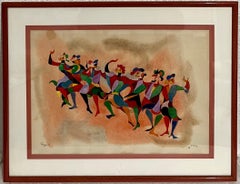
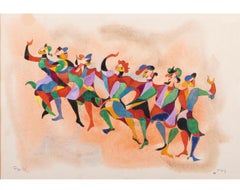
Bauhaus Moshe Raviv Moi Ver Abstract Dancing Painting Lithuanian Israeli Modern

Bauhaus Moshe Raviv Moi Ver Abstract Dancing Painting Lithuanian Israeli Modern

Located in Surfside, FL

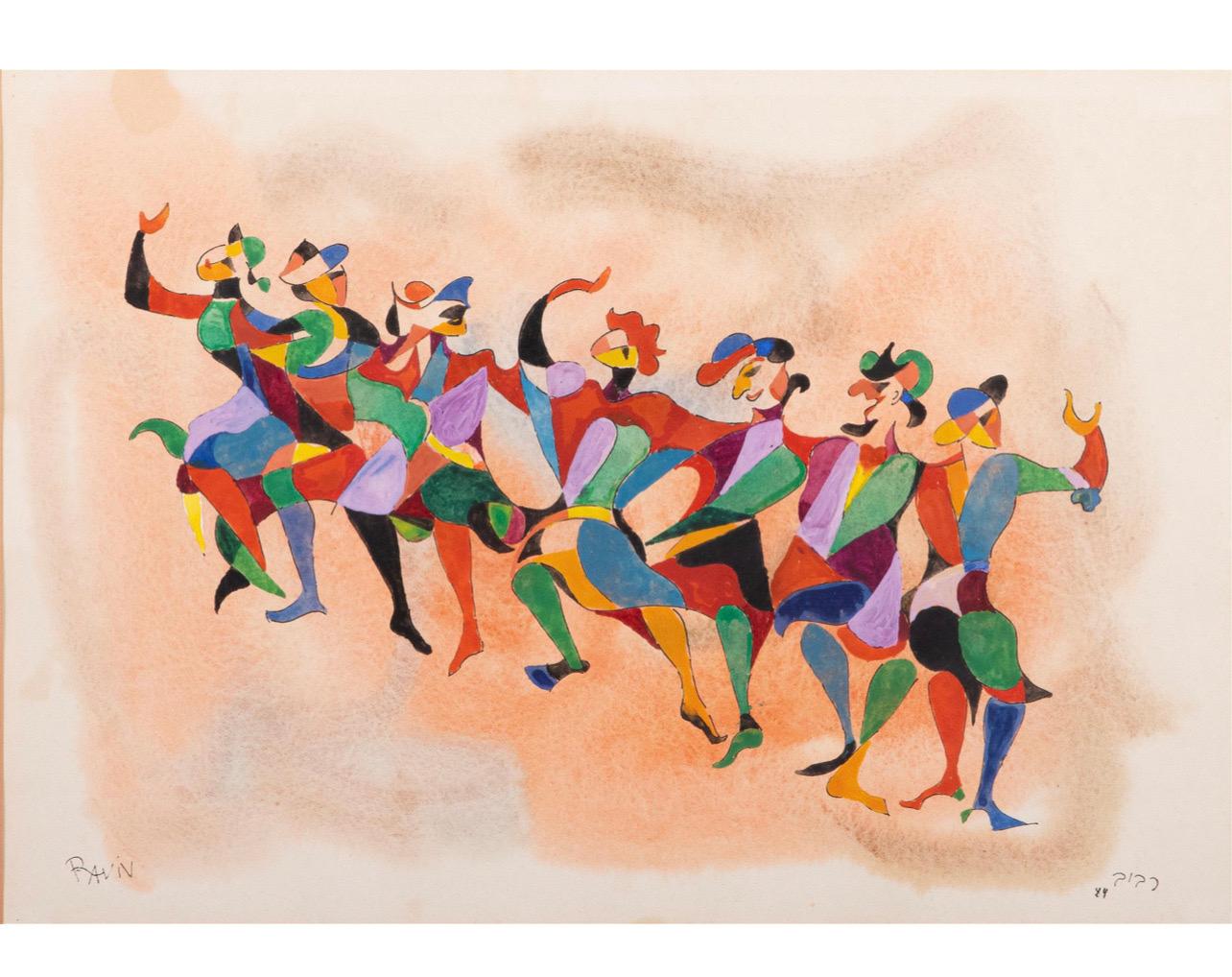
Dancing Jesters or Clowns (colorful Chassidim dancing) Gouache on paper Sheet is 19.25 X 25.25 Image is 13.5 X 19.25 Moshé Raviv-Vorobeichic, known as Moi Ver, born Moses Vorobeichik (1904–1995) was an Israeli photographer and painter. Moi Ver (Moshe Raviv) was born in 1904 in Vilnius, Lithuania as Moshe Vorobeichic. Moshe Vorobeichic received his initial artistic training in the early 1920s in Vilnius, Lithuania, where he studied painting, architecture, and photography. Having become an important figure in the Yiddish avant-garde culture, he exhibited his first works. From October 1927, he studied at the Bauhaus school in Dessau (Germany), with photographer-visual artist Laszlo Moholy Nagy and painters Josef Albers, Paul Klee, Wassily Kandinsky, and Hinnerk Scheper. In his book Moi Ver: Paris, he produced avant-garde photomontages. Originally published in 1931 by Editions Jeanne Walter with an introduction by futurist Fernand Leger. In 1932 Raviv was sent by the weekly La Vie Parisienne to British Mandate Palestine as photo reporter. Raviv illustrated many books. Raviv was a founder of the Artists' Colony in Safed. At the height of 20th Century modernism and one of the followers of Laszlo Moholy Nagy and his concept of New Vision, Moin Ver was one of the rising stars in European photography. Born in Lebedeva, in Belarus, he wandered through Europe until he immigrated to Palestine in 1934. His well known yet partly forgotten three photographic projects in 1931, The Ghetto Lane in Wilna, Paris: 80 Photographies de Moi Ver and Ci-Contre – 110 Photos de Moi Ver (that was not published at the time), have remained milestones in the art of the 1930s as he created and imposed a new visionary style in photography. As a contemporary of artists such as Man Ray, Ilse Bing...

Category

20th Century Bauhaus Art

Materials

Paper, Gouache

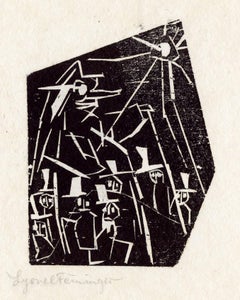
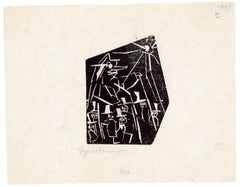
'Da - Da I' — German Expressionism, Rare

'Da - Da I' — German Expressionism, Rare

By Lyonel Feininger

Located in Myrtle Beach, SC

Lyonel Feininger, 'Da-Da I' also titled by the artist 'Der Abgott' (The Idol), woodcut, 1918, a proof impression. Prasse W91. Signed in pencil and annotated '1876', the artist’s inv...

Category

1920s Bauhaus Art
Materials

Woodcut

Self Portrait
Self Portrait

Self Portrait

By Sándor Bortnyik

Located in London, GB

Charcoal on paper, signed and dated (lower right), 33cm x 24cm, (66cm x 56cm framed). The work is framed behind UV glass and stepped gilded frame. Bortnyik was a painter and graphi...

Category

1910s Bauhaus Art
Materials

Paper, Charcoal

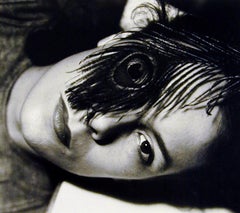
Juliet with One Peacock Feather Eye, Chicago

Juliet with One Peacock Feather Eye, Chicago

By György Kepes

Located in Denton, TX

Signed, dated and numbered. Portfolio Twelve Photographs, No. 13 György Kepes was a Hungarian artist born in 1906. He studied painting at the Budapest’s Academy of Fine Arts. In 193...

Category

1930s Bauhaus Art
Materials

Silver Gelatin

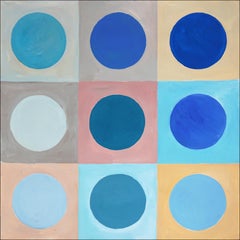
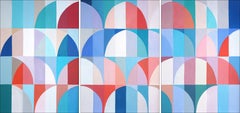
Pale Blue Dots, Primary Geometry Grid, Yellow and Blue, Complementary Tones

Pale Blue Dots, Primary Geometry Grid, Yellow and Blue, Complementary Tones

By Natalia Roman

Located in Barcelona, ES

These series of paintings by Natalia Roman gather their inspiration from geometric, minimalist shapes and paintings from the beginning of Modernism, with a special emphasis on Art Deco shapes of the 30's, 40's and 50's. The subtle but chic color combinations will combine beautifully with both vintage and modern furniture without overtaking spaces that are carefully crafted by designers. Natalia Roman was born in 1984 in Girona, Spain. She has exhibited in galleries across Europe and her colorful, abstract paintings are part of private collections all over the world. Details: Title: Pale Blue Dots...

Category

2010s Bauhaus Art
Materials

Acrylic, Handmade Paper

BENDIX ALUFROID original horizontal French poster

BENDIX ALUFROID original horizontal French poster

Located in Spokane, WA

Original Bendix Alufroid French Lithographic Vintage Poster by Hervé Morvan from the 1960s. Archival linen-backed and in very fine condition, ready for framing. Add a touch of cla...

Category

1960s Bauhaus Art
Materials

Lithograph

Small Forms On Crossing Bands

Small Forms On Crossing Bands

By Werner Drewes

Located in Myrtle Beach, SC

Werner Drewes, 'Small Forms on Crossing Bands', drypoint and roulette, 1935, edition 20, Rose 1.197. Signed in pencil. A fine, rich impression, in warm black ink, on cream wove paper...

Category

1930s Bauhaus Art
Materials

Drypoint

Römisches Offset Print by Oskar Schlemmer, Bauhaus Style, 1988

Römisches Offset Print by Oskar Schlemmer, Bauhaus Style, 1988

By Oskar Schlemmer

Located in Brooklyn, NY

This is a high-quality reproduction of Römisches (Roman), originally painted by Oskar Schlemmer in 1925, during his influential tenure at the Bauhaus. Schlemmer—celebrated for his ra...

Category

1980s Bauhaus Art
Materials

Offset

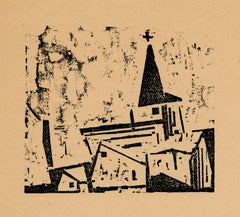
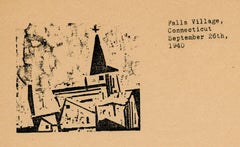
'Church with House and Tree' – Artist's Personal Letterhead, 1940s Modernism

'Church with House and Tree' – Artist's Personal Letterhead, 1940s Modernism

By Lyonel Feininger

Located in Myrtle Beach, SC

Lyonel Feininger, 'Church with House and Tree (Kirche mit Haus und Baum)', woodcut, 1936, one of a small but unknown number of letterhead proofs; Prasse W290 IV. Annotated 'PW 290 state IV / IV 3669', in pencil, in the bottom right sheet corner. With the artist's typed address and date adjacent to the letterhead image: 'Falls Village, Connecticut September 26th, 1940'. A fine impression, on buff, wove letterhead stock; several small losses, and tears, in the sheet edges (not affecting the image area); a crease in the bottom right sheet edge, otherwise in good condition. Very scarce. Image size: 2 3/8 x 2 3/4 inches; sheet size 11 x 8 5/8 inches. Archivally sleeved, unmatted. Feininger moved from Germany to New York City in 1938 and began spending his summers in Falls Village in 1940. Exhibited: 'Lyonel Feininer, Woodcuts Used As Letterheads'; Associated American Artists; Feb 4 - March 2, 1974; New York, NY. ABOUT THE ARTIST Lyonel Feininger (1871-1956) was born in New York City into a musical family—his father was a violinist and composer, his mother was a singer and pianist. He studied violin with his father, and by the age of 12, he was performing in public, but he also drew incessantly, most notably the steamboats and sailing ships on the Hudson and East Rivers, and the landscape around Sharon, Conn., where he spent time on a farm owned by a family friend. At the age of 16 he left New York to study music and art in Germany, from where his parents emigrated. Drawn more to the visual arts, he attended schools in Hamburg, Berlin, and Paris from 1887 to 1892. After completing his studies, Feininger began his artistic career as a cartoonist and illustrator, his originality leading him to great success. In 1906, after working for a dozen years in Germany, he was offered a job as a cartoonist at the Chicago Tribune, the largest circulation newspaper in the Midwest. He worked there for a year, inventing what became the standard design for the comic strip: in the words of John Carlin, “an overall pattern. . . that allowed the page to be read both as a series of elements one after the other, like language and as a group of juxtaposed images, like visual art.” His originality did not end there: he went on to become one of the great abstract painters. Like Kandinsky, music was his model, but Kandinsky only knew music from the outside—as a listener (inspired initially by Wagner, then by Schoenberg)—while Feininger knew it from the inside. He lived in Paris from 1906 to 1908, during which time he met and was influenced by the work of progressive painters Robert Delaunay and Jules Pascin, as well as that of Paul Cezanne and Vincent van Gogh. He began painting full-time, developing his distinctive Iyrical style based on Cubist and Expressionist idioms and a concern for the emotive qualities of light and color. He exhibited with the Der Blaue Reiter group in 1913, and in 1917, he had his first solo exhibition at Galerie Der Sturm in Berlin. One year after his solo exhibition, in 1918, Feininger began making woodcuts. He became enamored with the medium, producing an impressive 117 in his first year of exploring the printmaking medium. In 1919 at the invitation of the architect Walter Gropius, he was appointed the first master at the newly formed Staatliches Bauhaus in Weimar. His woodcut of a cathedral crowned...

Category

1930s Bauhaus Art
Materials

Woodcut

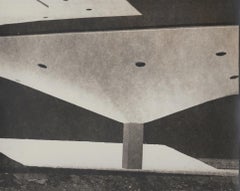
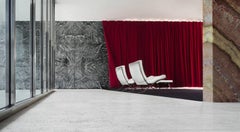
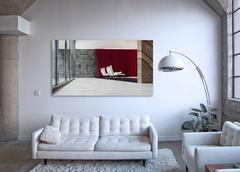
Barcelona - interior architecture and furniture of iconic midcentury pavillion

Barcelona - interior architecture and furniture of iconic midcentury pavillion

By Frank Schott

Located in San Francisco, CA

A serene interior photograph of iconic furniture inside an architectural masterpiece, the mid century modern "Barcelona Pavilion", designed by Ludwig Mies van der Rohe, director of t...

Category

21st Century and Contemporary Bauhaus Art
Materials

Archival Pigment, Archival Paper, Photographic Paper, Giclée

Twin Formation in Gray

Twin Formation in Gray

By Werner Drewes

Located in Myrtle Beach, SC

Twin Formation in Gray, color woodcut, 1982, edition 30, Rose III.400. Signed, dated and numbered I7/XXX in pencil, annotated 415 and titled in the bottom left sheet edge. A fine impression with fresh, rich colors, on heavy off-white Japan paper; the full sheet with wide margins (1 3/4 to 3 1/4 inches), in good condition. Printed in black, dark gray, medium gray, yellow/orange, and lemon yellow. Matted to museum standards, unframed. An impression of this work is included in the permanent collection of the Smithsonian American Art Museum. ABOUT THE ARTIST Painter, printmaker, and art teacher, Werner Drewes (1899–1985) was among the founding fathers of American abstraction. A student at the famed Bauhaus in the 1920s, he studied under Lyonel Feininger, Paul Klee, Laszlo Moholy-Nagy and Wassily Kandinsky. Following his emigration to the United States in 1930, he was instrumental in introducing modernist Bauhaus concepts and esthetics to America. Drewes’ boldly dynamic and emotionally expressive work, which encompassed both non-objective and figurative genres, brought him critical acclaim and numerous gallery and institutional exhibitions throughout his artistic career. Drewes' graphic work can be found in most major American art museums including, the Ackland Art Museum, The Art Institute of Chicago, Bauhaus Archive...

Category

Late 20th Century Bauhaus Art
Materials

Woodcut

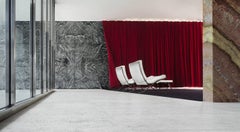
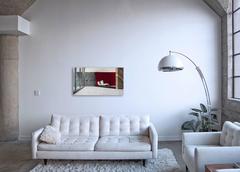
Barcelona - interior architecture and furniture of iconic midcentury pavillion

Barcelona - interior architecture and furniture of iconic midcentury pavillion

By Frank Schott

Located in San Francisco, CA

Limited edition architectural interior photograph of the iconic mid century modern "Barcelona Pavilion", designed by Ludwig Mies van der Rohe, director of the Bauhaus, who envisioned...

Category

21st Century and Contemporary Bauhaus Art
Materials

Photographic Paper, Archival Pigment, Archival Ink, Archival Paper, Giclée

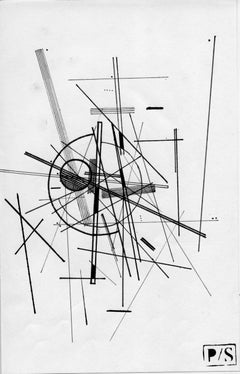
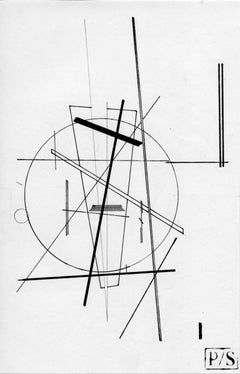
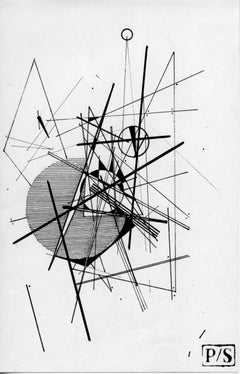
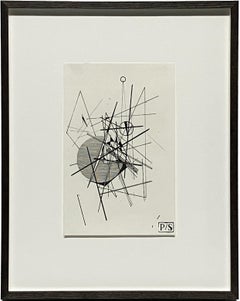
Bauhaus Inspired, Black & White "Composition #17" by Artist Paarshav Shah

Bauhaus Inspired, Black & White "Composition #17" by Artist Paarshav Shah

Located in Chicago, IL

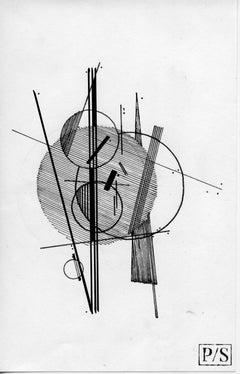
Bauhaus inspired, Black and white, Abstract Geometric, Architectural, deconstructionist drawing by Chicago artist and architect Paarshav Shah. Stamped signature P/S, lower right. Ar...

Category

21st Century and Contemporary Bauhaus Art
Materials

Ink, Paper

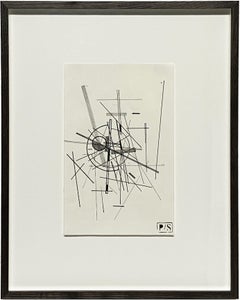
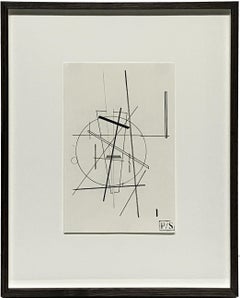
Bauhaus Inspired, Black & White Composition #15 by Artist Paarshav Shah

Bauhaus Inspired, Black & White Composition #15 by Artist Paarshav Shah

Located in Chicago, IL

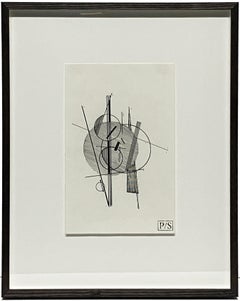
Bauhaus inspired, black and white, Abstract Geometric, architectural, deconstructionist drawing by Chicago artist and architect Paarshav Shah. Artwork size: 5 1/2" x 8 1/2". Fram...

Category

21st Century and Contemporary Bauhaus Art
Materials

Ink, Paper

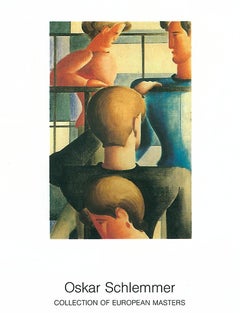
Oskar Schlemmer 'Gruppe Am Gelander' 1988- Vintage

Oskar Schlemmer 'Gruppe Am Gelander' 1988- Vintage

By Oskar Schlemmer

Located in Brooklyn, NY

This is a high-quality reproduction of Gruppe am Geländer (Group at the Railing), a painting by German artist Oskar Schlemmer originally created in 1931. Schlemmer, a central figure ...

Category

1980s Bauhaus Art
Materials

Offset
Slot Canyon Tree, NM

Slot Canyon Tree, NM

By Gerard Giliberti

Located in East Hampton, NY

This tree is in the slot canyon section on upward path to the magnificent Tent Rock landscape, The rock formations are over 6,00 feet above sea level in the Kasha-Katuwe Tent Rocks N...

Category

2010s Bauhaus Art
Materials

Archival Pigment

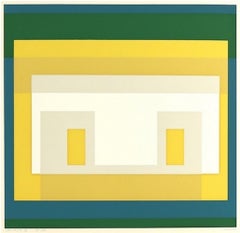
Variables
Variables

Variables

By Ed Touchette

Located in Gloucester, MA

Ed Touchette (b. 1948) is inspired by a love of architecture and public spaces to make paintings which express joyful wonder at our built environment — ol...

Category

2010s Bauhaus Art
Materials

Canvas, Acrylic

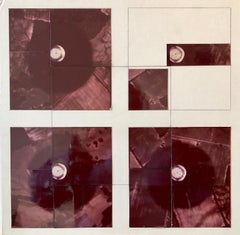
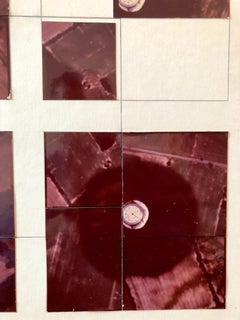
Fluid Patterns

Fluid Patterns

By György Kepes

Located in Denton, TX

Signed, dated and numbered. Portfolio "Twelve Photographs", No. 13 György Kepes was a Hungarian artist born in 1906. He studied painting at Budapest’s Academy of Fine Arts. In 1937,...

Category

1940s Bauhaus Art
Materials

Silver Gelatin

Bauhaus art for sale on 1stDibs.
Find a wide variety of authentic Bauhaus art available for sale on 1stDibs. Works in this style were very popular during the 21st Century and Contemporary, but contemporary artists have continued to produce works inspired by this movement. If you’re looking to add art created in this style to introduce contrast in an otherwise neutral space in your home, the works available on 1stDibs include elements of purple, orange, blue, green and other colors. Many Pop art paintings were created by popular artists on 1stDibs, including Natalia Roman, Brigitte Parusel, Lyonel Feininger, and Werner Drewes. Frequently made by artists working with Paint, and Watercolor and other materials, all of these pieces for sale are unique and have attracted attention over the years. Not every interior allows for large Bauhaus art, so small editions measuring 2.38 inches across are also available. Prices for art made by famous or emerging artists can differ depending on medium, time period and other attributes. On 1stDibs, the price for these items starts at $120 and tops out at $203,691, while the average work sells for $840.