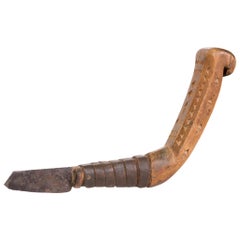
Antique Crooked Knife

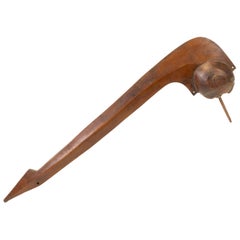
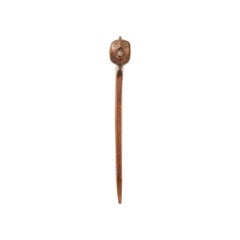
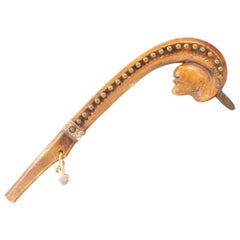
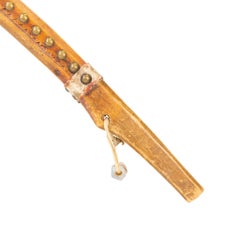
Eastern Woodland Crooked Knife

Eastern Woodland Crooked Knife

$1,100

H 9.25 in W 1.75 in D 9.25 in

Eastern Woodland Crooked Knife

Located in Coeur d'Alene, ID

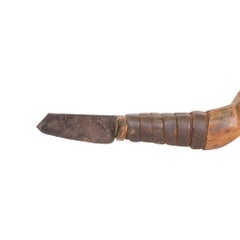
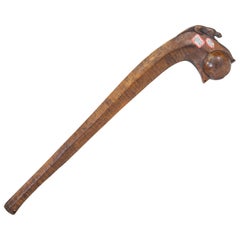
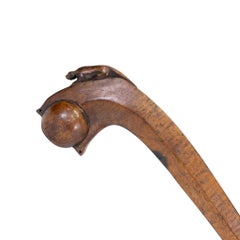
Eastern woodland crooked knife. Solid handle having an exquisite hand chipped carved American Folk

Category

Mid-19th Century American Native American Antique Crooked Knife

Materials

Wood

People Also Browsed

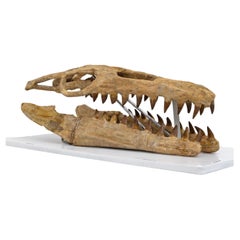
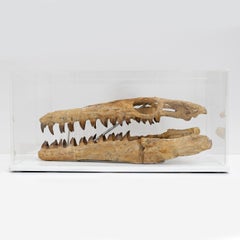
Fossilised Skull of Prehistoric Marine Reptile the Mosasaur, 70Million Years Ago

Fossilised Skull of Prehistoric Marine Reptile the Mosasaur, 70Million Years Ago

Located in Puglia, Puglia

Upper Cretaceous, about 70-65 million years ago (Maastrichtian) Morocco The skull is reconstructed in good proportions with fossil pieces found in a phosphate mine in Morocco. I att...

Category

15th Century and Earlier African Antique Crooked Knife

Materials

Bone

Northern Plains Pictorial Scabbard

Northern Plains Pictorial Scabbard

$4,500

H 48 in W 8 in D 8 in

Northern Plains Pictorial Scabbard

Located in Coeur d'Alene, ID

Rifle scabbard on brain tanned elk. Exceptional beading. Warrior with double trailer headdress. Coupstick on war pony one side, two florals on reverse. Period: Mid-20th Century Ori...

Category

Mid-20th Century American Native American Antique Crooked Knife

Materials

Hide

19th Century Sioux Bow, Arrows and Beaded Quiver Case

19th Century Sioux Bow, Arrows and Beaded Quiver Case

By Sioux Indian Art

Located in Coeur d'Alene, ID

Sioux bow and quiver with beaded bands on top and bottom on both bow and quiver case. Bow 46" of bodack with original sinew string and three 24" matching arrows, two having 2 1/2" or...

Category

Late 19th Century American Native American Antique Crooked Knife

Materials

Other

19th Century Native American Ball Head War Club

19th Century Native American Ball Head War Club

Located in Coeur d'Alene, ID

Ball headed war club of walnut with carved panther effigy. The panther is rare and a powerful warrior symbol that has different interpretations "He who kills with one blow" and "A po...

Category

Late 19th Century American Native American Antique Crooked Knife

Materials

Other

19th Century Northern Plains Spontoon Pipe Tomahawk

19th Century Northern Plains Spontoon Pipe Tomahawk

Located in Coeur d'Alene, ID

Northern Plains spontoon style pipe tomahawk with solid brass head, carved and file burnt and painted original haft. Period: 19th century Origin: Northern Plains Size: Head 11 1/2",...

Category

Mid-19th Century American Native American Antique Crooked Knife

Materials

Iron

19th Century Eastern Ball Headed War Club

19th Century Eastern Ball Headed War Club

$12,000

H 24 in W 4 in D 4 in

19th Century Eastern Ball Headed War Club

Located in Coeur d'Alene, ID

Eastern (most probably Mohawk), circa 1880-1890, ball headed war club with antler spike. Still shows file rasp marks from carving. Decorated with dots and bird tracks. Made of fir. G...

Category

Mid-19th Century American Native American Antique Crooked Knife

Materials

Wood

Native American Chippewa Catlinite T-Pipe

Native American Chippewa Catlinite T-Pipe

$24,200

H 36 in W 4 in D 6 in

Native American Chippewa Catlinite T-Pipe

By Native American Art

Located in Coeur d'Alene, ID

19th century Chippewa pipe with weeping hearts. Long stem Chippewa T-pipe with file burnt stem and steatite bowl having red Catlinite weeping hearts and pewter inlay. The bowl is squ...

Category

Mid-19th Century American Native American Antique Crooked Knife

Materials

Other

Adorned Iron 19th Century Pipe Tomahawk

Adorned Iron 19th Century Pipe Tomahawk

$25,000

H 21 in W 18 in D 3 in

Adorned Iron 19th Century Pipe Tomahawk

Located in Coeur d'Alene, ID

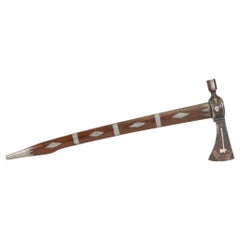
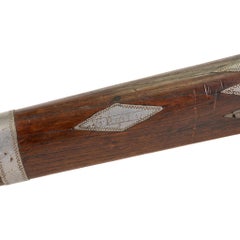
Heavily adorned presentation grade pipe tomahawk with pewter inlaid fish, moon, acorn and war axe on cast iron blade. Period: Mid-19th century Origin: Eastern, US Size: Head 18", ov...

Category

Mid-19th Century American Native American Antique Crooked Knife

Materials

Iron

19th Century Northern Plains Gun Stock Club

19th Century Northern Plains Gun Stock Club

Located in Coeur d'Alene, ID

Gunstock club with carved and painted feather carvings at top, lines with red paint, 4" blade, original trade point. A real weapon of tiger maple. Exceptional patina. Period: 19th c...

Category

19th Century American Native American Antique Crooked Knife

Materials

Maple

19th Century Eastern Ball Headed Club

19th Century Eastern Ball Headed Club

$15,000

H 21 in W 2.5 in D 2.5 in

19th Century Eastern Ball Headed Club

Located in Coeur d'Alene, ID

Eastern ball headed war club of native walnut with carved face having square nailed spike set in lead. Ex. Norm Johnson Estate. Period: Mid-19th century Origin: Eastern, US Size: 21...

Category

Mid-19th Century American Native American Antique Crooked Knife

Materials

Wood

Get Updated with New Arrivals
Save "Antique Crooked Knife", and we’ll notify you when there are new listings in this category.

A Close Look at Native-american Furniture

Native American broadly describes any Indigenous people in North America and encompasses hundreds of tribes and groups, all with distinct cultures. Native American–style furniture and decor likewise varies widely, from pieces created by Indigenous people to those appropriated by non-native designers.

Indigenous furniture’s rich heritage includes the bentwood boxes of the Northwest Coast carved from cedar for storing household or ceremonial objects. Generations of Native American people have made baskets for holding household items, with those in the Northeast using sweetgrass and those in the Southeast using pine needles and wicker. Artisans in the Plateau region wove watertight pieces like cradles from plant materials. Although these objects were intricately made, they were usually utilitarian rather than decorative.

The colonization of North America and the removal of Indigenous people from their lands led to the suppression of these practices. Many styles that used Native American motifs — such as Southwestern style, which was heavily influenced by the geometric patterns of Navajo textiles — have historically not involved Indigenous creators and, instead, have taken their traditions without their tribal context.

When decorating a home with Native American–style furniture, it is important to do so respectfully, by understanding the origins of motifs and objects and examining who profits from their sale. There are now Indigenous-led companies, such as Cherokee designer Cray Bauxmont-Flynn’s Amatoya and Totem House Design, promoting Indigenous work in furniture and home decor. Supporting Indigenous artists and artisans is essential to confronting the still pervasive issue of cultural appropriation in design.

Find a collection of Native American living room furniture, folk art, rugs and carpets, decorative objects and other items on 1stDibs.

Finding the Right Native-american-objects for You

As part of thoughtful home decor, antique and vintage Native American objects — works created by Native American artists and artisans — can bring rich textures and colors into a space.

Art collecting can be done in a socially and environmentally conscious way that reinvests in local communities. Tribal art is traditionally crafted with earth-friendly materials that respect the environment.

Textiles have long been objects of art and utility for Native Americans. Traditional weaving techniques involve material made from plant and animal fibers. Different tribes have woven distinctive patterns and colors into blankets, rugs and garments, such as the vibrant geometric shapes woven from wool by the Navajo.

After metal and glass beads were introduced to North America by Europeans, they became a popular form of art. Intricate beading appears on clothing, jewelry and other objects. Beadwork not only looks stunning, but it is also deeply emblematic of Native American ethnicity and can be used to pass stories handed down from generation to generation. Beaded garments have often been commissioned for important events like weddings, dances and celebrations.

Native Americans initially created pottery out of necessity to carry water and store food. For centuries, artists have decorated jugs, vases and other vessels, from designs etched into clay to experimentation with firing methods for unique finishes.

Find a diverse collection of colorful and culturally enriching antique and vintage Native American decorative items, objects and much more on 1stDibs.