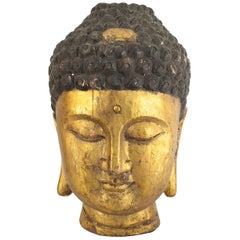
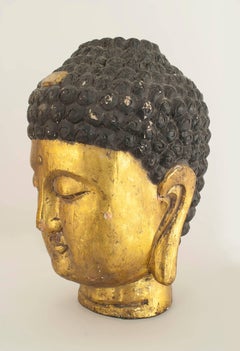
Sculpture of Asian Chinese Style Large Carved Head of Buddha
Located in Queens, NY
Sculpture of Asian Chinese style large carved bust (head) of Buddha with carved black hair.
Category
Mid-20th Century Busts
Materials
Wood
Sculpture of Asian Chinese Style Large Carved Head of Buddha
Located in Queens, NY
Sculpture of Asian Chinese style large carved bust (head) of Buddha with carved black hair.
Wood
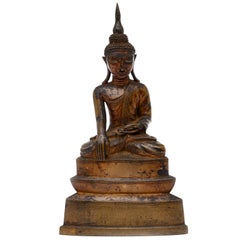
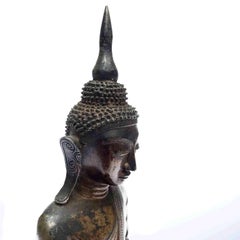
Burma Shan 18th Century Bronze Buddha Seated on a Three Tiers Base
Located in Milano, MI
A Burmese 18th century bronze Buddha with small pointed hair locks Shwebo Thorns, on top attached
Bronze
Sold
H 13 in W 9.5 in D 8 in
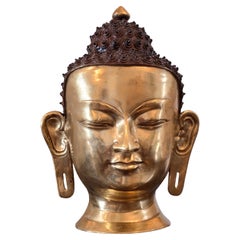
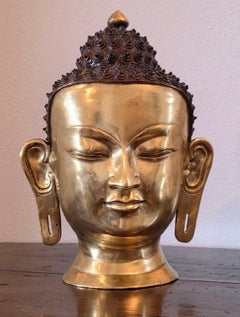
Large Life-size South Asian Nepali Gilded Patinated Brass Buddha Head Statue
Located in Forney, TX
certainly Nepali work, the large scale Buddhist Buddha depicted with intricate spiral snail hair that
Brass, Bronze

A Buddha statue is very personal. You should choose one that speaks to you. If you are a practitioner, you can ask your teacher for assistance as well.
The most commonly represented Buddha in Chinese Buddhist sculpture is Siddhartha Gautama, also known as Shakyamuni, the Enlightened One, or the Gautama Buddha. He is typically depicted seated upon a lotus throne with his hands in the Bhumisparsha mudra, the Gesture of Witness. This gesture symbolizes the moment that the Buddha claimed the earth as witness to his enlightenment and celebrates his unwavering meditative focus.
Buddha statues are not inherently lucky or unlucky, though images of the Fat Buddha (Budai or Hotei), have come to be associated with wealth, knowledge, and luck, with people often rubbing the belly or head.

Most ritual figures depict the Buddha in one of three postures: seated, standing, or reclining. Differences in expression, hand gesture (mudras), and accompanying objects can reveal the figure’s place of origin as well as the particular Buddhist teaching depicted. Such Buddha figures are rendered in a variety of media depending on regional art traditions and intended use, ranging from carved stone to cast bronze to lacquered bamboo.