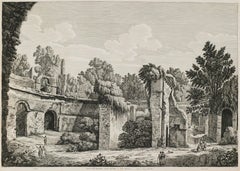
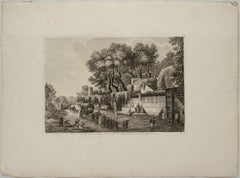
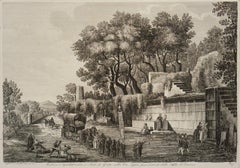
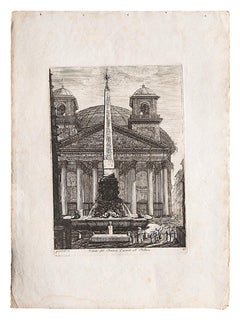
You are likely to find exactly the engraving rossini you’re looking for on 1stDibs, as there is a broad range for sale. If you’re looking for an engraving rossini from a specific time period, our collection is diverse and broad-ranging, and you’ll find at least one that dates back to the 19th Century while another version may have been produced as recently as the 20th Century. If you’re looking to add an engraving rossini to create new energy in an otherwise neutral space in your home, you can find a work on 1stDibs that features elements of
beige,
gray and more. There have been many interesting engraving rossini examples over the years, but those made by
Luigi Rossini are often thought to be among the most thought-provoking. Artworks like these of any era or style can make for thoughtful decor in any space, but a selection from our variety of those made in
engraving can add an especially memorable touch.
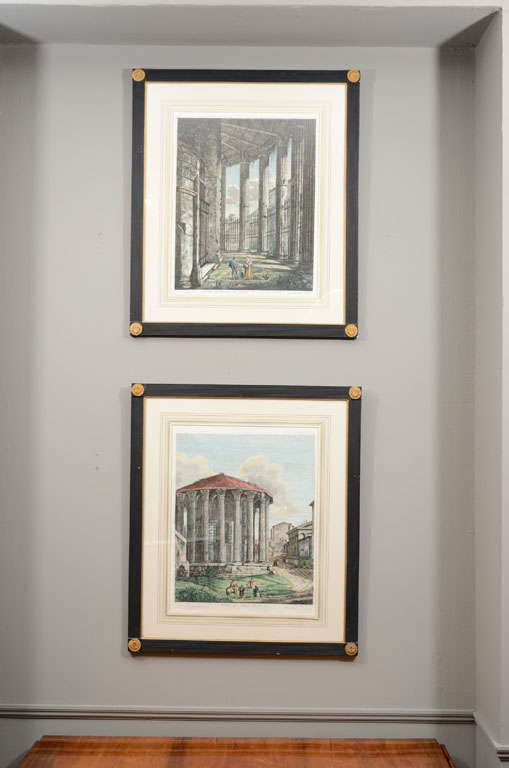
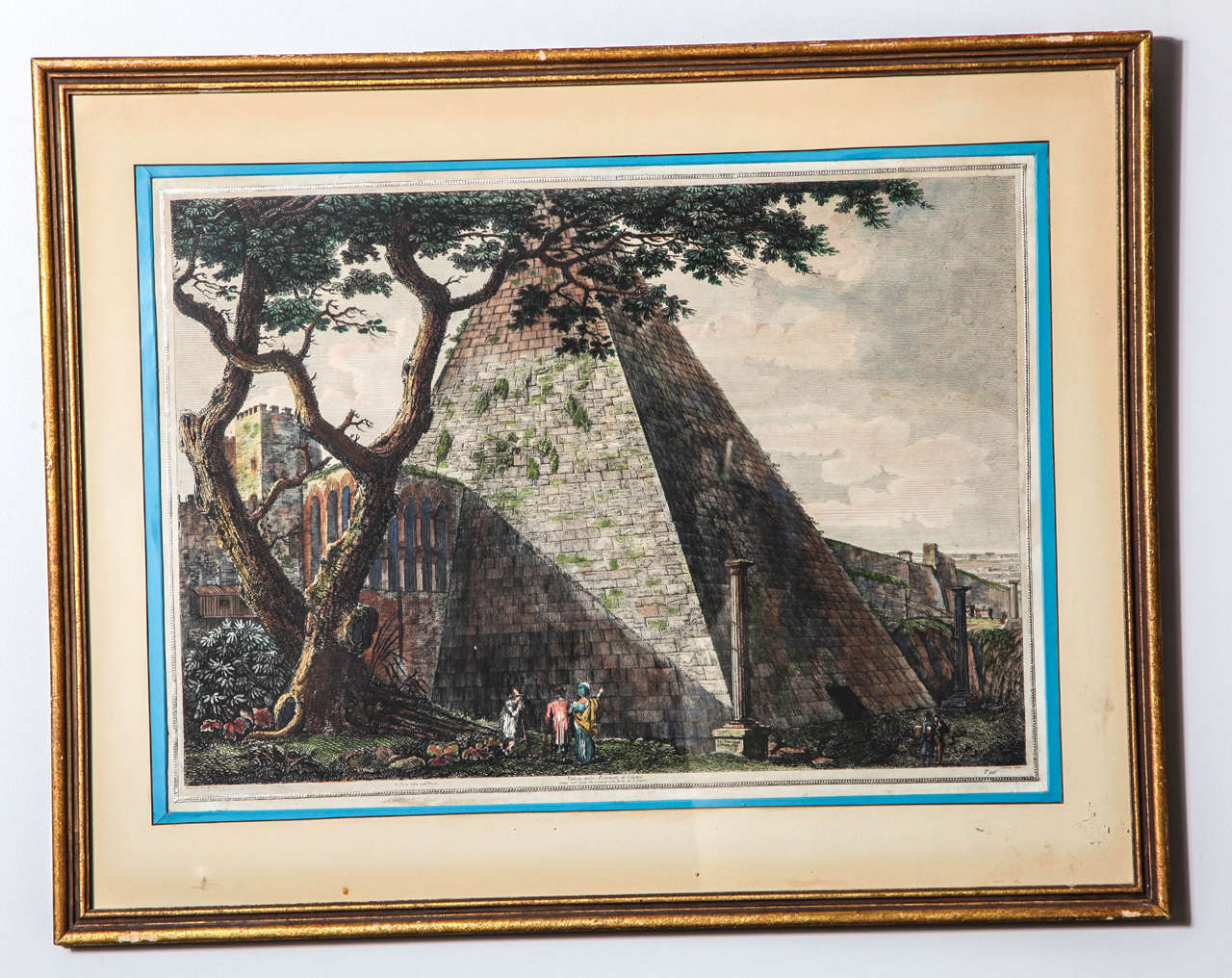
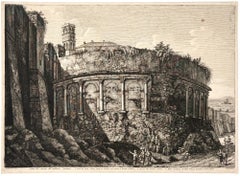
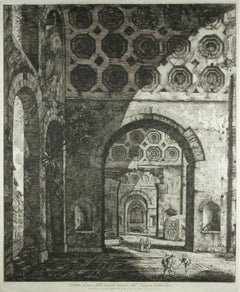
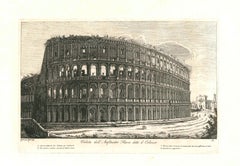
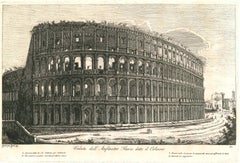
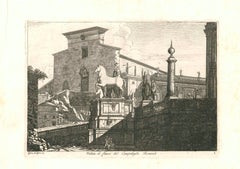
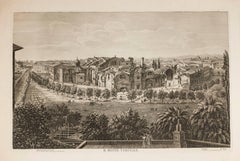
Luigi Rossini (1790-1857) like his predecessors, Giovanni Piranesi (1720–1778) and Giuseppi Vasi (1710-1782), was an architect and artist. Like Piranesi and Vasi, he wanted to glorify the architecture of ancient Rome, which he felt was deteriorating and needed to be documented. Several of the ruins he illustrated have, in fact, since disappeared leaving only his images as a record of their appearance. His images of the grand edifices of the city dramatically depict the power and glory of ancient Rome reflected by its architecture, but were accurate enough to be used by practicing architects, as well as other serious students of classical antiquity. His art continues to influence and inspire architects, artists and those who love Rome.
Rossini was born in Rome and trained at the Academy of Bologna. Upon graduation, he moved to Rome and attempted a career as an architect. As he was not economically successful as an architect, he became a full-time artist, initially producing souvenirs for local collectors, wealthy and aristocratic European tourists on the Grand Tour, as well as for architectural students and practitioners all over Europe. Many of his prints were published in several imperial folio sized collections, including Le Anchita Romane (The Rome of Antiquity).