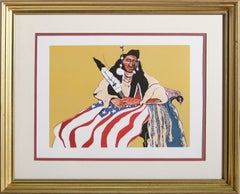
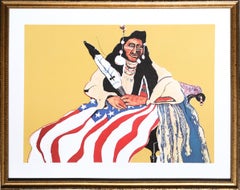
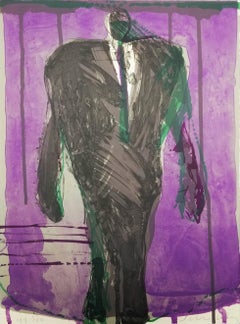
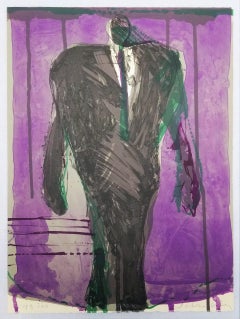
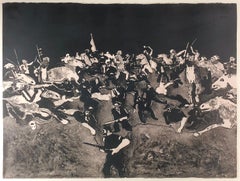
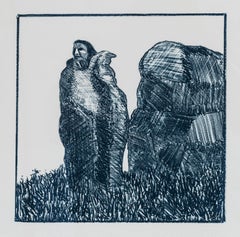
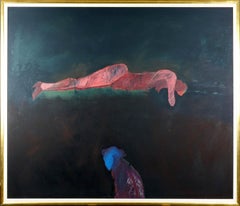
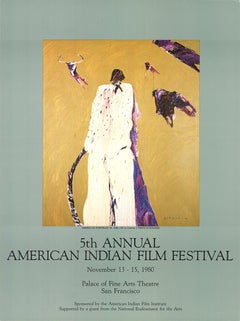
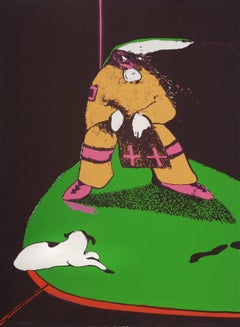
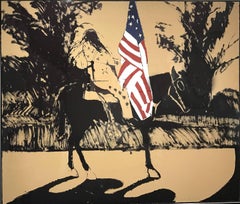
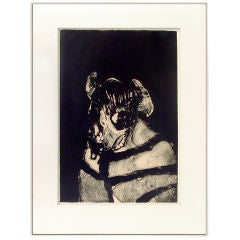
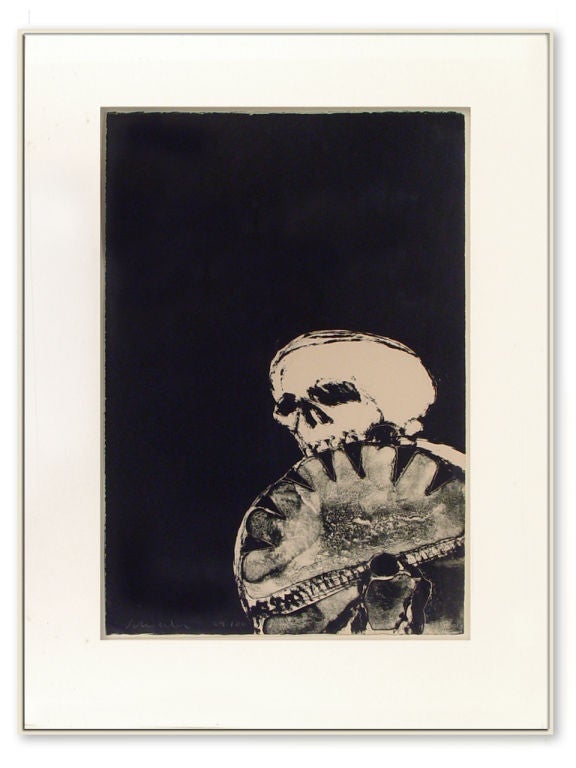
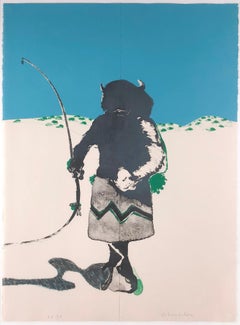
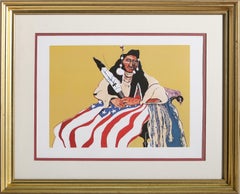
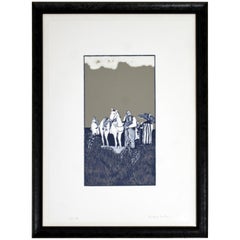
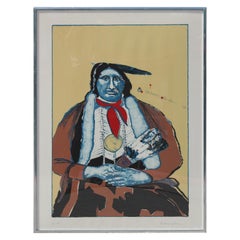
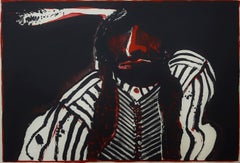
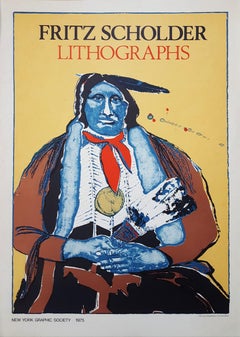
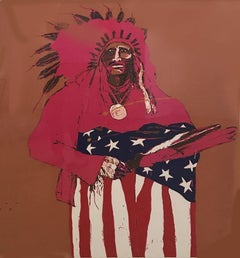
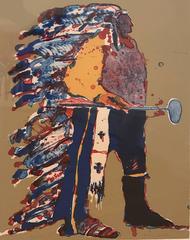
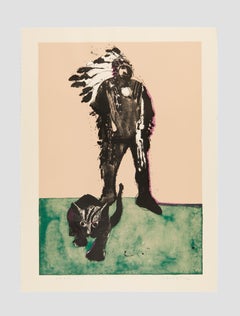
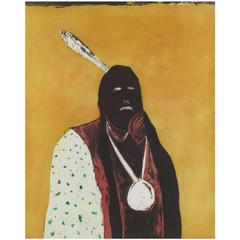
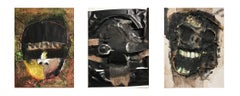
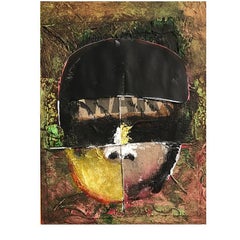
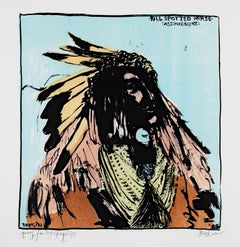
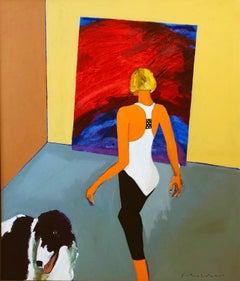
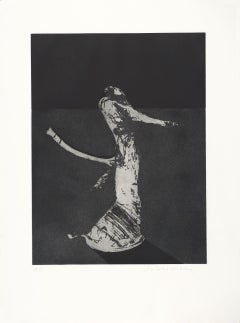
Surely you’ll find the exact fritz indian you’re seeking on 1stDibs — we’ve got a vast assortment for sale. Find
Expressionist versions now, or shop for
Expressionist creations for a more modern example of these cherished works. You’re likely to find the perfect fritz indian among the distinctive items we have available, which includes versions made as long ago as the 20th Century as well as those made as recently as the 21st Century. If you’re looking to add a fritz indian to create new energy in an otherwise neutral space in your home, you can find a work on 1stDibs that features elements of
brown,
beige,
black,
orange and more. A fritz indian from
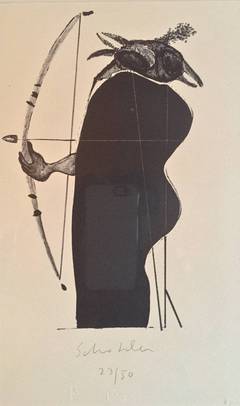
Fritz Scholder — each of whom created distinctive versions of this kind of work — is worth considering. Artworks like these — often created in
lithograph and
offset print — can elevate any room of your home.
A fritz indian can differ in price owing to various characteristics — the average selling price for items in our inventory is $3,250, while the lowest priced sells for $300 and the highest can go for as much as $15,000.
Fritz Scholder was born in Breckenridge, Minnesota, on October 6, 1937. Scholder was a prominent Indian portrait, figure and genre painter in Arizona. His father was part Indian and Fritz Scholder chose to focus his artwork on this part of his lineage and to express both an appreciation and disdain for Indian customs, traditions and daily existence. In his childhood, where he was the fifth sibling in a primarily German family, he showed a passion for collecting, which has dominated his largely autobiographical art. He studied at the University of Kansas, Wisconsin State University and with Wayne Thiebaud at Sacramento College in California. He earned a master of fine arts degree from the University of Arizona. A long-time resident of Scottsdale, Arizona, he has filled several artist-in-residence positions including Dartmouth College and the Oklahoma Summer Arts Institute. In his work, he frequently showed the harsh, realistic side of Indians' lives and deaths including the effects of alcohol and other dissipations, but some of his depictions are humorous such as Indians on horseback carrying umbrellas. His brush-work is generally swift, and the tone often somber and surreal. A major influence on his work was the contemporary British artist, Francis Bacon, from whom Scholder adapted ironic distortions into his canvases. In Scottsdale, he lived in an adobe-walled oasis of palm trees and oleander, amid skulls and skeletons. In the garden, several of Mr. Scholder's sculptures feature skull-like heads. In the library, an 18th-century skull engraved with witchcraft symbols shared shelf space with books printed before 1500. And the porch had been converted into a skull room, complete with Mexican Day of the Dead paraphernalia that spill from cabinets and rest on shelves and antique chairs. In a New York Times interview of August 12, 2001, Scholder said that despite the death-related items with which he surrounds himself, “I consider myself a natural optimist which might be surprising because I like the dark side of things. That's simply because of intellectual curiosity. I celebrate each day. I truly wake up happy every morning”. In appearance, he was rather a heavy set with shoulder-length hair and a radiant smile. He was shy and idiosyncratic including the driving of a gold 1979 Rolls-Royce fitted with tinted windows. His career includes etchings, aquatints, lithographs, monotypes, photographs, collages, sculptures and mixed media, but he is best known for his paintings. He was married to Lisa Markgraf Fisher and had one son. In his artwork, death had been a constant preoccupation for Scholder. He said, “Death is completely fearful, terrible violence that intrudes into what people believe. It's not what I want to think about, but it's there and is either the worst practical joke in the creation or the fault of whoever made all this up”. Fritz Scholder died February 10, 2005, at age 67 in Scottsdale, and a memorial service was held at the Heard Museum in Phoenix.