Peter Handel For Sale on 1stDibs
Find the exact peter handel you’re shopping for in the variety available on 1stDibs. If you’re looking for a peter handel from a specific time period, our collection is diverse and broad-ranging, and you’ll find at least one that dates back to the 20th Century while another version may have been produced as recently as the 21st Century. When looking for the right peter handel for your space, you can search on 1stDibs by color — popular works were created in bold and neutral palettes with elements of
gray,
black,
beige and
white. Creating a peter handel has been a part of the legacy of many artists, but those crafted by
Peter Handel are consistently popular. These artworks were handmade with extraordinary care, with artists most often working in
digital print,
giclée print and
inkjet print. A large peter handel can prove too dominant for some spaces — a smaller peter handel, measuring 18.51 high and 12.96 wide, may better suit your needs.
How Much is a Peter Handel?
The price for a peter handel in our collection starts at $394 and tops out at $525 with the average selling for $420.
Peter Handel for sale on 1stDibs
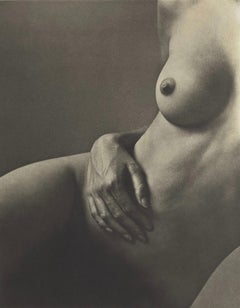
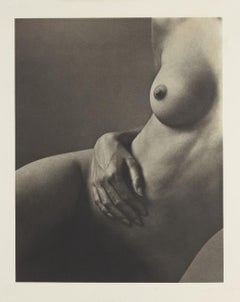
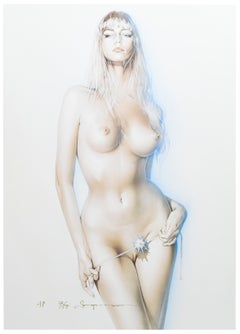
Peter Handel is an artist of international format and was born in 1949 in Anklam, East Germany. 1968 - 1971 studied art and sports, 1977 - 1982 teaching position at the GHS Duisburg, since 1979 freelance artist.
Handels' art developed out of the American photorealism movement of the 1970s, in which the visual reality of everyday life is depicted realistically, without the intervention of emotion. He transforms his nude photographs into hyper-realistic paintings and graphics that play with the mutual conditionality of reality-representing or reality-simulating images and media art.
Through meticulous imitation, Handel thus reflects on the photographic image and its sign-like quality, often on an additional level of reality when there are apparently pasted or hung photographs next to the painted level.
The encounter with the painter Peter Handel reveals an old-masterly skill. In the creative process of the highly realistic nudes, light and shadow, plasticity and form are modulated with several layers as well as by glazing application. Handel slowly approaches his painting and in a subjective way arrives at an independent result.
Fascinated by the possibilities of painting, Handel confronts and discusses different levels of reality - realistic and idealistic - leaving behind the objective level of pure depiction.
Peter Handel's works are represented in numerous exhibitions: 1972 - 1975 Wilhelm Lehmbruck-Museum, Duisburg; 1979 "Miami international print bienal", USA ; 1981 Museum Portsmouth, England; 2009 C T Gallery, Seoul; 2011 - 2019 OS Galery, Korea, "Sightzeichen" Galerie Klose, Essen
Literature © peterhandel.de
A Close Look at Realist Art
Realist art attempts to portray its subject matter without artifice. Similar to naturalism, authentic realist paintings and prints see an integration of true-to-life colors, meticulous detail and linear perspectives for accurate portrayals of the world.
Work that involves illusionistic techniques of realism dates back to the classical world, such as the deceptive trompe l’oeil used since ancient Greece. Art like this became especially popular in the 17th century when Dutch artists like Evert Collier painted objects that appeared real enough to touch. Realism as an artistic movement, however, usually refers to 19th-century French realist artists such as Honoré Daumier exploring social and political issues in biting lithographic prints, while the likes of Gustave Courbet and Jean-François Millet painting people — particularly the working class — with all their imperfections, navigating everyday urban life. This was a response to the dominant academic art tradition that favored grand paintings of myth and history.
By the turn of the 20th century, European artists, such as the Pre-Raphaelites, were experimenting with nearly photographic realism in their work, as seen in the attention to every botanical attribute of the flowers surrounding the drowned Ophelia painted by English artist John Everett Millais.
Although abstraction was the guiding style of 20th-century art, the realism trend in American modern art endured in Edward Hopper, Andrew Wyeth and other artists’ depictions of the complexities of the human experience. In the late 1960s, Photorealism emerged with artists like Chuck Close and Richard Estes giving their paintings the precision of a frame of film.
Contemporary artists such as Jordan Casteel, LaToya Ruby Frazier and Aliza Nisenbaum are now using the unvarnished realist approach for honest representations of people and their worlds. Alongside traditional mediums, technology such as virtual reality, artificial intelligence and immersive installations are helping artists create new sensations of realism in art.
Find authentic realist paintings, sculptures, prints and more art on 1stDibs.
Finding the Right Prints And Multiples for You
Decorating with fine art prints — whether they’re figurative prints, abstract prints or another variety — has always been a practical way of bringing a space to life as well as bringing works by an artist you love into your home.
Pursued in the 1960s and ’70s, largely by Pop artists drawn to its associations with mass production, advertising, packaging and seriality, as well as those challenging the primacy of the Abstract Expressionist brushstroke, printmaking was embraced in the 1980s by painters and conceptual artists ranging from David Salle and Elizabeth Murray to Adrian Piper and Sherrie Levine.
Printmaking is the transfer of an image from one surface to another. An artist takes a material like stone, metal, wood or wax, carves, incises, draws or otherwise marks it with an image, inks or paints it and then transfers the image to a piece of paper or other material.
Fine art prints are frequently confused with their more commercial counterparts. After all, our closest connection to the printed image is through mass-produced newspapers, magazines and books, and many people don’t realize that even though prints are editions, they start with an original image created by an artist with the intent of reproducing it in a small batch. Fine art prints are created in strictly limited editions — 20 or 30 or maybe 50 — and are always based on an image created specifically to be made into an edition.
Many people think of revered Dutch artist Rembrandt as a painter but may not know that he was a printmaker as well. His prints have been preserved in time along with the work of other celebrated printmakers such as Pablo Picasso, Salvador Dalí and Andy Warhol. These fine art prints are still highly sought after by collectors.
“It’s another tool in the artist’s toolbox, just like painting or sculpture or anything else that an artist uses in the service of mark making or expressing him- or herself,” says International Fine Print Dealers Association (IFPDA) vice president Betsy Senior, of New York’s Betsy Senior Fine Art, Inc.
Because artist’s editions tend to be more affordable and available than his or her unique works, they’re more accessible and can be a great opportunity to bring a variety of colors, textures and shapes into a space.
For tight corners, select small fine art prints as opposed to the oversized bold piece you’ll hang as a focal point in the dining area. But be careful not to choose something that is too big for your space. And feel free to lean into it if need be — not every work needs picture-hanging hooks. Leaning a larger fine art print against the wall behind a bookcase can add a stylish installation-type dynamic to your living room. (Read more about how to arrange wall art here.)
Find fine art prints for sale on 1stDibs today.