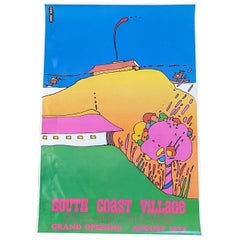
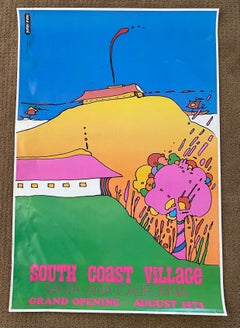
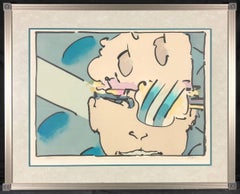
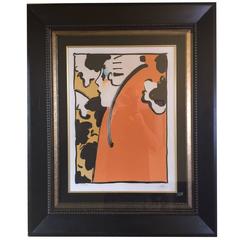
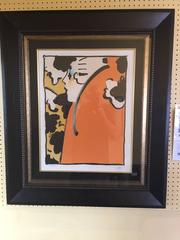
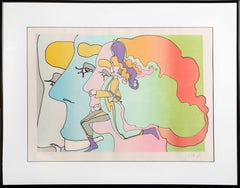
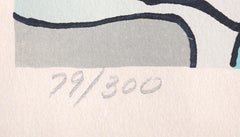
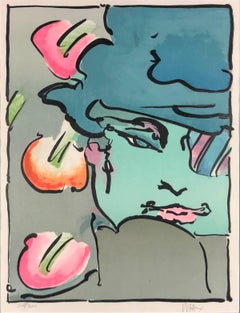
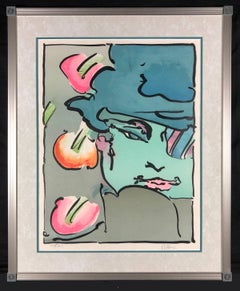
Surely you’ll find the exact peter max 1973 you’re seeking on 1stDibs — we’ve got a vast assortment for sale. In our selection of items, you can find
abstract examples as well as a
modern version. You’re likely to find the perfect peter max 1973 among the distinctive items we have available, which includes versions made as long ago as the 20th Century as well as those made as recently as the 21st Century. On 1stDibs, the right peter max 1973 is waiting for you and the choices span a range of colors that includes
gray,
beige,
black and
white. A peter max 1973 from
Hans Burkhardt,
Peter Max,
Richard Hamilton,
Joan Miró and
Peter Dean — each of whom created distinctive versions of this kind of work — is worth considering. Frequently made by artists working in
paint,
canvas and
fabric, these artworks are unique and have attracted attention over the years.
The price for an artwork of this kind can differ depending upon size, time period and other attributes — a peter max 1973 in our inventory may begin at $200 and can go as high as $88,000, while the average can fetch as much as $5,500.
Born Peter Max Finkelstein in Berlin in 1937, psychedelic Pop art icon Peter Max spent the first part of his childhood in Shanghai after his parents emigrated from Germany to flee the Nazis. While there, Max developed his deep interest in American pop culture — namely comic books, jazz and cinema. Max’s paintings, graphic design, prints and illustrations, which were inspired by these interests, were also informed by his experience with synesthesia, a sensory condition that causes him to see music and hear color.
After relocating to Haifa, Israel, then Paris, where he spent a significant amount of time in sketching classes at the Louvre, a teenage Max and his family finally moved to the United States, settling in Brooklyn. Max enrolled in the Art Students League of New York in 1956, training under Frank J. Reilly, and then the School of Visual Arts. Throughout art school, Max focused on photorealism, but he found the style too restrictive. When he graduated and opened his graphic design studio with friends in 1962, he began experimenting with abstraction and color — just in time for the psychedelic era.
The technicolor works for which Max would become known are characterized by big and bold graphic qualities — not dissimilar to what you’d find in his beloved comic books. Some deeper themes emerged across his work too: Max spent a good portion of the 1960s and 1970s creating his signature cosmic style, inspired by his fascination with astronomy and Eastern philosophies.
For Max and his partners, the graphic design business was highly successful, with commissions rolling in from advertising agencies, magazines and even Hollywood in the form of movie posters. The artist was featured on the cover of Life in 1969, and by the 1970s, he was practically a household name.
Max's body of work extended into product design, including a line of clocks for General Electric, while his domination of the commercial art scene continued for decades. He was commissioned to paint a postage stamp honoring the World’s Fair of 1974 (Expo ‘74); a Statue of Liberty series in which some proceeds went on to fund the statue’s restoration; posters and other advertising materials for major events like the Super Bowl, the U.S. Open and the Grammys; a Dale Earnhardt race car; and even the hull of the Norwegian Breakaway cruise ship.
Commercial activities aside, Max has long been the subject of many museum exhibitions, from his first solo show in 1970, “The World of Peter Max,” at the M.H. de Young Memorial Museum in San Francisco to 2016's “Peter Max: 50 Years of Cosmic Dreaming” at the Tampa Museum of Art in Florida. Today, his work belongs to the collections of the Museum of Modern Art in New York, the Philadelphia Museum of Art and other institutions.
Find original Peter Max lithographs, paintings, signed art and other works for sale on 1stDibs.