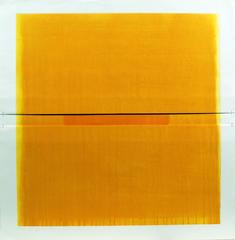
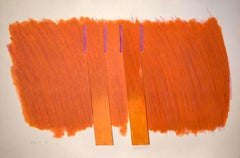
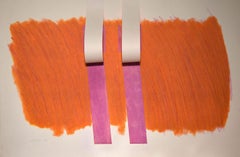
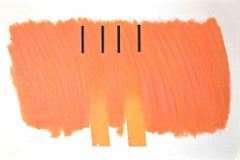
Richard Smith Orange For Sale on 1stDibs
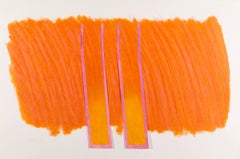
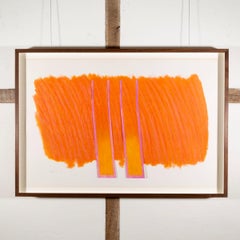
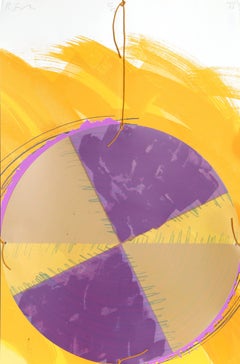
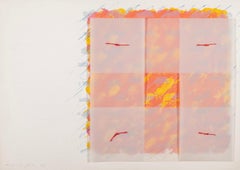
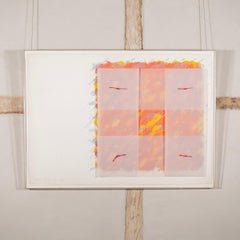
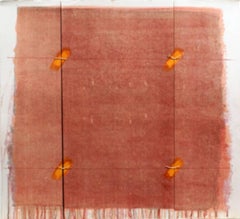
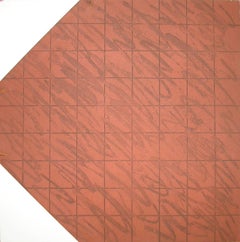
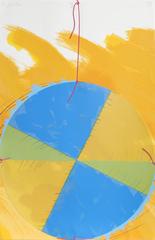
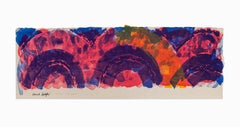
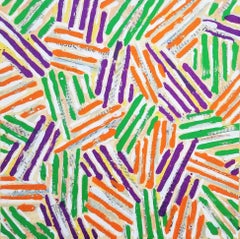
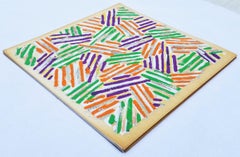
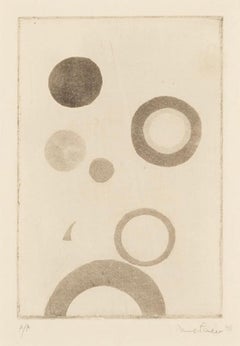
You are likely to find exactly the richard smith orange you’re looking for on 1stDibs, as there is a broad range for sale. In our selection of items, you can find
Abstract examples as well as a
Contemporary version. You’re likely to find the perfect richard smith orange among the distinctive items we have available, which includes versions made as long ago as the 20th Century as well as those made as recently as the 21st Century. On 1stDibs, the right richard smith orange is waiting for you and the choices span a range of colors that includes
orange,
beige,
gold and
gray. A richard smith orange from
Richard Smith and
Richard Smith b.1955 — each of whom created distinctive versions of this kind of work — is worth considering. Artworks like these — often created in
lithograph,
etching and
mixed media — can elevate any room of your home.
How Much is a Richard Smith Orange?
The average selling price for a richard smith orange we offer is $1,175, while they’re typically $310 on the low end and $2,500 for the highest priced.
Richard Smith for sale on 1stDibs
Charles Richard "Dick" Smith was an English printmaker and painter.
He Attended St Albans School of Art followed by post-graduate studies at the Royal College of Art, London, from 1954-57. Smith shared a flat-cum-studio with Peter Blake in his second year at the RCA, and then again for two years after he left the college in 1957. When Terence Conran's Soup Kitchen opened on Fleet Street in the late 1950s, it featured a letter-collage mural by Smith and Blake. Michael Chow would later commission Smith to design installations for his restaurant in Los Angeles, and Chow and Conran have remained two of his biggest supporters.
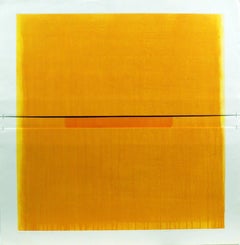
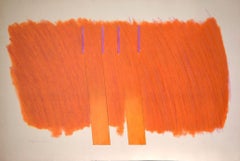
In 1959 he moved to New York to teach on a Harkness Fellowship, staying for two years, where he produced paintings combining the formal qualities of many of the American abstract painters which made references to American commercial culture. The artist's first solo exhibition was at the Green Gallery. As his work matured it tended to be more minimal, often painted using one colour with a second only as an accent.
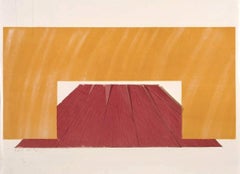
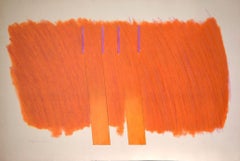
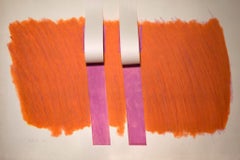
In trying to find ways of transposing ideas, Smith began to question the two-dimensional properties of art itself and to find ways by which a painting could express the shape of reality as he saw it. These principles he carried into his graphic work by introducing cut, folded and stapled elements into his prints; some works were multi-leaved screenprinting, and others printed onto three-dimensional fabricated metal.
Smith returned to England in 1963 - specifically East Tytherton, Wiltshire where Howard Hodgkin was a neighbour - and gained critical acclaim for extending the boundaries of painting into three dimensions, creating sculptural shaped canvases with monumental presence, which literally protruded into the space of the gallery. Evocative titles such as Panatella and Revlon, and cosmetic, synthetic colours alluded to the consumer landscapes of urban America which had proved so influential. He showed at the Kasmin Gallery, a venture between Kas and the Marquess of Dufferin and Ava in New Bond Street, throughout the 60s, more-widely known as David Hockney's first gallery.
Smith was invited to exhibit at the XXXV Venice Biennale as the official British artist in 1970. Smith taught with Richard Hamilton at Gateshead in 1965, where he met Mark Lancaster and Stephen Buckley, and again in 2000, becoming close to the artist and his wife, Terry.
By the late 1960s Smith's ambition to produce paintings which shared a common sensibility with other media, such as film and photography, began to wane and he focused on the formal qualities of painting. First exhibited in New York in 1971, the traditional wooden supports of the canvases were replaced by aluminium rods and strings, allowing them to be hung freely in response to the surrounding architecture. Smith continued in the subsequent decades to construct site-specific works in public and private spaces often hanging from the ceilings or architectural supports. He resettled in Patchogue, New York in around 1977.
Smith was awarded the CBE in 1971.