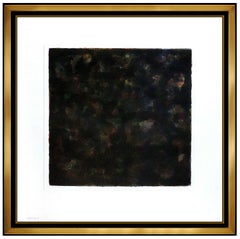
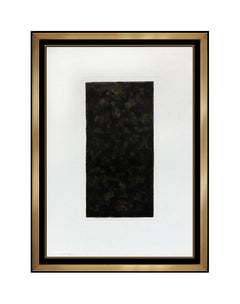
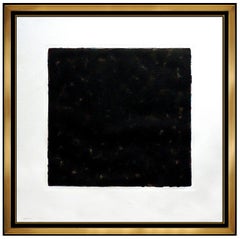
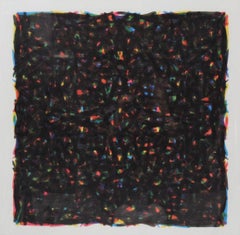
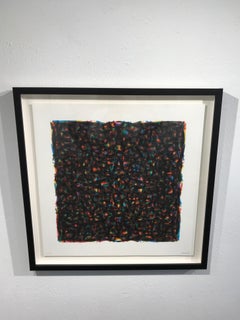
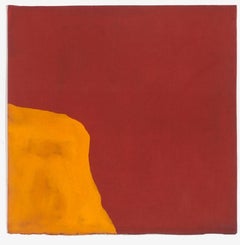
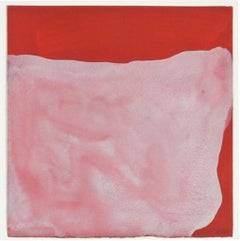
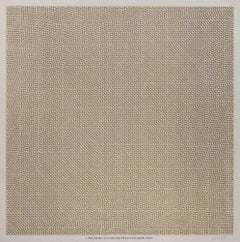
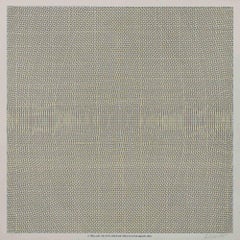
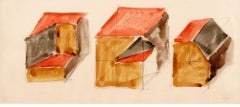
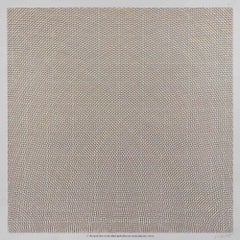
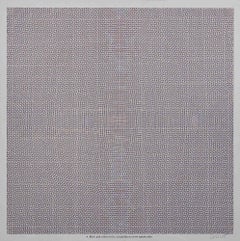
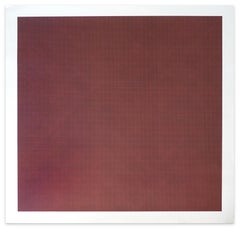
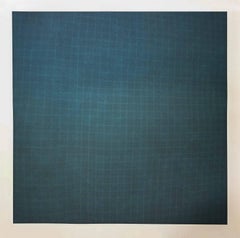
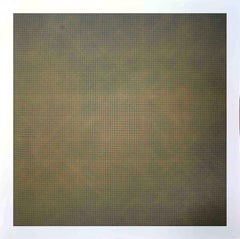
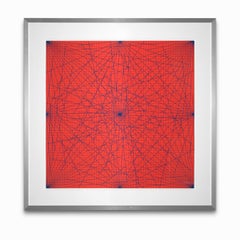
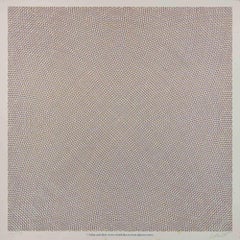
Surely you’ll find the exact sol lewitt signed you’re seeking on 1stDibs — we’ve got a vast assortment for sale. You can easily find an example made in the
abstract style, while we also have 40
abstract versions to choose from as well. You’re likely to find the perfect sol lewitt signed among the distinctive items we have available, which includes versions made as long ago as the 19th Century as well as those made as recently as the 21st Century. If you’re looking to add a sol lewitt signed to create new energy in an otherwise neutral space in your home, you can find a work on 1stDibs that features elements of
black,
beige,
gray,
silver and more. There have been many interesting sol lewitt signed examples over the years, but those made by
Elizabeth Gourlay,
Sol LeWitt,
Fred McDarrah,
Daniel Handal and
Robert Vizzini are often thought to be among the most thought-provoking. Frequently made by artists working in
paint,
synthetic resin paint and
fabric, these artworks are unique and have attracted attention over the years. A large sol lewitt signed can be an attractive addition to some spaces, while smaller examples are available — approximately spanning 4 high and 4 wide — and may be better suited to a more modest living area.
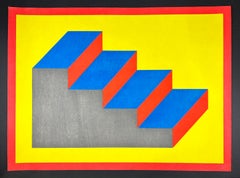
While New York City’s art scene in the 1950s and ’60s revolved around Abstract Expressionism, multidisciplinary artist Sol LeWitt paved an alternative path, creating a prolific output of work in the genres of minimalism and, later, Conceptual art.
While LeWitt is perhaps best known for his immense “wall drawings,” he created work in a wide range of media, including drawing, painting, printmaking and sculpture. (However, in a characteristic rebuttal of canonical art history, he referred to these pieces as “structures.”) He also produced several texts, including the seminal Sentences on Conceptual Art (1969).
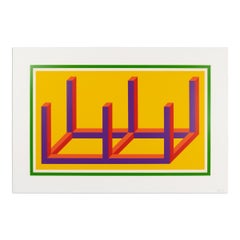
Born in Hartford, Connecticut, in 1928, LeWitt received a BFA from Syracuse University before going to work as a graphic designer for the renowned architect I.M. Pei. He would later work at the book counter at the Museum of Modern Art, where his colleagues included fellow artists. LeWitt’s early exposure to architecture may well have had outsize influence on his subsequent career: He was known for the geometric nature of his work, specifically his fastidious, near-obsessive treatment of the cube, which he rendered repeatedly in various ways throughout his paintings, structures and wall drawings.
In the 1960s, LeWitt showed in several group exhibitions throughout New York and also began to experiment with three-dimensional structures, most modular riffs on the cube shape. His work was included in “Working Drawings and Other Visible Things on Paper Not Necessarily Meant to Be Viewed as Art,” curated by Mel Bochner, another leading exponent of Conceptualism.
Later, LeWitt debuted his now-iconic wall drawings, creating work directly on the walls of galleries and show spaces, beginning with pioneering gallerist Paula Cooper’s inaugural show in 1968. The wall drawings became a prime example of LeWitt’s philosophical approach to art, with their installation often carried out by museum staff or curators following precise instructions from the artist.
“The idea,” the artist once said, “becomes a machine that makes the art.” LeWitt continued to produce work until his death in 2007.
Find a collection of original Sol LeWitt art on 1stDibs.