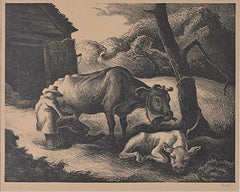
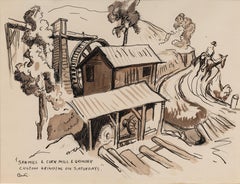
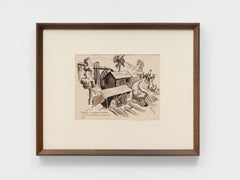
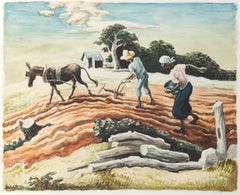
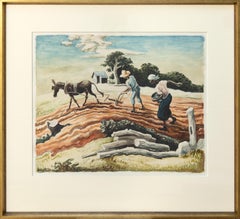
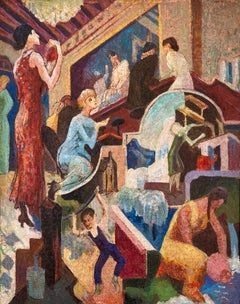
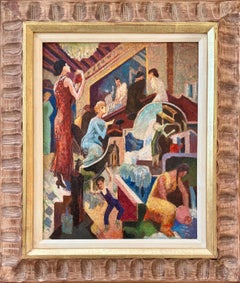
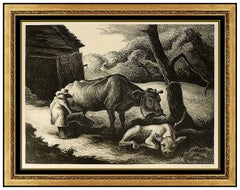
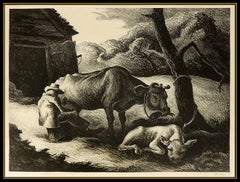
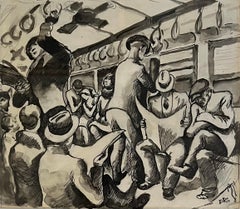
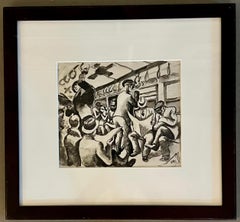
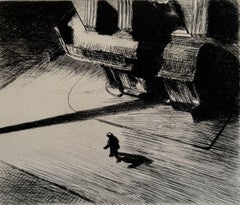
Thomas Hart Benton Original For Sale on 1stDibs
Find many varieties of an authentic thomas hart benton original available at 1stDibs. A thomas hart benton original — often made from
paper — can elevate any home. Your living room may not be complete without a thomas hart benton original — find older editions for sale from the 20th Century and newer versions made as recently as the 20th Century. Each thomas hart benton original bearing
Mid-Century Modern or
Modern hallmarks is very popular. Many designers have produced at least one well-made thomas hart benton original over the years, but those crafted by
Thomas Hart Benton and
Thomas W. Benton are often thought to be among the most beautiful.
How Much is a Thomas Hart Benton Original?
A thomas hart benton original can differ in price owing to various characteristics — the average selling price 1stDibs is $3,598, while the lowest priced sells for $995 and the highest can go for as much as $18,500.
Thomas Hart Benton for sale on 1stDibs
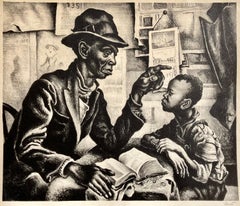
Thomas Hart Benton was born in Neosho, Missouri on April 15, 1889. Even as a boy, he was no stranger to the "art of the deal" or to the smoke-filled rooms in which such deals were often consummated. His grandfather had been Missouri's first United States Senator and served in Washington for thirty years. His father, Maecenas Benton, was United States Attorney for the Western District of Missouri under Cleveland and served in the United States House of Representatives during the McKinley and Theodore Roosevelt administrations. Benton's brother, Nat, was prosecutor for Greene County, Missouri, during the 1930s.
As soon as he could walk, Benton traveled with his father on political tours. There he learned the arts of chewing and smoking, and while the men were involved in their heated discussions, Benton delighted in finding new cream colored wallpaper on the staircase wall, at the age of six or seven, and drew in charcoal his first mural, a long multi-car freight train.
As soon as he was eighteen, even though his father wanted him to study law, Benton left for Chicago where he studied at the Art Institute during the years 1907 and 1908. He continued his studies in Paris, where he learned delicious wickedness, aesthetic and otherwise.
Once back home, he became the leader of the Regionalist School, the most theatrical and gifted of the 1930s muralists and as Harry Truman described him,"the best damned painter in America."
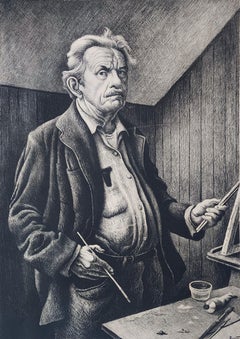
Detractors said that Benton was "a fascist, a communist, a racist and a bigot"; the ingenious structure, powerful use of modeling and scale and the high-colored humanity of the murals and easel paintings are retort enough. He was a dark, active dynamo, only 5 ft., 3 1/2 in. tall. He was outspoken, open, charmingly profane; he had a great mane of hair and a face the texture of oak bark. He wore rumpled corduroy and flannel, and walked with the unsteady swagger of a sailor just ashore. He poured a salwart drink, chewed on small black cigars and spat in the fire.
Benton was once described as the "churlish dean of regionalist art." If you listened to a variety of art authorities, you would find them equally divided between Harry Truman's assessment of Benton as "the best damned painter in America" and Hilton Kramer who proclaimed Benton "a failed artist."
The East Coast art establishment tended to regard Benton as memorable for one reason only: he was the teacher of Jackson Pollock.
Benton was married in 1922 to Rita, a gregarious Italian lady, and they had a daughter and a son. At the height of his fame in the 1940s, Benton bungled the buy-out he was offered by Walt Disney and went his own way, completing his last mural in 1975 in acrylics the year of his death.
He died in 1975.