Ashkan Sahihi Photography

to
3
Overall Width
to
Overall Height
to
3
3
3
3
1
3
10,524
2,811
2,500
1,409
3
Artist: Ashkan Sahihi
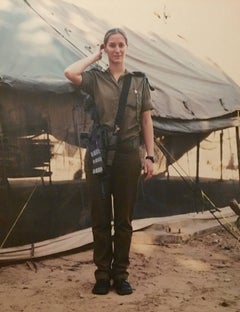
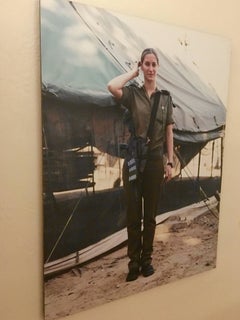
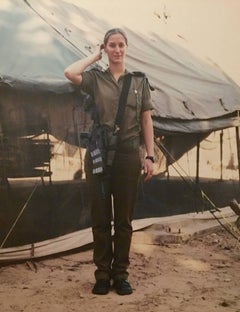
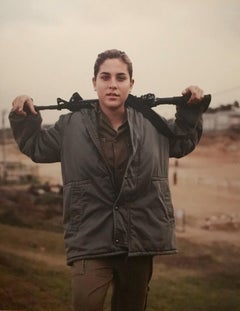
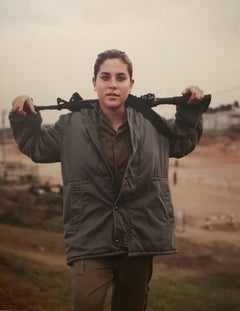
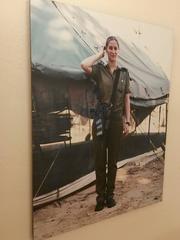
Large Color Photograph "Women of the IDF" Ashkan Sahihi

Large Color Photograph "Women of the IDF" Ashkan Sahihi

By Ashkan Sahihi

Located in Surfside, FL

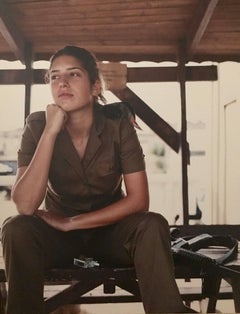
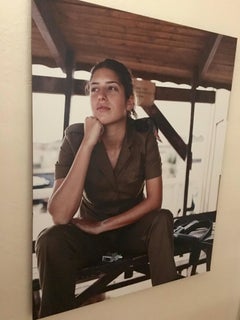
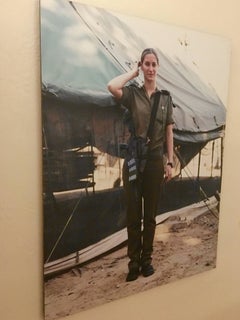
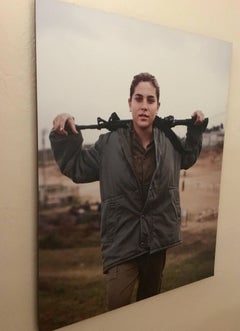
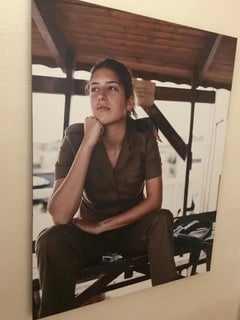
"Women of the IDF" Large Exhibition color Photograph 30 x 40 inches, mounted on masonite and laminated. Edition of 4 + 2 artists proof. minor dings and bumps to edges Born in Tehra...

Category

Early 2000s Ashkan Sahihi Photography

Materials

Laminate, Masonite
WOMEN OF THE ISRAEL DEFENSE FORCES Large Photo NETA

WOMEN OF THE ISRAEL DEFENSE FORCES Large Photo NETA

By Ashkan Sahihi

Located in Surfside, FL

"Women of the IDF" Large Exhibition color Photograph 30 x 40 inches, mounted on masonite and laminated. Edition of 4 + 2 artists proof. minor dings and bumps to edges Born in Teh...

Category

Early 2000s Ashkan Sahihi Photography

Materials

Masonite

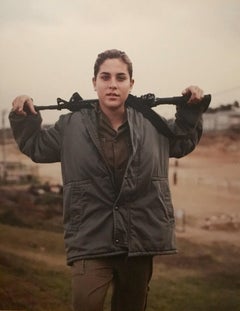
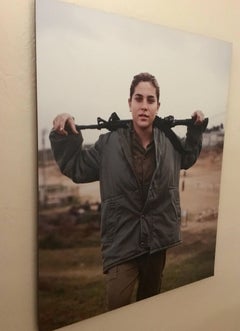
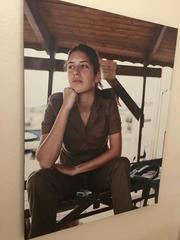
WOMEN OF THE IDF Large color Photograph LITAL

WOMEN OF THE IDF Large color Photograph LITAL

By Ashkan Sahihi

Located in Surfside, FL

"Women of the IDF" Large Exhibition color Photograph 30 x 40 inches, mounted on masonite and laminated. Edition of 4 + 2 artists proof. minor dings and bumps to edges Born in Teh...

Category

Early 2000s Ashkan Sahihi Photography

Materials

Masonite

Related Items
Kate Moss 90's, Paradise Island Bahamas, Nude Model, Vintage Photograph, Framed

Kate Moss 90's, Paradise Island Bahamas, Nude Model, Vintage Photograph, Framed

By Herb Ritts

Located in London, GB

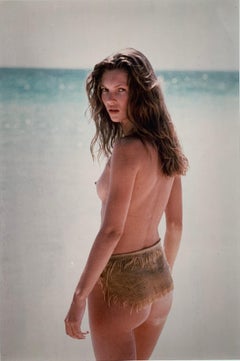
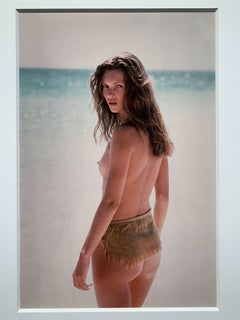
For the 1994 Pirelli Calendar shot on the Paradise Island in the Bahamas, photographer Herb Ritts set out to capture in a series of nudes what he called “the gentle innocence” of Kat...

Category

1990s Contemporary Ashkan Sahihi Photography

Materials

Archival Paper, Color, C Print, Photographic Paper, Photographic Film, W...

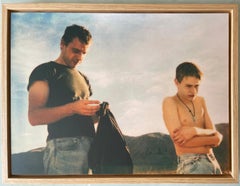
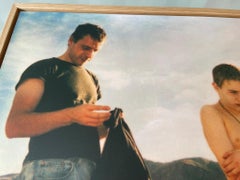
D. and Felix -  Contemporary, 21st Century, Polaroid, Figurative Photography

D. and Felix - Contemporary, 21st Century, Polaroid, Figurative Photography

By Stefanie Schneider

Located in Morongo Valley, CA

D. and Felix (Stranger than Paradise) - 1997 Edition of 2/30. Image size 16 x 21.6 inch, External dimensions: 17.7 x 23.3 inch. Archival C-Print, based on the Polaroid. Mounted...

Category

1990s Contemporary Ashkan Sahihi Photography

Materials

Wood, Archival Paper, Photographic Paper, C Print, Polaroid

Chaiwa - Tewa - Profile,  1921

Chaiwa - Tewa - Profile, 1921

By Edward S. Curtis, 1868-1952

Located in Los Angeles, CA

Edward S. Curtis Chaiwa - Tewa - Profile 1921 Photogravure Print 22 x 18 inches Vintage large format Curtis Portfolio Photogravure, Portfolio 12, Plate #415, The North American Indi...

Category

Early 20th Century Other Art Style Ashkan Sahihi Photography

Materials

Photogravure

1970s Nightclubs of Chicago South Side - Dancer with white scarf, Framed

1970s Nightclubs of Chicago South Side - Dancer with white scarf, Framed

Located in London, GB

"A camera is a window through which a photographer interacts with the world, and it's up to the operator to decide whether his camera will be a barrier or a mirror between he and his subjects. In the 1970s, Michael Abramson...

Category

1970s Contemporary Ashkan Sahihi Photography

Materials

Archival Paper, Black and White, Wood, Glass, Photographic Film, Photogr...

Michelin Star Chefs' Last Supper C-Type Print Limited Edition, Framed, 127x81 cm

Michelin Star Chefs' Last Supper C-Type Print Limited Edition, Framed, 127x81 cm

Located in London, GB

'Last supper' of 13 Michelin-starred Chefs... John Reardon is particularly associated with his portraits of chefs for the Observer Food Monthly (UK) for which this commission based o...

Category

Early 2000s Contemporary Ashkan Sahihi Photography

Materials

Wood, Color, Glass, Photographic Film, Archival Ink, Photographic Paper,...

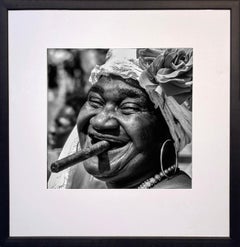
La Dama de la Plaza by James Sparshatt - A portrait of joy in life and cigars

La Dama de la Plaza by James Sparshatt - A portrait of joy in life and cigars

By James Sparshatt

Located in Coltishall, GB

A lady of pure joy… dancing in the Plaza de la Revolucion on May 1st. The Spirit of the Revolution series documents the generation of Cubans that saw the dramatic changes of 1959 as...

Category

21st Century and Contemporary Other Art Style Ashkan Sahihi Photography

Materials

Wood, Silver Gelatin

"Emulsion 12" (FRAMED) Photography 40" x 40" inch Edition 2/20 by Giuliano Bekor

"Emulsion 12" (FRAMED) Photography 40" x 40" inch Edition 2/20 by Giuliano Bekor

By Giuliano Bekor

Located in Culver City, CA

"Emulsion 12" (FRAMED) Photography 40" x 40" inch Edition 2/20 by Giuliano Bekor Title: Emulsion EM12 Year: 2018 Print size: 40" x 40" Inch Artwork finished size: 42" x 42" Inch E...

Category

21st Century and Contemporary Abstract Expressionist Ashkan Sahihi Photography

Materials

Laminate, Archival Paper, Digital

Antique 1920s Danish Realist Oil Painting Fish Market Scene Copenhagen Signed

Antique 1920s Danish Realist Oil Painting Fish Market Scene Copenhagen Signed

Located in Stockholm, SE

This antique oil on canvas from the 1920s, attributed to the Danish artist Søren Christian Bjulf (1890 - 1958), captures a spirited fish market at Gammel Strand, Copenhagen. The scen...

Category

Early 20th Century Realist Ashkan Sahihi Photography

Materials

Canvas, Wood, Oil

Profile of a Zebra (Limited Edition of 5), 40"x60"  - Animal Wall Art

Profile of a Zebra (Limited Edition of 5), 40"x60" - Animal Wall Art

By Viet Chu

Located in New York, NY

New York City based wildlife and street photographer Viet Chu, captured this breathtaking monochrome shot of a profile of a Zebra on a Black background. This image was taken in 2016, in Sayari Camp, Serengeti, Asilia Africa. Chu’s emphasis is to give us a glimpse of an everyday life in the wild, and to inspire us by the beauty and grace of this black and white striped animal. Viet Chu is a world traveler for photographic assignments. He finds beauty in life’s special moments in time, capturing each with his unique photographic style. Chu’s work is a reflection of his journey’s and life experiences. In his approach to capture an image, he utilizes traditional and non-traditional means of lighting. It is then infused with his intuitive sensibility, converging it with emotional intelligence, to create a simple composition of shadows, light, subject and background. His goal is to capture a moment in time that tells a story for the rest of time. Limited Edition of this print, numbered and signed by Viet Chu are available in the sizes below. We ship world-wide and shipping is free. Your choice of one or many artworks will be given the highest standard care and delivery. Limited Edition print orders, due to risk of damage, value and high shipping and insurance costs are not framed. All limited-edition prints are professionally packaged and shipped in sturdy tubes. Animal Wall Art...

Category

2010s Contemporary Ashkan Sahihi Photography

Materials

Archival Pigment

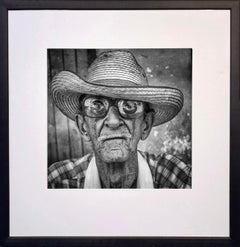
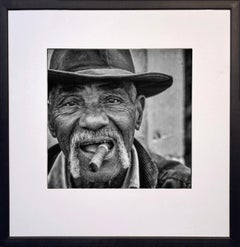
El Sentinel by James Sparshatt - Framed BW portrait of cigar smoking Cuban man

El Sentinel by James Sparshatt - Framed BW portrait of cigar smoking Cuban man

By James Sparshatt

Located in Coltishall, GB

A man of gentlemany demeanour, content with his cigar. A sentinel watching the world pass amidst the endless sugar cane country of central Cuba. The Spirit of the Revolution serie...

Category

21st Century and Contemporary Other Art Style Ashkan Sahihi Photography

Materials

Silver Gelatin, Wood

Untitled #3

Anna MinnickUntitled #3, 2016

$300

H 12 in W 11 in D 2 in

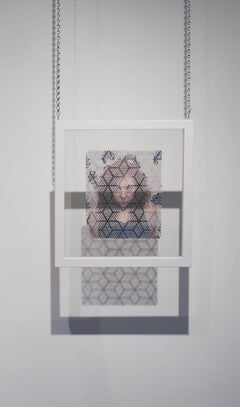
Untitled #3

By Anna Minnick

Located in Kansas City, MO

Materials : Hand Cut Paper Date : 2016 Dimensions : 12" x 2" x 11" COA provided Anna Minnick's work explores the struggles of identity and mental illness. She hopes her work forms a...

Category

2010s Contemporary Ashkan Sahihi Photography

Materials

Glass, Wood, Paper

Untitled #4

Anna MinnickUntitled #4, 2016

$300

H 12 in W 12 in D 2 in

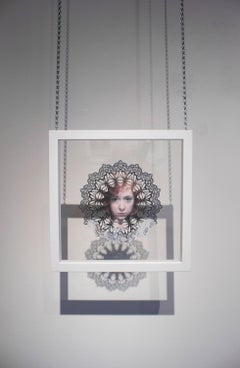
Untitled #4

By Anna Minnick

Located in Kansas City, MO

Materials : Hand Cut Paper Date : 2016 Dimensions : 12″ x 2″ x 12″ COA provided Anna Minnick's work explores the struggles of identity and mental illness. She hopes her work forms a...

Category

2010s Contemporary Ashkan Sahihi Photography

Materials

Glass, Wood, Paper

Previously Available Items
WOMEN OF THE ISRAEL DEFENSE FORCES Large Photo NETA

WOMEN OF THE ISRAEL DEFENSE FORCES Large Photo NETA

By Ashkan Sahihi

Located in Surfside, FL

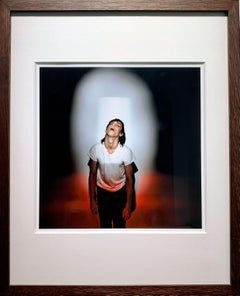
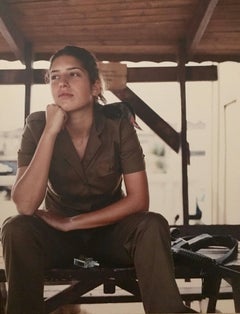
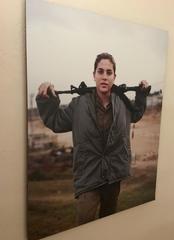
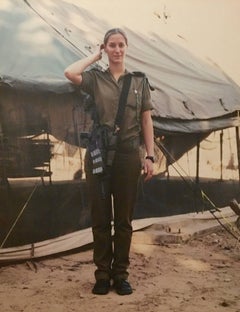
"Women of the IDF" Large Exhibition color Photograph 30 x 40 inches, mounted on masonite and laminated. Edition of 4 + 2 artists proof. minor dings and bumps to edges Born in Tehran, Iran, Ashkan Sahihi moved with his family to West Germany at the age of seven. Although he began taking photographs as a teenager, Sahihi traces the beginning of his professional trajectory to New York in 1987, a thriving “pop culture metropolis” where he could do the kind of photography work that he wanted to do, exploring the underbelly of the society around him. Taking assignments from German publications such as the Süddeutsche Zeitung Magazine, Der Spiegel, Dummy and GEO, he photographed subjects like prisoners on death row, players in the hip-hop scene, and the downtown art scene of New York. Neither black nor white, an insider among outsiders, he found himself able to navigate spaces and dynamics that others might have had difficulty entering. He considered this both a privilege and an obligation – to visit these places and tell these stories. His success led to commissions from American publications as well, including the New York Times Magazine, the New Yorker, Rolling Stone, and Vogue. Put off by the limitations of photojournalism (the expectation that he would illustrate the writer’s perspective rather than author a narrative of his own), Sahihi began to embark on independent, highly compact conceptual series. His main goal in these series has been to drive forward public discourse on topics he believes have not provoked enough or the right kind of discussion: drugs, gender in the media, women in the military, etc. His portraits draw on a familiar visual language – often seated subjects before a neutral backdrop – but push the viewer to feel and think about entirely new things. Although he constantly challenges the comfort level of both the viewer and the subject, Sahihi never removes himself from the line of fire; all of his work requires the artist to immerse himself in uncomfortable situations and challenge his own emotional fortitude. Photographic Series In the “Face Series”, latex-gloved hands manipulate the subjects’ features, stretching, pushing, squeezing, pinching at the whim of external direction – from the artist? The customer? The public? The “Hypnosis Series” comprises 8 portraits of hypnotized subjects each experiencing a single emotion, e.g. helplessness, withholding/anger, or regret. In a society that rewards the suppression of such naked emotion, the purity of these depictions is arresting. In 2006, Sahihi photographed himself in the homes and with the families of six ex-girlfriends and one ex-wife, imposing himself more or less awkwardly on the constellations that emerged after he had exited their lives (“Exes Series”). For Sahihi’s most well-known work, the “Drug Series,” he convinced 11 non–drug users to consume a particular drug, then took their portraits over the course of their trips. The series was born out of Sahihi’s frustration with the hypocrisy of the political conversation about drugs in the United States. “By attempting to present an objective image of drug use, the artist addresses the cultural politics that allow our society to simultaneously glamorize the ‘drug look’ in fashion magazines and the entertainment industry and meanwhile turn a blind eye to the complicated, and vast, problem of drug abuse.” Sahihi has exhibited this series at MoMA PS1 New York in 2001, in Dresden in 2008, and alongside his installation “100 Million in Ready Cash." Sahihi’s dense explorations through small photographic series include “Women of the IDF," portraits of female Israeli soldiers...

Category

Early 2000s Ashkan Sahihi Photography

Materials

Masonite

WOMEN OF THE IDF Large color Photograph LITAL

WOMEN OF THE IDF Large color Photograph LITAL

By Ashkan Sahihi

Located in Surfside, FL

"Women of the IDF" Large Exhibition color Photograph 30 x 40 inches, mounted on masonite and laminated. Edition of 4 + 2 artists proof. minor dings and bumps to edges Born in Tehran, Iran, Ashkan Sahihi moved with his family to West Germany at the age of seven. Although he began taking photographs as a teenager, Sahihi traces the beginning of his professional trajectory to New York in 1987, a thriving “pop culture metropolis” where he could do the kind of photography work that he wanted to do, exploring the underbelly of the society around him. Taking assignments from German publications such as the Süddeutsche Zeitung Magazine, Der Spiegel, Dummy and GEO, he photographed subjects like prisoners on death row, players in the hip-hop scene, and the downtown art scene of New York. Neither black nor white, an insider among outsiders, he found himself able to navigate spaces and dynamics that others might have had difficulty entering. He considered this both a privilege and an obligation – to visit these places and tell these stories. His success led to commissions from American publications as well, including the New York Times Magazine, the New Yorker, Rolling Stone, and Vogue. Put off by the limitations of photojournalism (the expectation that he would illustrate the writer’s perspective rather than author a narrative of his own), Sahihi began to embark on independent, highly compact conceptual series. His main goal in these series has been to drive forward public discourse on topics he believes have not provoked enough or the right kind of discussion: drugs, gender in the media, women in the military, etc. His portraits draw on a familiar visual language – often seated subjects before a neutral backdrop – but push the viewer to feel and think about entirely new things. Although he constantly challenges the comfort level of both the viewer and the subject, Sahihi never removes himself from the line of fire; all of his work requires the artist to immerse himself in uncomfortable situations and challenge his own emotional fortitude. Photographic Series In the “Face Series”, latex-gloved hands manipulate the subjects’ features, stretching, pushing, squeezing, pinching at the whim of external direction – from the artist? The customer? The public? The “Hypnosis Series” comprises 8 portraits of hypnotized subjects each experiencing a single emotion, e.g. helplessness, withholding/anger, or regret. In a society that rewards the suppression of such naked emotion, the purity of these depictions is arresting. In 2006, Sahihi photographed himself in the homes and with the families of six ex-girlfriends and one ex-wife, imposing himself more or less awkwardly on the constellations that emerged after he had exited their lives (“Exes Series”). For Sahihi’s most well-known work, the “Drug Series,” he convinced 11 non–drug users to consume a particular drug, then took their portraits over the course of their trips. The series was born out of Sahihi’s frustration with the hypocrisy of the political conversation about drugs in the United States. “By attempting to present an objective image of drug use, the artist addresses the cultural politics that allow our society to simultaneously glamorize the ‘drug look’ in fashion magazines and the entertainment industry and meanwhile turn a blind eye to the complicated, and vast, problem of drug abuse.” Sahihi has exhibited this series at MoMA PS1 New York in 2001, in Dresden in 2008, and alongside his installation “100 Million in Ready Cash." Sahihi’s dense explorations through small photographic series include “Women of the IDF," portraits of female Israeli soldiers...

Category

Early 2000s Ashkan Sahihi Photography

Materials

Masonite

Large Color Photograph "Women of the IDF" Ashkan Sahihi

Large Color Photograph "Women of the IDF" Ashkan Sahihi

By Ashkan Sahihi

Located in Surfside, FL

"Women of the IDF" Large Exhibition color Photograph 30 x 40 inches, mounted on masonite and laminated. Edition of 4 + 2 artists proof. minor dings and bumps to edges Born in Tehran, Iran, Ashkan Sahihi moved with his family to West Germany at the age of seven. Although he began taking photographs as a teenager, Sahihi traces the beginning of his professional trajectory to New York in 1987, a thriving “pop culture metropolis” where he could do the kind of photography work that he wanted to do, exploring the underbelly of the society around him. Taking assignments from German publications such as the Süddeutsche Zeitung Magazine, Der Spiegel, Dummy and GEO, he photographed subjects like prisoners on death row, players in the hip-hop scene, and the downtown art scene of New York. Neither black nor white, an insider among outsiders, he found himself able to navigate spaces and dynamics that others might have had difficulty entering. He considered this both a privilege and an obligation – to visit these places and tell these stories. His success led to commissions from American publications as well, including the New York Times Magazine, the New Yorker, Rolling Stone, and Vogue. Put off by the limitations of photojournalism (the expectation that he would illustrate the writer’s perspective rather than author a narrative of his own), Sahihi began to embark on independent, highly compact conceptual series. His main goal in these series has been to drive forward public discourse on topics he believes have not provoked enough or the right kind of discussion: drugs, gender in the media, women in the military, etc. His portraits draw on a familiar visual language – often seated subjects before a neutral backdrop – but push the viewer to feel and think about entirely new things. Although he constantly challenges the comfort level of both the viewer and the subject, Sahihi never removes himself from the line of fire; all of his work requires the artist to immerse himself in uncomfortable situations and challenge his own emotional fortitude. Photographic Series In the “Face Series”, latex-gloved hands manipulate the subjects’ features, stretching, pushing, squeezing, pinching at the whim of external direction – from the artist? The customer? The public? The “Hypnosis Series” comprises 8 portraits of hypnotized subjects each experiencing a single emotion, e.g. helplessness, withholding/anger, or regret. In a society that rewards the suppression of such naked emotion, the purity of these depictions is arresting. In 2006, Sahihi photographed himself in the homes and with the families of six ex-girlfriends and one ex-wife, imposing himself more or less awkwardly on the constellations that emerged after he had exited their lives (“Exes Series”). For Sahihi’s most well-known work, the “Drug Series,” he convinced 11 non–drug users to consume a particular drug, then took their portraits over the course of their trips. The series was born out of Sahihi’s frustration with the hypocrisy of the political conversation about drugs in the United States. “By attempting to present an objective image of drug use, the artist addresses the cultural politics that allow our society to simultaneously glamorize the ‘drug look’ in fashion magazines and the entertainment industry and meanwhile turn a blind eye to the complicated, and vast, problem of drug abuse.” Sahihi has exhibited this series at MoMA PS1 New York in 2001, in Dresden in 2008, and alongside his installation “100 Million in Ready Cash." Sahihi’s dense explorations through small photographic series include “Women of the IDF," portraits of female Israeli soldiers...

Category

Early 2000s Ashkan Sahihi Photography

Materials

Laminate, Masonite
Large Color Photograph "Women of the IDF" Ashkan Sahihi

Large Color Photograph "Women of the IDF" Ashkan Sahihi

By Ashkan Sahihi

Located in Surfside, FL

"Women of the IDF" Large Exhibition color Photograph 30 x 40 inches, mounted on masonite and laminated. Edition of 4 + 2 artists proof. minor dings and bumps to edges Born in Tehran, Iran, Ashkan Sahihi moved with his family to West Germany at the age of seven. Although he began taking photographs as a teenager, Sahihi traces the beginning of his professional trajectory to New York in 1987, a thriving “pop culture metropolis” where he could do the kind of photography work that he wanted to do, exploring the underbelly of the society around him. Taking assignments from German publications such as the Süddeutsche Zeitung Magazine, Der Spiegel, Dummy and GEO, he photographed subjects like prisoners on death row, players in the hip-hop scene, and the downtown art scene of New York. Neither black nor white, an insider among outsiders, he found himself able to navigate spaces and dynamics that others might have had difficulty entering. He considered this both a privilege and an obligation – to visit these places and tell these stories. His success led to commissions from American publications as well, including the New York Times Magazine, the New Yorker, Rolling Stone, and Vogue. Put off by the limitations of photojournalism (the expectation that he would illustrate the writer’s perspective rather than author a narrative of his own), Sahihi began to embark on independent, highly compact conceptual series. His main goal in these series has been to drive forward public discourse on topics he believes have not provoked enough or the right kind of discussion: drugs, gender in the media, women in the military, etc. His portraits draw on a familiar visual language – often seated subjects before a neutral backdrop – but push the viewer to feel and think about entirely new things. Although he constantly challenges the comfort level of both the viewer and the subject, Sahihi never removes himself from the line of fire; all of his work requires the artist to immerse himself in uncomfortable situations and challenge his own emotional fortitude. Photographic Series In the “Face Series”, latex-gloved hands manipulate the subjects’ features, stretching, pushing, squeezing, pinching at the whim of external direction – from the artist? The customer? The public? The “Hypnosis Series” comprises 8 portraits of hypnotized subjects each experiencing a single emotion, e.g. helplessness, withholding/anger, or regret. In a society that rewards the suppression of such naked emotion, the purity of these depictions is arresting. In 2006, Sahihi photographed himself in the homes and with the families of six ex-girlfriends and one ex-wife, imposing himself more or less awkwardly on the constellations that emerged after he had exited their lives (“Exes Series”). For Sahihi’s most well-known work, the “Drug Series,” he convinced 11 non–drug users to consume a particular drug, then took their portraits over the course of their trips. The series was born out of Sahihi’s frustration with the hypocrisy of the political conversation about drugs in the United States. “By attempting to present an objective image of drug use, the artist addresses the cultural politics that allow our society to simultaneously glamorize the ‘drug look’ in fashion magazines and the entertainment industry and meanwhile turn a blind eye to the complicated, and vast, problem of drug abuse.” Sahihi has exhibited this series at MoMA PS1 New York in 2001, in Dresden in 2008, and alongside his installation “100 Million in Ready Cash." Sahihi’s dense explorations through small photographic series include “Women of the IDF," portraits of female Israeli soldiers...
Category

Early 2000s Ashkan Sahihi Photography

WOMEN OF THE IDF Large color Photograph LITAL

WOMEN OF THE IDF Large color Photograph LITAL

By Ashkan Sahihi

Located in Surfside, FL

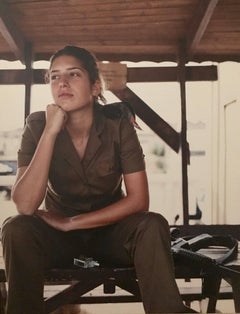
"Women of the IDF" Large Exhibition color Photograph 30 x 40 inches, mounted on masonite and laminated. Edition of 4 + 2 artists proof. minor dings and bumps to edges Born in Tehran, Iran, Ashkan Sahihi moved with his family to West Germany at the age of seven. Although he began taking photographs as a teenager, Sahihi traces the beginning of his professional trajectory to New York in 1987, a thriving “pop culture metropolis” where he could do the kind of photography work that he wanted to do, exploring the underbelly of the society around him. Taking assignments from German publications such as the Süddeutsche Zeitung Magazine, Der Spiegel, Dummy and GEO, he photographed subjects like prisoners on death row, players in the hip-hop scene, and the downtown art scene of New York. Neither black nor white, an insider among outsiders, he found himself able to navigate spaces and dynamics that others might have had difficulty entering. He considered this both a privilege and an obligation – to visit these places and tell these stories. His success led to commissions from American publications as well, including the New York Times Magazine, the New Yorker, Rolling Stone, and Vogue. Put off by the limitations of photojournalism (the expectation that he would illustrate the writer’s perspective rather than author a narrative of his own), Sahihi began to embark on independent, highly compact conceptual series. His main goal in these series has been to drive forward public discourse on topics he believes have not provoked enough or the right kind of discussion: drugs, gender in the media, women in the military, etc. His portraits draw on a familiar visual language – often seated subjects before a neutral backdrop – but push the viewer to feel and think about entirely new things. Although he constantly challenges the comfort level of both the viewer and the subject, Sahihi never removes himself from the line of fire; all of his work requires the artist to immerse himself in uncomfortable situations and challenge his own emotional fortitude. Photographic Series In the “Face Series”, latex-gloved hands manipulate the subjects’ features, stretching, pushing, squeezing, pinching at the whim of external direction – from the artist? The customer? The public? The “Hypnosis Series” comprises 8 portraits of hypnotized subjects each experiencing a single emotion, e.g. helplessness, withholding/anger, or regret. In a society that rewards the suppression of such naked emotion, the purity of these depictions is arresting. In 2006, Sahihi photographed himself in the homes and with the families of six ex-girlfriends and one ex-wife, imposing himself more or less awkwardly on the constellations that emerged after he had exited their lives (“Exes Series”). For Sahihi’s most well-known work, the “Drug Series,” he convinced 11 non–drug users to consume a particular drug, then took their portraits over the course of their trips. The series was born out of Sahihi’s frustration with the hypocrisy of the political conversation about drugs in the United States. “By attempting to present an objective image of drug use, the artist addresses the cultural politics that allow our society to simultaneously glamorize the ‘drug look’ in fashion magazines and the entertainment industry and meanwhile turn a blind eye to the complicated, and vast, problem of drug abuse.” Sahihi has exhibited this series at MoMA PS1 New York in 2001, in Dresden in 2008, and alongside his installation “100 Million in Ready Cash." Sahihi’s dense explorations through small photographic series include “Women of the IDF," portraits of female Israeli soldiers...
Category

Early 2000s Ashkan Sahihi Photography

WOMEN OF THE ISRAEL DEFENSE FORCES Large Photo NETA

WOMEN OF THE ISRAEL DEFENSE FORCES Large Photo NETA

By Ashkan Sahihi

Located in Surfside, FL

"Women of the IDF" Large Exhibition color Photograph 30 x 40 inches, mounted on masonite and laminated. Edition of 4 + 2 artists proof. minor dings and bumps to edges Born in Tehran, Iran, Ashkan Sahihi moved with his family to West Germany at the age of seven. Although he began taking photographs as a teenager, Sahihi traces the beginning of his professional trajectory to New York in 1987, a thriving “pop culture metropolis” where he could do the kind of photography work that he wanted to do, exploring the underbelly of the society around him. Taking assignments from German publications such as the Süddeutsche Zeitung Magazine, Der Spiegel, Dummy and GEO, he photographed subjects like prisoners on death row, players in the hip-hop scene, and the downtown art scene of New York. Neither black nor white, an insider among outsiders, he found himself able to navigate spaces and dynamics that others might have had difficulty entering. He considered this both a privilege and an obligation – to visit these places and tell these stories. His success led to commissions from American publications as well, including the New York Times Magazine, the New Yorker, Rolling Stone, and Vogue. Put off by the limitations of photojournalism (the expectation that he would illustrate the writer’s perspective rather than author a narrative of his own), Sahihi began to embark on independent, highly compact conceptual series. His main goal in these series has been to drive forward public discourse on topics he believes have not provoked enough or the right kind of discussion: drugs, gender in the media, women in the military, etc. His portraits draw on a familiar visual language – often seated subjects before a neutral backdrop – but push the viewer to feel and think about entirely new things. Although he constantly challenges the comfort level of both the viewer and the subject, Sahihi never removes himself from the line of fire; all of his work requires the artist to immerse himself in uncomfortable situations and challenge his own emotional fortitude. Photographic Series In the “Face Series”, latex-gloved hands manipulate the subjects’ features, stretching, pushing, squeezing, pinching at the whim of external direction – from the artist? The customer? The public? The “Hypnosis Series” comprises 8 portraits of hypnotized subjects each experiencing a single emotion, e.g. helplessness, withholding/anger, or regret. In a society that rewards the suppression of such naked emotion, the purity of these depictions is arresting. In 2006, Sahihi photographed himself in the homes and with the families of six ex-girlfriends and one ex-wife, imposing himself more or less awkwardly on the constellations that emerged after he had exited their lives (“Exes Series”). For Sahihi’s most well-known work, the “Drug Series,” he convinced 11 non–drug users to consume a particular drug, then took their portraits over the course of their trips. The series was born out of Sahihi’s frustration with the hypocrisy of the political conversation about drugs in the United States. “By attempting to present an objective image of drug use, the artist addresses the cultural politics that allow our society to simultaneously glamorize the ‘drug look’ in fashion magazines and the entertainment industry and meanwhile turn a blind eye to the complicated, and vast, problem of drug abuse.” Sahihi has exhibited this series at MoMA PS1 New York in 2001, in Dresden in 2008, and alongside his installation “100 Million in Ready Cash." Sahihi’s dense explorations through small photographic series include “Women of the IDF," portraits of female Israeli soldiers...
Category

Early 2000s Ashkan Sahihi Photography

Ashkan Sahihi photography for sale on 1stDibs.

Find a wide variety of authentic Ashkan Sahihi photography available for sale on 1stDibs. You can also browse by medium to find art by Ashkan Sahihi in masonite, wood, laminate and more. Not every interior allows for large Ashkan Sahihi photography, so small editions measuring 31 inches across are available. Customers who are interested in this artist might also find the work of Iran Issa-Khan, Isabella Ginanneschi, and Leobardo Huerta. Ashkan Sahihi photography prices can differ depending upon medium, time period and other attributes. On 1stDibs, the price for these items starts at $1,800 and tops out at $1,800, while the average work can sell for $1,800.